Why DevOps Is Changing the Role of QA
DevOps spreads testing across development, delivery, and production. Here’s how QA expertise changes—and where human judgment remains essential.
DevOps changes QA by moving quality work across the software delivery lifecycle. Fast, repeatable checks run during development and in CI, while production checks reveal behavior under real traffic and changing conditions. QA expertise remains valuable in designing useful coverage, keeping automated suites reliable, and applying human judgment through exploratory and usability testing.
This is a change in how teams practice quality, not evidence that dedicated QA specialists disappear. The right mix depends on the risks a team needs to detect and how quickly it needs feedback.
1. What changes when QA works in a DevOps team?
In a release-gate model, much of the testing may happen after a batch of development is complete. That can make feedback arrive late, when a defect is more expensive or disruptive to investigate. DevOps practices distribute repeatable checks through the delivery process so teams can learn sooner and keep delivery moving.
Google Cloud describes running unit tests, most integration tests, and extensive static and dynamic analyses while an engineer proposes a change. Presubmit checks run before merge and review. DORA likewise identifies fast, reliable automated test suites in continuous delivery pipelines as a DevOps capability.
That changes QA’s focus from owning a late testing phase toward helping the team build quality into its working system. QA can contribute to test selection, risk analysis, coverage, testability, and investigation of behavior that automated checks do not fully explore.
2. How testing shifts left and right
Shift-left and shift-right address different risks. They work best as complementary practices, not competing choices.
| Approach | When and where | What it helps reveal |
|---|---|---|
| Earlier pipeline checks | During development, in CI, or before a change is merged | Unit behavior, integration issues, and code problems that fast automated checks can catch before merge |
| Production checks | After deployment, in a real and changing environment | Deployed behavior, compatibility, performance, and issues influenced by real customer traffic |
Google Cloud’s change guidance is an example of earlier feedback in the development loop. Microsoft Learn explains that staging can simulate production but cannot fully reproduce it: production has real customer traffic and an environment that continues to change. Its shift-right guidance highlights compatibility in microservices and post-deployment quality.
Not every test belongs in production, and production checks need appropriate scope and operational controls. The sources support testing after deployment but do not prescribe a single rollout method for every team.
3. What QA expertise contributes when checks are automated
Automation is effective at repeating defined checks consistently. It does not decide by itself whether the checks cover the risks that matter, whether results are trustworthy, or whether a product is understandable to users.
DORA specifically identifies exploratory testing, usability testing, and test-suite curation as continuing contributions from testers and QA teams. In practice, QA expertise can help teams:
- Choose meaningful coverage based on how the software can fail and who would be affected.
- Find scenarios that are difficult to express as stable, repeatable automated checks.
- Explore changing or unexpected user workflows and assess usability.
- Curate test suites so they remain useful, dependable, and fast enough to support frequent feedback.
- Help developers make software easier to observe and test throughout delivery.
These are capabilities, not a universal job description. The research does not establish mandatory titles, staffing ratios, or a single division of work for every organization.
4. Skills and practices that help QA work in DevOps
The sources support building familiarity with test automation in CI/CD, unit and integration testing, static and dynamic analysis, exploratory and usability testing, test-suite curation, and security testing. Which capabilities matter most depends on the product, architecture, risk, and team.
- Understand the feedback path. Know how a proposed change moves through checks, review, merge, deployment, and post-deployment observation.
- Make automated coverage useful. Help choose checks that give reliable, actionable feedback rather than measuring coverage for its own sake.
- Keep human testing purposeful. Use exploration and usability work to investigate behavior that fixed scripts may miss.
- Think across environments. Identify what preproduction checks can establish and what requires observing a deployed service.
These are practical areas of contribution, not a guaranteed checklist for every employer. The reviewed sources do not establish particular certifications, tools, or labor-market requirements.
5. A practical way to distribute quality checks
Teams can decide where checks belong by considering timing, environment, and the risk they observe:
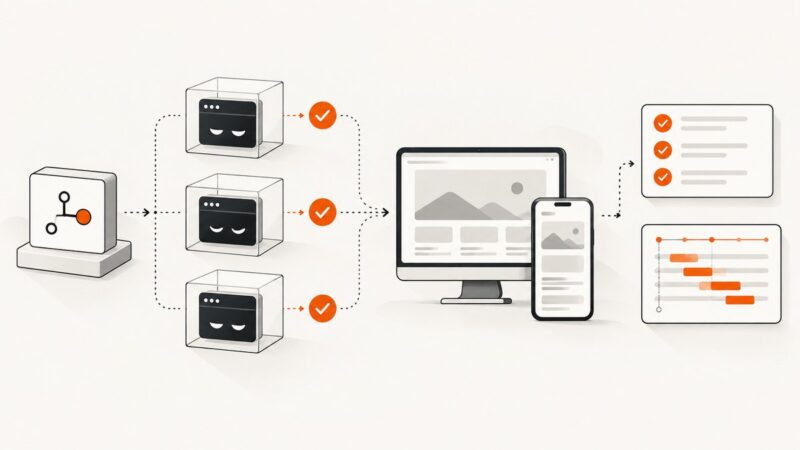
- Put fast, repeatable checks early. Run checks such as unit tests and appropriate integration tests during development or before merge, where they can give prompt feedback.
- Use pipeline automation for repeatable work. Keep automated suites dependable and integrated into delivery so teams can act on their results.
- Reserve human judgment for questions that need it. Use exploratory and usability testing to investigate scenarios and experience, and curate suites as the software changes.
- Observe deployed behavior where needed. Add appropriately scoped production checks for risks involving real traffic, compatibility, or changing infrastructure.
- Review the feedback itself. If checks are slow, unstable, or disconnected from decisions, revisit what they cover and how the team uses their results.
This is a way to reason about coverage, not a universal process prescription. Google Cloud and Microsoft describe different stages and risks; teams should choose a mix that fits their system.
6. How visual checks fit into QA workflows
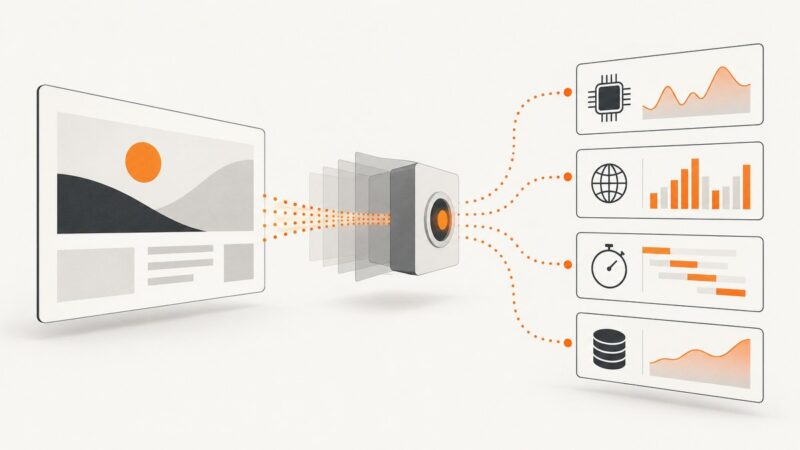
Visual checks can help teams inspect rendered pages after a change or deployment. A screenshot captures a page at a point in time, so it can support review of layout and visible content. It does not replace checks of application behavior, accessibility, usability, or performance.
For a repeatable capture, developers can use a browser automation setup or a screenshot API. The choice depends on whether they need control over browser execution or want a capture service to handle it. ScreenshotNeo is a website screenshot API and MCP server from Yorker Media; its documented options include full-page capture, CSS-selector element capture, device and viewport settings, custom CSS and JavaScript, and waiting for a selector, delay, or network idle. See the ScreenshotNeo API documentation.
7. Or skip the browser setup
For a direct website capture, ScreenshotNeo accepts a URL in one GET request and returns an image or PDF. This cURL example saves a WebP screenshot:
curl -G "https://api.screenshotneo.com/v1/shot" -d access_key=YOUR_API_KEY --data-urlencode url=https://stripe.com -o shot.webpPython:
import requests

r = requests.get(
    "https://api.screenshotneo.com/v1/shot",
    params={"access_key": "YOUR_API_KEY", "url": "https://stripe.com"},
    timeout=90,
)
open("shot.webp", "wb").write(r.content)
Node.js:
const q = new URLSearchParams({ access_key: 'YOUR_API_KEY', url: 'https://stripe.com' });
const res = await fetch(`https://api.screenshotneo.com/v1/shot?${q}`);
const bytes = Buffer.from(await res.arrayBuffer());
await import('node:fs/promises').then(fs => fs.writeFile('shot.webp', bytes));
Cookie banners, newsletter popups, and chat widgets are removed before the shot. Bot checks, blank pages, and failed loads are never billed; response headers report the page verdict and billing status. An MCP server lets AI agents take screenshots, and 1,000 screenshots a month are free with no card; paid plans start at $5 for 3,000. Sign up for ScreenshotNeo’s free plan.
8. Troubleshooting a screenshot capture
| Symptom | Likely cause | What to check |
|---|---|---|
| The saved image is blank | The page did not render useful content before capture, or the destination returned an empty page. | Check the response’s page-verdict and billing headers. Review the target URL and, where applicable, wait for a selector or page readiness condition using the documented API options. |
| The capture shows a bot check or CAPTCHA | The destination presented an automated-access challenge. | Inspect the page verdict. ScreenshotNeo says bot checks and CAPTCHAs are not billed; a screenshot API cannot guarantee access to pages protected by a challenge. |
| The page is missing content that appears later | Content may load asynchronously or after scrolling. | Use a suitable wait condition or full-page capture. Confirm the page itself eventually renders the content. |
| A pop-up or consent layer obscures the page | The overlay appeared before capture or is outside the known removal behavior. | Check the documented cleanup options and whether each step is enabled; ScreenshotNeo allows cleanup steps to be turned off. |
| The output file is not the expected format | The request may be using defaults or an incorrect output option. | Set the desired image format or PDF options according to the API documentation and use a matching file extension. |
9. Reliability, performance, and cost considerations
For QA work, a screenshot is useful only when the capture conditions are repeatable enough to compare. Keep the target URL, viewport or device, wait condition, and other capture settings consistent across runs. Dynamic content, network delays, and page changes can affect results, so interpret a changed image in context rather than treating every pixel difference as a product defect.
Capture time depends on page loading and the selected waits. Waiting for a specific selector or a suitable readiness condition can avoid capturing too early; an unnecessarily long delay adds time without guaranteeing that a page is stable. Full-page capture and high-resolution output can also produce larger files than a viewport capture.
ScreenshotNeo offers caching with a configurable TTL, async jobs with signed webhooks, and bulk capture for up to 100 URLs per call. These options can help fit captures into different workflows. Its billing model says only clean shots are billed: bot checks or CAPTCHAs, blank pages, timeouts, failed loads, and cache hits cost nothing; responses include X-Page-Verdict and X-Billed headers. Plans are Free for 1,000 shots/month with no card, Starter $5 for 3,000, Growth $15 for 15,000, Pro $39 for 60,000, Scale $99 for 250,000, and Business $249 for 1,000,000; yearly billing gives two months free. Every feature is available on every plan. Check the ScreenshotNeo site and documentation for product details.
10. What the evidence does and does not say
The cited guidance describes practices and capabilities, not a measured change in QA headcount or a universal staffing model. It does not show that QA specialists are disappearing, quantify the scale of role change, or say that every team should organize quality work identically.
DORA’s 2024 report discusses AI’s effects on software delivery and warns of potential negative effects on delivery stability and throughput. That observation is specific to the report; it is not a 2026 statistic about QA roles or staffing. The report summary emphasizes fundamentals such as small batch sizes and robust testing.
11. Frequently asked questions
Does QA still test after software is released?
Yes. Shift-right practices include testing and observing behavior after deployment. Production checks complement preproduction testing because real traffic and changing environments cannot be fully reproduced in staging.
Does test automation make human testers obsolete?
No. DORA identifies exploratory testing, usability testing, and test-suite curation as continuing contributions from testers and QA teams. Automation handles repeatable checks; it does not remove the need to decide what matters or investigate user-facing experience.
Is there one correct QA job structure for DevOps?
The cited sources do not prescribe one. Teams can distribute quality work in different ways while building feedback across development, delivery, and deployed operation.
How much has DevOps changed QA staffing?
The reviewed sources do not quantify role or headcount changes. They describe practices and capabilities rather than staffing statistics.