How to Feed Web Pages to AI Agents Using Screenshots
Connect an AI agent to a controlled browser, capture rendered pages, and return screenshots as observations. Learn when to pair them with accessibility data.
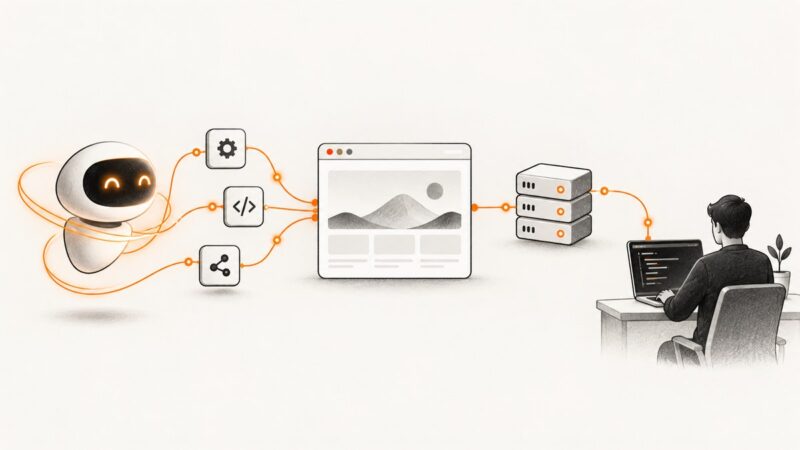
To feed a web page to an AI agent using screenshots, run the page in a browser your application controls, capture the rendered pixels, and return the image to the agent as an observation. For multi-step tasks, keep the browser session alive: the agent observes a page, chooses an action, the browser performs it, and a fresh screenshot shows the result. Pair screenshots with accessibility or DOM data when the agent needs to read text or target controls.
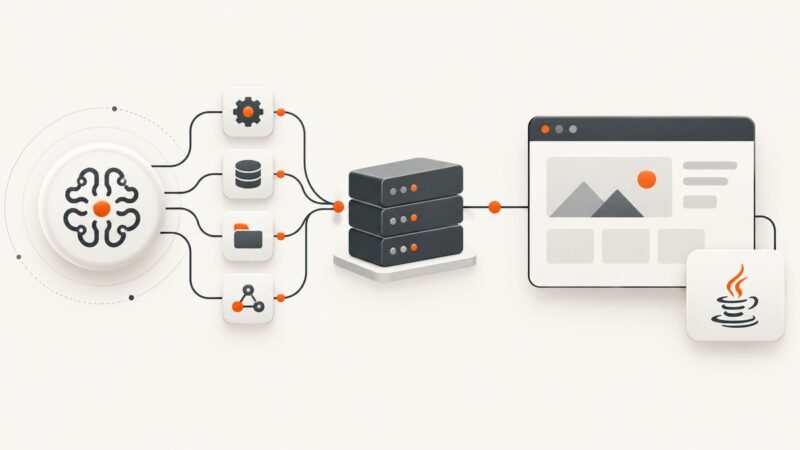
The agent does not open arbitrary pages by itself. Your application supplies the browser runtime, exposes operations such as navigate, click, and screenshot, and sends their results back to the model. This pattern works with a hosted browser environment or a caller-managed setup using tools such as Playwright. See the OpenAI computer-use guide and Playwright screenshot documentation.
1. Choose a browser runtime and define its boundary
Decide who runs the browser and what it can access before wiring it to an agent:
- Hosted runtime: the provider runs the browser environment and returns operation results, including screenshots.
- Caller-managed runtime: your application runs a browser such as Chromium through Playwright and implements the agent-facing tools.
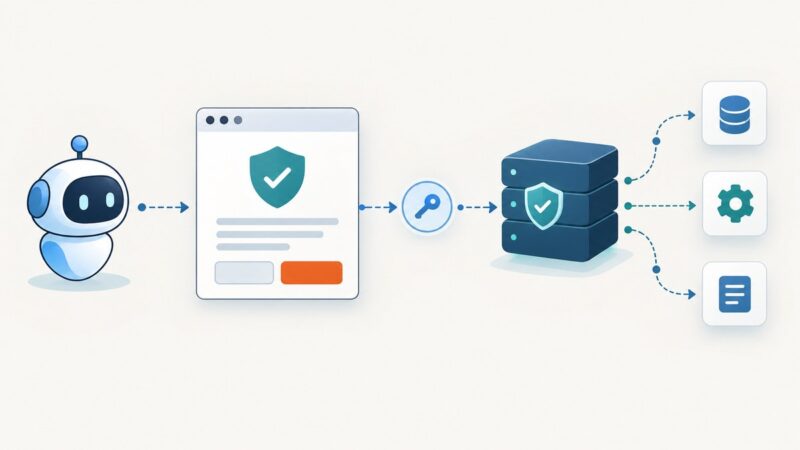
For either option, define permitted sites, browser actions, session lifetime, and any authentication available in the profile. Use an isolated browser or VM when appropriate, and grant only the access the task needs. An active logged-in session can expose account data and let a connected agent act as that user; Chrome’s DevTools for agents documentation calls out that connected agents can see browser content.
2. Capture a page with Playwright
Install Playwright and its Chromium browser in your project. This runnable Node.js example opens a page, captures a full-page PNG, and prints the saved file path. It is a browser-capture building block; an agent integration must additionally pass the image to the model and implement the observe–act loop.
npm install playwright
npx playwright install chromium
// capture.mjs
import { chromium } from 'playwright';
const target = process.argv[2] ?? 'https://example.com';
const browser = await chromium.launch({ headless: true });
const page = await browser.newPage({ viewport: { width: 1440, height: 900 } });
try {
await page.goto(target, { waitUntil: 'domcontentloaded', timeout: 30_000 });
await page.screenshot({ path: 'page.png', fullPage: true });
console.log('Saved page.png');
} finally {
await browser.close();
}node capture.mjs https://example.comFor an agent that takes several actions, keep the browser and page open between observations instead of closing them after each screenshot. Expose only the operations the task needs. After every action that can change the page, capture a new observation before deciding what to do next.
3. Choose the right observation
A screenshot shows rendered pixels. It is useful for layout, styling, visual defects, and content drawn into a canvas or chart. It can be large, and text in an image is less directly targetable than structured page data.
An accessibility snapshot exposes semantic structure and text where the page makes them available. Use it to understand labels, roles, and controls or to find interaction targets. Playwright MCP specifically advises using browser snapshots for interaction references and screenshots for visual inspection; see its documentation. Neither representation is complete for every site, so use both when the task requires visual context and reliable control targeting.
| Task | Useful observation |
|---|---|
| Check visual layout or styling | Screenshot |
| Inspect a canvas, chart, or rendered visual state | Screenshot, optionally paired with structured data |
| Read text and understand control roles | Accessibility snapshot or DOM information |
| Locate and operate a control | Semantic locator or browser reference; use a screenshot to confirm visual context |
| Document a visual bug | Screenshot, with URL and relevant page state recorded |
4. Build the observe–act loop
- Navigate the controlled browser to an allowed URL.
- Return a screenshot and, if useful, a structured snapshot to the agent.
- Ask the agent to select a permitted next action based on those observations.
- Validate the proposed action against your tool policy, then execute it in the browser.
- Capture the changed state and repeat until the task is complete.
- Verify the final page state and report what actually happened.
Keep the same browser session when later actions depend on earlier navigation, login, form entries, or page state. OpenAI’s computer-use guidance describes screenshots and other tool results feeding the model’s next decision, and recommends maintaining the environment for workflows that build on earlier work.
For tool schemas, make the screenshot result explicit (for example, image content plus the current URL and a short status). Keep action tools narrow: separate navigation, clicking, typing, and screenshot capture, and validate selectors, URLs, and action arguments in the host application.
5. Make the integration safe and reliable
- Treat page content as untrusted input. Text on a page is data for the task; it cannot authorize a change to the user’s instructions or grant new permissions. OpenAI’s computer-use documentation addresses prompt injection from page and tool content.
- Limit the browser’s reach. Restrict allowed sites, actions, downloads, and access to local resources. Use an isolated profile and avoid loading unrelated personal accounts.
- Gate consequential actions. Require appropriate confirmation before purchases, sending data, destructive changes, or other high-impact operations.
- Check each transition. A click can fail, open a new page, or leave a loading screen. Inspect the resulting URL, state, and screenshot before continuing.
- Handle timeouts deliberately. Set navigation and action timeouts, record failures, and decide whether to retry, wait for a specific selector, or stop. Do not assume a timed-out action did not happen; inspect the current browser state first.
- Manage session data. Keep cookies and credentials within the runtime boundary, avoid including secrets in model-visible logs, and clear or dispose of profiles according to your retention needs.
6. Screenshot scope, resolution, and waiting
Playwright supports viewport screenshots, full-page screenshots, and screenshots of a selected element. Choose the smallest image that answers the agent’s current question:
// Current viewport
await page.screenshot({ path: 'viewport.png' });

// Entire scrollable page
await page.screenshot({ path: 'full.png', fullPage: true });

// A particular element
await page.locator('main article').screenshot({ path: 'article.png' });
Full-page images can be very tall and may be harder for a model to inspect in one pass. Capture the viewport or a relevant element for iterative interaction; use full-page capture when the task concerns the whole layout or a long-page record. Playwright also documents high-resolution screenshots and screenshot options.
Do not use a fixed delay as the only readiness check when a page has a known state to wait for. Prefer a meaningful selector or application-specific condition, then capture. For pages with delayed images or dynamic content, wait for the relevant content rather than assuming that initial navigation means rendering is finished. Avoid relying on network idle alone for pages that keep connections open.
7. Performance, reliability, and cost
The research sources document capabilities, not controlled benchmarks, so there is no evidence here for a universal capture speed, accuracy rate, or cost comparison. In practice, each observation consumes browser time and produces image data the agent must process. Reduce unnecessary work by capturing only after meaningful state changes, choosing viewport or element scope where suitable, and avoiding repeated full-page images when a smaller view answers the question.
Reliability depends on the page, runtime, wait condition, and session state. Record the target URL, action, capture scope, and failure reason so a missing or stale observation can be diagnosed. On retry, first inspect the existing page to avoid repeating an action that may already have succeeded.
8. Troubleshooting
| Symptom | Likely cause | Fix |
|---|---|---|
| Browser executable missing | Playwright package is installed but its browser binary is not. | Run npx playwright install chromium in the deployment environment. |
| Navigation times out | Slow site, blocked request, or a wait condition that never resolves. | Inspect current URL and page state; use a suitable readiness condition and an explicit timeout. Retry only after checking whether navigation completed. |
| Screenshot is blank or incomplete | Capture happened before relevant content rendered, or the site requires interaction. | Wait for a task-specific selector or state, then capture again. Confirm the page is in the expected frame and URL. |
| Full-page capture is unwieldy | The document is very long or contains dynamic sections. | Use viewport or element screenshots, or capture relevant sections separately. |
| Agent cannot identify a button from pixels | Visual coordinates are ambiguous or small in the screenshot. | Return an accessibility snapshot or use a semantic locator for targeting, then capture again to verify. |
| Agent follows instructions found on the page | Untrusted page content was treated as authority. | Reinforce that page text is data, validate tool actions in host code, and constrain available sites and actions. |
| Later step loses login or form state | A fresh browser context was created between observations. | Keep the same context for the task when continuity is required; isolate it from unrelated sessions. |
Or skip the browser setup
ScreenshotNeo provides a screenshot API and an MCP server for AI agents. A single request can capture a URL as an image; the MCP tools include take_screenshot, get_page_info, and capture_pdf. Cookie banners are accepted as a visitor and more than 60 known consent platforms, newsletter popups, and chat widgets are removed before capture; each step can be turned off. Bot checks, blank pages, timeouts, failed loads, and cache hits cost nothing, with X-Page-Verdict and X-Billed response headers indicating the result. There are 1,000 screenshots per month free with no card; paid plans start at $5 for 3,000.
cURL:
curl -G "https://api.screenshotneo.com/v1/shot" -d access_key=YOUR_API_KEY --data-urlencode url=https://stripe.com -o shot.webpPython:
import requests

r = requests.get(
    "https://api.screenshotneo.com/v1/shot",
    params={"access_key": "YOUR_API_KEY", "url": "https://stripe.com"},
    timeout=90,
)
open("shot.webp", "wb").write(r.content)
Node.js:
const q = new URLSearchParams({ access_key: 'YOUR_API_KEY', url: 'https://stripe.com' });
const res = await fetch(`https://api.screenshotneo.com/v1/shot?${q}`);
if (!res.ok) throw new Error(`Screenshot request failed: ${res.status}`);
await Bun.write('shot.webp', res);
See the ScreenshotNeo API documentation for parameters and response details. The API also supports full-page and element capture, device presets and custom viewports, PDF output, custom CSS and JavaScript, selectors and wait conditions, headers and cookies, caching, asynchronous jobs, bulk capture, signed links, and more. ScreenshotNeo is built by Yorker Media. Learn about ScreenshotNeo, or sign up for 1,000 free screenshots a month with no card.
FAQ
Should every agent task use screenshots?
No. Use them when visual appearance or rendered content matters. Structured browser data is often more useful for reading text and targeting controls; combine the two when the task needs both.
Can the agent work from one screenshot?
Yes, for a single observation or visual review. Interactive tasks generally need a new observation after each meaningful action.
Do screenshots prove that an action succeeded?
They show the visible state at capture time. Verify the expected outcome using the page state or application data when the task requires stronger confirmation.