BlogScreenshots on your device
Firefox Screenshots Extension Alternatives for Linux Users
Compare Firefox’s built-in tools, SnapLocal, and Flameshot for Linux screenshots, with guidance for full-page capture, annotation, privacy, and Wayland.
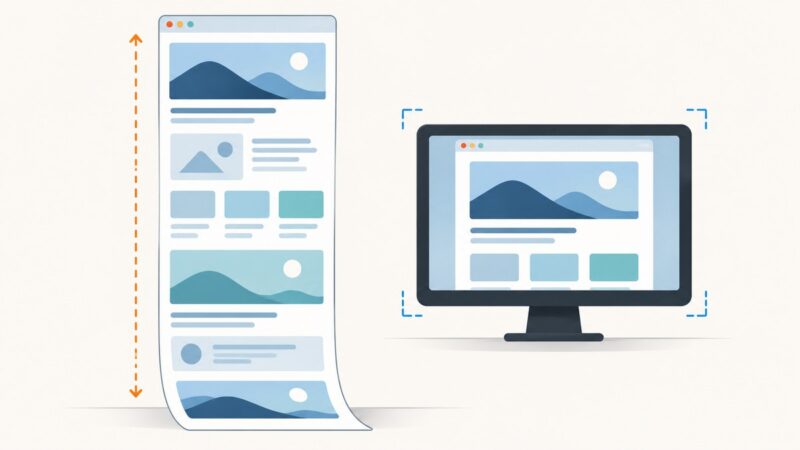
Linux users do not need a Firefox extension for ordinary web-page screenshots: Firefox can capture a selected region, the visible page, or a full page, then save or copy the image. For element-specific or repeatable captures, use Firefox Developer Tools. For annotation and desktop-wide capture, consider SnapLocal or Flameshot. If you specifically want a screenshot service or API, try ScreenshotNeo first: it removes common cookie banners, popups, and chat widgets before capture, and bills only clean shots.
1. Choose the right screenshot workflow
| Option | Best for | What to check |
|---|---|---|
| Firefox screenshot interface | Quick browser-page captures with no install | Mozilla documents a Wayland limitation for moving the screenshot crosshair; this does not mean all Firefox screenshot capture is broken. |
| Firefox Developer Tools | Full-page, element-only, delayed, or repeatable captures | More technical than a one-click extension. |
| SnapLocal | Browser capture with annotation, blur, and redaction | Its listing claims local processing and no network requests; these are vendor claims, not independently audited here. |
| Flameshot | Desktop-wide screenshots, annotations, and command-line use | Check behavior on your exact distribution, desktop, and Wayland compositor. |
| ShareX Firefox add-on | Sending selected media or text to a ShareX application workflow | The add-on is an integration, not a standalone Linux screenshot tool; the cited listing does not establish Linux availability of the ShareX application. |
Decide whether you need a web-page capture or a screenshot of anything on the desktop. Then check whether you need full-page or element capture, markup or permanent redaction, keyboard or CLI operation, and local processing. On Linux, also check the display server and desktop environment. Mozilla identifies addons.mozilla.org as its official place to discover and install extensions; inspect each add-on’s author, requested permissions, update history, and privacy claims. Being listed there is not independent security assurance.
2. Use Firefox’s built-in screenshot tools
Capture a region, visible page, or full page
- Open the page in Firefox and open the page context menu (right-click).
- Choose Take Screenshot. If that command is unavailable in your version or context, use Firefox’s toolbar customization to add the screenshot control.
- Choose a region, the visible page, or the full page using the controls shown.
- Save the image or copy it to the clipboard.
Firefox’s screenshot interface handles page content. Use a desktop capture utility such as Flameshot when you need to include other applications, menus, or desktop areas outside the browser.
Wayland note: Mozilla documents that moving the screenshot crosshair does not work on Wayland. Treat this as a limitation of that interaction, not proof that Firefox screenshots as a whole cannot work. If selection is awkward, try Developer Tools or a desktop capture utility compatible with your setup.
3. Capture full pages or individual elements with Developer Tools
Firefox Developer Tools support whole-page capture and an Inspector command for a specific page element. The console also provides the :screenshot helper with options for delay, clipboard, filename, full-page capture, and a CSS selector. Mozilla’s documentation describes these routes in its Taking screenshots guide.
- Open Developer Tools with Ctrl+Shift+I (or Cmd+Option+I on macOS).
- For one element, open the Inspector, select the node, and use its screenshot command.
- For a page capture, use the Developer Tools screenshot command or enter
:screenshotin the Developer Tools console. - Use the helper’s supported options when you need a delay, clipboard output, a chosen filename, full-page capture, or a CSS selector. Consult the current Mozilla documentation for exact syntax supported by your Firefox version.
This route is useful for debugging a particular component or repeating a capture with a selector. If the selector matches no element, select the right node in Inspector or correct the CSS selector. Dynamic content may need time to render before capture.
4. Consider SnapLocal for browser capture and markup
SnapLocal’s Mozilla Add-ons listing describes area, visible-page, full-page, and delayed capture, plus annotation, blur, redaction, clipboard, and PNG saving. The listing claims that processing is local and makes no network requests; those claims have not been independently verified here. The listing had zero reviews at the time the research was accessed, which is not a quality verdict. Review the current listing, permissions, author, update history, and privacy details before installing it.
Choose it when you want browser-context capture and markup in one extension. For sensitive material, confirm that redaction is irreversible before sharing the resulting file; a blur effect may not conceal content as reliably as covering it with an opaque shape.
5. Consider Flameshot for desktop-wide capture
Flameshot is a Linux desktop screenshot utility with annotation tools, customization, CLI support, and Linux packages. Its official installation documentation lists distribution packages, AppImage, and Flatpak. Package versions can lag upstream, so check what your distribution provides and whether a newer official option is appropriate.
- Install Flameshot using your distribution’s package manager or one of its documented package formats.
- Launch it and select a screen region; use its annotation controls before saving or copying.
- For repeatable or scripted use, consult the current Flameshot CLI documentation and your package’s version-specific help.
- On Wayland, test the actual selection and capture behavior in your desktop session. Compatibility can vary by compositor and package build.
Flameshot is the better fit when you need to capture menus, other applications, or desktop areas as well as browser content. Firefox’s built-in tools remain simpler for a page-only capture.
6. Where the ShareX add-on fits
The ShareX Firefox add-on adds an “Upload with ShareX” action for selected images, video, audio, and text. It connects Firefox to the ShareX application; it is not itself a general-purpose screenshot extension. The available listing does not establish Linux availability of the ShareX application, so verify that requirement for your system before choosing this workflow.
7. Or skip the browser setup
For a screenshot generated from a URL, ScreenshotNeo provides an HTTP API and an MCP server. One GET request returns a PNG, JPEG, WebP, or PDF. Use the API when you want to capture a site without configuring a local browser workflow. See the ScreenshotNeo API documentation for options and formats.
curl -G "https://api.screenshotneo.com/v1/shot" -d access_key=YOUR_API_KEY --data-urlencode url=https://stripe.com -o shot.webpimport requests
r = requests.get(
"https://api.screenshotneo.com/v1/shot",
params={"access_key": "YOUR_API_KEY", "url": "https://stripe.com"},
timeout=90,
)
open("shot.webp", "wb").write(r.content)const q = new URLSearchParams({ access_key: 'YOUR_API_KEY', url: 'https://stripe.com' });
const res = await fetch(`https://api.screenshotneo.com/v1/shot?${q}`);
if (!res.ok) throw new Error(`Screenshot request failed: ${res.status}`);
await Bun.write('shot.webp', res);- Cookie banners are accepted and more than 60 known consent platforms, newsletter popups, and chat widgets are removed before the shot; each step can be turned off.
- Bot checks and CAPTCHAs, blank pages, timeouts, failed loads, and cache hits cost nothing. Response headers report the page verdict and whether the request was billed.
- An MCP server gives AI agents tools for taking screenshots, getting page information, and capturing PDFs.
- The free plan includes 1,000 shots a month with no card; paid plans start at $5 for 3,000 shots.
Sign up free for 1,000 screenshots a month with no card.
8. Troubleshooting
| Problem | Likely cause | What to try |
|---|---|---|
| Firefox’s selection crosshair does not move as expected | Mozilla documents this limitation on Wayland. | Try Firefox Developer Tools or a desktop tool, and check the behavior in your specific session. |
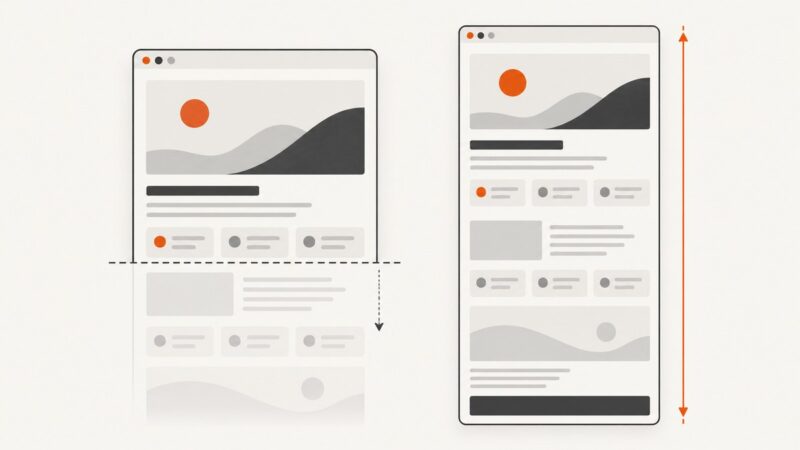
| The screenshot is only the visible viewport | A visible-area capture was selected instead of full page. | Choose full-page capture in Firefox’s screenshot interface or Developer Tools. |
| An element capture is missing or wrong | The selector may not match, or the page may not have rendered the element yet. | Inspect and select the intended node, correct the selector, and wait for dynamic content to appear. |
| A banner or popup covers the page | The page displayed an overlay at capture time. | Dismiss it manually, capture after it closes, or use a workflow that handles consent and common overlays. |
| Flameshot selection or capture behaves differently on Wayland | Behavior depends on compositor, desktop, and package build. | Check the current distro guidance and test the installed build in your actual session. |
| A Firefox add-on asks for broad access | Extensions can request access to page data or browser features. | Review permissions and the current listing’s author, update history, and privacy claims; remove the add-on if its access does not fit your needs. |
9. Performance, reliability, and privacy considerations
- Capture scope: a visible-region capture is usually the shortest route; full-page capture has more content to render and inspect. For repeat work on one component, an element capture avoids unrelated page areas.
- Dynamic pages: wait until lazy-loaded images, fonts, and application content are ready. A delay or selector-based workflow can help where available, but a delay alone cannot guarantee a page is finished.
- Local files and redaction: choose a storage location deliberately. Before sharing sensitive screenshots, cover secrets with opaque redaction and review the saved output.
- Extension trust: Mozilla’s marketplace is the official discovery site, but presence there does not prove independent security. Check current permissions and privacy statements.
- Distribution variance: distro packages can lag upstream. Keep package source and version in mind when comparing behavior or following CLI instructions.
- Service billing: ScreenshotNeo states that only clean shots are billed; bot checks, blank pages, timeouts, failed loads, and cache hits are free. Inspect
X-Page-VerdictandX-Billedresponse headers to see the outcome. Its monthly plans range from 1,000 free shots to paid tiers; annual billing gives two months free.
10. Frequently asked questions
Do I need an extension to take a full-page screenshot in Firefox on Linux?
No. Firefox’s built-in screenshot interface and Developer Tools offer full-page capture.
Can Firefox Developer Tools capture just one element?
Yes. Use the Inspector’s screenshot command or the console screenshot helper with a CSS selector.
Does the Wayland crosshair issue mean Firefox screenshots are broken?
No. Mozilla documents a limitation with moving the crosshair on Wayland. It does not say that all Firefox screenshot capture is broken.
Which option should I use to annotate screenshots?
SnapLocal’s listing describes browser capture and annotation; Flameshot provides desktop capture with annotation tools. Choose based on whether you need page-only or whole-desktop capture, and review current product details before installing.
Is a Firefox extension the right choice for automated URL screenshots?
For occasional manual captures, Firefox is sufficient. For requests generated from URLs in scripts or services, an API such as ScreenshotNeo avoids local browser setup.