BlogScreenshots on your device
How to Take Full-Page Webpage Screenshots with FireShot in Firefox
Capture an entire scrolling page in Firefox with FireShot, choose the right format, fix common problems, and compare built-in alternatives.
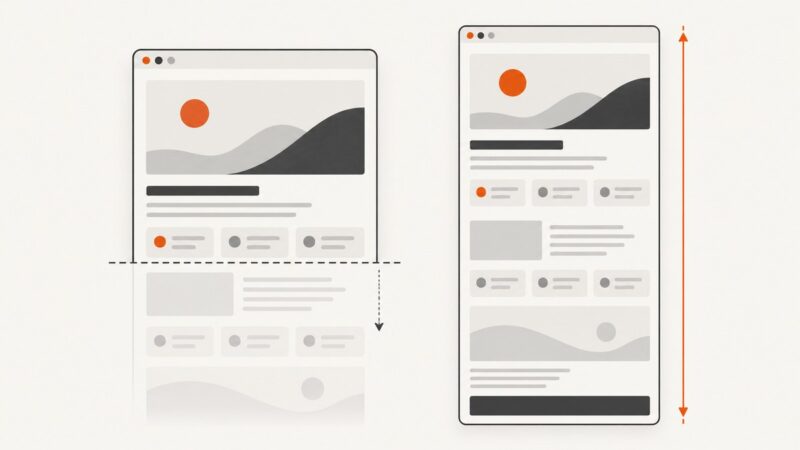
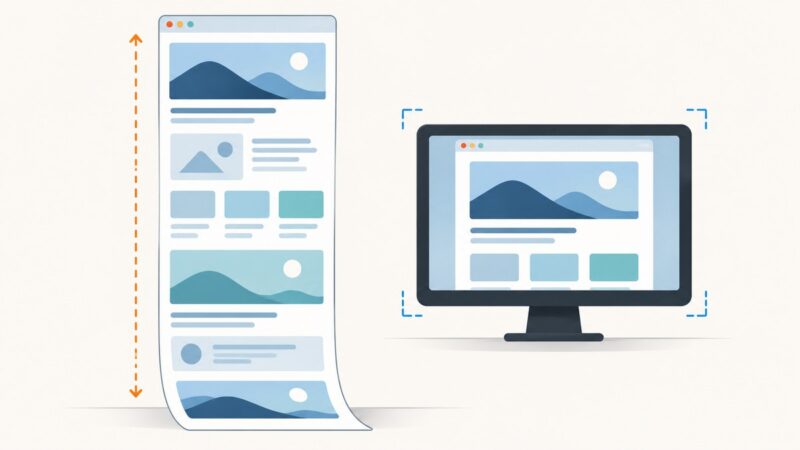
Direct answer: In Firefox, open FireShot from its toolbar button, the main menu, or the page context menu. Choose Capture entire Page (or the toolbar action labeled Capture entire webpage and Edit), then save, copy, print, email, or export the result. The entire-page mode includes content below the current viewport; the visible-area mode does not.
FireShot’s Firefox Add-ons listing documents full-page, visible-area, and scrolling-selection captures with PDF, PNG, and JPEG output. The vendor guide documents the menu entry points and the entire-page workflow. Firefox Add-ons listing · FireShot vendor documentation
1. Install and open FireShot
- Install FireShot from the official Firefox Add-ons listing. Prefer this listing when choosing the Firefox installation source.
- After installation, look for the FireShot toolbar button. If it is not visible, open Firefox’s extension controls or use the browser’s main menu. FireShot’s vendor instructions also identify the page context menu as an entry point.
- Open the page you want to capture and wait for its initial content to load before starting the capture.
The listing snapshot used for this guide reports FireShot 1.12.18, last updated 5 June 2023, and mentions a separate v2 rollout. Treat those details as listing metadata that can change; the add-on page is the authoritative place to check the currently offered Firefox package.
2. Capture the entire scrolling page
- Click the FireShot toolbar button, or open FireShot from the main menu or page context menu.
- Select Capture entire Page. Do not select Capture visible area when you need content below the fold. Use a scrolling-selection option when you need only a chosen portion of a long page.
- Let FireShot finish scrolling and assembling the page. Avoid switching tabs or changing the page while capture is running.
- Choose the post-capture action. The vendor documentation lists saving, copying to the clipboard, printing, email, and export actions. The toolbar’s documented default action is Capture entire webpage and Edit, which opens the result in the editor.
- Choose an output format offered by your installation. The current Firefox listing advertises PDF, PNG, and JPEG. Some PDF and text capabilities are marked with an asterisk or associated with an upgrade, so verify what your installed edition provides.
Full page versus visible area
| Mode | What it captures | Use it for |
|---|---|---|
| Entire page | The page, including content that requires scrolling | Documentation, landing pages, audit records, and long articles |
| Visible area | Only the current viewport | A quick view of what is currently on screen |
| Scrolling selection | A selected portion gathered while scrolling | One section of a long page |
3. Save, edit, and verify the result
After capture, inspect the complete image or PDF before sharing it. Check the top, bottom, sticky headers, lazy-loaded images, tables, and sections that appear only after scrolling. Look for duplicated fixed elements, blank bands, abrupt stitching, or content that never loaded.
Use FireShot’s editor or the available save, clipboard, print, email, and export actions documented by the vendor. The Firefox listing currently advertises PDF, PNG, and JPEG; vendor Pro documentation mentions additional formats such as GIF and BMP, but those should not be assumed to be available in the free Firefox listing.
4. Firefox’s built-in full-page screenshot
You do not need an extension for a basic full-page image. Mozilla’s Help instructions are:
- Right-click an empty part of the page and choose Take Screenshot, or press Ctrl+Shift+S on Windows/Linux or Command+Shift+S on macOS.
- In the screenshot interface, choose Save full page.
- Download the image or copy it to the clipboard.
Mozilla documents region and visible-area capture in the same interface. See Mozilla’s screenshot help.
For a developer-oriented route, enable the screenshot icon in Developer Tools toolbox settings, or open the Web Console and run:
:screenshot --fullpageFirefox Source Docs describe this helper as saving a screenshot that includes content outside the current window bounds. See Firefox Source Docs.
5. Choosing between FireShot and Firefox Screenshots
| Question | FireShot | Firefox built-in tool |
|---|---|---|
| Need a full page? | Choose Capture entire Page. | Choose Save full page. |
| Need visible or selected area? | Use visible-area or scrolling-selection modes. | Use visible or region capture. |
| Need editing and export actions? | FireShot documents an editor and save, clipboard, print, email, and export actions; availability depends on edition. | Mozilla documents download and clipboard actions. |
| Need extra permissions? | The listing requests access to data for all websites and permissions related to external programs and downloads; clipboard and browser-tab access are listed as optional. | Uses Firefox’s built-in screenshot feature. |
The FireShot listing says screenshots are stored locally and do not leave the computer. That is the extension publisher’s stated privacy behavior, not an independent audit. Mozilla’s separate Firefox Screenshots documentation discusses interaction data for the built-in feature and says it does not collect the URL or captured image details; do not apply that statement to FireShot.
6. Troubleshooting FireShot captures
The FireShot button is missing
Open Firefox’s extension controls or main menu and locate FireShot. The vendor documentation also lists the page context menu. If the add-on is disabled, enable it and reload the page.
The result contains only the viewport
Restart the capture and select Capture entire Page. Visible-area capture intentionally excludes content below the fold.
Images or sections are blank
Wait for the page to finish loading before capture. Pages with lazy-loaded content may require scrolling or interaction to trigger that content. Reload, dismiss blocking dialogs, and try again. FireShot behavior on unusual pages was not independently tested, so treat embedded scroll containers and dynamically rendered sections as possible problem areas.
Sticky headers, banners, or controls repeat
Fixed-position elements can appear in multiple stitched segments. Close overlays before capture when possible, or use a scrolling selection that excludes the repeated control. Verify the final file at several scroll positions.
The capture stops or times out
Reduce page complexity by closing unrelated tabs, allow the page to settle, and retry. Very long pages, heavy scripts, videos, and continuously loading feeds take longer to assemble. Capture a smaller scrolling selection if a complete page is impractical.
PDF or an editor feature is unavailable
Check the capabilities shown by your installed Firefox listing and edition. The listing advertises PDF, PNG, and JPEG, while some PDF/text and editor/export features are associated with an upgrade.
Firefox blocks a permission
Review FireShot’s permissions in Firefox’s extension settings. The listing requests access to data for all websites plus external-program and download permissions, with clipboard and browser-tab permissions shown as optional. Only grant permissions you understand and need.
7. Reliability, performance, and privacy considerations
- Dynamic pages: A screenshot reflects the state of the page when capture runs. Trigger accordions, tabs, lazy images, and infinite-scroll content first if they are required in the final artifact.
- Very long documents: More scrolling and image stitching means more time and memory. Split the work into sections when a single file becomes unwieldy.
- Animations and video: Pause them when a stable frame matters; otherwise the captured frame can vary between runs.
- Access-controlled pages: FireShot runs in your Firefox session, so it can capture pages you can view there. Do not share screenshots containing private data.
- Repeatability: Record the URL, viewport size, zoom level, date, and any interactions needed before capture so another person can reproduce the result.
8. Or skip the browser setup
If you need automated screenshots, repeatable options, or server-side capture, ScreenshotNeo returns a PNG, JPEG, WebP, or PDF from one GET request. Its cleanup steps accept cookie and consent banners and remove more than 60 known consent platforms, newsletter popups, and chat widgets before capture; each step can be turned off. Bot checks, blank pages, timeouts, failed loads, and cache hits are not billed, and the response identifies the result with X-Page-Verdict and X-Billed headers.
See the ScreenshotNeo API documentation for all options. The following calls capture the same page:
cURL
curl -G "https://api.screenshotneo.com/v1/shot" -d access_key=YOUR_API_KEY --data-urlencode url=https://stripe.com -o shot.webpPython
import requests

r = requests.get(
    "https://api.screenshotneo.com/v1/shot",
    params={"access_key": "YOUR_API_KEY", "url": "https://stripe.com"},
    timeout=90,
)
r.raise_for_status()
open("shot.webp", "wb").write(r.content)
Node.js
const q = new URLSearchParams({ access_key: 'YOUR_API_KEY', url: 'https://stripe.com' });
const res = await fetch(`https://api.screenshotneo.com/v1/shot?${q}`);
if (!res.ok) throw new Error(`Screenshot failed: ${res.status}`);
const data = Buffer.from(await res.arrayBuffer());
require('fs').writeFileSync('shot.webp', data);
ScreenshotNeo also supports full-page capture with lazy images loaded, CSS-selector element capture, dark mode, device presets and custom viewports, retina scale, PDF paper sizes/margins/landscape/page ranges, custom CSS and JavaScript, clicks, waits, request blocking, headers, cookies, user agents, Authorization, timezone, geolocation, transparent backgrounds, resizing, TTL caching, signed links, asynchronous jobs with signed webhooks, bulk capture of up to 100 URLs per call, a usage API, and an OpenAPI specification. An MCP server provides take_screenshot, get_page_info, and capture_pdf for Claude, Cursor, and other MCP clients.
The Free plan includes 1,000 shots per month with no card. Paid plans start at $5 for 3,000 shots; yearly billing gives two months free, and every feature is available on every plan. Create a free ScreenshotNeo account.
9. Frequently asked questions
Does FireShot capture content below the fold?
Yes, when you choose its entire-page capture mode. Visible-area capture is limited to the current viewport.
Can Firefox capture a full page without FireShot?
Yes. Use Take Screenshot and then Save full page, or use the Developer Tools :screenshot --fullpage helper.
Which format should I choose?
Use PNG for crisp interface details, JPEG for smaller photographic images, and PDF when the result is intended for document sharing. Confirm which formats your installed FireShot edition exposes.
Why is a page with an internal scroll box incomplete?
The browser page may be full height while the content inside a nested element scrolls independently. Scroll that element first, use a scrolling selection, or capture the element with an automation tool that supports CSS selectors.
Is FireShot’s permission request unusual?
The Firefox listing requests access to data for all websites and permissions related to external programs and downloads, with clipboard and browser-tab permissions listed as optional. Review the listing and Firefox’s permission dialog before enabling it.