BlogScreenshots on your device
Free Open-Source Screen Capture Tools for Developers in 2026
Compare ShareX, Flameshot, and OBS for developer screenshots, annotations, automation, and recording, with a practical 2026 decision guide.
Short answer: choose the tool that matches your operating system and the artifact you need. ShareX is the strongest documented Windows choice for screenshots, scrolling capture, annotation, OCR, and upload automation. Flameshot is the practical cross-platform pick when you need annotated screenshots and a scriptable CLI. OBS Studio is the right starting point for narrated recordings, multi-source scenes, or live streaming on Windows, macOS, or Linux.
This guide focuses on free, open-source desktop capture in 2026. The feature descriptions come from each project’s official documentation; no speed, quality, or resource-use comparison was performed.
Choose by output and platform
| Need | Start with | Why |
|---|---|---|
| Windows screenshots, scrolling pages, OCR, redaction, repeatable uploads | ShareX | Its documented workflow combines region and scrolling capture, annotation, OCR, hotkeys, post-capture actions, and uploads. |
| Annotated screenshots on Windows, macOS, or Linux | Flameshot | It provides arrows, text, highlights, blur/pixelation, numbered markers, and a terminal interface suitable for scripts or key bindings. |
| Narrated walkthroughs, multiple windows/sources, or streaming | OBS Studio | Scenes can combine window captures and other sources, with audio mixing, hotkeys, plugins, and Lua/Python scripting. |
Match the capture type before comparing feature lists:
- Still image: ShareX or Flameshot.
- Short clip or GIF: ShareX documents screen recording/GIF workflows; OBS handles full recording setups.
- Multi-source video: OBS scenes and audio mixer are designed for this.
- Automated, repeatable screenshots: Flameshot’s CLI, ShareX hotkeys/post-actions, or a browser screenshot API.
ShareX on Windows
ShareX is free and open source for Windows. Its documented audiences include developers, technical writers, and QA testers. A typical workflow is:
- Install from the project’s official website, GitHub releases, Microsoft Store, or Steam.
- Assign a hotkey to region, window, full-screen, or scrolling capture.
- Use the editor to crop, draw, add text, blur/pixelate sensitive data, or run OCR.
- Configure post-capture actions such as copying, saving, or uploading to a destination you control.
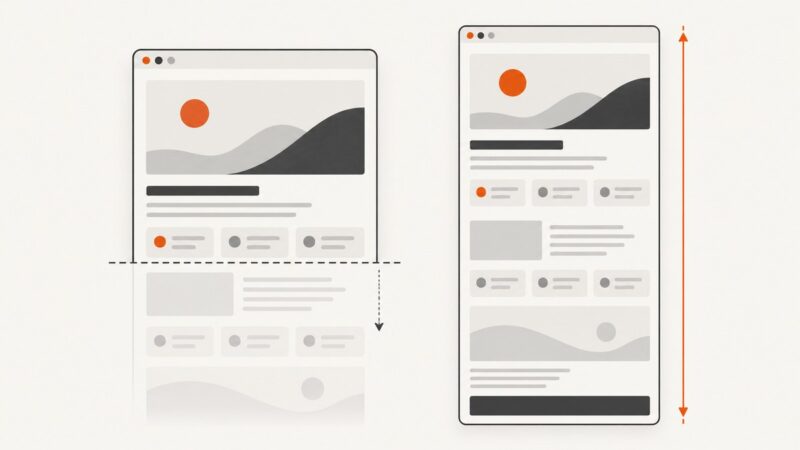
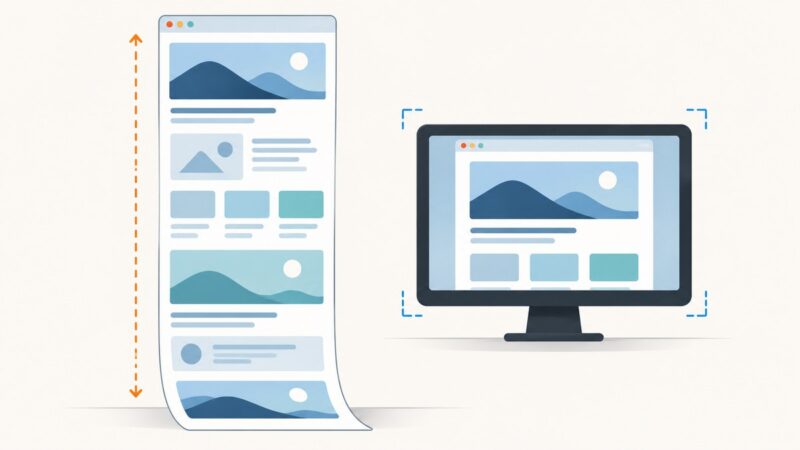
Scrolling capture: select the scrolling-capture command, choose the target window or page, and let ShareX stitch the scroll. Keep the target at a stable zoom and close overlays first; sticky headers and infinite-scroll pages can produce repeated or missing sections.
Repeatable developer workflow: combine a hotkey with a fixed save location and post-capture action. For CI or headless browser jobs, use a browser automation tool instead; ShareX is a desktop application and the reviewed material does not establish a supported headless mode.
Flameshot on Windows, macOS, and Linux
Flameshot describes itself as free, open source, and cross-platform. Its downloads include Windows installers/portable builds, macOS packages, and Linux AppImage or distribution packages. The interactive editor supports arrows, text, highlights, blur or pixelation, and numbered markers.
Interactive capture
- Launch Flameshot and invoke its tray shortcut.
- Drag a region or select the full screen.
- Annotate before saving or copying.
- Choose a deterministic output path when the image will be consumed by a script.
CLI capture
The project documents a terminal interface that can be scripted or bound to keys. Check flameshot --help on the installed version for exact flags and display behavior. A common pattern is:
flameshot full -p "$PWD/captures"
flameshot gui -p "$PWD/captures"
Those commands intentionally leave region selection interactive. For unattended jobs, verify the available options on your platform and session type; Wayland, macOS permissions, and multiple monitors can change what the CLI can capture.
OBS Studio for recording and streaming
OBS Studio supports Windows, macOS, and Linux. Its scene system lets you compose display or window captures, cameras, images, browser sources, and other inputs, then mix audio and bind hotkeys. Plugins and Lua/Python scripts extend the workflow. Capture cards are documented source types for recording a separate device; they are optional for ordinary desktop capture.
Set up a developer recording
- Create a scene named for the task, such as
bug-repro. - Add a window or display capture and select the application.
- Add microphone and desktop-audio sources only when narration or system sound is required.
- Set recording format and output directory, then make a short trial recording.
- Use hotkeys for start/stop and scene changes; add plugins or scripts only when built-in sources do not cover the workflow.
Use window capture when you need to avoid exposing unrelated applications. Use display capture when a workflow spans multiple windows. For a second computer, console, or camera feed, a capture card is optional.
Installation, licensing, and safe downloads
- ShareX: use the project’s official site, GitHub releases, Microsoft Store, or Steam. The reviewed material does not establish a precise minimum Windows version.
- Flameshot: use the project’s current download page and select the package for your operating system.
- OBS: its homepage lists Windows 10/11, macOS 12 or newer, and Linux. The help portal documents GPLv2 licensing and commercial use without restrictions; download from the official site.
Project pages and release details change. Recheck official documentation before standardizing an installer or license notice.
Automation patterns for developers
Capture a reproducible bug report
- Fix browser zoom, window size, and monitor arrangement.
- Hide credentials and personal data before capture; use blur/pixelation where appropriate.
- Capture the smallest useful region for issue trackers and a full-context shot when reviewers need surrounding UI.
- Save with a timestamp and attach the file alongside reproduction steps.
Record a scripted demo
Use OBS scenes for the application, terminal, and microphone. Bind hotkeys to switch scenes and start/stop recording. If a screenshot rather than video is needed at each checkpoint, use ShareX hotkeys or Flameshot CLI and keep filenames deterministic.
Run captures in CI
Desktop tools require a graphical session and OS permissions. A browser automation runner or screenshot API is usually simpler in CI because it can set a viewport, wait for page readiness, and return an artifact without a physical desktop. Keep credentials in the CI secret store and redact tokens from logs.
Or skip the browser setup
ScreenshotNeo is a website screenshot API and MCP server. One GET request returns PNG, JPEG, WebP, or PDF. It accepts consent banners like a visitor, then removes more than 60 known consent platforms plus newsletter popups and chat widgets before capture; each step can be disabled. Bot checks/CAPTCHAs, blank pages, timeouts, failed loads, and cache hits are not billed, and response headers report the page verdict and billing status.
See the ScreenshotNeo API documentation for all options.
cURL
curl -G "https://api.screenshotneo.com/v1/shot" -d access_key=YOUR_API_KEY --data-urlencode url=https://stripe.com -o shot.webpPython
import requests
r = requests.get("https://api.screenshotneo.com/v1/shot", params={"access_key": "YOUR_API_KEY", "url": "https://stripe.com"}, timeout=90)
open("shot.webp", "wb").write(r.content)
Node.js
const q = new URLSearchParams({ access_key: 'YOUR_API_KEY', url: 'https://stripe.com' });
const res = await fetch(`https://api.screenshotneo.com/v1/shot?${q}`);
Relevant options include full-page capture with lazy images loaded, CSS-selector element capture, dark mode, 12 device presets or any viewport, retina scale, PDF paper size/margins/landscape/page ranges, HTML/CSS to image, custom CSS and JavaScript, pre-capture clicks, hidden selectors, waits (selector, delay, or network idle), blocking ads/trackers/requests/resource types, custom headers/cookies/user agent/Authorization, timezone and geolocation, transparent backgrounds, resizing, configurable-TTL caching, signed links, asynchronous jobs with signed webhooks, bulk capture of 100 URLs per call, a usage API, and an OpenAPI specification. Common parameter names from other screenshot APIs also work.
The MCP server exposes take_screenshot, get_page_info, and capture_pdf to Claude, Cursor, and other MCP clients. Plans include 1,000 free shots per month with no card; paid plans start at $5 for 3,000 shots. Higher plans are Starter $5/3,000, Growth $15/15,000, Pro $39/60,000, Scale $99/250,000, and Business $249/1,000,000; yearly billing gives two months free and every feature is on every plan. Create a free ScreenshotNeo account.
Troubleshooting
| Symptom | Likely cause | Fix |
|---|---|---|
| Blank or black desktop image | OS permission, protected window, or unsupported session | Grant screen-recording permission, try window capture, and check the desktop session, especially Wayland. |
| Scrolling shot repeats or misses content | Sticky header, animation, or infinite scroll | Stop animation, close overlays, capture a bounded region, or take several sections. |
| Flameshot CLI works manually but not in a job | No graphical session or display permission | Run inside an authorized desktop session; for CI use browser automation or ScreenshotNeo. |
| OBS recording has no audio | Wrong source or OS privacy setting | Select the intended input, check mixer meters, and grant microphone/system-audio permissions. |
| ScreenshotNeo response is not an image | Invalid key, URL, or page verdict | Inspect HTTP status plus X-Page-Verdict and X-Billed; correct the request and retry only transient failures. |
| Dynamic page is incomplete | Capture happened before rendering | Use a selector wait, delay, or network-idle wait; load lazy images with full-page capture. |
Performance, reliability, and cost notes
- Desktop capture cost is primarily your machine, storage, and optional upload destination; the reviewed sources provide no benchmark for CPU, memory, or capture speed.
- OBS has the most configuration surfaces because it combines scenes, sources, audio, hotkeys, plugins, and scripts. Keep scenes small and test the exact output path before a long recording.
- For repeatability, pin viewport/window geometry, disable notifications, use deterministic names, and keep a short validation capture in automation.
- ScreenshotNeo can reduce wasted API spend because failed loads, bot checks, blank pages, timeouts, and cache hits are not billed. Use TTL caching for stable URLs and asynchronous jobs/webhooks for long batches.
- Bulk capture handles up to 100 URLs per call. Treat rate limits and page readiness as operational concerns; retry transient network errors with backoff and inspect verdict headers before retrying a non-billable failure.
FAQ
Which tool is best for Linux screenshots?
Flameshot is the clearest fit in the reviewed material because it lists Linux packages, annotation tools, and a scriptable CLI. OBS is better when the output is video or a composed scene.
Can OBS capture one application window?
Yes. Add a window-capture source to a scene and select the application.
Do I need a capture card?
Only when recording output from a separate device. Desktop capture works without one.
Which option is suitable for website screenshots in CI?
A browser automation runner or ScreenshotNeo avoids desktop-session dependencies. ScreenshotNeo also provides signed links, async jobs, bulk capture, and an MCP server for AI clients.