BlogScreenshots on your device
How to Capture a Full-Page Website Screenshot in Chrome on a Mac
Capture an entire webpage in Chrome on your Mac with DevTools, troubleshoot common issues, and choose the right workflow for repeat captures.
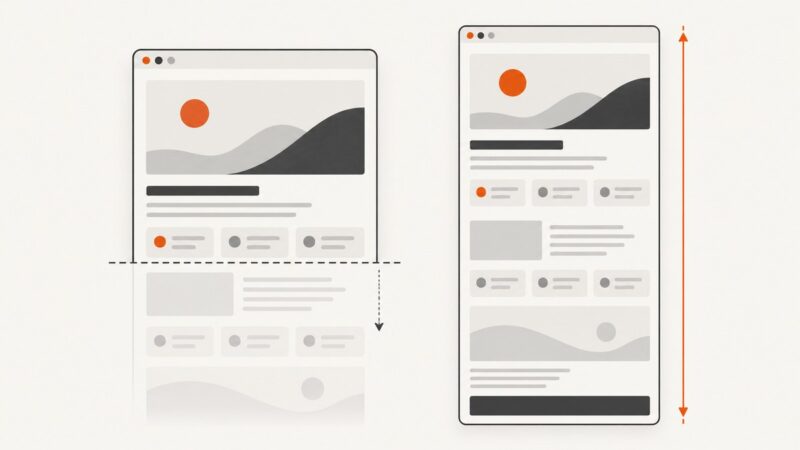
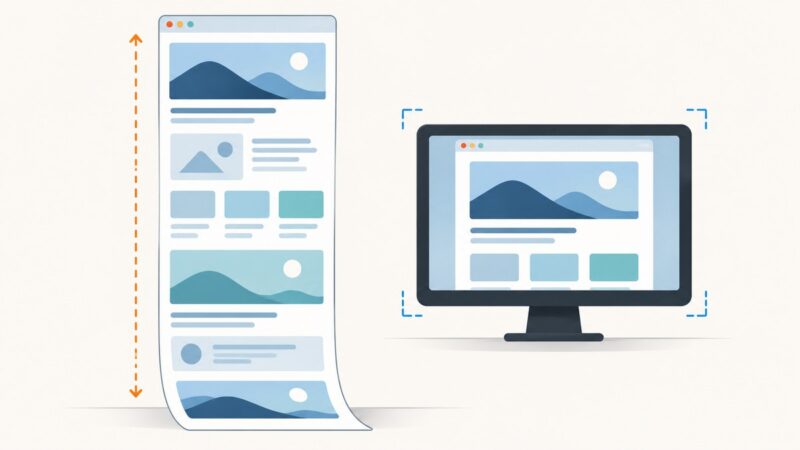
To capture a full webpage in Chrome on a Mac, open DevTools, press Command+Shift+P, type screenshot, and choose Capture full size screenshot. Chrome saves an image of the page beyond the visible viewport. For a one-off capture, you do not need an extension or command-line setup.
Capture the whole page with Chrome DevTools
- Open the webpage in Chrome and wait for the content you need to appear. If the page loads images or sections as you scroll, scroll through it first so those parts have a chance to load.
- Open DevTools with Option+Command+I. You can also use Chrome’s menu: View → Developer → Developer Tools.
- Press Command+Shift+P to open the DevTools Command Menu.
- Type screenshot.
- Select Capture full size screenshot from the suggestions.
- Check your Downloads folder or Chrome’s configured download location for the saved image.
The full-size command captures the whole page, including content outside the current viewport. The similarly named Capture screenshot command captures only the visible viewport. Chrome documents both options in its DevTools device mode guide.
Use the device toolbar menu instead
You can also open DevTools, enable device mode if needed, and use the device toolbar’s More options menu. Choose Capture a full size screenshot for the full page, or choose the regular screenshot option for only the visible area. Device mode can emulate a different viewport, so check the selected device and dimensions if the capture should match a particular screen size.
Choose the right capture method
| Method | What it captures | Good fit |
|---|---|---|
| DevTools: Capture full size screenshot | The webpage, including off-screen content | A one-off full-page image |
| DevTools: Capture screenshot | The currently visible browser viewport | A view of the page as it appears on screen |
| Mac: Shift-Command-3 or Shift-Command-4 | The screen or a selected area | A quick desktop or region capture |
| Chrome headless | A screenshot or PDF from a command-line workflow | Scripts and repeatable automation |
Mac’s built-in screenshot shortcuts are useful for visible screen content, but they do not automatically scroll through a webpage. Apple documents Shift-Command-3 for the screen and Shift-Command-4 for a selected area in its Mac screenshot instructions. For a full webpage, use Chrome’s full-size capture command.
Check the result and handle dynamic pages
Open the saved image and inspect the top, middle, and bottom of the page. Chrome’s command captures the full page, but the page itself may load or change while you are preparing the capture. Lazy-loaded images, expandable sections, embedded content, and animations can affect what appears in the final image.
- Scroll through the page first if images or content appear only when they approach the viewport.
- Wait for the page to settle before invoking the command if content is still shifting.
- Open collapsed sections if you need their contents included; a screenshot reflects the page’s current state.
- Review the bottom edge to confirm the complete page was captured and no content you need was still loading.
Common problems and fixes
| Problem | Likely cause | What to do |
|---|---|---|
| The image contains only what was visible on screen. | You chose Capture screenshot, which captures the viewport. | Open the Command Menu again and choose Capture full size screenshot. |
| Command+Shift+P does not open the menu. | DevTools may not be open or focused. | Open DevTools with Option+Command+I, click inside its panel, then press Command+Shift+P. |
| The command does not appear in the suggestions. | The search may be too specific, or the Command Menu is not active. | Open the DevTools Command Menu and type screenshot; select the full-size result if it appears. |
| Some images or sections are missing. | The page may load them only after scrolling, or they may not have finished loading. | Scroll through the page, wait for the content, then capture again and inspect the result. |
| The saved image is hard to find. | Chrome’s download location may differ from the default. | Check Chrome’s configured download location and recent downloads. |
| The capture has an unexpected device width. | Device mode may be emulating a different viewport. | Check device mode and its viewport settings, or use the Command Menu workflow without changing the emulated device. |
Automate captures or save a PDF
For repeatable command-line work, Chrome also documents headless screenshot and PDF capture options. They are more technical than the DevTools workflow and are useful when a script needs to run the browser capture. See the official Chrome Headless documentation for the current command examples and options.
Choose an image capture when you need a single visual image of the page. Choose PDF when you need a document format for printing or sharing. A PDF is not the same output as a screenshot image; check the generated file for page breaks and layout if the page is long.
Or skip the browser setup
ScreenshotNeo is a website screenshot API and MCP server. One GET request can return a PNG, JPEG, WebP, or PDF. The API accepts options for full-page capture, viewport and device settings, lazy image loading, waiting, custom CSS or JavaScript, and more. See the ScreenshotNeo API documentation for parameters and response details.
curl -G "https://api.screenshotneo.com/v1/shot" -d access_key=YOUR_API_KEY --data-urlencode url=https://stripe.com -o shot.webpimport requests
r = requests.get(
"https://api.screenshotneo.com/v1/shot",
params={"access_key": "YOUR_API_KEY", "url": "https://stripe.com"},
timeout=90,
)
open("shot.webp", "wb").write(r.content)const q = new URLSearchParams({ access_key: 'YOUR_API_KEY', url: 'https://stripe.com' });
const res = await fetch(`https://api.screenshotneo.com/v1/shot?${q}`);ScreenshotNeo removes cookie and consent banners, newsletter popups, and chat widgets before capture; each cleanup step can be turned off. Bot checks, blank pages, failed loads, timeouts, and cache hits are not billed, and response headers report the page verdict and billing status. Its MCP server provides screenshot, page-info, and PDF tools for AI agents. The free plan includes 1,000 screenshots a month with no card; paid plans start at $5 for 3,000 screenshots.
Sign up for 1,000 free screenshots a month, with no card required.
Frequently asked questions
Does a full-page screenshot include content below the fold?
Yes. Choose Capture full size screenshot; the regular screenshot command covers only the visible viewport.
Where does Chrome save the screenshot?
It uses Chrome’s configured download location. Check Downloads or the location set in Chrome’s download settings.
Can I use the Mac screenshot toolbar for a whole webpage?
The built-in shortcuts capture the screen, a window, or a selected area. They do not automatically scroll and capture the full webpage.
Do I need device mode?
No. The DevTools Command Menu provides the full-size capture command. Device mode is an alternate route and can be useful when you want an emulated viewport.