BlogScreenshots on your device
How to Capture a Full-Page Screenshot from the Chrome Console
Use Chrome DevTools’ built-in Capture full size screenshot command to save an entire web page, including content below the fold.
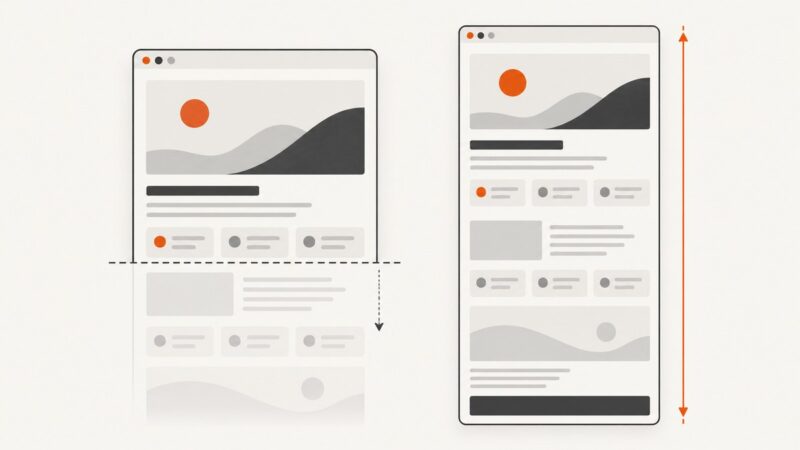
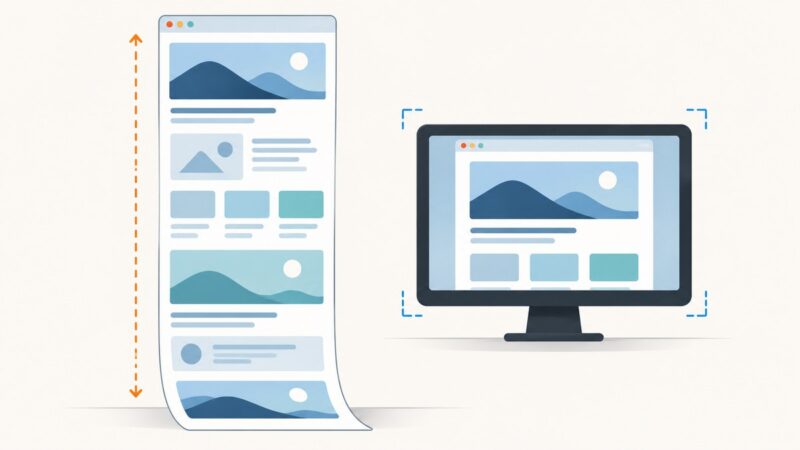
Use Chrome DevTools’ Command Menu and choose Capture full size screenshot. It captures the entire page, including content below the current viewport. Despite the title, you do not type a command into the JavaScript Console panel; the documented workflow uses Chrome DevTools’ Command Menu or the device toolbar menu.
Quick steps
- Open the page you want to capture in Google Chrome.
- Open DevTools with Ctrl+Shift+I on Windows/Linux or Command+Option+I on macOS.
- Open the Command Menu with Ctrl+Shift+P on Windows/Linux or Command+Shift+P on macOS.
- Type
screenshot. - Select Capture full size screenshot.
Chrome saves the resulting image using its normal download behavior. The command is documented in Chrome’s Device Mode documentation; the shortcut and Command Menu behavior are covered in the Command Menu guide.
What “Chrome Console” means here
Developers often use “Chrome Console” to mean Chrome’s developer tools. The JavaScript Console is only one DevTools panel. The full-page screenshot action is a DevTools command, so open the Command Menu rather than pasting JavaScript into the Console.
Choose the right screenshot command
| Command | What it captures | When to use it |
|---|---|---|
| Capture full size screenshot | The complete page, including content outside the viewport | Documentation, audits, long landing pages, and archival captures |
| Capture screenshot | Only the currently visible viewport | A browser-state or above-the-fold image |
| Capture area screenshot | A region you drag-select | A specific part of the rendered page |
These options are separate. A normal capture does not automatically include content below the fold. For area capture, keep DevTools docked to the browser window; Chrome’s Command Menu documentation notes that area capture does not work when DevTools is undocked.
Method 1: Command Menu (recommended)
- Navigate to the exact URL and wait for the page to finish its initial load.
- Open DevTools.
- Press Ctrl+Shift+P (Windows/Linux) or Command+Shift+P (Mac).
- Enter
screenshotin the command search field. - Choose Capture full size screenshot, not Capture screenshot or Capture area screenshot.
You can also open the same menu with Customize and control DevTools → Run command.
Method 2: Device toolbar menu
- Open DevTools and turn on the device toolbar with Ctrl+Shift+M (Windows/Linux) or Command+Shift+M (Mac).
- Open the device-toolbar More options menu.
- Select Capture full size screenshot.
This route produces the same full-page type of capture. It is useful when you are already checking responsive layouts in device mode.
Before you capture: a reliable checklist
- Confirm that you are on the intended URL, including the correct path, query string, and logged-in state.
- Dismiss dialogs that should not appear in the final image, such as development notices or test overlays.
- Wait for content that loads after navigation. Full-size capture includes rendered page content, so an element that has not loaded yet may be absent.
- Check the page at the viewport size you actually want to document. Device mode changes the emulated viewport.
- For pages with lazy-loaded sections, scroll through the page first if the page only loads those sections when they approach the viewport.
Common problems and fixes
| Symptom | Likely cause | Fix |
|---|---|---|
| Only the visible area appears | The viewport command was selected | Run the Command Menu again and choose Capture full size screenshot. |
| The screenshot command is hard to find | The Command Menu was not opened | Press Ctrl+Shift+P or Command+Shift+P, then type screenshot. |
| An area cannot be selected | DevTools is undocked | Dock DevTools to the browser window, then use Capture area screenshot. |
| Images or sections are missing | Lazy loading or delayed requests have not completed | Wait for the page, scroll through it to trigger lazy loading, then capture again. |
| A consent banner, chat bubble, or popup covers the page | The site rendered an overlay before capture | Close it manually, or use a capture service that handles common overlays before taking the shot. |
| The page is blank or incomplete | Navigation, authentication, or a script failed | Verify the page in the normal tab, check the Console and Network panels for the page error, and retry after the page is usable. |
| The result is unexpectedly large | The page has substantial content or a very tall layout | Capture only the needed element or viewport, or export separate sections for documentation. |
Full-page capture versus area and viewport capture
Use full-size capture when the question is “What does the entire rendered page look like?” Use viewport capture when browser framing or the above-the-fold state matters. Use area capture when you need a selected region and do not need the rest of the page. The Command Menu guide describes these as distinct commands, and its area-capture limitation applies when DevTools is undocked.
Performance and reliability considerations
- Long pages take longer to inspect. More rendered content means a larger image and more work for the browser.
- Dynamic pages can change during capture. Ads, animations, timestamps, and client-side requests may produce different results on successive captures.
- Lazy content needs attention. If a page loads images only as they approach the viewport, scroll through the page before capturing.
- Authentication is local to your browser. DevTools captures the page in your current session, so verify that the correct account and permissions are active.
- Repeatability improves when the page is stable. Use a consistent viewport, wait for critical requests, and close transient overlays before each capture.
Or skip the browser setup
ScreenshotNeo provides a one-request website screenshot API. Its capture workflow accepts common screenshot parameters, supports full-page shots, and can return PNG, JPEG, WebP, or PDF. See the ScreenshotNeo documentation for request options.
curl -G "https://api.screenshotneo.com/v1/shot" -d access_key=YOUR_API_KEY --data-urlencode url=https://stripe.com -o shot.webpimport requests
r = requests.get(
"https://api.screenshotneo.com/v1/shot",
params={"access_key": "YOUR_API_KEY", "url": "https://stripe.com"},
timeout=90,
)
r.raise_for_status()
open("shot.webp", "wb").write(r.content)const q = new URLSearchParams({ access_key: 'YOUR_API_KEY', url: 'https://stripe.com' });
const res = await fetch(`https://api.screenshotneo.com/v1/shot?${q}`);
if (!res.ok) throw new Error(`Screenshot request failed: ${res.status}`);
const bytes = new Uint8Array(await res.arrayBuffer());
// Save bytes with your runtime's file API.ScreenshotNeo removes cookie and consent banners, newsletter popups, and chat widgets before the shot. Bot checks, blank pages, failed loads, timeouts, and cache hits are not billed, and the response reports the result through X-Page-Verdict and X-Billed headers. An MCP server provides take_screenshot, get_page_info, and capture_pdf tools for Claude, Cursor, and other MCP clients. The Free plan includes 1,000 screenshots per month with no card; paid plans start at $5 for 3,000 shots. Create a free ScreenshotNeo account.
FAQ
Does full-size screenshot capture require JavaScript?
No. Use the DevTools Command Menu or device-toolbar menu. The JavaScript Console is not required.
What shortcut opens the screenshot commands?
Open the Command Menu with Ctrl+Shift+P on Windows/Linux or Command+Shift+P on Mac, then search for screenshot.
Why is my screenshot not full length?
The most common reason is selecting Capture screenshot, which captures only the viewport. Select Capture full size screenshot instead.
Can I capture one element instead of the whole page?
Chrome’s documented commands cover viewport, full-size, and area captures. For repeatable CSS-selector element captures, use an API that supports element targeting, such as ScreenshotNeo.