BlogScreenshots on your device
How to Capture Full-Page Screenshots on Ubuntu
Capture an entire webpage on Ubuntu with Firefox, Developer Tools, or a screenshot API—including content below the visible viewport.
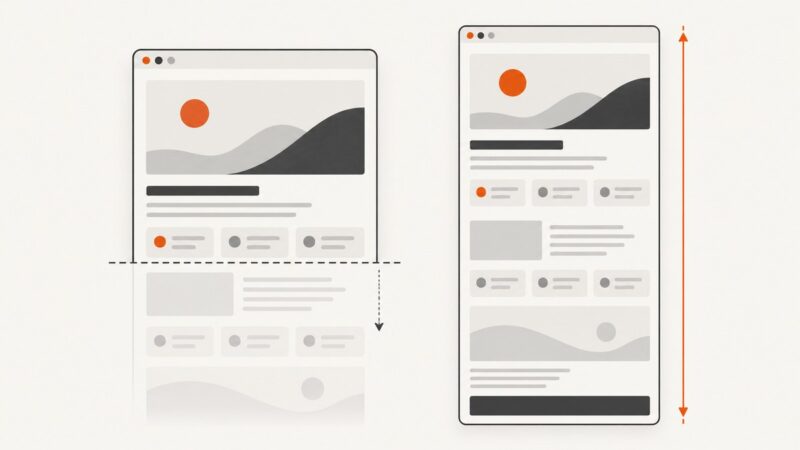
Use Firefox’s built-in full-page screenshot. Open the page, right-click an empty area, choose Take Screenshot (or press Ctrl+Shift+S), select Save full page, and save the image. This captures the document from top to bottom instead of only the pixels currently visible on your Ubuntu screen.
Ubuntu’s standard screenshot tool captures a screen, window, or selected region. It is useful for desktop screenshots, but it is not documented as a scrolling webpage capture tool. For a complete web document, use Firefox’s page screenshot workflow.
Capture a full webpage in Firefox
- Open the webpage in Firefox and wait for the content you need to appear.
- Right-click an empty area of the page.
- Select Take Screenshot. You can also press Ctrl+Shift+S to open Firefox’s screenshot workflow.
- In the capture controls, choose Save full page. Do not choose Save visible; that option captures only the current viewport.
- Use the save or copy controls to keep the resulting image.
Firefox’s labels and control placement can change between releases, but the distinction between a visible-area capture and a full-page capture remains the key choice. See Mozilla’s Firefox screenshot documentation.
When the page changes while capturing
Some pages load images, charts, comments, or additional rows as you scroll. Let the page finish loading before opening the screenshot tool. If content appears only after interaction, perform that interaction first. A browser screenshot captures the rendered page state, so a collapsed section stays collapsed and content that has not loaded may be absent.
Use Firefox Developer Tools
Developer Tools provides a second full-page route. It is useful when DevTools is already open or when you want the screenshot command in the toolbox.
- Open Developer Tools with F12 or Ctrl+Shift+I.
- Open the DevTools settings menu.
- Find Available Toolbox Buttons.
- Enable Take a screenshot of the entire page.
- Click the new screenshot button in the toolbox.
Mozilla documents that this Developer Tools capture is saved to Firefox’s Downloads directory. Button names can move in later Firefox versions; use the matching label in your installed release. See the Firefox Developer Tools screenshot documentation.
What Ubuntu’s screenshot tool can and cannot do
Ubuntu’s screenshot interface can capture the entire display, a window, or a selected rectangle. It automatically saves screenshots in Pictures/Screenshots and copies them to the clipboard according to the Ubuntu documentation.
Those modes describe the physical screen. A long webpage extends beyond that screen, so selecting “entire screen” does not create one image of the complete document. Use Firefox’s Save full page command for that job.
Choose the right capture method
| Need | Best route | Result or location |
|---|---|---|
| One complete webpage quickly | Firefox page menu | Choose Save full page and save or copy it |
| Capture from an open DevTools session | Firefox Developer Tools | Full-page image in the Downloads directory |
| Desktop, window, or rectangular region | Ubuntu screenshot tool | Image in Pictures/Screenshots and clipboard |
| Repeatable or automated captures | Screenshot API | Request an image or PDF without driving a desktop browser manually |
Troubleshooting
“Take Screenshot” is missing
Make sure you right-click inside the webpage, not on a browser toolbar, tab, or embedded control. You can also use Ctrl+Shift+S. If the menu still differs, update Firefox or use the Developer Tools route.
The image contains only the visible area
Reopen the screenshot workflow and select Save full page. Save visible intentionally excludes content below the viewport.
Images or sections are blank
Wait for the page to finish loading and retry. Lazy-loaded content may require scrolling or another interaction before it exists in the rendered page. Expand accordions and dismiss overlays before capture when those states matter.
The page is extremely tall
Large captures consume memory and produce large files. Capture a specific element when possible, or export a PDF if a paginated document is more useful. For repeat jobs, an API can apply a fixed viewport, wait condition, and output format consistently.
The screenshot looks different from the page
Responsive layouts depend on viewport width, zoom, fonts, cookies, login state, and system rendering. Set the browser window and zoom deliberately, and capture after the same consent or login steps used by a reader.
Or skip the browser setup
ScreenshotNeo provides a one-request website screenshot API for automated Ubuntu jobs, CI pipelines, and scripts. It can return PNG, JPEG, WebP, or PDF and supports full-page capture with lazy images loaded. The API documentation lists the available options.
cURL
curl -G "https://api.screenshotneo.com/v1/shot" -d access_key=YOUR_API_KEY --data-urlencode url=https://stripe.com -o shot.webpPython
import requests

r = requests.get(
    "https://api.screenshotneo.com/v1/shot",
    params={"access_key": "YOUR_API_KEY", "url": "https://stripe.com"},
    timeout=90,
)
r.raise_for_status()
open("shot.webp", "wb").write(r.content)
Node.js
const q = new URLSearchParams({ access_key: 'YOUR_API_KEY', url: 'https://stripe.com' });
const res = await fetch(`https://api.screenshotneo.com/v1/shot?${q}`);
if (!res.ok) throw new Error(`Screenshot failed: ${res.status}`);
const buffer = Buffer.from(await res.arrayBuffer());
require('fs').writeFileSync('shot.webp', buffer);
For an automated full-page capture, add the relevant full-page option from the documentation. ScreenshotNeo also supports CSS-element capture, dark mode, device presets, custom viewports, retina scale, custom CSS and JavaScript, clicks, selector or network-idle waits, blocked resource types, headers, cookies, user agents, authorization, timezone, geolocation, transparent backgrounds, resizing, caching with a chosen TTL, signed links, asynchronous jobs, signed webhooks, bulk capture of up to 100 URLs per call, usage reporting, and PDF controls.
Cookie and consent banners, newsletter popups, and chat widgets are removed before the shot. Bot checks, blank pages, timeouts, failed loads, and cache hits are not billed; response headers identify the page verdict and whether the request was billed. An MCP server provides take_screenshot, get_page_info, and capture_pdf tools for Claude, Cursor, and other MCP clients.
The Free plan includes 1,000 screenshots per month with no card. Paid plans start at $5 for 3,000 screenshots; yearly billing gives two months free, and every feature is available on every plan. Create a free ScreenshotNeo account.
Performance, reliability, and cost considerations
- Browser captures: Rendering cost is local, but very long pages can use substantial memory and take longer when images or scripts load during scrolling.
- Repeatability: Record the URL, viewport, zoom, login state, and page state so another capture can reproduce the same result.
- Automation: Use explicit waits for a selector, delay, or network idle when a page is dynamic. Block ads, trackers, or unnecessary resource types when they are not part of the result.
- Output: WebP or JPEG is usually smaller than PNG; use PNG when lossless detail or transparency matters. Use PDF when the deliverable is a paginated document.
- Billing: ScreenshotNeo bills only clean shots. Failed loads, bot checks, blank pages, timeouts, and cache hits cost nothing, and the response headers report the verdict and billing status.
FAQ
Does Ubuntu itself have a scrolling webpage screenshot shortcut?
Ubuntu’s documented screenshot tool captures a screen, window, or selected area. Firefox supplies the documented full-page webpage capture.
Can I capture a page without saving a file?
Firefox’s screenshot workflow provides a copy control as well as save controls, depending on the release.
Where does the Developer Tools screenshot go?
Mozilla documents the Developer Tools route as saving the result to Firefox’s Downloads directory.
Can I automate this from a shell script?
Yes. Use a browser automation tool or a screenshot API such as ScreenshotNeo; the cURL example above can run from a shell or CI job.