BlogScreenshots on your device
How to Capture a Full-Screen Screenshot with a Browser Extension
Capture an entire webpage beyond the visible browser window using Edge, Firefox, or a browser extension, then troubleshoot long and dynamic pages.
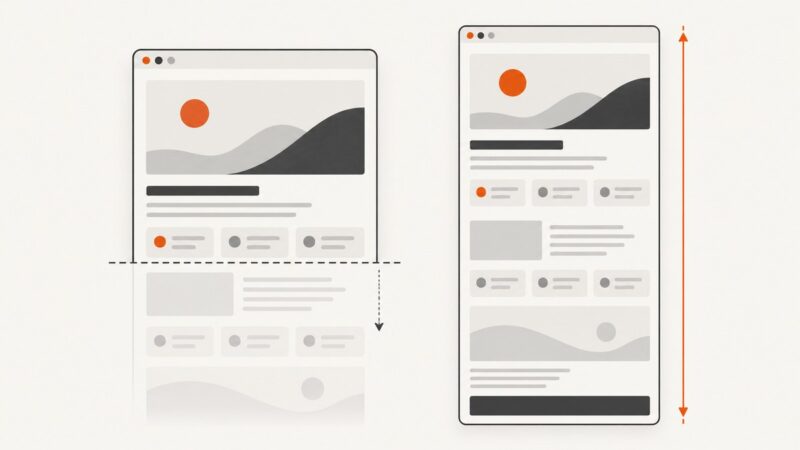
A full-screen, or full-page, screenshot captures the entire webpage, including content below the visible browser window. It is different from a normal screen capture, which records only the viewport currently on screen.
Start with your browser’s built-in feature when it provides one. In Microsoft Edge, press Ctrl+Shift+S and choose Capture full page. In Firefox, open the screenshot tool and choose Save full page. If your browser does not offer the format or controls you need, install a full-page capture extension from its official add-on store.
Choose the right capture method
| Method | Best for | Things to check |
|---|---|---|
| Edge built-in capture | Quick full-page images without installing an extension | Availability and behavior can vary by device, market, and browser version. |
| Firefox built-in screenshot | Saving a complete webpage directly from Firefox | Use Save full page, then download the result. |
| Browser extension | Extra export formats, shortcuts, or capture controls | Review the current store listing, permissions, privacy policy, and limits on very large pages. |
| Screenshot API | Automated, repeatable captures in scripts, CI jobs, or backend services | Requires an API key and request configuration, but avoids running a browser extension for every capture. |
Capture a full page in Microsoft Edge
- Open the webpage you want to capture.
- Press Ctrl+Shift+S.
- Choose Capture full page.
- Save or download the resulting image.
Edge’s documented full-page option captures content beyond the current screen without requiring you to scroll manually. Microsoft notes that screenshot features can vary by device, market, and browser version, so the command or menu may differ in your installation.
If the command does not appear, update Edge, open the browser’s screenshot or web-capture menu, and check whether your current release supports full-page capture.
Capture a full page in Firefox
- Open the page in Firefox.
- Open Firefox’s screenshot tool from the page context menu or browser controls.
- Select Save full page.
- Download the generated image.
Firefox’s native screenshot tool is enough for a straightforward webpage capture. Inspect the downloaded file before sharing it, especially when the page contains animations, lazy-loaded images, sticky navigation, or content that changes while the capture runs.
Use a browser extension
Use an extension when the browser’s native tool does not provide the output format or controls you need.
- Identify your browser and version.
- Open its official extension or add-on store.
- Search for a full-page screenshot extension and read the current listing.
- Review requested permissions and the extension’s privacy information.
- Install it, then pin its icon if you want quick access.
- Open the target page and use the extension’s toolbar command or keyboard shortcut.
- Wait while it captures the page sections and assembles them.
- Export the result in the format offered by that extension, such as an image or PDF.
For example, the GoFullPage Firefox listing describes clicking the extension icon or using Alt+Shift+P, waiting for the scrolling capture, and downloading an image or PDF. Its listing also warns that exceptionally large pages may be split into multiple images. Treat those details as extension-specific: shortcuts, formats, permissions, and menus can change, and other extensions may behave differently.
Verify the result
- Check the top, middle, and bottom of the output.
- Confirm that images loaded instead of appearing as blank placeholders.
- Look for duplicated or missing sections caused by sticky headers and footers.
- Check that fixed chat buttons, cookie banners, and newsletter popups did not obscure content.
- For a very long page, confirm whether the extension created one file or several.
- Open the saved image or PDF in a separate viewer before sending it to someone else.
Full-page screenshots versus visible-area screenshots
A visible-area screenshot records only what is inside the browser viewport. A full-page screenshot captures content below the fold by scrolling, stitching sections together, or asking the browser to render the entire document. Use visible-area capture for a quick bug report about one screen. Use full-page capture for documentation, design review, archival reference, or sharing a complete article.
Dynamic pages, lazy loading, and fixed elements
Scrolling capture is not identical to printing a static document. Pages may load images only after they approach the viewport, replace content after JavaScript runs, or display fixed elements on every scroll position.
- Wait for the page to finish loading before starting.
- Scroll through the page once if important images are lazy-loaded.
- Close or dismiss cookie banners and popups when they block the page.
- Pause animations when possible so adjacent sections do not show different frames.
- Retry if a sticky header is repeated over every stitched section.
- Use a PDF or print workflow when the page is designed as a document and image fidelity is less important.
Privacy and permissions
A capture extension may need access to page content in order to read and assemble it. Review the exact permissions and privacy policy shown in the current official store listing. Do not capture or share passwords, payment details, personal records, private dashboards, or confidential customer data. An extension is not guaranteed to capture every protected page, and it should not be treated as a way to bypass browser security controls.
Troubleshooting
| Problem | Likely cause | Fix |
|---|---|---|
| Only the visible screen is saved | The visible-area command was selected. | Choose Capture full page, Save full page, or the extension’s full-page mode. |
| The full-page option is missing | Browser version, device, market, or extension availability differs. | Update the browser, check its current screenshot menu, or use an extension from the official store. |
| The bottom of the page is missing | The page timed out, the extension stopped scrolling, or content required more time to load. | Wait for loading, reload the page, disable unnecessary extensions, and retry in shorter sections if supported. |
| Images are blank | Images are lazy-loaded or blocked before they enter the viewport. | Scroll through the page once, wait for images to appear, then capture again. |
| Sections are duplicated | A fixed header, footer, or chat widget was stitched repeatedly. | Hide or dismiss the fixed element, use the extension’s hide controls if available, and retry. |
| The output is split into files | The page is exceptionally large. | Combine the files afterward or capture a smaller range. Some extension listings explicitly warn about this limitation. |
| Text or layout looks distorted | The page changed during scrolling or uses responsive layout breakpoints. | Set a stable window size, stop animations, wait for network activity to settle, and retry. |
| A protected page cannot be captured | Browser security or the site’s authentication flow prevents access. | Capture only after authenticating normally and follow the site’s policies; use an approved export instead of attempting to bypass protections. |
Performance and reliability considerations
- Page length: More sections mean more scrolling, rendering, and image stitching. Very long pages are more likely to hit memory or output-size limits.
- Network activity: Ads, trackers, video, and late API calls can keep changing the page. Let the page settle before capture.
- Repeatability: Use a fixed viewport, browser version, zoom level, and logged-in state when comparing captures.
- Output size: PNG preserves detail but can be large. JPEG is smaller for photographic pages. PDF is useful for document sharing when the extension supports it.
- Validation: Always inspect at least the top, middle, and bottom. A completed download does not guarantee that every section rendered correctly.
Automate full-page screenshots with an API
For scheduled jobs, documentation pipelines, or many URLs, an API avoids opening a browser and manually installing an extension on each machine. ScreenshotNeo returns a PNG, JPEG, WebP, or PDF from one GET request. Its full-page capture can load lazy images and supports controls such as viewport and device presets, retina scale, waits, custom CSS and JavaScript, hidden selectors, blocked resources, cookies, headers, timezone, geolocation, caching, and bulk capture.
Or skip the browser setup
Use the ScreenshotNeo API when you need repeatable captures from code. See the ScreenshotNeo documentation for the complete option list.
cURL
curl -G "https://api.screenshotneo.com/v1/shot" -d access_key=YOUR_API_KEY --data-urlencode url=https://stripe.com -o shot.webpPython
import requests

r = requests.get(
    "https://api.screenshotneo.com/v1/shot",
    params={"access_key": "YOUR_API_KEY", "url": "https://stripe.com"},
    timeout=90,
)
r.raise_for_status()
open("shot.webp", "wb").write(r.content)
Node.js
const q = new URLSearchParams({ access_key: 'YOUR_API_KEY', url: 'https://stripe.com' });
const res = await fetch(`https://api.screenshotneo.com/v1/shot?${q}`);
if (!res.ok) throw new Error(`Screenshot failed: ${res.status}`);
const buffer = Buffer.from(await res.arrayBuffer());
await import('node:fs/promises').then(fs => fs.writeFile('shot.webp', buffer));
ScreenshotNeo removes cookie and consent banners, newsletter popups, and chat widgets before capture. Bot checks, blank pages, failed loads, timeouts, and cache hits are not billed, and the response identifies the result with X-Page-Verdict and X-Billed headers. An MCP server provides take_screenshot, get_page_info, and capture_pdf tools for Claude, Cursor, and other MCP clients. The Free plan includes 1,000 screenshots per month without a card; paid plans start at $5 for 3,000 screenshots. Create a free ScreenshotNeo account.
Screenshot API cost and reliability notes
- Use caching with a TTL when the same URL does not need a fresh render for every request.
- Use asynchronous jobs and signed webhooks for slow or large captures.
- Use bulk capture for up to 100 URLs per call when processing a collection.
- Check
X-Page-VerdictandX-Billedbefore storing usage data or charging a downstream customer. - Choose PNG, JPEG, WebP, or PDF according to the destination rather than converting every file afterward.
FAQ
Does a full-page screenshot include content below the fold?
Yes. It captures the page beyond the currently visible browser window.
Do I need an extension in Edge or Firefox?
No. Both browsers document native full-page screenshot options. An extension is useful when you need additional export formats or controls.
Why is my very long capture split?
Some extensions split exceptionally large pages into multiple images. Capture a smaller range or combine the resulting files.
Can I automate this process?
Yes. Use a screenshot API such as ScreenshotNeo for scripts, scheduled jobs, bulk URLs, and MCP-based AI workflows.
What should I inspect before sharing a screenshot?
Check the top, middle, and bottom, and make sure popups, fixed elements, lazy images, and private information are handled correctly.