Generative AI for Software Testing: Hype or Practical Tool?
Generative AI can speed up test writing, but generated tests still need to run, assert real behavior, and survive human review.
Generative AI is a practical assistant for drafting and expanding software tests, but the evidence does not support treating generated tests as reliable without execution and review. Use it to reduce the effort of writing scaffolding and exploring cases; keep people responsible for expected behavior, assertions, and whether the tests detect defects.
A 2024 study of GitHub Copilot-generated Python tests found that about 45.28% passed when generated within an existing test suite. Without an existing suite, 92.45% were failing, broken, or empty. Those results describe a specific tool, Python sample, task, and evaluation setup—not all AI tools or testing work. Read the study summary from TU Delft.
What the evidence says—and does not say
The available findings point to useful assistance with a validation requirement. They do not establish that AI-generated tests are dependable across languages, test types, or current model versions.
| Evidence | What was measured | How to interpret it |
|---|---|---|
| El Haji, Brandt, and Zaidman, 2024 | 290 Copilot-generated tests for 53 sampled tests from open-source projects. About 45.28% passed with an existing suite; 54.72% were failing, broken, or empty. Without an existing suite, 92.45% were failing, broken, or empty. | Direct evidence about test generation in this defined Python task. Existing context was associated with a substantially different result, but it did not guarantee usable tests. |
| GitHub randomized coding task, 2024 | 202 developers with at least five years’ experience wrote API endpoints. Participants with Copilot access had a 53.2% greater likelihood of passing all 10 unit tests. | This measures the functionality of code developers wrote with Copilot, not the reliability of AI-generated tests. It is also a vendor-published result from one task. GitHub’s study description. |
| NIST pilot plan, 2025 | A plan to measure and evaluate AI-generated unit tests for elementary Python code. | It shows that evaluation is an active need; a pilot plan is not a performance result. NIST publication. |
Do not combine these numbers into a single score. The studies ask different questions and use different designs. The evidence here does not settle how well AI performs on integration tests, UI tests, security testing, other languages, or newer model versions.
Where AI helps in a testing workflow
- Scaffolding: draft test files, fixtures, setup, and repetitive cases that follow the project’s existing conventions.
- Case discovery: suggest boundary values, invalid inputs, empty collections, state transitions, and failure paths for a human to assess.
- Legacy code exploration: help explain a function and propose tests that characterize observed behavior before a refactor.
- Test maintenance: propose updates after an interface change, while a reviewer checks that the changed expectations are intentional.
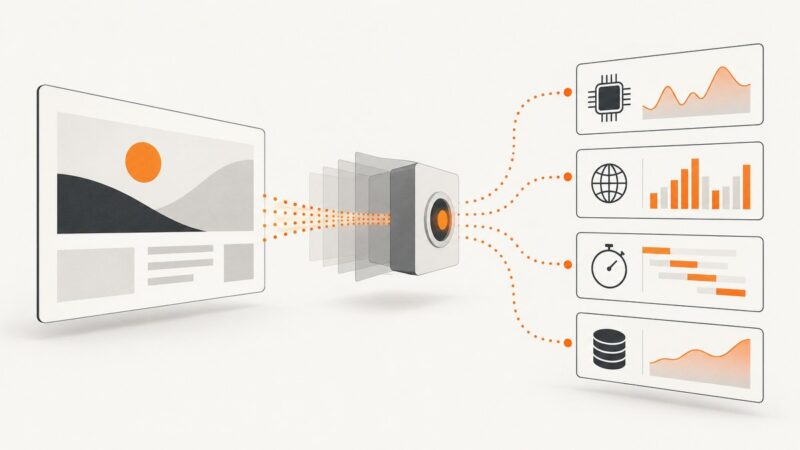
- Browser workflow support: help draft or maintain browser tests and inspect visual outcomes. For repeatable visual baselines, capture the same page, viewport, and state consistently.
AI is a poor source of truth for undocumented business rules. If the specification is missing, the model can produce plausible tests for the wrong behavior. Write down expected outcomes first, then ask for tests against them.
How to use generated tests responsibly
- Choose a bounded target. Start with a small, understandable function or behavior where the expected result is known. Avoid making the first trial depend on complex external services or unclear requirements.
- Provide relevant context. Include the function, its public contract, existing tests, framework conventions, important constraints, and edge cases. Do not include secrets or restricted source code in a prompt unless your organization permits it.
- Ask for behavior-focused tests. Request cases with explicit inputs and expected observable outputs. Ask the assistant to identify assumptions separately instead of silently choosing business rules.
- Review every assertion. Reject tests that only repeat implementation details, assert a value derived from the same logic under test, check that a mock was called without verifying outcomes, or pass without meaningful assertions.
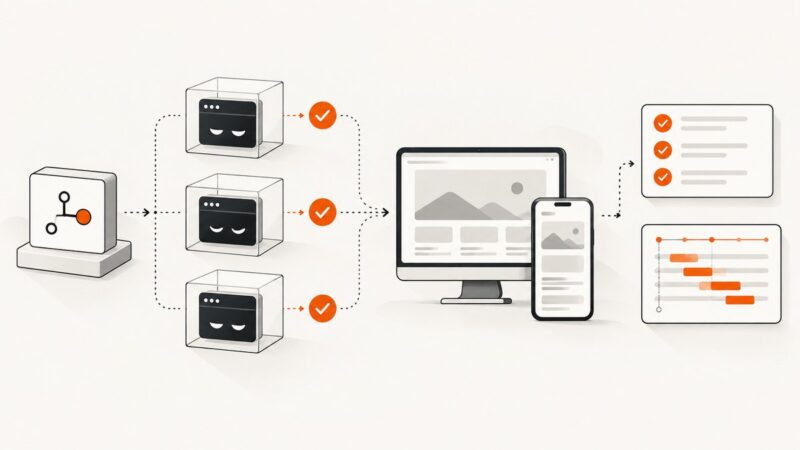
- Run in the normal project environment. Use the team’s test command, dependencies, fixtures, and CI checks. A syntactically valid test can still be broken, flaky, or irrelevant.
- Check defect-finding value. Where practical, confirm that a test fails when a known bug or deliberate small defect is introduced, and passes after the behavior is corrected. Line coverage alone does not establish this.
- Review maintainability. Keep useful cases, simplify awkward generated code, remove duplicates, and ensure failures will tell a future developer what behavior broke.
- Measure the trial. Compare similar work against a baseline and record validity, review and repair time, maintenance burden, coverage, escaped defects, and developer confidence.
Prompt pattern for useful test drafts
A prompt should describe the contract and ask the model to expose uncertainty. Adapt this template to the language and test framework in the repository:
Write tests for the function below using the test framework already used in this repository.

Behavior contract:
- [State the intended result for ordinary inputs.]
- [State boundary and invalid-input behavior.]
- [State observable side effects, if any.]

Constraints:
- Test public behavior, not private implementation details.
- Use the repository's existing fixtures and naming conventions.
- Include a short reason for each case.
- Do not invent behavior. List any assumptions or unresolved questions instead.

Function:
[paste the relevant function and necessary types]
Then ask for a separate review pass: “For each test, explain what bug it would catch. Flag tests that can pass while the intended behavior is wrong, tests that duplicate another case, and assumptions not supported by the contract.” Treat the response as a review aid, not proof.
Evaluate a pilot with outcomes, not test volume
Generated test count and acceptance rate are weak success measures by themselves. A large number of tests can raise coverage while adding little protection. GitHub recommends defining goals, running trials with pilot groups, and measuring outcomes such as coverage, post-deployment bug rate, developer confidence, and time spent writing tests. See GitHub’s rollout guidance.
| Measure | What to record |
|---|---|
| Validity | Share of generated tests that run and assert the intended behavior without substantial repair. |
| Defect-finding value | Whether tests catch known or seeded defects, not just execute lines. |
| Human effort | Time to review, fix, and maintain tests, including later updates. |
| Coverage | Line and branch coverage as diagnostic signals, paired with assertions and defect checks. |
| Product outcome | Escaped bugs or post-deployment bug rate, interpreted with an appropriate baseline. |
| Developer experience | Time spent writing tests and confidence in the resulting coverage, gathered consistently. |
| Governance | Whether prompts or source code may be sent to the service under organizational policy. Verify current terms with the provider; the studies cited here do not establish privacy terms. |
Keep comparisons like-for-like: use similar tasks, languages, test types, and experience levels where possible. Report the sample size and limitations. Do not generalize a small pilot into a claim about all software testing.
Limits, reliability, and cost considerations
- Reliability: generated output may fail to run, encode the wrong expectation, miss cases, or become brittle when implementation details change. Execution and review are part of the workflow, not optional cleanup.
- False confidence: more tests or higher coverage can create confidence without meaningful assertions. Evaluate whether tests detect behavior changes.
- Maintenance: generated tests have a lifecycle cost. Duplicated, over-mocked, or implementation-coupled tests can make future changes slower.
- Performance: generation can shorten drafting, but prompting, reviewing, repairing, and running tests also take time. Measure end-to-end effort rather than assuming a net speed gain.
- Cost: the cited evidence does not provide a universal cost comparison. Include tool charges where applicable, developer review time, test runtime, and maintenance in a local pilot.
- Privacy and policy: check whether the service is allowed to receive the code and prompts involved. Avoid sending credentials, customer data, or proprietary code without authorization.
For browser-based visual checks
AI can help draft browser-test scenarios, but screenshots remain useful artifacts for inspecting rendered states and comparing known pages. A screenshot is evidence of a visual state; it does not replace assertions about behavior, accessibility, or application logic.
For manual browser automation, capture the page after the app reaches a defined state, keep viewport and test data stable, and store screenshots with the test result so failures are diagnosable. If your workflow needs screenshots of external pages, ScreenshotNeo is a website screenshot API and MCP server for developers. It can provide a clean capture after accepting consent banners like a visitor and removing supported consent platforms, newsletter popups, and chat widgets; each cleanup step can be turned off. Its response identifies page verdict and billing status. See ScreenshotNeo and the API documentation.
Or skip the browser setup
One GET request returns a screenshot. The following cURL example saves a WebP capture:
curl -G "https://api.screenshotneo.com/v1/shot" -d access_key=YOUR_API_KEY --data-urlencode url=https://stripe.com -o shot.webpPython:
import requests

r = requests.get(
    "https://api.screenshotneo.com/v1/shot",
    params={"access_key": "YOUR_API_KEY", "url": "https://stripe.com"},
    timeout=90,
)
open("shot.webp", "wb").write(r.content)
Node.js:
const q = new URLSearchParams({ access_key: 'YOUR_API_KEY', url: 'https://stripe.com' });
const res = await fetch(`https://api.screenshotneo.com/v1/shot?${q}`);
if (!res.ok) throw new Error(`Screenshot request failed: ${res.status}`);
await Bun.write('shot.webp', new Uint8Array(await res.arrayBuffer()));
See the ScreenshotNeo docs for request options and response handling. Cookie banners, popups, and chat widgets are removed before the shot. Bot checks, blank pages, and failed loads are never billed. An MCP server lets AI agents—including Claude, Cursor, and other MCP clients—take screenshots. The Free plan includes 1,000 screenshots a month with no card; paid plans start at $5 for 3,000 shots. Sign up for 1,000 free screenshots a month, no card required.
Common problems and fixes
| Problem | Likely cause | What to do |
|---|---|---|
| Generated tests do not import or run | The assistant guessed module paths, fixtures, dependencies, or framework syntax. | Give it the repository’s actual test examples and run the standard test command. Correct imports and setup before judging the test idea. |
| Tests pass but do not catch a bug | Assertions are weak, tautological, or check implementation details instead of outcomes. | Write the expected behavior explicitly; inspect each assertion and try a known or seeded defect. |
| Tests encode the wrong business rule | The requirement was omitted or ambiguous, so the model filled in a plausible answer. | Resolve the rule with the product owner or specification, then regenerate or edit the expectation. |
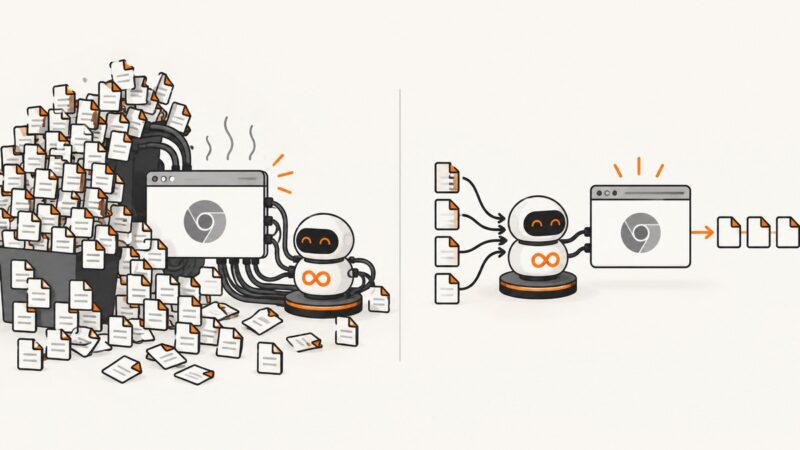
| Many generated tests fail together | Shared incorrect assumptions, missing context, or an incompatible fixture may affect the whole batch. | Inspect one failure at a time, provide the correct context, and generate a smaller set of cases. |
| Tests are flaky | Time, randomness, network state, shared state, or asynchronous waits are uncontrolled. | Use deterministic inputs, isolate state, mock only external boundaries, and wait for explicit conditions instead of arbitrary timing. |
| Coverage rises but confidence does not | Tests execute code without checking meaningful outcomes. | Pair coverage with mutation or known-defect checks and review whether assertions express the contract. |
| Review takes longer than writing tests | Prompt scope is too broad, code context is poor, or generated output is repetitive. | Limit the task, include a few project examples, request a small number of distinct cases, and track repair effort in the pilot. |
Frequently asked questions
Can AI write unit tests without existing tests?
It can draft them, but the cited 2024 Python study found a high rate of failing, broken, or empty output in its no-existing-suite condition. Provide a behavior contract and validate every test.
Should AI-generated tests be merged automatically?
Only if they pass the same review and quality gates as other tests. A generated test should not bypass execution, code review, or project policy.
Does higher coverage mean better tests?
No. Coverage indicates which code ran, not whether assertions would catch incorrect behavior.
Is the evidence strong enough to choose a particular AI testing tool?
No vendor-neutral leaderboard or comprehensive current-market comparison is established by these sources. Run a scoped pilot with your own languages, frameworks, and requirements.
Can screenshots verify a UI test?
They can help inspect a rendered state or visual regression, but do not alone verify interaction behavior, accessibility, or correct application logic.
Conclusion
Generative AI is a practical way to accelerate test drafts and explore cases, especially when the codebase supplies useful context. The strongest evidence in this dossier also shows why generated output needs scrutiny: many tests in the evaluated sample were not usable, and positive results about AI-assisted code functionality answer a different question. Treat each suggestion as a draft, run it, examine what it actually asserts, and judge a pilot by defect-finding value and total effort—not test count alone.