How AI Makes Test Automation Smarter
AI can help draft tests and surface edge cases, but generated code still needs review. Learn a practical workflow, its limits, and how to measure its value.
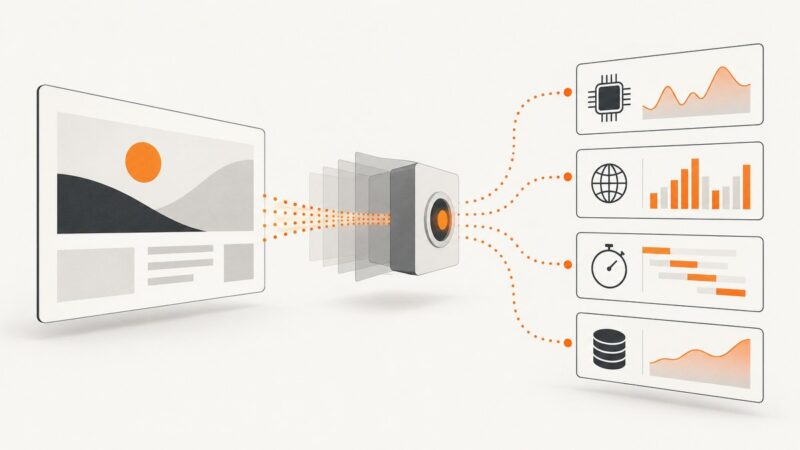
AI makes test automation smarter by helping developers draft test scaffolds, identify edge cases, extend tests around legacy code, and connect tests to a development workflow. It does not make generated tests correct by default. The useful pattern is to give an AI tool relevant code, intended behavior, and existing test conventions; review its assertions; run the tests; then revise against real requirements.
This guide covers how to use AI for test automation, what the evidence does and does not show, how to build a safe workflow, and how to assess whether it helps your team. It also includes a small browser-capture example using ScreenshotNeo, a website screenshot API and MCP server for developers.
1. What “smarter test automation” means
Traditional test automation executes checks that people or tools have defined. AI can assist earlier in the process by proposing checks, test inputs, test scaffolds, and workflow configuration. A developer still has to decide whether those checks represent the product’s intended behavior.
- Draft tests: Suggest a test structure for a function or module in the project’s framework.
- Explore edge cases: Propose cases such as null, empty, boundary, malformed, or unexpected inputs when those cases make sense for the requirements.
- Work with legacy code: Scaffold tests around existing behavior to make later changes safer.
- Explain behavior: Use existing tests as clues about how a codebase is expected to behave.
- Connect to CI: Ask for guidance on where tests should run in a continuous integration pipeline, then verify the configuration in the actual project.
These are documented use cases for GitHub Copilot, not proof that generated tests are correct or guarantee better quality. AI is best treated as an assistant that expands the set of candidate checks a person can review.
2. What the evidence says about AI-generated tests
Adoption, output quality, and business value are different questions. Survey respondents may use AI for testing even when their generated tests need substantial correction.
| Finding | What it means | Important scope |
|---|---|---|
| More than 98% said their organizations had experimented with AI coding tools to generate test cases. | Experimentation was widespread in the surveyed enterprises. | GitHub’s 2024 survey, updated in 2025, covered 2,000 non-manager respondents at organizations with 1,000+ employees in the U.S., Brazil, India, and Germany. It does not represent every organization and does not establish test quality. GitHub survey and methodology. |
| About 45.28% of generated tests passed when Copilot was used within an existing test suite. | Results varied with the available project context and study setup. | The 2024 study assessed 290 generated tests for 53 sampled tests from open-source Python projects. Study record at TU Delft. |
| 92.45% of tests generated without an existing test suite were failing, broken, or empty. | Generation without suite context can produce unusable output. | This is one study of Python test generation, not an accuracy benchmark for every tool or current model. It also does not prove suite context alone caused the difference. Study record at TU Delft. |
| 76% of respondents reported using AI-powered tools in software testing; 82% saw AI as critical to testing’s future. | These figures describe respondents’ views and reported use. | They come from Katalon’s 2025 State of Software Quality Report, a publisher-reported industry survey, not an independent census. Katalon report. |
| DORA gathered more than 100 hours of qualitative data and responses from nearly 5,000 technology professionals worldwide. | Its 2025 report frames AI as an amplifier of organizational strengths and dysfunctions. | The findings do not say that AI automatically fixes a weak engineering process. Google Research / DORA 2025 report. |
The practical conclusion is not that AI tests are “45% accurate.” The empirical study has a defined tool, language, sample, and outcome categories. Use it as a reason to provide context and validate output, not as a universal score for present-day AI tools.
3. A practical workflow for using AI to write tests
- Choose a narrow target. Start with a function or module whose intended behavior can be stated clearly. Avoid asking for a whole test suite before you know what should be tested.
- Gather context. Provide the relevant source, public interface, existing tests, test framework, conventions, and documented requirements. Include important dependencies or fixtures when they affect behavior.
- Name the cases. Tell the assistant which branches and boundaries matter. Ask it to identify assumptions and uncertainties instead of inventing product rules.
- Request a small patch. Ask for test code that follows the repository’s patterns, with one assertion per behavior where practical. Ask for a brief explanation of each case.
- Review assertions and fixtures. Confirm that tests check the requirement rather than merely mirror the implementation. Check that mocks, setup, expected values, and failure cases are meaningful.
- Run the tests locally and in CI. Fix syntax, import, fixture, and environment issues. Run relevant tests and the wider suite if the change could affect shared behavior.
- Review coverage gaps and maintenance cost. Add missing cases, remove redundant tests, and ensure the tests remain readable for the next person.
- Keep normal review gates. Treat generated changes like any other code change: use code review, CI, security and privacy controls, and the project’s quality checks.
A prompt template
Write tests for the function below using our existing test framework and conventions.

Requirements:
- [State the documented behavior and constraints.]
- [List important branches and edge cases.]
- Do not infer undocumented business rules. Call out assumptions instead.
- Prefer tests that are independent and readable.
- For each proposed test, explain which requirement it verifies.
- Do not change production code unless you first explain why a test cannot be written without that change.

Relevant implementation:
[Paste the smallest relevant code excerpt.]

Existing tests or fixtures:
[Paste examples that show project conventions.]

Return a proposed test patch and any unresolved questions.
Give the assistant only the repository context your organization permits. Remove secrets and sensitive production data. For a large codebase, supply the smallest relevant excerpts rather than a broad, noisy dump.
4. Make the generated tests trustworthy
A generated test can compile and still be wrong. Review the behavior it asserts, not just its syntax or whether it passes.
- Check the oracle: Is the expected result grounded in a requirement, documented contract, or established behavior?
- Check meaningful failure: Would the test fail if the behavior regressed? A test that only executes lines or repeats the implementation may add little protection.
- Check boundaries: Are empty, null, minimum, maximum, malformed, and duplicate inputs relevant? Include only cases that correspond to actual contracts or realistic failure modes.
- Check isolation: Do tests rely on network, wall-clock time, ordering, mutable shared state, or environment-specific paths unnecessarily?
- Check the test itself: Can a reviewer understand the setup, action, and expected result? Is it deterministic and maintainable?
- Check for invented rules: If the requirement is unclear, ask a product owner or consult the specification. Do not let the model decide what undocumented business behavior should be.
GitHub’s guidance similarly cautions developers to review generated test logic, cover edge behavior, avoid relying on Copilot to guess undocumented business rules, and retain human code review. GitHub Docs: Increasing test coverage.
5. Where AI fits in a development and CI workflow
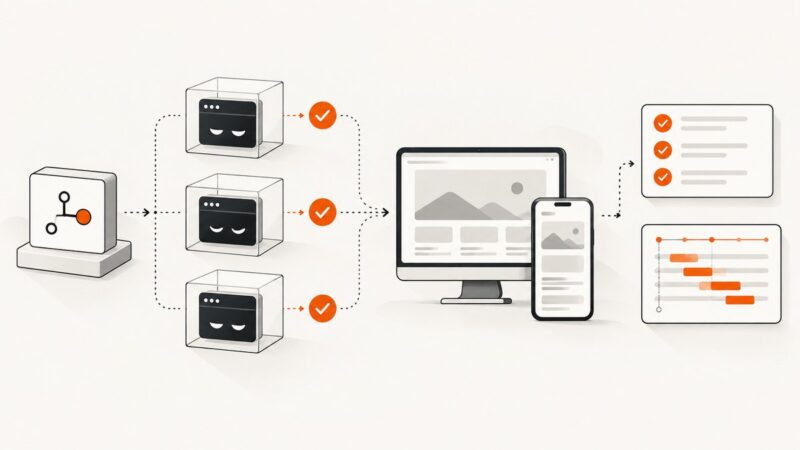
AI-generated tests belong in the same versioned workflow as hand-written tests. A simple cycle is: propose tests, review the patch, run the relevant test command, run the project’s CI checks, and merge only through the normal review process. A coding assistant can suggest CI changes, but the repository’s existing pipeline and platform documentation determine the correct configuration.
Use AI to suggest a workflow change only after supplying the language, package manager, test command, CI provider, and current configuration. Verify that secrets are handled through the CI platform’s approved mechanism, that test jobs have appropriate permissions, and that the new job reports failures clearly. The research sources do not establish a single CI configuration or vendor that is best for all teams.
6. AI for visual and browser-based checks
Browser automation can verify behavior that unit tests do not cover, such as whether a page renders, an element is visible, or a user flow reaches the expected state. AI can help draft cases or scripts, but a visual result still needs a clear acceptance criterion: which page, viewport, state, and expected evidence count as correct?
For a developer-owned visual check, a browser library can open a page and save a screenshot. Keep navigation, readiness conditions, browser version, viewport, and test data explicit so the output is reproducible. ScreenshotNeo is a website screenshot API and MCP server; it can be used to capture a page for a visual review or agent workflow, but it does not determine whether an application’s test assertions are correct.
DIY browser capture with Playwright
This runnable Node.js example captures a page after network activity settles, then saves a full-page PNG. Install Playwright with npm install playwright and install its browser with npx playwright install chromium.
// save as capture.mjs
import { chromium } from 'playwright';

const url = process.argv[2] ?? 'https://example.com';
const browser = await chromium.launch({ headless: true });
try {
  const page = await browser.newPage({ viewport: { width: 1440, height: 900 } });
  const response = await page.goto(url, { waitUntil: 'networkidle', timeout: 60000 });
  if (!response || !response.ok()) {
    throw new Error(`Navigation failed: ${response?.status() ?? 'no response'}`);
  }
  await page.screenshot({ path: 'page.png', fullPage: true });
} finally {
  await browser.close();
}
Run it with node capture.mjs https://example.com. Some sites keep connections open, so networkidle may never occur; in that case use domcontentloaded and wait for a specific selector that signals the page is ready. Avoid treating one screenshot as a complete test: compare it against an explicit visual or functional expectation.
7. Or skip the browser setup
One GET request can return a screenshot from ScreenshotNeo. See the ScreenshotNeo API documentation for the API options and configuration.
cURL
curl -G "https://api.screenshotneo.com/v1/shot" \
  -d access_key=YOUR_API_KEY \
  --data-urlencode url=https://example.com \
  -o shot.webp
Python
import requests

r = requests.get(
    "https://api.screenshotneo.com/v1/shot",
    params={"access_key": "YOUR_API_KEY", "url": "https://example.com"},
    timeout=90,
)
r.raise_for_status()
open("shot.webp", "wb").write(r.content)
Node.js
const q = new URLSearchParams({
  access_key: 'YOUR_API_KEY',
  url: 'https://example.com',
});
const res = await fetch(`https://api.screenshotneo.com/v1/shot?${q}`);
if (!res.ok) throw new Error(`Screenshot request failed: ${res.status}`);
await import('node:fs/promises').then(({ writeFile }) =>
  writeFile('shot.webp', new Uint8Array(await res.arrayBuffer()))
);
ScreenshotNeo accepts cookie or consent banners like a visitor and removes 60+ known consent platforms, newsletter popups, and chat widgets before capture; each of those steps can be turned off. Bot checks or CAPTCHAs, blank pages, timeouts, failed loads, and cache hits cost nothing, and response headers say the page verdict and whether the request was billed. Its MCP server provides take_screenshot, get_page_info, and capture_pdf tools for Claude, Cursor, and other MCP clients. The free plan includes 1,000 shots per month without a card; paid plans start at $5 for 3,000 shots. Every feature is on every plan.
Sign up for 1,000 free screenshots a month, no card required.
8. Evaluate whether AI improves your testing workflow
Run a limited pilot on a defined part of the codebase. Measure useful results rather than the number of lines or tests generated. The following are practical evaluation suggestions, not published benchmark results:
- How many proposed tests are accepted after review, and how many need major correction?
- Do the tests expose missed requirements, edge cases, or regressions?
- How much reviewer time does each useful test take?
- Do generated tests add flaky behavior, slow runs, brittle mocks, or future maintenance work?
- Does the tool fit the team’s language, framework, repository, and CI process?
- Can the team apply suitable privacy, access, governance, and review controls?
Compare the whole workflow: context quality, correctness, framework integration, reviewability, governance, and the team’s ability to improve its process. Raw output volume is not a meaningful success measure by itself. DORA’s 2025 framing is a useful reminder: AI may amplify a well-functioning engineering system and expose weak practices. It is not an automatic quality fix.
9. Common problems and fixes
| Symptom | Likely cause | What to do |
|---|---|---|
| Generated test does not compile or import. | The prompt omitted the language version, framework, fixtures, or project conventions. | Provide an example from the same test suite and ask for a minimal patch using its imports and fixtures. Run the project’s normal test command. |
| The test passes but does not catch a regression. | It checks execution or repeats the current implementation instead of asserting the contract. | Write down the expected behavior first, then check that a plausible behavior change would make the test fail. |
| The assistant invents an expected value or rule. | The requirement is absent or ambiguous in the supplied context. | Do not accept the guess. Find the specification or ask the responsible product or engineering owner; update the prompt with the confirmed rule. |
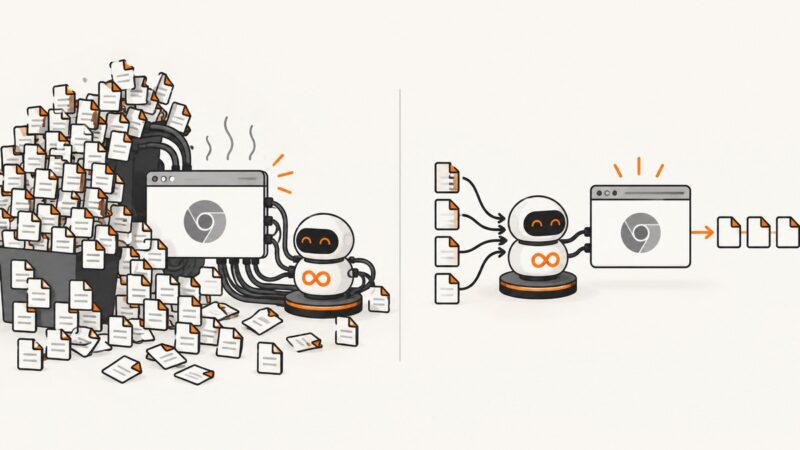
| Tests are empty, broken, or mostly placeholders. | The request is too broad, context is missing, or the tool cannot infer the project setup. | Reduce scope to one function, include a working test example and relevant fixtures, and ask for tests for named cases. Review before using. |
| Tests are flaky or fail only in CI. | They depend on timing, network state, ordering, environment values, or nondeterministic data. | Make inputs deterministic, isolate external services, control clocks where appropriate, and match local and CI runtime assumptions. |
| The assistant skips boundary cases. | The request did not state which boundaries matter, or generated suggestions were accepted without review. | Name relevant boundaries in the prompt and inspect branch behavior against requirements. Do not add irrelevant cases just to increase test count. |
| Visual capture differs between runs. | Dynamic content, fonts, animations, browser versions, viewport, or readiness timing changed. | Fix the viewport and browser environment, wait for a meaningful readiness condition, control test data where possible, and disable or account for dynamic content. |
| Browser navigation times out waiting for network idle. | The page maintains long-lived requests or never becomes network-idle. | Wait for DOM content or a specific selector instead; retain a reasonable timeout and report failed navigation clearly. |
| Screenshot API output is an error or unexpected page. | The target failed to load, a bot check appeared, or request parameters or credentials are wrong. | Check the response status and ScreenshotNeo’s X-Page-Verdict and X-Billed headers; verify the URL, API key, and requested capture settings. See the API docs. |
10. Performance, reliability, and cost considerations
- Performance: AI-assisted test authoring adds a review and execution step. Keep prompts scoped, reuse existing fixtures, and measure review time alongside test runtime. Browser captures are slower and more environment-sensitive than unit tests, so use them for checks that need a rendered page.
- Reliability: Generated output can be invalid, incomplete, or based on a mistaken assumption. Run it, review it, and retain CI and code-review gates. Avoid making a generated test the sole definition of undocumented behavior.
- Privacy and governance: Follow your organization’s rules for source code, secrets, customer data, tool access, and retention. Share only context that is allowed and necessary.
- Cost: Assess the tool’s actual plan and usage terms for your organization; the research cited here does not establish a cross-vendor cost comparison. Include human review, maintenance, CI runtime, and infrastructure in a pilot’s cost assessment. For ScreenshotNeo, the stated plans are free for 1,000 shots monthly, then $5 for 3,000, $15 for 15,000, $39 for 60,000, $99 for 250,000, and $249 for 1,000,000; yearly billing gives two months free. Every feature is on every plan.
11. FAQ
Can AI generate software tests?
Yes. Coding assistants can propose test scaffolds and cases from code and context. Treat each result as a draft to review and run.
Are AI-generated tests reliable?
Reliability depends on the tool, prompt, available code and requirements, and review process. The cited Python study found sharply different outcomes with and without an existing test suite, but its results are not universal accuracy rates.
Will AI replace QA testers?
The cited sources do not establish that AI replaces QA roles. AI can assist with test drafting and exploration, while people remain responsible for requirements, risk choices, review, and interpreting failures.
Should I use AI for unit tests or end-to-end tests?
Use it wherever a candidate test can be clearly checked against a requirement and the team can review the result. Pick the level that gives useful feedback without unnecessary setup or maintenance.
What should I give an AI tool before asking for tests?
Provide the smallest relevant code, documented behavior, existing test conventions, framework, and important branches. Do not include secrets or context your organization does not permit sharing.
Does a passing generated test prove the feature is correct?
No. It proves only that the current code passed that particular check in that run. Review whether the expected result is correct and whether the test would catch the failures that matter.
Sources
- GitHub, “Survey: The AI wave continues to grow on software development teams”.
- El Haji, Brandt, and Zaidman, “Using GitHub Copilot for Test Generation in Python: An Empirical Study,” AST 2024 record.
- GitHub Docs, “Increasing test coverage in your company with GitHub Copilot”.
- Google Research / DORA, “DORA 2025 State of AI-assisted Software Development Report”.
- MITRE, “Software Engineering with Generative Artificial Intelligence Tools”.
- Katalon, “State of Software Quality Report 2025”.