How Grok Bot Crawls and Captures Websites
Learn what xAI documents about Grok Bot and Web Search, how to diagnose access, and how to capture clean pages for your own workflows.
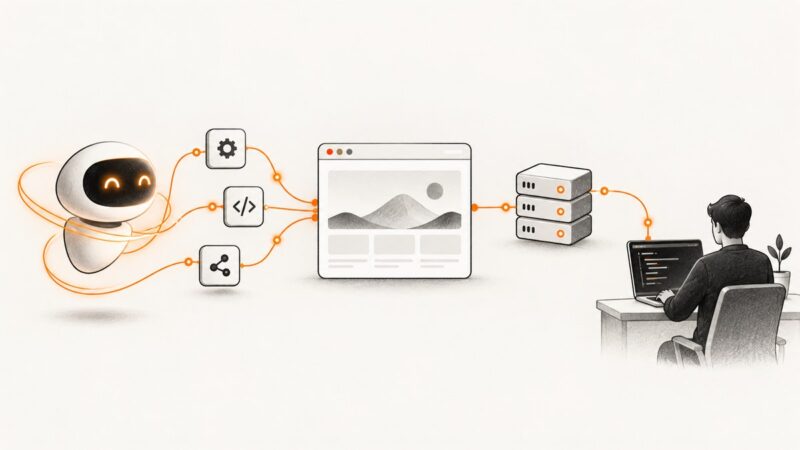
Short answer: xAI documents Grok Bot as a browser-using agent running on a persistent cloud computer. It can navigate websites, use a filesystem and terminal, and encounter login prompts, CAPTCHAs, automation blocks or human-confirmation steps. xAI separately documents Grok Web Search as a real-time search and page-browsing capability. Public xAI documentation does not establish that these are the same system, identify a general-purpose Grok crawler, or explain a persistent crawl, rendering, storage or refresh pipeline.
That distinction matters. You can troubleshoot how an interactive agent reaches your site, and you can inspect what a browser receives, but you should not assume an undocumented GrokBot user-agent, fixed IP range, crawl schedule or screenshot archive.
What xAI actually documents
| Capability | Documented behavior | What is not documented |
|---|---|---|
| Grok Bot | A bot works on a persistent cloud computer with a browser, filesystem and terminal. It can work across websites and applications. | A public crawler identity, request schedule, rendering stack, storage policy or page-reuse system. |
| Grok Web Search | Searches the web in real time, browses pages and extracts information. | A crawler token, user-agent, IP list, crawl rate or robots.txt policy. |
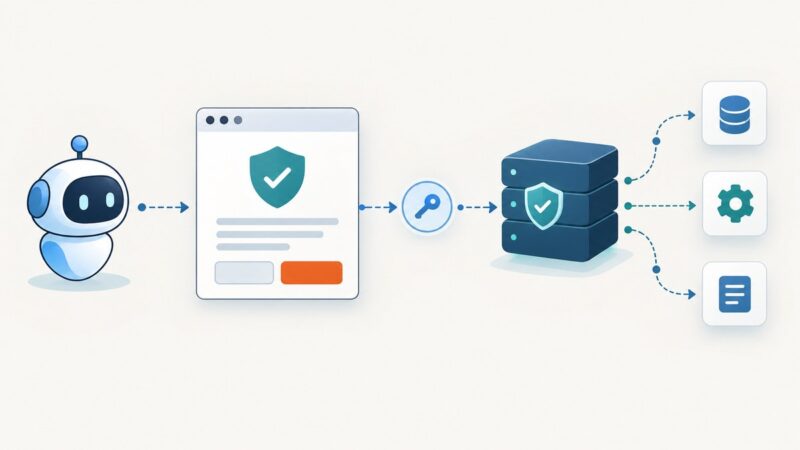
| Blocked interactions | A site may block automation, require a new login, show a CAPTCHA or require human confirmation. The Bot should hand those steps to the user. | Any bypass method for those controls. |
See the Grok Bot documentation, the Web Search documentation and the Grok Bot FAQ. These are product descriptions, not a specification for a public crawler.
Does Grok crawl websites?
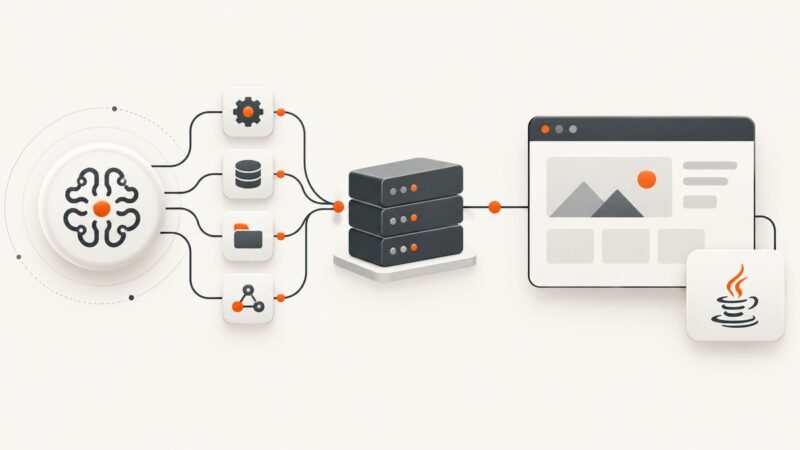
It depends on what “crawl” means. Grok Bot can browse a site when a user or workflow directs it to do so. Web Search can find and browse pages in real time. Neither statement proves that xAI operates a continuously refreshed, general-purpose index of every public URL.
The safest description is: Grok can access and read web pages through documented browser-agent and search-and-browse products, while the underlying selection, fetching, rendering and storage architecture remains publicly unresolved.
How a browser agent reads a page
- Navigation: the agent opens a URL or follows a link.
- Network response: your CDN, firewall, authentication layer and application return HTML and resources.
- Rendering: a browser may execute JavaScript, load images and wait for client-side content.
- Interaction: the agent can click, type, scroll or use a terminal, subject to site controls.
- Extraction: the agent reads visible content or page data for the task.
This is a model of browser interaction, not a claim about an undocumented Grok crawler implementation. A page that works for a normal browser can still fail for an automated session because of a login, expired cookie, bot-management rule, CAPTCHA, timing issue or required human action.
Inspect what your site returns
Before changing robots.txt or firewall rules, reproduce the public request path and record status, redirects, headers and body size.
cURL: inspect headers and redirects
curl -I -L --max-redirs 10 https://example.com/cURL: save the returned HTML
curl -L --compressed -o page.html https://example.com/
wc -c page.html
Python: inspect an HTTP response
import requests

url = "https://example.com/"
r = requests.get(url, timeout=30, allow_redirects=True)
print("status:", r.status_code)
print("final URL:", r.url)
print("content type:", r.headers.get("content-type"))
print("bytes:", len(r.content))
print(r.text[:500])
Node.js: inspect an HTTP response
const res = await fetch('https://example.com/', { redirect: 'follow' });
const body = await res.text();
console.log({
  status: res.status,
  url: res.url,
  contentType: res.headers.get('content-type'),
  bytes: Buffer.byteLength(body)
});
Render JavaScript with a browser
Raw HTTP checks do not show content created after JavaScript runs. Use a browser automation tool to compare the server response with the rendered page. The following Playwright example is a diagnostic, not an implementation of Grok Bot.
import { chromium } from 'playwright';

const browser = await chromium.launch({ headless: true });
const page = await browser.newPage({
  viewport: { width: 1440, height: 900 },
  userAgent: 'Mozilla/5.0 (compatible; diagnostic browser)'
});

page.on('response', response => {
  if (response.status() >= 400) {
    console.log(response.status(), response.url());
  }
});

await page.goto('https://example.com/', { waitUntil: 'networkidle' });
console.log('title:', await page.title());
console.log('text:', (await page.locator('body').innerText()).slice(0, 1000));
await page.screenshot({ path: 'page.png', fullPage: true });
await browser.close();
For diagnosis, compare three states: HTML from cURL, DOM after JavaScript, and the final screenshot. Differences reveal client rendering, lazy loading, consent overlays or blocked resources.
Can robots.txt block Grok?
Robots.txt rules are matched against crawler user-agent tokens. Google’s robots.txt guidance also states that robots.txt is not an access-control mechanism. Do not add an unverified GrokBot or xAI-Grok rule and assume it controls an official product.
If content is private, require authentication or enforce access control at the application, CDN or origin. If content is public but inaccessible, first inspect the actual request and response, then review firewall and bot-management logs alongside robots.txt.
Why Grok may not access your website
| Symptom | Likely cause | Fix |
|---|---|---|
| 401 or 403 | Authentication, WAF rule or missing entitlement | Check credentials, session expiry, CDN logs and allow rules. Do not weaken access controls for private content. |
| CAPTCHA or “verify you are human” | Bot-management challenge | Complete the human step when prompted, or review the provider policy. Do not attempt to bypass it. |
| Blank page | JavaScript error, blocked script, race condition or failed API call | Check browser console, failed network requests and server-side rendering output. |
| Old login page | Expired session or cookie scope problem | Log in again, verify cookie domain and check redirects. |
| Missing images or text | Lazy loading, blocked resource host or viewport-dependent rendering | Scroll or wait for the relevant selector, then inspect resource responses. |
| Different result by region | Geo, timezone, language or CDN variation | Compare request region, headers, cookies and cache keys. |
Reliability and performance checklist
- Return useful server-rendered HTML for critical content.
- Keep redirects finite and canonical.
- Monitor JavaScript errors and failed API requests.
- Ensure important content is not hidden behind an unavoidable consent wall.
- Set explicit cache headers and purge rules.
- Review WAF logs for blocked browser sessions.
- Use authentication for confidential pages instead of robots.txt.
- Test from the regions and viewport sizes your users require.
Browser rendering is slower and more resource-intensive than a single HTTP request. Waiting for network idle can also delay pages with long-lived analytics connections. Prefer a specific selector or bounded timeout when your own capture workflow allows it.
Or skip the browser setup
ScreenshotNeo provides a website screenshot API and MCP server. It accepts one GET request and returns PNG, JPEG, WebP or PDF. Before capture, it accepts cookie and consent banners like a visitor and removes more than 60 known consent platforms, newsletter popups and chat widgets; each step can be disabled. Only clean shots are billed: bot checks and CAPTCHAs, blank pages, timeouts, failed loads and cache hits cost nothing, and the response reports the result in X-Page-Verdict and X-Billed headers.
Read the ScreenshotNeo API documentation for all options, including full-page and element capture, custom CSS and JavaScript, waits, blocking rules, headers, cookies, user agents, geolocation, PDF settings, caching, signed links, asynchronous jobs, bulk capture, usage and MCP tools.
cURL
curl -G "https://api.screenshotneo.com/v1/shot" -d access_key=YOUR_API_KEY --data-urlencode url=https://stripe.com -o shot.webpPython
import requests
r = requests.get("https://api.screenshotneo.com/v1/shot", params={"access_key": "YOUR_API_KEY", "url": "https://stripe.com"}, timeout=90)
open("shot.webp", "wb").write(r.content)
Node.js
const q = new URLSearchParams({ access_key: 'YOUR_API_KEY', url: 'https://stripe.com' });
const res = await fetch(`https://api.screenshotneo.com/v1/shot?${q}`);
An MCP server lets Claude, Cursor and other MCP clients call take_screenshot, get_page_info and capture_pdf. The free plan includes 1,000 screenshots per month with no card; paid plans start at $5 for 3,000. Create a free ScreenshotNeo account.
FAQ
Is there an official Grok crawler user-agent?
The reviewed xAI documentation does not publish one. Verify current xAI documentation before relying on a token.
Does a Grok search result prove my page is permanently indexed?
No. The documented search capability does not establish persistent storage, refresh frequency or a permanent index.
Should I block all automated browsers?
Decide based on access policy and risk. Protect private data with authentication; use WAF controls and monitoring for public automation.
Can I reproduce Grok Bot exactly?
No public specification describes its complete browser, network, selection or storage pipeline. You can reproduce common browser diagnostics with HTTP clients and Playwright.
What should I collect for an access report?
Record URL, timestamp, status, redirect chain, response headers, rendered screenshot, console errors, failed requests and relevant CDN or WAF log entries.