How Test Automation Helps Teams Deliver Successful Software
Test automation shortens feedback on regressions and makes repeatable checks practical. Learn how to choose test levels, control maintenance costs, and keep human testing in the loop.
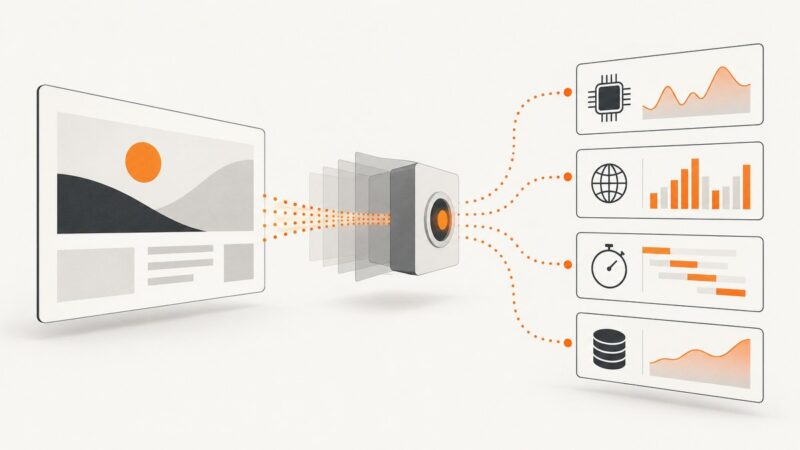
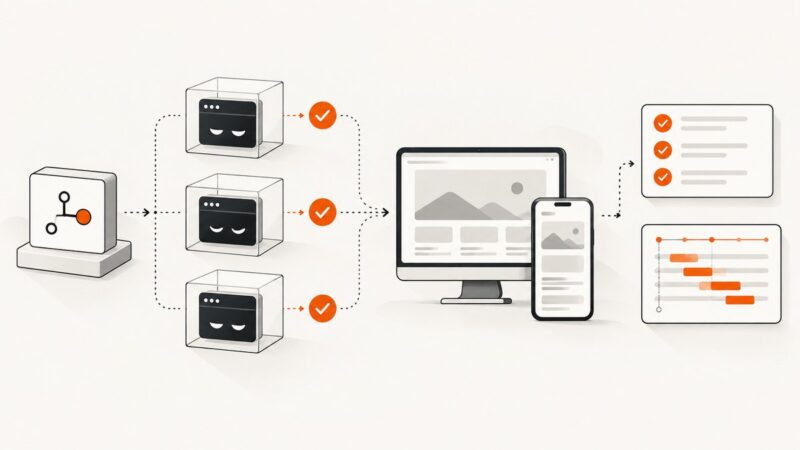
Test automation helps teams deliver software by rerunning repeatable checks after code changes and returning feedback sooner. That feedback can reveal regressions while a change is still fresh, helping developers fix problems before they spread. Automation supports testing; a passing suite does not prove a product is good, and it does not replace exploratory testing or human judgment about usability.
The sustainable approach is to automate checks at several levels, invest in maintainable test code and dependable environments, and measure whether results help the team make better decisions. The right mix depends on the system’s architecture and risks, not on a fixed target for the number of tests.
1. What test automation does for a delivery team
An automated test executes a check and compares the observed result with an expected result that a machine can evaluate. Teams can rerun those checks consistently as code changes, during continuous integration, before a release, or on a schedule.
- Shorter regression feedback: A check can identify a broken behavior shortly after a change, rather than waiting for a later manual test cycle. Martin Fowler describes the benefit as discovering breakage in seconds or minutes rather than days or weeks; that is an illustration, not a promise about every suite. Actual feedback time depends on suite design, size, infrastructure, and execution strategy. Fowler’s practical test pyramid explains the faster-feedback rationale.
- Repeatability: The same steps and assertions can be run again, reducing the effort of repeatedly checking stable behaviors.
- Change confidence: A useful set of checks gives the team evidence about covered behaviors when refactoring or adding features. It reduces uncertainty; it cannot eliminate it.
- Shared expectations: Readable acceptance checks can record expected behavior and help establish shared agreements. An Agile Alliance interview presents this as practitioner experience, while also noting that GUI-based acceptance checks can be difficult and slow to run. Agile Alliance’s interview on the testing pyramid
Automation is most useful when a result is important, repeatable, and machine-verifiable. If a check fails, the output should help someone understand what failed and where to investigate.
2. Choose a balanced portfolio of test levels
The test pyramid is a rule of thumb: use many fast, focused checks, some checks of service or component interactions, and fewer broad end-to-end interface checks. It is not a quota. Use the levels that match the system’s architecture and the risks that matter to users. Fowler’s practical guide and the Agile Alliance interview discuss this balance.
| Level | What it exercises | Typical strengths | Costs and limits |
|---|---|---|---|
| Unit or component | A small unit of logic in isolation or with controlled collaborators | Usually fast and focused; failures can be relatively easy to localize | Does not establish that separately tested parts integrate correctly |
| Service, API, or integration | Interactions between components or a service boundary | Checks contracts and integration behavior without necessarily driving the whole interface | Needs reliable dependencies, configuration, and test data |
| End-to-end or GUI | A wider deployed workflow through the user-facing system | Can exercise a user journey across multiple layers | Often slower and more sensitive to interface changes and environment behavior; failures can be harder to localize |
These are tendencies, not guarantees. A well-designed integration test may be clearer than a poorly isolated unit test, and some architectures make a particular layer more practical than another. Compare levels by feedback speed, fault localization, coverage scope, reliability, and maintenance burden, rather than by raw test count.
Automated browser screenshots can also help teams review visual changes in a controlled workflow. A screenshot is evidence of a rendered page at a point in time; it does not determine whether the design is usable or whether a visual difference is acceptable. ScreenshotNeo is a website screenshot API and MCP server from Yorker Media. For teams that need page captures, it removes known consent banners, newsletter popups, and chat widgets before capture, and only clean shots are billed. See ScreenshotNeo for the service details.
3. Start with the right checks
- Pick a risk that matters. Start with a regression that is costly to miss or frequently repeated, such as a critical calculation, API contract, or release workflow.
- Choose the narrowest useful level. Put logic checks near the component when that gives quick, precise feedback. Add integration or end-to-end coverage where the behavior depends on interactions between parts.
- Define the expected result. Make the assertion explicit and machine-verifiable. Keep subjective questions, such as whether a page feels intuitive, in human review.
- Make the check diagnosable. Include useful failure output, logs, and reports so a person can locate the cause without rerunning the entire process blindly.
- Run it where it can influence a decision. Integrate suitable checks into the development lifecycle or CI/CD workflow. A result that arrives after the release decision has limited value for that decision.
- Review and maintain it. Remove obsolete checks, update assertions when behavior intentionally changes, and investigate flaky failures rather than teaching the team to ignore them.
For a browser-based test or visual review, capture the page only after the relevant state is ready. Select a stable viewport, wait condition, and target element where needed; account for dynamic content, animation, and loaded fonts. A screenshot can make a visual regression easier to discuss, but it is not a substitute for checks of underlying behavior.
4. Keep the automation maintainable
Test automation is software that needs an architecture, ownership, and upkeep. ISTQB’s current CTAL-TAE v2.0 engineering outline includes lifecycle integration, architecture, maintainability, CI/CD, reporting, metrics, and improvement. Its CT-TAS strategy outline addresses costs, risks, roles, value, and maintenance investment.
The explicit implementation points below come from ISTQB’s 2016 Test Automation Engineer syllabus, a legacy syllabus: align automation architecture with the product, design systems with testability in mind, consider cost and risk across components, and begin with components that are practical to test. The newer engineering outline confirms that maintainability and reporting remain in scope.
- Keep tests understandable. Make setup, action, and expected result clear. Share helper code where it reduces duplication without hiding what a test actually verifies.
- Stabilize environments and data. Control dependencies and test data, and make setup repeatable. Otherwise a failure may reflect the environment rather than a regression.
- Make results actionable. Capture the information needed to diagnose failures, document how to run and maintain the suite, and preserve traceability to important requirements where useful.
- Plan ownership. Decide who fixes broken tests, updates test data, reviews new coverage, and removes checks that no longer provide value.
- Use testable interfaces. Where practical, expose stable component or service boundaries so important behavior can be checked without driving every test through a fragile UI.
5. Costs, limits, and measures of value
Automation has an upfront and ongoing cost: tool and framework setup, infrastructure, skills, test data, execution time, and maintenance. ISTQB’s 2016 syllabus explicitly includes setup investment, technical skills, ongoing upkeep, complexity, and errors introduced by automation among the costs and risks. Include those costs in the business case rather than counting only the time saved on repeated execution.
Not every manual test can be automated. Automation depends on results that can be interpreted and verified by a test oracle. It also cannot replace exploratory testing, which helps people investigate unexpected behavior, or usability work that requires human judgment about experience. Both the ISTQB syllabus and Fowler’s guide describe these limits.
Measure whether automation improves feedback and decisions, not merely how many checks exist. ISTQB’s current engineering and strategy scopes include data collection, analysis, reporting, metrics, and stakeholder decisions, but the reviewed overviews do not prescribe a universal KPI set. Choose measures that help answer practical questions, such as whether important failures are found early enough to act on, whether failures are diagnosable, and how much upkeep the suite requires. Interpret changes in context; a rising test count by itself does not show that delivery improved.
For visual checks, factor in rendering variability, capture frequency, and review effort. A screenshot comparison can flag a change, but teams still need a process for deciding whether it is expected. A paid screenshot service also has a direct usage cost, so estimate capture volume and choose a plan that fits. ScreenshotNeo lists 1,000 shots per month free with no card, then plans at $5 for 3,000, $15 for 15,000, $39 for 60,000, $99 for 250,000, and $249 for 1,000,000; yearly billing gives two months free, and every feature is on every plan.
6. Or skip the browser setup
If a workflow needs screenshots of live web pages, ScreenshotNeo can return an image or PDF from one GET request. Its API supports PNG, JPEG, or WebP output, and it can also be used as an MCP server by Claude, Cursor, or another MCP client. Cookie banners, popups, and chat widgets are removed before the shot; bot checks, blank pages, and failed loads are never billed. Each response includes page verdict and billing headers, and cache hits cost nothing.
Use the ScreenshotNeo API documentation to create an API key and review request options. This runnable cURL example saves a WebP capture:
curl -G "https://api.screenshotneo.com/v1/shot" \
  -d access_key=YOUR_API_KEY \
  --data-urlencode url=https://stripe.com \
  -o shot.webp
Python:
import requests

r = requests.get(
    "https://api.screenshotneo.com/v1/shot",
    params={"access_key": "YOUR_API_KEY", "url": "https://stripe.com"},
    timeout=90,
)
open("shot.webp", "wb").write(r.content)
Node.js (Node 18 or later, which includes fetch):
const q = new URLSearchParams({
  access_key: 'YOUR_API_KEY',
  url: 'https://stripe.com'
});
const res = await fetch(`https://api.screenshotneo.com/v1/shot?${q}`);
if (!res.ok) throw new Error(`Screenshot request failed: ${res.status}`);
const bytes = new Uint8Array(await res.arrayBuffer());
await import('node:fs/promises').then(fs => fs.writeFile('shot.webp', bytes));
These examples capture a full page with default settings. The API also supports element capture by CSS selector, dark mode, device presets or a custom viewport, retina scale, PDF page and margin settings, HTML/CSS input, custom CSS or JavaScript, clicking or hiding elements, selector or network-idle waits, request and resource blocking, custom headers, cookies, user agent and authorization, timezone and geolocation, transparent backgrounds, resizing, configurable caching, signed public image links, asynchronous jobs with signed webhooks, bulk capture of up to 100 URLs per call, usage API, and an OpenAPI specification. The parameter names used by other screenshot APIs also work to make migration easier. Turn off individual cleanup steps when a workflow requires them.
ScreenshotNeo includes an MCP server with take_screenshot, get_page_info, and capture_pdf tools, so an AI agent can request captures through an MCP client. Free access includes 1,000 screenshots per month without a card; paid plans start at $5 for 3,000. Sign up for ScreenshotNeo’s free plan.
7. Troubleshooting automated checks
| Symptom | Likely cause | Practical fix |
|---|---|---|
| A check fails intermittently | Uncontrolled data, timing assumptions, shared state, or an unstable dependency | Make setup repeatable, isolate state, wait on a meaningful condition, and record enough diagnostics to find the cause. |
| A large UI test fails with little clue | The test covers a broad workflow and hides which interaction broke | Keep end-to-end coverage for important journeys, then add focused checks nearer to the failing component or service. |
| Tests pass locally but fail in CI | Environment, configuration, dependency, or test-data differences | Document and align setup, control dependencies and data, and include environment details in failure reports. |
| The suite is slow to return feedback | Too many checks run at a costly level, unnecessary waits, or inefficient execution | Review test placement and waits; keep fast focused checks available for quick feedback and use broader checks where their coverage justifies the cost. |
| Failures are routinely rerun or ignored | Reports do not explain failures, or flaky checks have become normal | Improve logs and reports, assign ownership, and fix or remove unreliable checks rather than treating a rerun as a passing result. |
| A visual capture differs unexpectedly | Dynamic page content, viewport, fonts, animation, or consent behavior changed the rendered state | Control the capture state and viewport, wait for the intended page condition, and review whether the difference is meaningful before updating expectations. |
8. Frequently asked questions
Does a green automated test suite prove the release is safe?
No. It shows that the checks passed for the behaviors and conditions they cover. It cannot establish that untested behavior is correct or that users find the product usable.
Should every manual test be automated?
No. Automate repeatable checks with verifiable outcomes when the benefits justify the setup and maintenance. Keep exploratory and usability testing in the process.
Is the testing pyramid mandatory?
No. It is a useful starting model for balancing speed, coverage, and maintenance. Adapt the levels to the system and the risks the team needs to manage.
How can teams tell whether automation is worth maintaining?
Review whether checks provide timely, actionable evidence for decisions, and weigh that value against infrastructure, skills, data, execution, and upkeep costs. Test count alone is not a measure of value.
Sources and further reading
- Martin Fowler, “The Practical Test Pyramid” (2018).
- Agile Alliance, “Climbing the Testing Pyramid” (2021).
- ISTQB CTAL-TAE v2.0 engineering outline.
- ISTQB CT-TAS strategy outline.
- ISTQB Test Automation Engineer syllabus, version 2016 (legacy syllabus cited for explicit implementation principles and risks).