How to Implement Autonomous Testing
Build autonomous testing as a governed feedback loop: start with a high-risk user journey, validate agent-generated tests, and expand through CI.
Implement autonomous testing as a governed feedback loop: choose a high-risk user journey, define what a user should see, let an agent help plan and write a small test, run it against the real application, and review every generated test or repair before it enters the codebase. The engineering team remains responsible for expected behavior, access boundaries, and accepting changes.
This guide uses Playwright with TypeScript for runnable examples. The principles also apply when using Selenium or another framework. The source material supports browser end-to-end guidance; it does not establish one architecture for every test layer or a universal return on investment.
1. Define what autonomous testing means
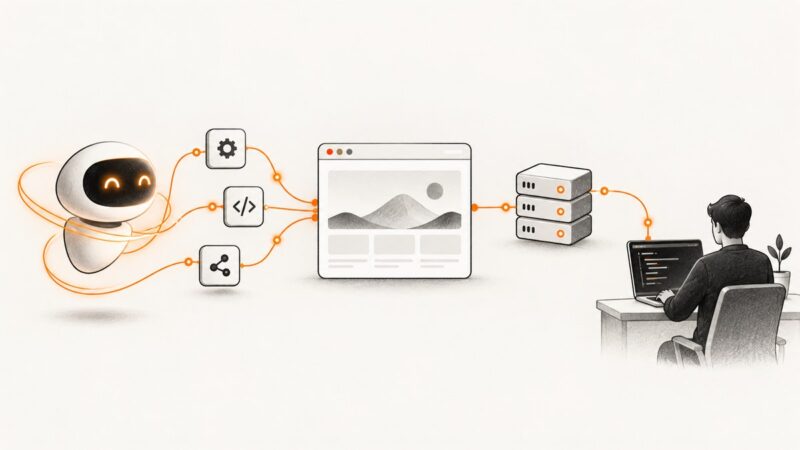
In an autonomous testing workflow, software agents can assist with test planning, test generation, execution, and repair proposals. “Autonomous” describes how work is carried out, not who owns the result. People still define intended behavior, decide which environments and data an agent may access, review changes, and approve merges.
Keep tests grounded in what users can see and do. Playwright recommends testing user-visible behavior and isolating tests so one test’s state does not affect another. Its guidance cautions against basing checks on implementation details users neither see nor use. Playwright Best Practices
2. Choose a narrow, high-risk journey
Start with a journey whose failure would matter: for example, signing in, completing checkout, or submitting a critical form. Write down the user’s starting state, the actions taken, and the observable outcome that demonstrates success.
- State the risk: What user or business outcome is harmed if this journey breaks?
- Specify the expected behavior: Describe the visible result without prescribing internal implementation.
- Choose a test level: Decide whether the behavior is best checked at component, API or contract, or browser end-to-end level. There is no universal distribution; use the lowest level that proves the required behavior, and reserve browser tests for journeys that need a browser.
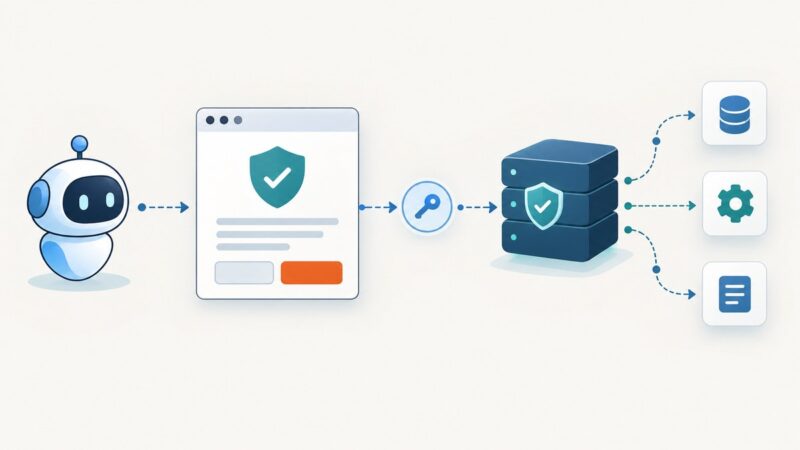
- Set access boundaries: Specify allowed environments, accounts, test data, credentials, and actions. Prefer a staging environment and dedicated test accounts.
- Record what requires approval: Generated tests and proposed repairs should be reviewed against the intended outcome before merge.
For AI systems and their components, use a risk-based test plan and document the chosen testing processes. ISO/IEC TS 42119-2:2025 describes applying the ISO/IEC/IEEE 29119 series to AI testing. ISO/IEC TS 42119-2:2025
3. Set up a reproducible Playwright project
Use the framework and language that fit your codebase, browser coverage, CI environment, and team’s ability to debug failures. Playwright and Selenium are both documented choices; neither is a universal fit. The following example assumes a TypeScript project using npm.
npm init playwright@latestChoose TypeScript when prompted. For an existing project, install Playwright Test and its browsers using the commands documented for your setup. Pin dependencies in the lockfile so local and CI runs use the same versions.
Give agents current, project-specific context before asking them to generate code. Selenium’s agent guidance recommends providing the framework version, current documentation, working examples, and written project conventions; stale patterns can produce incorrect or flaky code. Put the rules in a file such as AGENTS.md or the equivalent your agent reads. Include:
- Framework and language versions, install and run commands, and links to current official documentation.
- Locator conventions, test naming rules, setup expectations, and how test data is created and cleaned up.
- Which environments, accounts, credentials, and operations the agent may access.
- Requirements for isolated tests, user-visible assertions, failure evidence, and human review.
- Rules against changing product behavior or weakening assertions merely to make a test pass.
4. Inspect the running application before generating tests
Ask the agent to inspect the real application and propose locators before it writes a complete test. A locator inferred from a familiar page pattern may not match the application. Selenium recommends a lightweight throwaway browser script for inspection and reviewing locators before generating the test. Selenium: Using AI coding agents
Prefer stable locators that reflect user-facing roles, labels, or accessible names when they are available. Confirm each locator against the running app, then assert the outcome visible to the user. Keep setup explicit: tests should create or select their own state rather than depend on another test having run first.
A useful agent task is: “Inspect the staging checkout journey using this test account. Propose the user-visible steps, locators, and final assertion. Do not change files yet. Use the project’s locator and access rules in AGENTS.md, and report any uncertainty.” Review the proposal, then ask for a single test. Do not give the agent broader credentials or production access just to make discovery easier.
5. Generate and run one test
A minimal Playwright test might look like this. Replace the example URL and accessible names with those verified in your application.
import { test, expect } from '@playwright/test';

test('customer can complete checkout', async ({ page }) => {
  await page.goto('https://staging.example.com/checkout');
  await page.getByLabel('Email').fill('buyer@example.test');
  await page.getByRole('button', { name: 'Place order' }).click();

  await expect(page.getByRole('heading', { name: 'Order confirmed' }))
    .toBeVisible();
});
This example assumes the test environment has a safe, deterministic way to submit an order. In a real project, arrange test data and side effects so repeated runs do not create unwanted orders or depend on external services. Use the application’s actual labels and expected confirmation.
Run the test alone while establishing the setup and assertions:
npx playwright testRepeat it enough to investigate intermittent behavior before treating it as stable. When it fails, give the agent the exact command, exception, logs, and a screenshot or trace from that failure. Selenium warns against masking races by adding longer timeouts or sleeps; diagnose from evidence instead.
6. Connect the suite to CI
Install project dependencies and matching browser binaries on the CI worker before running the suite. Playwright’s documented CI sequence for npm is:
npm ci
npx playwright install --with-deps
npx playwright test
Playwright recommends one worker by default in CI for reproducibility. Once the suite is stable and the infrastructure can support it, parallelize or shard tests across jobs to reduce elapsed time. Preserve reports and failure evidence so a failed run can be diagnosed. Playwright recommends collecting traces on the first retry rather than on every test because tracing has a performance cost; traces can include a timeline, DOM snapshots, and network requests. See Playwright CI guidance and trace guidance.
7. Add agent roles in controlled steps
Playwright’s Test Agents documentation describes three roles: a planner that explores an application and produces a Markdown test plan, a generator that turns a plan into tests, and a healer that executes a suite and repairs failing tests. The documentation is labeled Next, so confirm availability and commands for the version you install. These are capabilities, not evidence that an automatic repair preserves product intent. Playwright Test Agents (Next)
- Ask the planner for a test plan for one risk-prioritized journey.
- Review the plan for correct behavior, data assumptions, and access boundaries.
- Generate a limited test and inspect its locators, setup, and assertions.
- Run it and review the report and failure evidence.
- If a healer proposes a repair, compare it with the intended behavior. Reject repairs that remove meaningful assertions, hide product regressions, or only make the test pass.
- Rerun the suite and require normal code review before merging changes.
8. Expand coverage and measure local results
Add journeys according to risk and observed failure modes, not a target number of tests. Track signals that help your team decide whether the workflow is useful:
- Whether high-priority journeys run in CI and produce actionable results.
- Whether failures reproduce when rerun under the same conditions.
- Time your team spends diagnosing failures and reviewing agent proposals.
- Whether proposed test or repair changes pass human review without weakening intended checks.
These are suggested local measures, not published benchmark results. The sources reviewed describe practices and tool capabilities; they do not establish a general productivity or defect-reduction percentage for autonomous testing.
9. Browser setup choices
Self-managed Playwright runs let a team control its runner, dependencies, and evidence storage, while requiring it to maintain that execution environment. Microsoft documents Playwright Workspaces as a hosted option for continuous end-to-end testing across browsers and operating systems, with CI-scale execution and a service dashboard. That documentation establishes the service use case; check current price, data handling, retention, and access terms before choosing a hosted service. Microsoft Playwright Workspaces quickstart
For screenshots used to inspect a page during test planning or debugging, ScreenshotNeo is a website screenshot API and MCP server. Its options include viewport and full-page captures, waiting for a selector or network idle, custom headers and cookies, and screenshots in PNG, JPEG, or WebP. Use it as a page-observation aid; it does not replace an assertion or prove that a user journey works. See the ScreenshotNeo documentation.
10. Or skip the browser setup
To capture a page for test planning or failure review with one request:
curl -G "https://api.screenshotneo.com/v1/shot" -d access_key=YOUR_API_KEY --data-urlencode url=https://staging.example.com/checkout -o shot.webpimport requests
r = requests.get(
"https://api.screenshotneo.com/v1/shot",
params={"access_key": "YOUR_API_KEY", "url": "https://staging.example.com/checkout"},
timeout=90,
)
open("shot.webp", "wb").write(r.content)const q = new URLSearchParams({
access_key: 'YOUR_API_KEY',
url: 'https://staging.example.com/checkout'
});
const res = await fetch(`https://api.screenshotneo.com/v1/shot?${q}`);
if (!res.ok) throw new Error(`Screenshot request failed: ${res.status}`);
await import('node:fs/promises').then(fs => fs.writeFile('shot.webp', Buffer.from(await res.arrayBuffer())));ScreenshotNeo accepts cookie and consent banners like a visitor and removes more than 60 known consent platforms, newsletter popups, and chat widgets before capture; each cleanup step can be turned off. Bot checks or CAPTCHAs, blank pages, timeouts, failed loads, and cache hits cost nothing, and response headers report the page verdict and billing status. Its MCP server provides take_screenshot, get_page_info, and capture_pdf tools for Claude, Cursor, and other MCP clients. The Free plan includes 1,000 screenshots per month with no card; paid plans start at $5 for 3,000 screenshots. Every feature is on every plan. See the API documentation for parameters and setup.
Sign up free for 1,000 screenshots a month with no card.
11. Troubleshooting
| Symptom | Likely cause | What to do |
|---|---|---|
| Locator times out or matches nothing | The agent guessed a label or role, the page differs from the inspected state, or the page has not reached the expected state. | Inspect the running application, verify the locator and accessible name, and use a condition tied to the expected page state. Do not keep increasing timeouts without evidence. |
| Test passes alone but fails in the suite | Tests share state, depend on ordering, or contend for data. | Make setup and cleanup explicit, isolate data per test, and remove order dependencies. Keep one CI worker while diagnosing. |
| Intermittent failure after a click | A race, asynchronous application update, or external dependency is involved. | Capture the actual exception and trace, identify the missing observable condition, and wait for that condition rather than inserting a blind sleep. |
| Works locally but browser launch fails in CI | CI dependencies or browser binaries are missing or differ from the project version. | Install dependencies and browsers with the documented CI setup, then confirm the CI worker uses the lockfile and matching Playwright version. |
| Agent repair makes the test pass but the bug remains | The repair weakened or removed the assertion instead of correcting a test issue. | Compare the change with the intended behavior and failure evidence. Restore meaningful assertions and review the proposed repair before merge. |
| Agent uses obsolete APIs or conventions | Its context is stale or lacks project-specific rules. | Provide the installed version, current official documentation, examples, and a conventions file; verify unfamiliar APIs against the docs. |
12. Performance, reliability, and cost
- Execution speed: Begin with one CI worker for reproducibility. Add parallel workers or sharding only when tests are isolated and the available infrastructure can support the load.
- Debugging overhead: Save reports and failure evidence. Traces add useful context but have a performance cost, so follow the documented retry strategy rather than tracing every successful run.
- Reliability: Stable tests come from explicit setup, isolated state, verified locators, and assertions tied to user-visible outcomes. Agent generation alone does not establish reliability.
- Operating cost: Self-managed execution uses team infrastructure and maintenance time. Hosted services have service-specific pricing and data terms that need checking; no comparative price or ROI is established by the sources here.
- Screenshot costs: ScreenshotNeo’s stated plans are Free 1,000 per month, Starter $5 for 3,000, Growth $15 for 15,000, Pro $39 for 60,000, Scale $99 for 250,000, and Business $249 for 1,000,000. Yearly billing gives two months free. Every feature is on every plan. Check the current product page for signup and plan details.
FAQ
Does autonomous testing mean tests merge without review?
No. Agents can propose and execute work, but engineers remain responsible for intended behavior, access boundaries, and accepting changes.
Do I need an AI-specific testing framework?
No universal framework follows from the cited guidance. Select tools that fit the codebase, browser and environment needs, and team debugging skills; apply risk-based planning to AI systems where relevant.
Can a screenshot prove that a test passed?
No. A screenshot can help inspect or debug a rendered page. A test still needs explicit assertions for the expected behavior.
Is there a proven productivity gain?
The cited sources do not establish a general measured return on investment for autonomous testing. Track your own review, diagnosis, reproducibility, and CI coverage signals.