How Visual AI Speeds Up Software Releases
Learn how visual AI finds interface regressions in pull requests, reduces noisy diffs, and fits into CI without replacing functional tests.
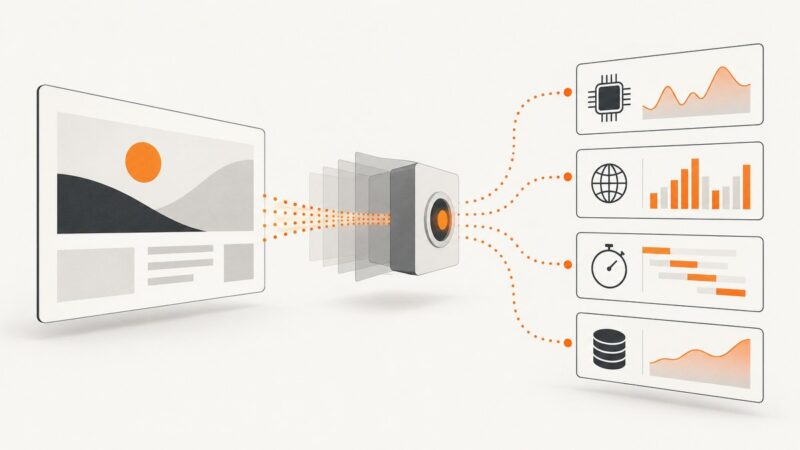
Visual AI can speed up software releases by finding interface regressions in a pull request or CI run, while the change is still easy to fix. It compares a known-good page rendering with the changed version and helps reviewers distinguish real layout or styling problems from expected changes and rendering noise.
It complements functional tests. A test can confirm that a button works or an API returns the expected value while missing a shifted layout, wrong color, changed font, overlap, or missing element. The practical benefit depends on stable captures, useful baselines, and timely review; AI does not remove the need to maintain tests or approve visual changes.
How visual AI speeds up software releases
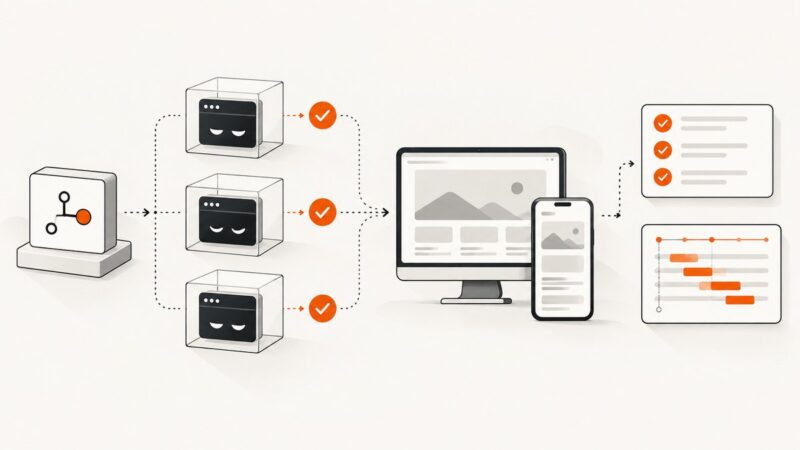
A visual regression workflow captures a page or component in a known state, renders the changed application under a controlled configuration, and compares the new image with a baseline. The diff gives the reviewer evidence of what changed visually. When this runs on each pull request, a regression can be investigated before merge rather than after deployment.
- Establish a baseline. Capture representative pages, components, and user states at the viewport and browser configurations that matter.
- Capture the proposed change. Run the same flows against the pull request build, with repeatable data and rendering settings.
- Compare and triage. Inspect changed regions. AI-assisted analysis may help filter dynamic noise or explain whether a difference looks structural or cosmetic.
- Approve or correct. A reviewer accepts intentional changes by updating the baseline, or sends regressions back for a fix.
The speed comes mainly from shortening the feedback loop and making review focused. It does not mean every detected difference is a defect, nor that automated comparison can decide whether a product change is desirable.
What visual AI can catch that functional tests may miss
Functional assertions test behavior that has been explicitly encoded. Visual comparison checks the rendered interface in the captured state, so it can surface unintended appearance changes even when interactions still pass.
| Possible regression | Why a functional test may pass | What to inspect |
|---|---|---|
| Element moved or resized | The control remains present and clickable. | Alignment, spacing, and responsive behavior. |
| Wrong color, font, or styling | Assertions may verify text or state, not visual tokens. | Contrast, typography, brand styles, and theme. |
| Overlap or clipping | The page can still load and controls may remain in the DOM. | Content at the target viewport and longer localized text. |
| Missing icon, image, or section | Tests may not assert that every visual asset rendered. | Asset loading, conditional rendering, and empty states. |
Visual checks do not replace functional, accessibility, security, or end-to-end tests. Use them alongside those checks because each catches a different class of failure.
How to add visual regression checks to CI/CD
- Choose high-value coverage. Start with important user journeys and shared components where a small styling change can affect many screens. Include the browsers, resolutions, roles, and states your users rely on.
- Make page state repeatable. Use stable test data, predictable authentication, fixed viewport sizes, and deterministic application state. Avoid capturing pages that depend on uncontrolled external content.
- Control rendering noise. Freeze or disable animations, wait for fonts and images, and mask or stabilize timestamps, rotating content, and personalized data. Keep masks narrow so they do not conceal real defects.
- Capture a reviewed baseline. Baselines should represent intentional UI, with a clear owner and review history. Do not automatically accept every new rendering as correct.
- Run checks on pull requests. Publish the comparison report as a PR check or artifact. Make failures visible to the author and reviewer while the change is in context.
- Set a triage policy. Define who reviews diffs, how intentional updates are approved, and how flaky captures are reported. Separate infrastructure failures from actual visual mismatches.
- Measure the workflow. Track review time, regressions caught before release, escaped visual defects, flaky-test rate, and snapshot maintenance. Expand coverage when the signal is useful.
BrowserStack’s Mastercard case study describes Percy snapshots running through Jenkins on every pull request, with handling for animations and dynamic content to limit false positives. BrowserStack’s Autodesk case study likewise describes visual tests as PR checks and part of CI/CD. These are vendor-published customer accounts and illustrate implementation choices, not a guarantee that another team will get the same results. Mastercard case study · Autodesk case study.
Reducing false positives and flaky visual tests
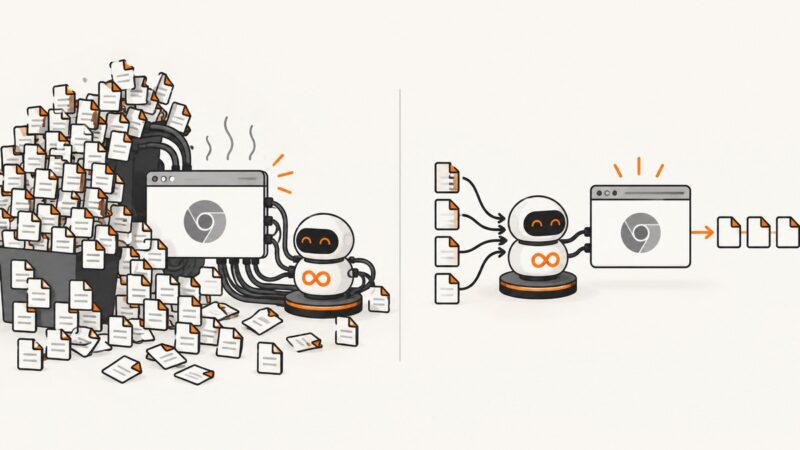
A noisy suite slows releases because people spend time investigating harmless differences and may stop trusting the checks. Treat reliability as a design requirement.
- Stabilize inputs: fix test data, user state, locale, timezone, and viewport for a given test.
- Wait for the page to settle: wait for a meaningful selector, fonts and images, or an appropriate network-idle condition rather than relying on a short arbitrary delay.
- Handle motion and dynamic regions: freeze animations and mask only content that is inherently variable, such as a timestamp. Review mask changes like code.
- Keep environments consistent: compare captures made with the same browser, operating system, device scale, and rendering configuration where possible.
- Investigate repeatability: rerun intermittent failures and identify whether the cause is test timing, application state, infrastructure, or a real race.
- Use AI as an aid to review: filtering or explanations can prioritize diffs, but a person should still approve meaningful baseline changes.
Layout-aware analysis can help distinguish a structural break from a minor cosmetic difference, while pixel-level comparison makes literal rendering changes visible. Neither removes the need to decide which differences matter to users and the product.
What reported results do—and do not—show
Published case studies report gains from specific implementations, but the figures measure different workflows and should not be treated as a forecast or a shared benchmark.
| Source and scope | Reported result | How to interpret it |
|---|---|---|
| BrowserStack’s Mastercard Percy case study | About 9 engineering hours reclaimed per iteration; more than six significant regression defects detected in one iteration; a visual report for a major UI-library update in 15 minutes. | Vendor-published customer results for that implementation. |
| BrowserStack’s Autodesk Percy case study | Potential release cadence of three times a week. | Described as a potential cadence, not a measured universal outcome. |
| Microsoft Inside Track’s Enterprise Test Platform account | In a migration pilot, weekly regression testing fell from three days to under an hour; the account also reports 57% automation across that migration effort. | A broader testing-platform account, not a visual-AI-specific result. |
| IBM Think’s Enterprise Payment Services account | IBM reports an 80% reduction in regression execution cycle time using IBM Bob. | A named workflow and broader generative-AI testing account, not a visual-AI benchmark. |
| AWS’s Katalon case study | AWS reports up to 60% shorter test durations and 100% self-healing test coverage for Katalon’s Scout build. | AWS-published claims about that product build, not independent validation or a general forecast. |
Do not average these figures: the organizations, systems, periods, and test scopes differ. Measure your own baseline before adopting visual AI, then compare review effort, release lead time, defects caught, escaped visual defects, and maintenance cost. Sources: BrowserStack / Mastercard, BrowserStack / Autodesk, Microsoft Inside Track, IBM Think, and AWS / Katalon.
AI-generated tests, review, and governance
AI can also propose test cases or diagnoses, but generated steps and expected results need review. Microsoft describes a human approval stage for proposed cases and a human-readable execution context that fixes steps, inputs, outputs, and assertions for repeatable runs. IBM describes QA review of generated cases and notes the consequences of plausible but incorrect output in a regulated payment workflow.
For high-impact systems, retain an auditable record of who approved a test, what it checks, and which baseline or expected result it uses. Treat AI suggestions as drafts. Keep execution repeatable after approval, and require appropriate human sign-off for baseline updates and release decisions.
ScreenshotNeo for visual release evidence
ScreenshotNeo is a website screenshot API and MCP server from Yorker Media. It can capture a URL as PNG, JPEG, WebP, or PDF. A screenshot API is useful for collecting page evidence or making repeatable captures in a release workflow; it is not a substitute for a dedicated visual regression system that manages baselines and diffs. See ScreenshotNeo and the API documentation.
Or skip the browser setup
For a straightforward page capture, one GET request returns the image. The following cURL, Python, and Node.js examples use Stripe as the target; replace it with a page you are authorized to capture. See the ScreenshotNeo API docs for parameters and response details.
cURL
curl -G "https://api.screenshotneo.com/v1/shot" -d access_key=YOUR_API_KEY --data-urlencode url=https://stripe.com -o shot.webpPython
import requests

r = requests.get(
    "https://api.screenshotneo.com/v1/shot",
    params={"access_key": "YOUR_API_KEY", "url": "https://stripe.com"},
    timeout=90,
)
r.raise_for_status()
open("shot.webp", "wb").write(r.content)
Node.js
const q = new URLSearchParams({ access_key: 'YOUR_API_KEY', url: 'https://stripe.com' });
const res = await fetch(`https://api.screenshotneo.com/v1/shot?${q}`);
if (!res.ok) throw new Error(`Screenshot request failed: ${res.status}`);
const bytes = Buffer.from(await res.arrayBuffer());
await import('node:fs/promises').then(fs => fs.writeFile('shot.webp', bytes));
ScreenshotNeo accepts cookie or consent banners as a visitor and removes more than 60 known consent platforms, newsletter popups, and chat widgets before capture; each step can be turned off. Only clean shots are billed: bot checks or CAPTCHAs, blank pages, timeouts, failed loads, and cache hits cost nothing, with the outcome reported in X-Page-Verdict and X-Billed headers. Its MCP server offers take_screenshot, get_page_info, and capture_pdf for Claude, Cursor, and other MCP clients.
There are 1,000 screenshots a month free with no card. Paid plans start at $5 for 3,000 screenshots; every feature is available on every plan, and yearly billing gives two months free. Sign up free for 1,000 screenshots a month.
Relevant capture options for release workflows
ScreenshotNeo supports full-page captures with lazy images loaded, element capture by CSS selector, 12 device presets and custom viewports, dark mode, and retina scale. For controlled capture state, it supports custom CSS and JavaScript, clicking an element before capture, hiding selectors, and waiting for a selector, delay, or network idle. It can also set headers, cookies, user agent, Authorization, timezone, and geolocation; block ads, trackers, requests, or resource types; and use transparent backgrounds.
Output and delivery options include PNG, JPEG, WebP, PDF with paper size, margins, landscape, and page ranges, HTML/CSS to image, image resizing, configurable cache TTL, signed links for public image tags, asynchronous jobs with signed webhooks, bulk capture of up to 100 URLs per call, a usage API, and an OpenAPI spec. Parameter names used by other screenshot APIs also work, which can make migration easier. A captured image can support review or documentation, but visual regression detection still requires comparing captures against a baseline.
Troubleshooting visual release checks
| Symptom | Likely cause | Fix |
|---|---|---|
| Diffs change on every run | Animations, timestamps, rotating content, random data, or inconsistent environment. | Freeze motion, stabilize data and locale, and mask only unavoidable dynamic regions. |
| Screenshot is blank or incomplete | Capture starts before navigation, fonts, images, or client rendering finish. | Wait for a meaningful selector or settled page condition; check the app logs and resource failures. |
| Text wraps differently in CI | Font loading, viewport, device scale, browser, or operating system differs. | Pin the rendering configuration and wait for web fonts before capture. |
| Intentional redesign blocks the pull request | The baseline still represents the previous approved design. | Review the changed regions and update the baseline with the product change, retaining normal approval. |
| Too many failures to review | Coverage is broad but noisy, or thresholds and masks hide the useful signal. | Prioritize high-value pages, narrow unstable regions, and track flaky rate and review time. |
| AI explanation seems convincing but is wrong | Generated analysis is probabilistic and can misclassify a change. | Inspect the actual capture and diff; keep human approval for tests and baseline updates. |
| Screenshot API request fails | Invalid key, inaccessible target, timeout, or a blocked/bot-check page. | Check credentials and target access, allow enough time for rendering, inspect response status and X-Page-Verdict/X-Billed headers, and consult the API docs. |
Performance, reliability, and cost
Capture cost is only one part of visual testing. Browser startup, page load, test data setup, baseline review, and flaky reruns all affect pipeline duration. Run a focused set of high-value visual checks on pull requests, and use broader browser, resolution, and journey coverage where the longer run fits your release process. Parallel work can reduce elapsed time, but it increases resource use and may expose shared-state problems if tests are not isolated.
Prefer reproducibility over aggressive thresholds: pin browser and viewport settings, keep test data isolated, and monitor flaky runs. A fast suite that reviewers distrust will not shorten releases. Compare total operating cost—including test maintenance and human review—with the value of earlier defect discovery. ScreenshotNeo’s published pricing is free for 1,000 shots monthly with no card, then $5 for 3,000, $15 for 15,000, $39 for 60,000, $99 for 250,000, and $249 for 1,000,000; all features are on each plan, with two months free on yearly billing.
FAQ
Does visual AI know whether a design change is good?
No. It can identify and help explain rendering differences, but product intent and approval remain human decisions.
Should every page be included in pull request checks?
Start with high-value journeys and shared components, then expand based on defect risk and suite reliability. Every additional capture also adds maintenance and review surface.
Can a screenshot API replace a visual regression platform?
A screenshot API supplies captures. Baseline management, comparisons, approvals, and CI reporting may require separate tooling or workflow code.
How do we know whether it made releases faster?
Compare a pre-adoption baseline with later review time, lead time, regressions caught before release, escaped visual defects, flaky-test rate, and maintenance effort. Attribute changes carefully because other process changes can affect those measures.