How Visual Testing Improves Software Quality
Visual testing catches UI regressions that behavior checks can miss. Learn how to add screenshot comparisons to your workflow and review changes reliably.
Visual testing improves software quality by comparing screenshots of a rendered interface against approved baseline images. It can reveal visible regressions—such as missing images, shifted layouts, overlapping elements, or changed typography—that functional assertions may not catch. It complements functional and accessibility testing; it does not replace either.
A useful visual test captures a meaningful UI state under controlled conditions, compares it with a baseline, and sends differences for review. Keep intentional design changes by approving an updated baseline. Treat unexpected differences as defects to investigate.
1. What visual testing checks
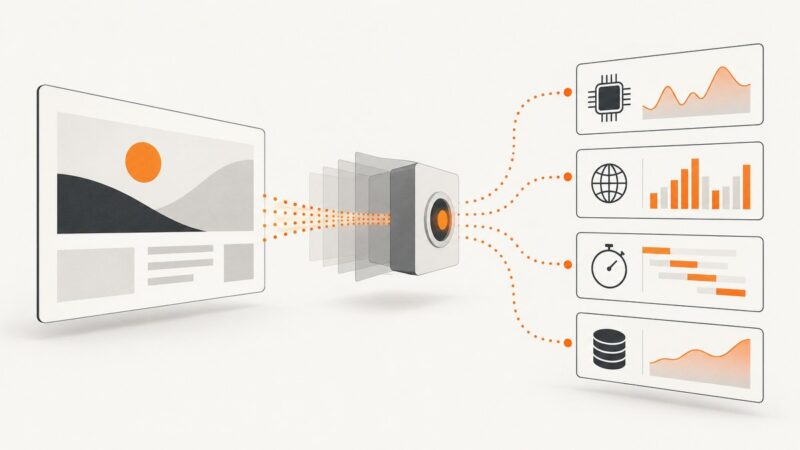
A visual test evaluates what a user sees at a particular checkpoint. A functional test might establish that a page loaded or a button opened a dialog; a visual comparison can additionally show whether the dialog is misplaced, text wraps unexpectedly, or an image is absent.
Typical targets include:
- Page layout, spacing, alignment, and responsive breakpoints.
- Missing, incorrect, or unexpectedly cropped images and icons.
- Overlapping or clipped content, including menus, modals, and sticky elements.
- Typography changes such as an incorrect font, weight, or line wrapping.
- Unexpected changes to colors, borders, and other visible styling.
These are issues visual comparisons can help expose, not a guarantee that every defect will be detected. Coverage depends on which screens and states are captured, the comparison method, and the review process. The available evidence does not support a general numerical estimate of how much visual testing improves overall quality.
2. How a visual regression workflow works
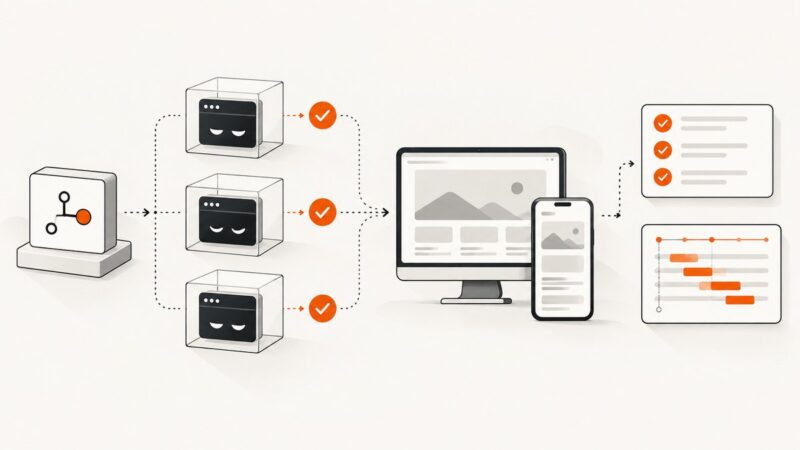
- Set up a meaningful state. Use the application test to navigate to a page or interaction state worth checking. Control data, viewport, and other avoidable variation.
- Capture the rendered screen. Take a screenshot at the checkpoint after the interface has reached the expected state.
- Compare with an accepted baseline. The tool identifies differences according to its comparison method and configuration.
- Review the result. Decide whether a difference represents a bug, harmless capture variation, or intended change.
- Update the baseline only for an intentional change. An approved design update becomes the new reference; a defect stays open for correction.
This is the general baseline-comparison workflow described in Applitools’ visual UI testing documentation. Implementations vary: framework-native screenshot assertions and dedicated visual testing services may differ in capture, comparison, reporting, and approval behavior.
3. Add a screenshot assertion with Playwright
Playwright can capture screenshots as part of browser tests and compare them with stored snapshots. The following JavaScript example illustrates a page-level check. It assumes a Playwright project with a test runner and a page at / that renders a stable heading. Replace the URL and selector with your application’s own.
import { test, expect } from '@playwright/test';

test('home page matches its visual baseline', async ({ page }) => {
  await page.setViewportSize({ width: 1280, height: 800 });
  await page.goto('http://localhost:3000/');
  await expect(page.getByRole('heading', { name: 'Welcome' })).toBeVisible();
  await expect(page).toHaveScreenshot('home-page.png', {
    fullPage: true,
    animations: 'disabled'
  });
});
Run it with the Playwright test runner configured in your project. On the first run, the runner creates a baseline snapshot; review that image before treating it as accepted. Later runs compare against it. Consult the Playwright screenshot assertions documentation for setup, snapshot update commands, and configuration details.
For a focused component check, target a locator instead of the full page:
await expect(page.locator('[data-testid="pricing-card"]'))
  .toHaveScreenshot('pricing-card.png');
Choose checkpoints that represent user-visible states, such as a loaded dashboard, an open menu, or a validation message. A screenshot taken before the relevant state is ready can produce a misleading baseline.
4. Make captures repeatable
Visual comparison is only useful when the same test state produces sufficiently consistent captures. Make the setup explicit:
- Use predictable data. Seed test records or fixtures so names, counts, and content do not change between runs.
- Set the viewport. Use a fixed width and height for each baseline. Treat a mobile or tablet viewport as a separate test case.
- Wait for the actual state. Prefer waiting for a meaningful selector or application-ready condition over an arbitrary short delay.
- Handle animation and time. Disable animations where appropriate and freeze or control timestamps, rotating banners, and other time-dependent content.
- Load fonts and assets before capture. A fallback font or late image can change wrapping and layout.
- Use consistent browser and rendering settings. Browser, operating system, device scale, font availability, and rendering behavior can affect pixels.
- Isolate external dependencies. Live APIs, ads, third-party widgets, and changing remote content can make a baseline unstable. Stub them where suitable for the test.
Do not mask a region just because it changes. First determine whether the changing content is meaningful to users or indicates an underlying reliability problem. Mask only content that must vary and is outside the purpose of that particular check.
5. Review differences without hiding defects
A difference is a review signal, not automatically a bug. Inspect both the rendered result and the change being reviewed:
- If a design change is intentional, verify it against the product change and approve the new baseline.
- If a layout or asset changed unexpectedly, reproduce the difference and correct the application.
- If only unstable data differs, make the test data deterministic or narrowly exclude that region.
- If many unrelated areas change at once, check shared causes such as a font update, browser version, viewport, or global CSS.
Keep baseline updates reviewable in version control or in the visual testing system’s approval workflow. A blanket baseline refresh can make real regressions harder to spot.
6. What visual testing does not prove
A screenshot can show visible appearance, but it cannot establish that controls work, data is correct, or the experience is accessible to people using assistive technology. A page can match its baseline and still contain a broken interaction or inaccessible control.
Use complementary checks:
- Functional tests verify behavior, navigation, and application outcomes.
- Visual tests compare rendered appearance at selected states.
- Accessibility checks identify some issues such as missing accessible names or contrast problems, depending on the tools and checks used.
- Manual assessment and inclusive user testing remain important because automated accessibility scans find only some common problems. See Playwright’s accessibility testing guidance.
Do not treat a passing screenshot test as an accessibility certification or as proof that the application is defect-free.
7. Choose an approach that fits the team
Visual checks can be built with browser automation and screenshot assertions, or run through a dedicated visual testing service. The right choice depends on your existing test workflow and the review and coverage needs of the project. The sources available here do not establish a neutral current pricing comparison or a basis for ranking providers.
| Evaluation area | Questions to ask |
|---|---|
| Frameworks and languages | Can the approach run with your current test framework and languages? |
| Browser and device coverage | Which browsers, operating systems, viewports, and device configurations can you capture? |
| Comparison behavior | Is comparison pixel-based, perceptual, or AI-assisted? How are rendering variations handled? |
| Dynamic content | How will tests handle timestamps, user-specific data, animation, and third-party content? |
| Review workflow | Can reviewers see differences clearly, approve intentional changes, and trace decisions? |
| CI integration | How do captures run in CI, and how are failures and artifacts surfaced to the team? |
| Maintenance | How much effort is needed to keep tests stable and baselines current? |
| Total cost | What costs apply at your expected capture volume, and what operational time does the approach require? |
Applitools describes its own visual testing workflow and framework integrations in its web testing overview. Percy describes visual testing as part of a testing strategy in its visual testing article. These vendor materials describe their respective products; they are not independent evidence of comparative superiority or quantified quality gains.
8. Troubleshooting common visual test failures
| Symptom | Likely cause | What to do |
|---|---|---|
| Repeated small pixel differences | Font rendering, antialiasing, browser, or operating-system variation. | Standardize the capture environment and browser version. Review whether the configured comparison method can account for this variation. |
| Text wraps differently | A different font loaded, the viewport changed, or content differs. | Wait for fonts, fix the viewport, and make test data deterministic. |
| Images are missing or appear late | The capture happened before assets loaded, or a remote dependency failed. | Wait for the relevant image or page-ready state. Stabilize or stub remote dependencies where appropriate. |
| Large areas change on every run | Dynamic data, animation, ads, clocks, or personalized content. | Control the source of variation. Exclude only narrowly defined regions that are intentionally outside the check. |
| Snapshot differs after a browser update | The rendering environment changed. | Review the change deliberately, rerun in the intended environment, and update baselines only when the differences are accepted. |
| A test passes but a user-visible bug remains | The affected page, viewport, or interaction state is not covered by a checkpoint. | Add a visual checkpoint for the missing state and retain functional checks for behavior. |
| Baseline updates hide regressions | Snapshots were refreshed without reviewing the changes. | Require an intentional-change review and keep baseline updates tied to the relevant code change. |
9. Performance, reliability, and cost
Visual checks add browser capture and comparison work to a test workflow. Their practical cost depends on the number of pages and states, browser/device matrix, execution model, and the time reviewers spend resolving noisy differences. The available sources do not support a universal runtime or return-on-investment estimate.
Start with high-value pages and states, then expand when the team can review the results reliably. Avoid capturing every possible state without a clear risk-based reason. Run checks in CI where they fit the project’s workflow, and preserve failure images and context so an engineer can diagnose a difference without rerunning blindly.
Reliability comes from repeatable setup and disciplined baseline review. If captures are noisy, adding more checkpoints can increase maintenance without improving confidence. Track recurring sources of variation and fix them at their origin where possible.
10. Or skip the browser setup
If you need a clean screenshot for a visual review, report, or AI workflow without setting up browser automation, ScreenshotNeo is a website screenshot API and MCP server. One GET request returns a PNG, JPEG, WebP, or PDF. See the ScreenshotNeo API documentation for request options.
curl -G "https://api.screenshotneo.com/v1/shot" -d access_key=YOUR_API_KEY --data-urlencode url=https://stripe.com -o shot.webpimport requests
r = requests.get(
"https://api.screenshotneo.com/v1/shot",
params={"access_key": "YOUR_API_KEY", "url": "https://stripe.com"},
timeout=90,
)
open("shot.webp", "wb").write(r.content)const q = new URLSearchParams({ access_key: 'YOUR_API_KEY', url: 'https://stripe.com' });
const res = await fetch(`https://api.screenshotneo.com/v1/shot?${q}`);
if (!res.ok) throw new Error(`Screenshot request failed: ${res.status}`);
const image = Buffer.from(await res.arrayBuffer());
await import('node:fs/promises').then(fs => fs.writeFile('shot.webp', image));ScreenshotNeo accepts cookie or consent banners like a visitor and removes more than 60 known consent platforms, newsletter popups, and chat widgets before capture; each step can be turned off. Bot checks or CAPTCHAs, blank pages, timeouts, failed loads, and cache hits are not billed, and response headers identify the page verdict and billing status. Its MCP server provides take_screenshot, get_page_info, and capture_pdf tools for Claude, Cursor, and other MCP clients. The free plan includes 1,000 screenshots a month with no card; paid plans start at $5 for 3,000 screenshots. This is useful for obtaining captures, but baseline comparison and defect review remain part of a visual testing workflow.
Sign up for 1,000 free screenshots a month, with no card required.
11. FAQ
Should visual tests run on every pull request?
That depends on how quickly the checks run, how stable the capture environment is, and whether reviewers can resolve differences in the pull request workflow. Start with important states and make failures actionable before expanding coverage.
Can screenshot comparisons catch every browser-specific issue?
No. A capture only covers the browser and configuration used for that run. Add coverage for the browser, viewport, and device combinations that matter to your users.
Does an approved baseline mean the page is correct?
It means the captured appearance was accepted as the reference for that checkpoint. It does not prove the behavior, content, or accessibility is correct.
Can I use visual testing for a third-party website?
You can capture pages you are authorized to access, but changing content and site behavior can make baselines unstable. For a product you control, deterministic test data and predictable state setup are usually easier to maintain.