How to Keep UI Tests Reliable as Your Website Changes
Keep browser tests useful as your interface evolves with stable locators, observable waits, isolated data, focused scenarios and a practical CI routine.
To keep UI tests reliable as your website changes, test behavior users can see, anchor checks to stable user-facing locators or deliberate test contracts, wait for observable outcomes, isolate test data, and keep end-to-end scenarios focused. When a test fails after a redesign, first determine whether the intended behavior changed or only its implementation did; update the test only after checking that distinction.
Reliability is a property of test design, controlled state and maintenance—not a selector trick. This guide gives a framework-neutral routine, a runnable Playwright example, failure diagnosis and CI guidance.
1. Define the behavior the test protects
Start each browser test with a user-visible outcome. For example: a visitor submits a valid sign-in form and sees their account page, or filters a list and sees matching results. Avoid checking private implementation details such as framework state, function names, or CSS classes unless the styling itself is the requirement.
Playwright’s guidance says tests should verify end-user behavior and avoid implementation details users do not see or use. The same principle applies regardless of framework. Write down the action and observable result before choosing a locator.
- Action: what the user does.
- Outcome: what visible state demonstrates success.
- Boundary: what must not happen, if it matters to the flow.
For a checkout update, the action could be changing a quantity and choosing “Update cart”; the outcome could be the updated quantity and total. A test that checks a component’s internal variable would be less meaningful to the user.
2. Choose locators as product contracts
Choose a locator based on what the test is meant to protect. Prefer accessible roles and names when the user-facing meaning matters. Use visible text when the copy is part of the behavior being tested. A dedicated test ID is useful when wording or layout may change independently from the behavior and the team agrees to maintain that explicit contract.
| Locator | Good fit | Typical risk |
|---|---|---|
| Role and accessible name | Buttons, links, fields and other controls whose meaning to users matters | Accessible name changes may reveal a real usability or product change |
| Visible text | Copy, messages, headings or labels are part of the requirement | Editorial wording changes can require a deliberate test update |
| Dedicated test ID | Stable behavior needs a locator independent of changing copy | IDs can become stale or overly coupled if no owner maintains them |
| CSS class or DOM path | Rarely appropriate for user behavior checks; possibly useful for a visual or structural test | Styling and markup refactors can break the test without changing behavior |
Prefer a locator that uniquely identifies the intended control. If it matches multiple elements, scope it to a meaningful region such as a dialog or a named form rather than selecting the first match and hoping the page order stays fixed.
3. Synchronize on observable state
Do not use a fixed delay as a substitute for knowing the page is ready. Wait for the condition relevant to the next action or assertion: a dialog becomes visible, a loading indicator disappears, a result row appears, or a URL changes. Modern browser automation frameworks often wait for actionability before interacting and retry assertions until their condition is met.
Fixed sleeps make every run wait at least that long, yet can still be too short on a slow run. A wait for the expected state is both more informative and more robust. For animations, background requests or eventual updates, assert the final user-visible state instead of assuming a duration.
4. Runnable example: Playwright with TypeScript
The example assumes a running application at BASE_URL with a sign-in page containing accessible labels “Email” and “Password”, a “Sign in” button, and an account page that displays “Your account”. Install Playwright with npm init playwright@latest, save this as tests/sign-in.spec.ts, set BASE_URL, and run npx playwright test. Use a test account provisioned for the test environment; do not put a real user’s credentials in source control.
import { test, expect } from '@playwright/test';

test('a user can sign in and reach their account', async ({ page }) => {
  const baseUrl = process.env.BASE_URL;
  const email = process.env.E2E_EMAIL;
  const password = process.env.E2E_PASSWORD;

  if (!baseUrl || !email || !password) {
    throw new Error('Set BASE_URL, E2E_EMAIL, and E2E_PASSWORD for the test environment.');
  }

  await page.goto(new URL('/sign-in', baseUrl).toString());
  await page.getByLabel('Email').fill(email);
  await page.getByLabel('Password').fill(password);
  await page.getByRole('button', { name: 'Sign in' }).click();

  await expect(page).toHaveURL(/\/account(?:\/|$)/);
  await expect(page.getByRole('heading', { name: 'Your account' })).toBeVisible();
});
The test verifies a meaningful user journey and waits for the URL and heading assertions to reach their expected state. If your product uses a different route, heading or form labels, change these to its actual user-facing contract. Do not add arbitrary sleeps to compensate for a missing or incorrect outcome.
5. Keep tests and data independent
A test should arrange the state it needs, perform a short action sequence and assert its own outcome. Avoid relying on another test to create a user, populate a cart or leave the browser on a particular page. Shared accounts and records can cause order-dependent failures when tests run in parallel or are retried.
- Use a dedicated staging environment and predictable seed data where possible.
- Give each parallel test a unique record or account when the scenario writes state.
- Reset or clean up created data, especially for destructive actions.
- Use a fresh browser context/profile so cookies, local storage and prior sessions do not leak between tests.
- Keep secrets in the CI secret store or environment, not in the repository or test output.
Some flows need pre-authenticated state for speed. Set it up through a documented fixture or supported test helper, and keep at least one focused test of the actual authentication path. Setup should be explicit so a failed test can be reproduced.
6. Keep browser scenarios short and valuable
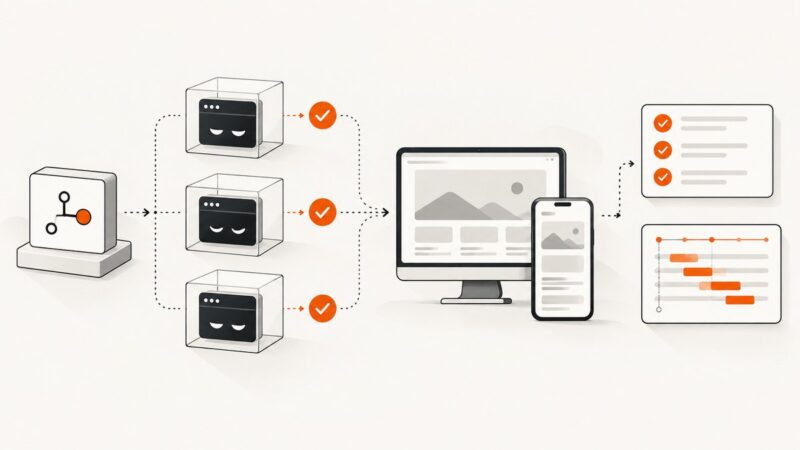
Browser tests exercise a real page and usually require more infrastructure and time than lower-level tests. Use unit or component tests for logic that does not need a browser. Reserve end-to-end coverage for critical user journeys and integration boundaries where the whole application needs to work together.
Prefer several short scenarios with clear outcomes over one long journey that traverses unrelated features. When a long flow fails, it can be hard to tell which transition broke; short scenarios make diagnosis and ownership clearer. Selenium’s guidance also emphasizes that no single test approach fits every situation.
7. Treat website changes as test maintenance work
When a test fails after a UI change, inspect the failure and ask these questions before editing it:
- Did the user’s intended behavior change?
- Did the accessible name, visible copy or navigation contract change intentionally?
- Did only the markup, styling or component structure change?
- Is the test using stale data, shared state or an assumption about timing?
- Does the failure reveal a regression in the new interface or an accessibility issue?
If behavior changed intentionally, update the scenario and expected outcome alongside the product change. If only the implementation changed, update a brittle locator to the stable contract the test should have used. If the failure points to a genuine regression, fix the product instead of weakening the assertion.
Include test ownership in UI change review: new or changed critical flows should bring corresponding coverage, and removed flows should retire obsolete tests. This keeps the suite aligned with the site rather than accumulating tests for an older interface.
8. Make CI results useful
Run the browser suite regularly in CI against a controlled staging environment. Run a small critical-path group on frequent changes and broader browser coverage at a cadence your infrastructure can support. Exercise the browser engines and versions important to your audience; support details change, so check the framework’s current documentation before setting the matrix.
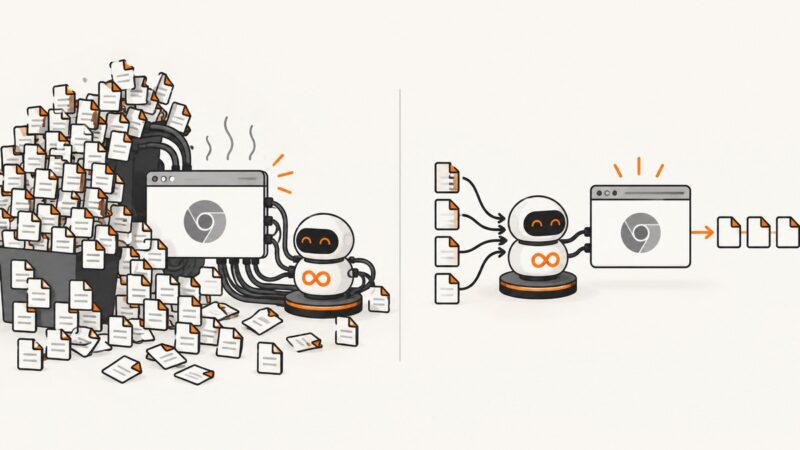
Keep diagnostics that help distinguish product failures from environment problems: test name, browser and version, console errors, relevant network failures, and a screenshot or trace on failure. Avoid logging credentials or sensitive user data. A retry can help collect evidence, but a test that only passes on retry is still a flaky result to investigate, not proof of reliability.
Track recurring failure causes and fix them at the source: unstable data, poor locator contracts, uncontrolled dependencies, or incorrect synchronization. Do not make retries the routine way to hide failures.
9. Framework choice and browser coverage
No framework is universally best. Compare candidates against the browsers your users need, the locator and waiting model your team can maintain, environment setup and isolation, failure diagnostics, CI execution cost, programming language and existing investment. Playwright documents Chromium, Firefox and WebKit projects. Cypress documents Chrome-family browsers and Firefox, while its WebKit support is described as experimental. Confirm current support in each project’s documentation because it can change.
Useful primary references: Playwright best practices, Playwright writing tests, Playwright retries, Selenium test automation overview, Selenium encouraged behaviors, and Cypress browser launching.
10. Troubleshooting common reliability failures
| Symptom | Likely cause | Fix |
|---|---|---|
| Element not found after a redesign | Locator depends on a class, DOM path, or old wording | Inspect the rendered page and intended behavior; move to an accessible role/name, meaningful text, or maintained test ID |
| Click fails because a control is covered or disabled | Overlay, loading state, animation or genuine disabled state | Wait for the expected visible/enabled state and determine why the overlay remains; do not force-click past a real user obstruction |
| Test passes alone but fails in the full suite | Shared state, order dependency, reused data or session leakage | Make setup self-contained, isolate browser context and data, and remove reliance on execution order |
| Intermittent timeout on a result assertion | Uncontrolled dependency, slow response, race or incorrect wait target | Capture network/console diagnostics; wait on the actual outcome and stabilize or control the dependency where practical |
| Retry passes after first attempt fails | Flake, transient environment issue or state pollution | Keep the retry evidence and diagnose the first failure; fix its cause rather than treating the retry as success |
| CI fails but local run succeeds | Different browser version, environment variables, data, network or viewport | Record environment details, reproduce with the CI browser/configuration, and make setup and viewport explicit |
| Several tests create conflicting records | Parallel workers share mutable test data | Use unique per-test data, isolated tenants/accounts, or controlled serial execution only where the workflow truly requires it |
11. Performance, reliability and cost
Keep browser coverage focused because browser sessions need execution time, workers and an environment that can serve the application and its dependencies. Run the most valuable short scenarios more often; place slower cross-browser or broad regression coverage at an appropriate CI stage. Avoid optimizing by removing assertions that protect important user outcomes.
Reliability improves when test data and environment are predictable and failures retain enough evidence to reproduce. A screenshot or trace can explain a UI mismatch, while console and network details can reveal a failed asset or API call. Keep artifacts scoped and scrub secrets before storing them.
CI cost depends on suite size, parallelism, browser matrix and execution infrastructure. The research sources provide no universal benchmark or cost figure, so measure the runtime and resource use of your own suite. A retry increases work and should be treated as diagnostic evidence.
12. Visual checks and screenshot workflows
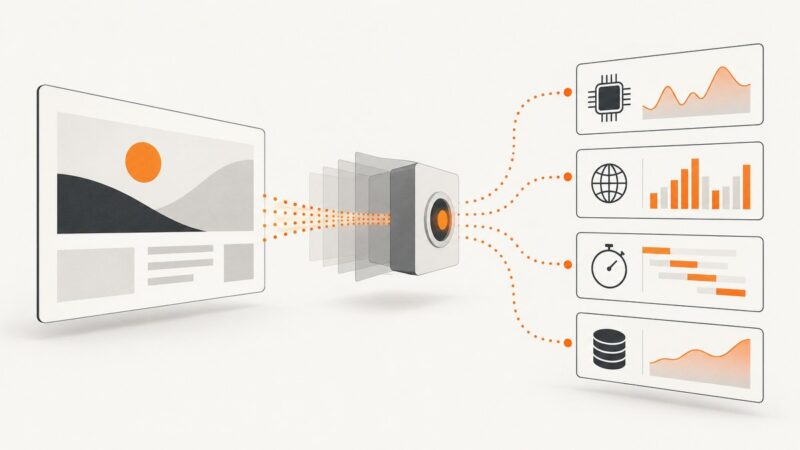
Functional assertions answer whether a user can complete an action and see the expected state. Visual comparison can complement them when layout, rendering or regressions in appearance matter. Keep visual baselines in a consistent environment: browser version, fonts, viewport, device scale and test data can affect the image. A screenshot alone does not prove the interaction works.
For manual review, bug reports or repeatable page captures, ScreenshotNeo is a website screenshot API and MCP server. Its screenshot output can help document how a page looked, while browser UI tests remain responsible for verifying interactive behavior.
13. Or skip the browser setup
When you need a page screenshot for review or documentation, ScreenshotNeo returns an image or PDF from one GET request. See the ScreenshotNeo API documentation for options.
curl -G "https://api.screenshotneo.com/v1/shot" -d access_key=YOUR_API_KEY --data-urlencode url=https://stripe.com -o shot.webpimport requests
r = requests.get("https://api.screenshotneo.com/v1/shot", params={"access_key": "YOUR_API_KEY", "url": "https://stripe.com"}, timeout=90)
open("shot.webp", "wb").write(r.content)const q = new URLSearchParams({ access_key: 'YOUR_API_KEY', url: 'https://stripe.com' });
const res = await fetch(`https://api.screenshotneo.com/v1/shot?${q}`);- Cookie banners are accepted and removed before capture; known newsletter popups and chat widgets are removed too.
- Bot checks, blank pages and failed loads are never billed; response headers report the page verdict and billing status.
- An MCP server provides
take_screenshot,get_page_infoandcapture_pdftools for AI agents. - The free plan includes 1,000 screenshots a month with no card; paid plans start at $5 for 3,000.
Sign up free for 1,000 screenshots a month, no card required.
14. FAQ
Should every UI test use a test ID?
No. Use accessible roles or text when user-facing meaning is part of the contract. Use a test ID when behavior needs a stable hook independent of wording and your team maintains it.
Should a test fail when button copy changes?
It depends on whether the wording is part of the requirement. If it is, the failure prompts review; if not, use a stable locator tied to the behavior.
Can screenshots replace UI assertions?
No. Screenshots document appearance, while assertions verify state and behavior. They serve different checks.
Are retries a solution to flaky tests?
No. They can expose useful evidence, but retry-only passes still indicate unreliability and need diagnosis.
Checklist
- Each browser scenario protects a clear user-visible outcome.
- Locators express a deliberate contract and avoid incidental styling or DOM structure.
- Waits target observable state rather than a guessed duration.
- Tests arrange independent data and browser state.
- Scenarios stay short and browser coverage focuses on valuable flows.
- CI records useful, safe diagnostics and retry passes are investigated.
- UI changes include corresponding test review and maintenance.