BlogScreenshots on your device
Linux Screenshot Tips and Techniques
Learn reliable Linux screenshot shortcuts, save locations, clipboard workflows, KDE automation, troubleshooting, and browser capture options.
Quick answer: identify your Linux desktop environment first. On GNOME, press Print to open the screenshot overlay, Alt+Print to capture the focused window, or Shift+Print to capture the entire screen. GNOME saves images in Pictures/Screenshots and copies the result to the clipboard. On KDE Plasma, Spectacle uses Print Screen for the app, Meta+Print Screen for the active window, Shift+Print Screen for the entire desktop, and Meta+Shift+Print Screen for a rectangular region.
These shortcuts are documented for GNOME and KDE Spectacle. Other desktop environments, distributions, keyboard layouts, and release versions can use different bindings, so confirm the desktop environment before troubleshooting a shortcut.
Choose the capture you need
| Goal | GNOME | KDE Spectacle |
|---|---|---|
| Whole screen | Shift+Print, or choose the screen option in the overlay | Shift+Print Screen |
| Active window | Alt+Print, or choose the window option in the overlay | Meta+Print Screen |
| Rectangular region | Press Print, then select an area | Meta+Shift+Print Screen |
| Clipboard copy | GNOME copies the image automatically | Configure post-capture clipboard actions in Spectacle |
| Destination | ~/Pictures/Screenshots |
Configured folder and filename pattern |
GNOME: take and find a screenshot
GNOME Help documents the instruction: “Press the Print key or press the screenshot button in the system menu.” This opens the screenshot overlay, where you can select a screen, window, or area and choose whether the pointer appears. See the GNOME screenshots and screencasts documentation.
- Press Print, or open the system menu and choose the screenshot button.
- Select Selection, Screen, or Window.
- Toggle pointer visibility if the overlay provides that option.
- Capture the image. GNOME saves it under
~/Pictures/Screenshots, using a filename beginning withScreenshotand a date/time. - Paste it directly into another application because GNOME also copies the image to the clipboard.
Useful GNOME checks
# List recent GNOME screenshot files
ls -lt "$HOME/Pictures/Screenshots"

# Open the screenshot directory in the default file manager
xdg-open "$HOME/Pictures/Screenshots"
If you need a recording rather than a still image, use the overlay’s screencast mode. Screenshot and screencast are separate modes; choose the image mode when you only need a still frame.
KDE Plasma: use Spectacle
Spectacle provides documented shortcuts for the full desktop, active window, and rectangular region. Its official handbook also covers previewing, saving, clipboard actions, filename patterns, image format, and command-line use.
- Press Print Screen to launch Spectacle.
- Choose the capture target in the application: full desktop, current window, or rectangular region.
- Preview the result, then save it or copy it.
- Use Spectacle’s configuration to set the default folder, filename pattern, image format, and post-capture save or clipboard actions.
KDE shortcut reference
- Print Screen: launch Spectacle.
- Meta+Print Screen: capture the active window.
- Shift+Print Screen: capture the entire desktop, including all monitors.
- Meta+Shift+Print Screen: capture a rectangular region.
Inspect the installed command-line options
Spectacle supports command-line operation and a background mode for scripted captures. Options differ by installed version, so inspect the local help instead of copying flags from an unrelated release:
spectacle --help
spectacle --version
Read the output for the capture type, output filename, and background options available on your system. This is the safest way to build a script that matches your Plasma version and configuration.
Save, name, and share screenshots reliably
Find files from the shell
# Search common screenshot locations
find "$HOME/Pictures" -maxdepth 3 -type f \( -iname '*screenshot*' -o -iname '*.png' -o -iname '*.jpg' \) -printf '%TY-%Tm-%Td %TH:%TM %p\n' | sort -r | head
GNOME’s default location is ~/Pictures/Screenshots. Spectacle can use a different folder or filename pattern, so check its configuration when the expected file is missing.
Use the clipboard for fast handoff
For a one-off bug report or chat message, paste immediately after capture. GNOME documents automatic clipboard copying. In Spectacle, configure the post-capture clipboard action if you want the same behavior. Clipboard contents can be replaced by the next copy operation, so save the file when the image must remain available.
Capture a clean region
- Move transient notifications away before pressing the shortcut.
- Close menus and tooltips that should not appear.
- Use a rectangular selection for documentation snippets and bug reports.
- Capture the active window when you need to avoid exposing unrelated desktop content.
Multi-monitor and scaling tips
On KDE, the documented full-desktop shortcut captures all monitors. If you need one display only, use Spectacle’s screen selection or a rectangular region. On GNOME, choose the screen or area in the overlay. Fractional scaling and high-density displays can make the pixel dimensions differ from the logical window size; check the resulting file dimensions before publishing a screenshot.
# Show dimensions and format (ImageMagick)
identify "$HOME/Pictures/Screenshots/"*.png 2>/dev/null | tail
If identify is unavailable, inspect the image properties in your file manager. Avoid assuming that a screenshot from one monitor has the same dimensions as another.
Automation and repeatable captures
For repeatable desktop captures, keep the desktop session, display arrangement, scaling, and target window stable. Spectacle’s command-line interface is the documented KDE route for scripted or background captures; use spectacle --help on the target machine to select the correct flags. GUI shortcuts are usually better for an occasional interactive capture, while command-line mode is appropriate for a scheduled or batch workflow.
Automation checklist
- Confirm the display server and desktop session used by the job.
- Use an explicit output path and create the directory before capture.
- Check the exit status and verify that the output file is non-empty.
- Record the desktop and Spectacle versions with the job logs.
- Keep secrets and private windows out of automated captures.
Troubleshooting common Linux screenshot problems
| Symptom | Likely cause | Fix |
|---|---|---|
| Print does nothing | The desktop uses different bindings, the key is remapped, or another application owns it. | Open the desktop keyboard-shortcut settings, launch the screenshot tool from the system menu, and verify the physical key and keyboard layout. |
| The image is saved but you cannot find it | The destination was changed, especially in Spectacle. | Check Spectacle’s configured folder and filename pattern; for GNOME inspect ~/Pictures/Screenshots. |
| Only one monitor appears | You selected a screen or window instead of the full desktop. | Use GNOME’s screen option or Spectacle’s full-desktop capture. |
| The screenshot contains a menu or tooltip | The transient UI was open at capture time. | Dismiss it and use a delayed or region capture if your desktop provides one. |
| Clipboard paste is empty | The capture was saved without a clipboard action, or another copy replaced it. | Save the image explicitly and configure Spectacle’s clipboard action; GNOME normally copies the result automatically. |
| Scripted Spectacle capture fails | Flags differ between versions or the session cannot access the display. | Run spectacle --help, test interactively, use an explicit output path, and run the script inside the graphical session. |
| Colors or dimensions look unexpected | Display scaling, color management, or image-format settings differ. | Check the saved file’s dimensions and format, then set the desired format in Spectacle or export a normalized copy. |
Browser screenshots without a local desktop
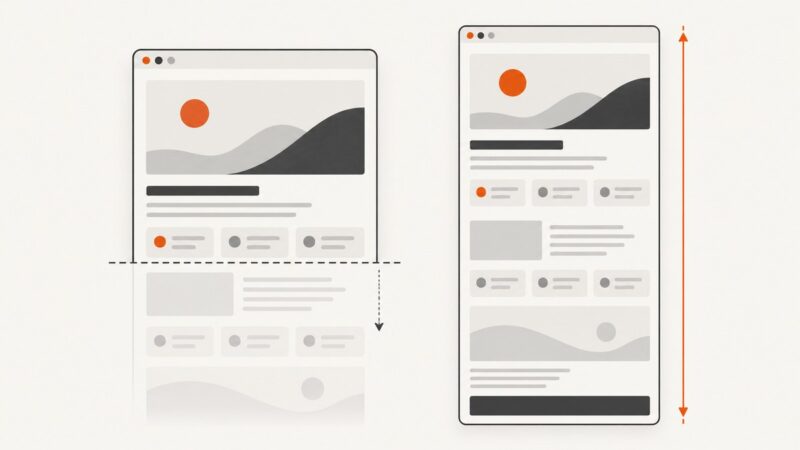
Desktop tools capture what is visible on your Linux session. A website screenshot API is more suitable when you need a repeatable URL capture, full-page scrolling, a fixed device viewport, or a server-side job.
Or skip the browser setup
ScreenshotNeo is a website screenshot API and MCP server. One GET request returns a PNG, JPEG, WebP, or PDF. It removes cookie and consent banners, newsletter popups, and chat widgets before capture; bot checks, blank pages, timeouts, failed loads, and cache hits are not billed; and its response identifies the result with X-Page-Verdict and X-Billed headers. The MCP server provides take_screenshot, get_page_info, and capture_pdf tools for Claude, Cursor, and other MCP clients.
See the ScreenshotNeo API documentation for request options.
cURL
curl -G "https://api.screenshotneo.com/v1/shot" \
  -d access_key=YOUR_API_KEY \
  --data-urlencode url=https://stripe.com \
  -o shot.webp
Python
import requests

r = requests.get(
    "https://api.screenshotneo.com/v1/shot",
    params={"access_key": "YOUR_API_KEY", "url": "https://stripe.com"},
    timeout=90,
)
r.raise_for_status()
open("shot.webp", "wb").write(r.content)
Node.js
const q = new URLSearchParams({ access_key: 'YOUR_API_KEY', url: 'https://stripe.com' });
const res = await fetch(`https://api.screenshotneo.com/v1/shot?${q}`);
if (!res.ok) throw new Error(`HTTP ${res.status}`);
const bytes = new Uint8Array(await res.arrayBuffer());
await Bun.write('shot.webp', bytes);
ScreenshotNeo also supports full-page capture with lazy images loaded, CSS-element capture, dark mode, device presets or custom viewports, retina scale, PDF paper and page-range settings, custom CSS and JavaScript, clicks, selector waits, delays, network-idle waits, request blocking, headers, cookies, user agents, authorization, timezone, geolocation, transparent backgrounds, resizing, configurable caching TTLs, signed image links, asynchronous jobs with signed webhooks, bulk capture for up to 100 URLs per call, usage reporting, and an OpenAPI specification. Existing parameter names used by other screenshot APIs also work to ease migration.
The free plan includes 1,000 screenshots per month without a card. Paid plans start at $5 for 3,000 screenshots; yearly billing provides two months free, and every feature is available on every plan. Create a free ScreenshotNeo account.
Performance, reliability, and cost considerations
- Interactive desktop work: shortcuts are fastest when the correct window is already visible, and clipboard copy avoids a file-picker step.
- Repeatability: record the desktop environment, version, monitor layout, scaling, destination, and image format with any automated workflow.
- Website jobs: wait for the page state you actually need. Dynamic pages may require a selector wait, delay, or network-idle condition.
- Cost control: use a viewport and capture target that match the requirement. ScreenshotNeo’s cache can use a TTL you choose, and cache hits are not billed.
- Failure handling: inspect the HTTP status and ScreenshotNeo verdict headers; bot checks, blank pages, timeouts, failed loads, and cache hits do not consume a billed clean shot.
FAQ
Where does GNOME save screenshots?
GNOME Help documents the Pictures/Screenshots directory in your home folder, with filenames beginning with “Screenshot” and a date/time.
Which KDE shortcut captures a selected rectangle?
Press Meta+Shift+Print Screen.
Can I use these shortcuts on Xfce?
Do not assume GNOME or KDE bindings apply. Check Xfce’s keyboard settings and the screenshot utility installed by your distribution.
How do I capture a web page that is taller than the screen?
Use a browser tool that supports full-page capture or an API such as ScreenshotNeo with full-page capture enabled. Desktop shortcuts capture the visible desktop area.
Are screenshots and screen recordings the same?
No. GNOME’s overlay can switch to screencast mode, but a screenshot is a still image and should be captured in the image mode.