How to Use MCP for Browser Automation and Website Screenshots
Use Playwright MCP to navigate, inspect, interact with pages, and capture reliable website screenshots—with a complete workflow and troubleshooting guide.
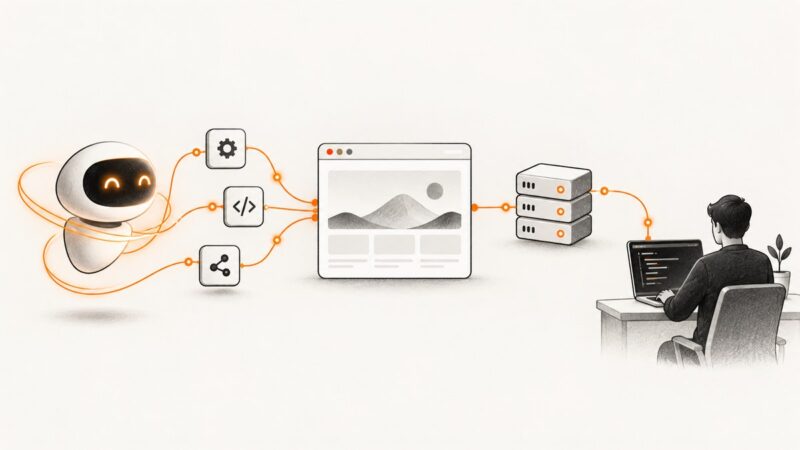
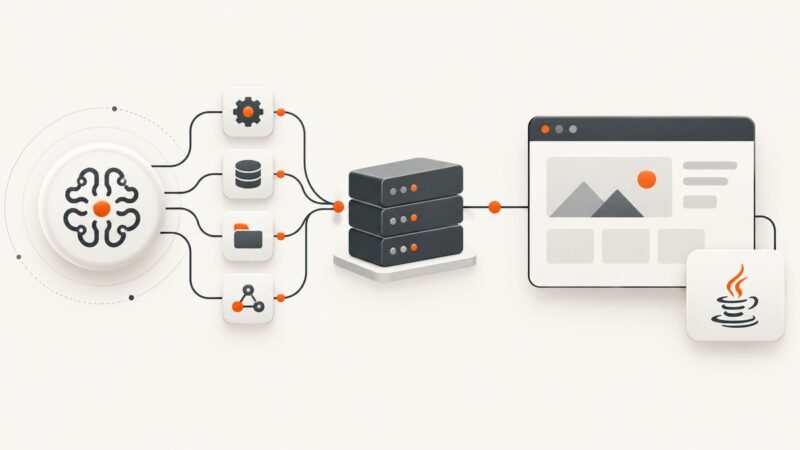
Short answer: MCP is the connection layer between an MCP client and tools. For browser automation, Playwright MCP lets a compatible client control a Playwright browser. The reliable workflow is: navigate to a page, read its accessibility snapshot, use the returned element references to interact, take a fresh snapshot after state changes, and capture a screenshot when you need visual evidence.
Use snapshots to understand and operate a page. Use screenshots to inspect appearance, verify layouts, review canvas or chart output, and document visual bugs. Playwright’s documentation puts it plainly: “Screenshots are for looking at, not for acting on.” Use browser_snapshot to get refs to interact.
1. What MCP, Playwright MCP, snapshots, and screenshots each do
| Part | Purpose | Best use |
|---|---|---|
| MCP | A protocol connection between an MCP client and tools | Lets clients discover and invoke tools exposed by a server |
| Playwright MCP | A browser automation server built around Playwright | Navigation, semantic inspection, interaction, and screenshots |
| Accessibility snapshot | A structured representation of roles, labels, text, and element references | Finding and acting on links, buttons, fields, and other controls |
| Screenshot | Pixels from the current viewport, an element, or the full scrollable page | Visual review, regression evidence, canvas or chart inspection |
| Vision mode | Coordinate-oriented browser interaction | Controls that are visible but not exposed usefully in the accessibility tree |
Tool names and available capabilities depend on the MCP server. Do not assume another browser MCP exposes the same names or options as Playwright MCP.
2. Prerequisites and setup
The official Playwright MCP quick start lists Node.js 20 or newer and an MCP-compatible client as prerequisites. Configuration formats differ between clients, so use your client’s current MCP configuration instructions and the current Playwright MCP getting-started guide.
Start the documented server package
npx @playwright/mcp@latestAdd that command as an MCP server in your client. A typical configuration has a server name, a command, and an argument list, but the exact JSON or UI fields are client-specific. After saving the configuration, restart or reload the client so it can discover the browser tools.
Choose a deployment mode
- Local server: the MCP process and browser run where your client runs. This is the simplest option for local development.
- Standalone HTTP server: useful when a headed browser must run on a machine without a display or when an IDE worker needs to connect to a separate process. Follow the current standalone-server guide for transport, browser availability, heartbeat, and deployment details.
Configuration areas to review
Playwright MCP configuration can include browser and context options, capabilities, network rules, and timeouts. Set only what your workflow needs, then verify the client’s generated configuration against the current options reference.
Security: arbitrary JavaScript execution
The browser_run_code_unsafe capability executes arbitrary JavaScript in the Playwright server process and is equivalent to remote code execution. It is not required for ordinary navigation, snapshots, clicking, typing, or screenshots. Enable it only when the MCP client is trusted and the risk is understood.
3. The dependable browser-automation workflow
- Navigate. Open the target URL with the server’s navigation tool.
- Read a snapshot. Request the accessibility snapshot and locate headings, links, buttons, fields, and their references.
- Act on references. Click, fill, type, select, or use keyboard actions with the references returned by the snapshot.
- Refresh after state changes. A click, navigation, dialog, or dynamically rendered section can make earlier references stale. Take a new snapshot before the next action when the page changed.
- Capture visual evidence. Call
browser_take_screenshotfor the viewport, a target element, or the full scrollable page. Supply a filename when the artifact must be retained; without one, the client can return the image inline. - Use vision mode when needed. If a visual control is not represented accessibly, use Playwright’s coordinate-oriented vision tools.
Example agent instruction
Open https://example.com.
Read the accessibility snapshot and identify the main heading and the “Sign up” button.
Click the “Sign up” button using its snapshot reference.
Take a fresh accessibility snapshot.
Capture a full-page screenshot and save it as example-signup.png.
The wording is intentionally semantic. The agent should obtain references from the snapshot instead of guessing coordinates or trying to click pixels in a screenshot.
4. How to take screenshots with Playwright MCP
Playwright MCP’s screenshot tool can capture the current viewport, a specified element, or the entire scrollable page. It supports PNG, JPEG, and WebP. If you do not set a format, the filename extension can determine it; otherwise PNG is the default. The scale option uses CSS pixels by default or device pixels for a higher-resolution image.
Viewport screenshot
Ask the MCP client:
“Navigate to https://example.com and capture the current viewport as example-viewport.png.”
Full-page screenshot
Ask the MCP client:
“Capture the entire scrollable page at https://example.com as example-full-page.webp.”
Full-page capture cannot be combined with target-element capture.
Element screenshot
Ask the MCP client:
“Read the accessibility snapshot for https://example.com, identify the pricing table, and capture that element as pricing.png.”
Use a snapshot to identify the element first. If the element is not exposed in the accessibility tree, use a selector or vision-mode workflow supported by your client.
Choosing format and scale
| Need | Choice |
|---|---|
| General documentation | PNG at the default scale |
| Smaller files for previews | JPEG or WebP |
| Pixel-level review on a high-density display | Device-pixel scale |
| Long page documentation | Full-page capture, with no element target |
| Focused visual evidence | Element capture after locating the element semantically |
5. Snapshot or screenshot?
| Question | Use a snapshot | Use a screenshot |
|---|---|---|
| What controls exist? | Yes: roles, labels, text, and refs | No: pixels alone do not provide the documented interaction refs |
| Click or fill a control | Yes | No; obtain a ref from browser_snapshot |
| Check spacing, colors, or responsive layout | Limited | Yes |
| Inspect a canvas, chart, or image-heavy region | Limited | Yes |
| Document a visual bug | Useful for context | Yes, as the visual artifact |
For many tasks, combine both: use a snapshot to locate and operate controls, then take a screenshot to preserve what the user actually saw.
6. Handling dynamic pages and stale references
- Take a new snapshot after navigation, opening a menu, submitting a form, or triggering client-side rendering.
- Wait for a meaningful state before capturing, such as a heading or results region appearing.
- Use a screenshot after the page settles when layout, lazy images, charts, or canvas output matters.
- Keep the browser context consistent for the task so cookies, storage, viewport, and authentication state remain available.
- When a target is visible but missing from the accessibility tree, switch to vision mode instead of repeatedly guessing a snapshot reference.
7. Troubleshooting
| Symptom | Likely cause | Fix |
|---|---|---|
| The client cannot discover tools | The server entry is malformed, the process is not running, or the client has not reloaded configuration | Check the command, reload or restart the client, and follow the client’s current MCP setup format |
npx fails to start |
Node.js is missing or older than the documented prerequisite | Install Node.js 20 or newer, then run npx @playwright/mcp@latest again |
| A click target cannot be found | No snapshot was taken, the reference is stale, or the control is not exposed accessibly | Take a fresh snapshot; if it is still absent, use vision mode for the visible control |
| The page changed after an action | Navigation or dynamic rendering invalidated earlier references | Request another snapshot before continuing |
| The screenshot is cropped | A viewport capture was requested instead of a full-page capture | Request the entire scrollable page; do not combine full-page and element targets |
| The screenshot has unexpected dimensions | Viewport or scale settings differ from the intended context | Set the browser/context viewport and choose CSS-pixel or device-pixel scale deliberately |
| A chart or canvas is missing | The page has not finished rendering or the content is not represented in the accessibility tree | Wait for the visual state, then capture a screenshot; use vision tools for visual controls |
| Direct JavaScript execution is blocked | browser_run_code_unsafe is disabled |
Keep it disabled for normal workflows; enable only for a trusted client when arbitrary server-process execution is explicitly required |
| A standalone server is unreachable | Transport, network, browser availability, or heartbeat configuration is wrong | Check the current standalone-server documentation and verify connectivity from the MCP client host |
8. Performance, reliability, and cost considerations
Performance
- Snapshots are usually the efficient way to discover controls because they return structured information instead of requiring visual interpretation.
- Capture screenshots only at points where visual evidence is needed.
- Use element screenshots when a full-page artifact is unnecessary.
- Use an appropriate image format and scale for the destination; higher-resolution images contain more pixels and create larger artifacts.
- For long pages, full-page capture requires the browser to process the complete scrollable document, so request it only when the whole page matters.
Reliability
- Make each action depend on a current snapshot reference.
- After every state-changing action, verify the new state with another snapshot or a visual capture.
- Keep setup and configuration version-sensitive: re-check the official Playwright and client documentation when upgrading packages or changing deployment.
- For repeatable evidence, save screenshots with deterministic filenames and record the URL and relevant browser/context settings alongside the artifact.
Cost
Playwright MCP is a self-managed browser workflow. Your costs come from the machine or browser infrastructure you choose and the MCP client you use; the cited documentation does not publish a universal price or benchmark. If you need a hosted screenshot endpoint instead of maintaining browser setup, ScreenshotNeo provides a single HTTP request and bills only clean screenshots.
9. Or skip the browser setup
ScreenshotNeo is a website screenshot API and MCP server. Its API accepts one GET request and returns PNG, JPEG, WebP, or PDF. Cookie and consent banners are accepted before capture, then more than 60 known consent platforms, newsletter popups, and chat widgets are removed; each step can be turned off. Bot checks or CAPTCHAs, blank pages, timeouts, failed loads, and cache hits cost nothing, and the response identifies the result with X-Page-Verdict and X-Billed headers. Its MCP server includes take_screenshot, get_page_info, and capture_pdf for Claude, Cursor, and other MCP clients.
See the ScreenshotNeo API documentation for the current request options.
cURL
curl -G "https://api.screenshotneo.com/v1/shot" -d access_key=YOUR_API_KEY --data-urlencode url=https://stripe.com -o shot.webpPython
import requests

r = requests.get(
    "https://api.screenshotneo.com/v1/shot",
    params={"access_key": "YOUR_API_KEY", "url": "https://stripe.com"},
    timeout=90,
)
r.raise_for_status()
open("shot.webp", "wb").write(r.content)
Node.js
const q = new URLSearchParams({ access_key: 'YOUR_API_KEY', url: 'https://stripe.com' });
const res = await fetch(`https://api.screenshotneo.com/v1/shot?${q}`);
if (!res.ok) throw new Error(`HTTP ${res.status}`);
const fs = await import('node:fs/promises');
await fs.writeFile('shot.webp', Buffer.from(await res.arrayBuffer()));
ScreenshotNeo also supports full-page capture with lazy images loaded, CSS-selector element capture, dark mode, 12 device presets and custom viewports, retina scale, PDF paper sizes and page ranges, custom CSS and JavaScript, clicks, selector or network-idle waits, request blocking, custom headers and cookies, user agents and Authorization, timezone and geolocation, transparent backgrounds, resizing, caching with a chosen TTL, signed links, asynchronous jobs with signed webhooks, bulk capture for up to 100 URLs per call, a usage API, and an OpenAPI specification. Parameter names used by other screenshot APIs also work for easier migration.
Plans include 1,000 screenshots per month free with no card. Paid plans start at $5 for 3,000 shots; every feature is available on every plan. Create a free ScreenshotNeo account.
10. FAQ
Does MCP itself provide browser automation?
MCP provides the connection layer. A server such as Playwright MCP exposes the browser capabilities and tool names.
Can I click a button from a screenshot?
Use the screenshot for visual inspection, then take an accessibility snapshot and click the returned reference. Use vision mode when the control is not represented accessibly.
When should I request a full-page screenshot?
Request one when the complete scrollable document is the artifact you need. Use viewport or element capture for focused evidence.
Are Playwright MCP configuration files portable between clients?
Not necessarily. Clients can use different configuration formats and connection settings, so check the current instructions for the client you use.
Is unsafe browser code required?
No. Navigation, snapshots, interaction, and screenshot capture do not require browser_run_code_unsafe.
Can ScreenshotNeo replace Playwright MCP?
They solve different deployment choices. Playwright MCP gives an MCP client interactive browser control; ScreenshotNeo gives you a screenshot API and its own MCP tools when you want capture without maintaining browser setup.