What Is the Model Context Protocol (MCP) in AI Testing?
MCP connects AI applications to tools. Learn how to test client and server conformance separately from agent behavior, security, and end-to-end workflows.
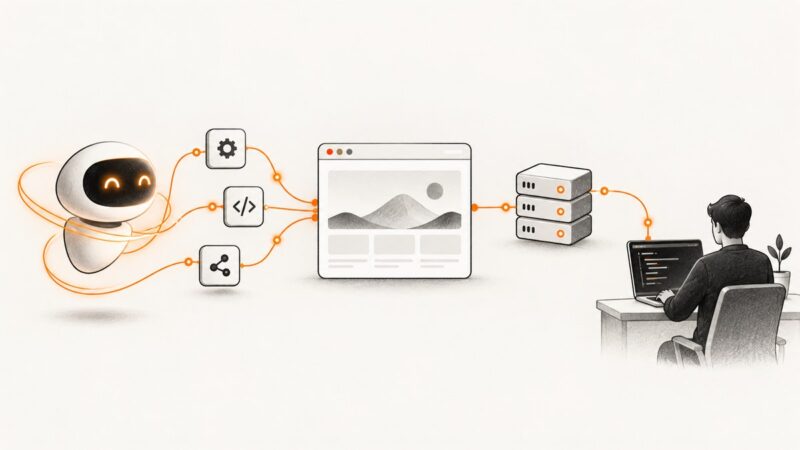
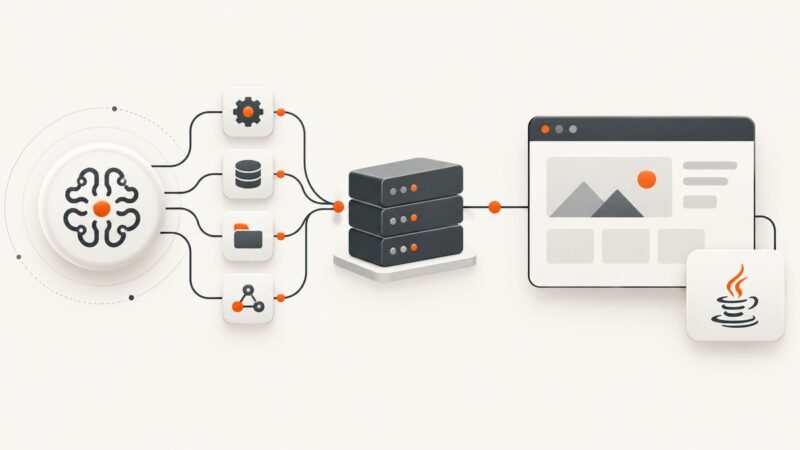
The Model Context Protocol (MCP) is a protocol that lets AI applications connect to external capabilities. An MCP server can expose tools with names, descriptions, and input schemas; a client can discover those tools and invoke them. In AI testing, that creates two separate targets: whether the client and server follow a chosen MCP specification revision, and whether the AI application uses the tools correctly, safely, and usefully for real tasks. Passing protocol conformance checks does not prove that an agent will make good decisions.
This guide discusses the MCP specification finalized on 2026-07-28 and the official conformance testing framework. MCP changes over time, so pin the exact revision used by your deployed client and server before defining expected behavior. The official conformance project notes lifecycle differences between dated versions through 2025-11-25 and 2026-07-28, and its scenario suite can grow. Use requirements for the release you intend to support, not just whichever scenarios happen to be in a current suite. MCP release notes and specification resources.
1. What MCP testing means
MCP is an integration protocol, not a test method or an automatic evaluator of an AI model. A useful test strategy separates protocol-level implementation checks from application-level evaluation:
| Test target | Question | Typical evidence |
|---|---|---|
| Server conformance | Does the server implement the selected revision’s required messages, lifecycle, tool listing, schemas, errors, and authorization behavior? | Scenario results from the official conformance framework, plus targeted security and integration tests. |
| Client conformance | Does the client correctly communicate with compliant servers and handle their responses and errors? | Conformance interactions against test servers, plus compatibility checks for supported revisions. |
| Agent behavior | Does the AI application select an appropriate tool, provide valid arguments, interpret results, handle failures, and respect user intent? | Task-based evaluations with expected outcomes and review of tool-call traces. |
The first two can be checked against specification requirements. The sources reviewed for this guide do not establish a single official, comprehensive benchmark or universal score for the third. Treat agent evaluation as application testing: build representative tasks, define expected outcomes, and inspect behavior.
2. Pin the MCP revision before testing
Write down the specification revision each client and server is expected to support. This matters especially during upgrades: lifecycle behavior differs between the stateful versions through 2025-11-25 and the stateless protocol core in 2026-07-28. The official conformance project provides revision-specific requirement sets so teams can check the scenarios required by a released version rather than treating a growing suite as a frozen historical standard.
- Record the deployed MCP revision for each implementation.
- Choose the matching conformance requirements and scenarios.
- Run the checks against the actual client or server build under test.
- When upgrading, run the new revision’s required scenarios and compatibility tests for any older revisions you still claim to support.
- Keep the revision and test result with the build or release record so a future suite change does not obscure what was verified.
See the official MCP conformance test framework for its current workflow, scenarios, and revision-specific requirements.
3. How to test an MCP server or client
The official framework supports running clients against test servers or sending requests to running servers, capturing the interactions, and checking observed behavior against scenarios and specification requirements. Use that protocol-level pass/fail evidence as one layer of a broader test plan.
Server test sequence
- Start the exact server build with test credentials and isolated data. Record the protocol revision and relevant configuration.
- Run the matching conformance scenarios. Include tool discovery, schema exposure, invocation, errors, and lifecycle behavior required for that revision.
- Exercise boundary inputs. Send missing fields, wrong types, out-of-range values, unknown tool names, and malformed arguments. Verify that the server rejects them predictably without executing unintended work.
- Exercise security controls. Check authorization, rate limits, timeouts, and output sanitization. Use accounts and fixtures with limited permissions.
- Check operational failures. Simulate downstream errors, delays, empty results, and unavailable dependencies; verify the response can be handled and does not leak secrets.
- Retain evidence. Store the revision, scenario results, sanitized interaction logs, and any deviations with the build.
Client test sequence
- Run the official client conformance workflow against its test servers for the pinned revision.
- Verify the client discovers tools and handles their names, descriptions, and schemas without assuming that metadata is trustworthy.
- Check argument construction, response parsing, and behavior for unknown tools, invalid arguments, server errors, empty results, and timeouts.
- Verify the UI or orchestration layer requests user confirmation where appropriate for sensitive operations and keeps the user informed about the inputs being sent.
- Test the real authorization boundary, including expired or insufficient credentials, without using production secrets in fixtures.
4. Test security as well as successful calls
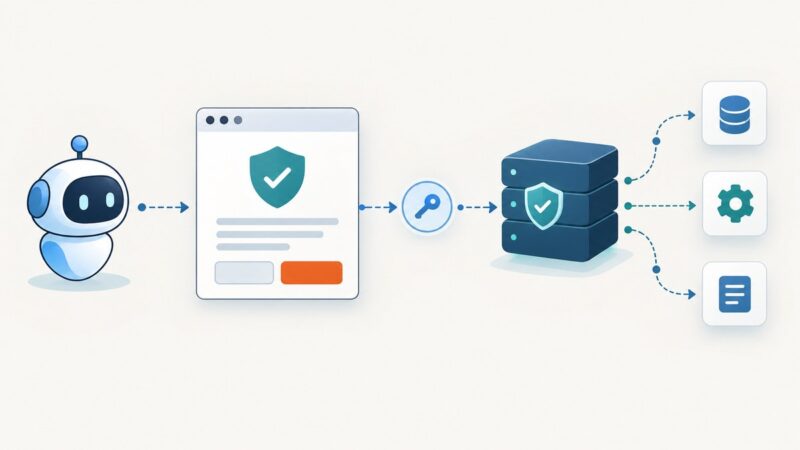
The MCP tools specification places requirements on servers and recommendations on clients. Servers MUST validate tool inputs, implement access controls, rate-limit invocations, and sanitize outputs. Clients SHOULD treat annotations as untrusted, consider confirmation for sensitive operations, show inputs to users to reduce malicious or accidental exfiltration, validate tool results before passing them to an LLM, use timeouts, and log tool use for audit. See the MCP tools specification for the normative wording and context.
Turn those controls into negative tests, not just review checklist items:
- Malformed input: wrong types, omitted required fields, unexpected extra fields, oversized values, and invalid encodings. Expect validation errors and no unintended side effects.
- Unauthorized invocation: missing, expired, or insufficient credentials. Expect denial without returning protected data.
- Rate limiting: repeated calls over the configured limit. Expect controlled rejection or throttling and no bypass through alternate call paths.
- Sensitive action: a tool that changes or exposes data. Verify the client obtains the required confirmation and presents meaningful inputs before invocation.
- Hostile metadata or output: descriptions, annotations, and results containing unexpected instructions or malformed content. Verify the application treats them as data, validates results, and does not blindly pass unsafe content to the model.
- Timeout and downstream failure: a slow or unavailable dependency. Expect bounded waiting, a recoverable error, and no duplicate side effect when retrying.
- Audit record: verify that tool use can be traced to an actor and request while avoiding the logging of credentials or unnecessary sensitive data.
Do not treat a passing happy-path call as evidence that an integration is safe. Include unauthorized, malformed, rate-limited, and unexpected-result cases in the release gate.
5. Evaluate the AI application separately
Protocol conformance checks whether implementations follow protocol requirements. It does not grade whether an agent is helpful or whether it chooses the right action. For agent behavior, create a task set based on the application’s real use cases and state what a good outcome looks like.
| Behavior to evaluate | Example test question |
|---|---|
| Tool selection | Does the agent choose the tool that can answer the user’s request, or explain why no available tool applies? |
| Argument accuracy | Are required fields present, values valid, and arguments grounded in the user’s request? |
| Result interpretation | Does the agent accurately summarize the result, including empty, partial, or ambiguous results? |
| Failure handling | Does it recover sensibly from timeouts, authorization errors, and malformed responses without claiming success? |
| User intent and safety | Does it avoid actions beyond the user’s request and seek confirmation for sensitive operations? |
| Repeatability | Does behavior remain acceptable across wording changes, tool ordering changes, and representative edge cases? |
For each task, capture the prompt, available tools and schemas, tool calls and arguments, results, final response, and whether the expected outcome was met. Review failures by category; a single aggregate pass rate can hide a dangerous failure on a sensitive action. These evaluation practices are a practical approach, not an MCP-mandated benchmark or official score.
6. Observe failures with end-to-end traces
When an integration test crosses several components, correlated traces can help identify where it failed. MCP release-candidate material describes a tool-call trace spanning the host, client SDK, MCP server, and downstream service into an OpenTelemetry-compatible backend. That can help distinguish, for example, a client-side timeout from a slow downstream dependency.
Tracing is diagnostic evidence, not a correctness certificate. A complete-looking span tree does not prove that the agent selected the right tool, respected permissions, or produced a useful answer. Pair traces with conformance results, security checks, and task outcomes. See the official MCP release material for the tracing context.
7. A practical test matrix
| Layer | Minimum coverage | When to run |
|---|---|---|
| Specification conformance | Revision-matched scenarios for client and/or server | On implementation changes and before claiming support for a revision |
| Schema and input validation | Valid, missing, mistyped, malformed, and boundary values | On tool schema or server changes |
| Authorization and abuse controls | Unauthorized calls, limited roles, rate limits, sensitive actions | On auth, permissions, or deployment changes |
| Failure handling | Timeout, downstream error, empty result, invalid result | On client, server, and dependency changes |
| Agent task evaluation | Representative tasks, expected tool choice, safe behavior, correct interpretation | On prompts, models, tools, schemas, or orchestration changes |
| End-to-end observability | Correlation across host, client, server, and downstream calls | During integration debugging and representative staging runs |
8. MCP in a testing workflow
MCP can also give AI agents access to tools that help testers do their work. The European Commission Interoperability Test Bed guide describes an MCP server that gives agents access to authoritative documentation for test development and configuration workflows. This is an example of MCP supporting testing work; it does not establish that generated test configurations are correct, and it does not replace running conformance or application tests. See the European Commission Interoperability Test Bed guides.
9. Troubleshooting common MCP testing problems
| Symptom | Likely cause | What to check or fix |
|---|---|---|
| A scenario fails after a spec upgrade | The test expects behavior from another revision, or lifecycle requirements changed. | Confirm the client/server revision and run the matching requirement set. Review upgrade changes before treating the failure as a regression. |
| The implementation passes protocol tests but the agent performs poorly | Conformance checks protocol behavior, not task quality or tool-selection judgment. | Add task-based evaluations for selection, arguments, result interpretation, safety, and recovery. |
| The tool appears in discovery but invocation fails | Arguments do not satisfy the schema, credentials are insufficient, or the downstream service failed. | Inspect the sanitized request and response, validate generated arguments, and distinguish auth errors from dependency errors. |
| Tests pass locally but fail remotely | The remote environment has different authorization, network, rate-limit, or dependency conditions. | Reproduce against a staging deployment with equivalent boundaries; record environment-specific configuration without exposing secrets. |
| Agent repeats a timed-out operation | The client or orchestrator retries without knowing whether the first call had a side effect. | Test timeout semantics and retry behavior explicitly. Use safe test fixtures and avoid blind retries for non-idempotent actions. |
| Logs contain sensitive values or are hard to correlate | Logging is unstructured, over-detailed, or lacks request correlation. | Redact credentials and unnecessary sensitive fields; correlate host, client, server, and downstream events with safe identifiers. |
| Unexpected tool metadata changes agent behavior | The application treats tool descriptions or annotations as trusted instructions. | Treat metadata as untrusted input, validate results before model use, and test hostile or malformed content. |
10. Performance, reliability, and cost considerations
MCP itself does not make an agent fast or reliable. Measure the path that matters to users: tool discovery, invocation, downstream work, model processing, and retries. Use traces to find latency contributors, and set bounded timeouts so a slow tool cannot hold a task indefinitely.
- Latency: record end-to-end task time as well as tool-call and downstream spans. Separate model time from network and service time where instrumentation allows.
- Reliability: test transient failures and retry behavior, especially for operations that can change state. Avoid retries that might duplicate side effects.
- Capacity: test rate limits and expected concurrent use in an environment representative of deployment. Do not infer production capacity from a small conformance run.
- Cost: track model and downstream-service usage for task evaluations. Conformance checks and traces provide behavioral evidence; they do not establish the operating cost of a particular agent workload.
- Release confidence: combine revision-pinned conformance, security negatives, task evaluations, and diagnostic observability. None of those alone answers every question.
11. Capture screenshots while debugging visual AI workflows
Some AI testing workflows involve checking how a web page looks before or after an action. A browser screenshot can make that state easier to inspect, but a screenshot does not replace protocol tests or task evaluation. For a repeatable capture, you can use a browser automation library in your own test environment. The exact setup depends on your browser and runner; when screenshots are only diagnostic artifacts, record the URL, viewport, and point in the workflow so they can be compared meaningfully.
If a visual test uses a page that may contain consent banners, popups, or chat widgets, decide whether the test should preserve those elements or capture the page after they are dismissed. Keep that choice explicit in the test so screenshots remain interpretable.
12. Or skip the browser setup
ScreenshotNeo is a website screenshot API and MCP server for developers. One GET request can return a PNG, JPEG, WebP, or PDF. Its capture flow accepts cookie and consent banners like a visitor and removes 60+ known consent platforms, newsletter popups, and chat widgets before the shot; each step can be turned off. Bot checks and CAPTCHAs, blank pages, timeouts, failed loads, and cache hits cost nothing, and responses indicate the page verdict and billing status.
curl -G "https://api.screenshotneo.com/v1/shot" -d access_key=YOUR_API_KEY --data-urlencode url=https://stripe.com -o shot.webpSee the ScreenshotNeo API documentation for request options and setup.
Python:
import requests

r = requests.get(
    "https://api.screenshotneo.com/v1/shot",
    params={"access_key": "YOUR_API_KEY", "url": "https://stripe.com"},
    timeout=90,
)
r.raise_for_status()
open("shot.webp", "wb").write(r.content)
Node.js:
const q = new URLSearchParams({ access_key: 'YOUR_API_KEY', url: 'https://stripe.com' });
const res = await fetch(`https://api.screenshotneo.com/v1/shot?${q}`);
if (!res.ok) throw new Error(`Screenshot request failed: ${res.status}`);
const shot = new Uint8Array(await res.arrayBuffer());
await import('node:fs/promises').then(fs => fs.writeFile('shot.webp', shot));- Cookie banners, popups, and chat widgets are removed before the shot.
- Bot checks, blank pages, and failed loads are never billed.
- An MCP server gives AI agents tools for screenshots, page information, and PDF capture.
- 1,000 screenshots a month are free with no card; paid plans start at $5 for 3,000 shots.
Try ScreenshotNeo with 1,000 free screenshots a month, with no card required.
13. Frequently asked questions
Does MCP automatically test an AI model?
No. MCP defines a way for AI applications to connect to capabilities. You still need task-based evaluations to assess model and application behavior.
Is an MCP server the same thing as an MCP client?
No. A server exposes capabilities such as tools; a client connects to servers and handles discovery and invocation on behalf of an AI application.
Does tracing prove that an agent is safe?
No. Traces help locate and understand interactions. Safety needs explicit checks for permissions, sensitive actions, inputs, outputs, and user intent.
Is there one official pass score for agent evaluations?
The sources reviewed do not establish a universal official score. Define task-specific expected outcomes and report the failure categories that matter to your application.