Can an MCP Server Capture Screenshots of Websites That Block Bots?
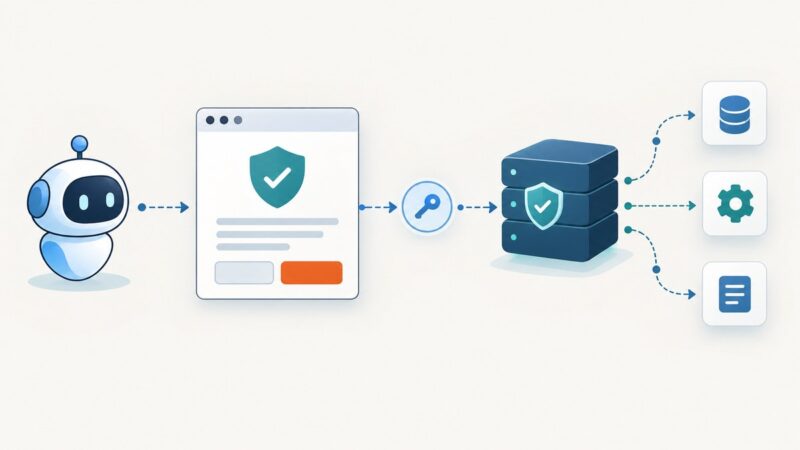
An MCP browser can screenshot what it renders, but that may be a bot challenge or denial page instead of the site’s content.
Yes—but an MCP server can only capture what its browser renders. If a website blocks that browser, the screenshot may show a denial page or challenge instead of the requested content. Screenshot support does not mean the server bypasses bot checks or guarantees access.
For example, Playwright MCP documents a screenshot tool that can capture the current viewport, a selected element, or the full scrollable page, in PNG, JPEG, or WebP. Its result represents the rendered page state at capture time. No particular protected site’s response can be inferred without checking that site and session.
1. What happens when a site blocks the browser
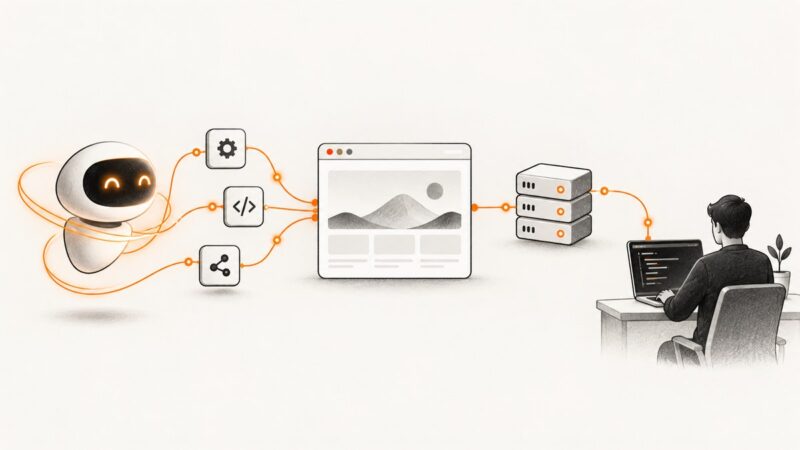
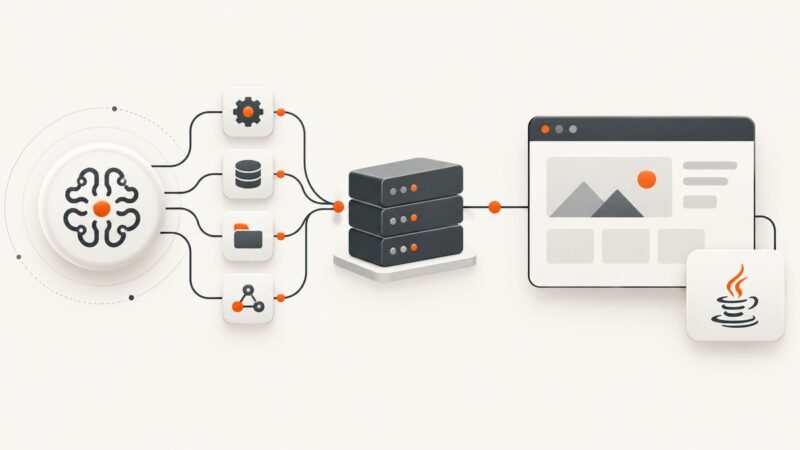
An MCP server provides a tool interface to an implementation such as Playwright MCP; the browser behind that tool navigates to the site. The site may return its intended page, a challenge, or a block page. The screenshot tool captures the state that was rendered—it does not establish that the intended page was reached.
Keep these questions separate when evaluating a result:
- Did navigation complete? A browser may reach a response even if that response is a challenge or denial.
- What did the page render? Check whether the image contains the expected page or an access message.
- What scope was captured? Viewport, element, and full-page captures are different outputs.
- Where is the output? The tool may return an image inline or save it to a file, depending on its options.
Do not treat a successful screenshot call as proof that a bot restriction was overcome. The documented screenshot feature describes image capture, not a way to defeat CAPTCHA, rate limits, login requirements, or site access policies. If the use case depends on a restricted site, establish permission and use its documented access options.
2. Capture a page with Playwright MCP
Playwright MCP is one documented MCP browser automation server. Configure it in an MCP client that supports stdio servers, then ask the client to navigate to a page and invoke its screenshot tool. The exact client configuration format can vary; the server’s current setup instructions are in the official Playwright MCP repository.
Once the server is connected and the page is open, these are representative tool calls for browser_take_screenshot:
{"type":"png","filename":"page.png"}That captures the current viewport and saves it to a file. To request a full-page capture:
{"type":"png","filename":"page-full.png","fullPage":true}To capture a specific element, pass its target reference or a unique selector:
{"type":"png","target":"main article","filename":"article.png"}Use a selector that uniquely identifies the desired element. If the selector is absent or ambiguous, inspect the page and choose a more specific target. Full-page capture and element capture are separate scopes; the documented tool does not allow fullPage with an element screenshot.
Documented screenshot options
| Option | Purpose | Notes |
|---|---|---|
target |
Capture a specific element | Use a target reference from the page snapshot or a unique selector. |
element |
Describe an element to interact with | Optional; the target identifies the screenshot target. |
fullPage |
Capture the full scrollable page | Cannot be combined with an element screenshot. |
type |
Choose the image format | PNG, JPEG, or WebP; when unset, the filename extension can determine the format, otherwise PNG is used. |
filename |
Save the screenshot | Omit it to use the server’s automatic output filename behavior. |
Playwright MCP also documents accessibility snapshots for structured page content and interaction. A screenshot is useful for visual appearance; use a snapshot when you need accessible structure and text. Neither output alone verifies that a site served its intended content.
3. Check whether the image is the intended page
- Navigate to the URL using the browser tool.
- Inspect the resulting page state with a snapshot or other browser inspection.
- Look for an access denial, challenge, CAPTCHA, unexpected redirect, or empty page.
- Capture the viewport, element, or full page that matches your purpose.
- Review the returned image or saved file before treating it as a screenshot of the intended content.
For repeatable work, record the URL and capture scope alongside the image. If a site’s response varies between sessions, a screenshot from one run is evidence only of what that run rendered.
4. Troubleshooting
| Symptom | Likely cause | What to do |
|---|---|---|
| The screenshot shows a challenge or denial | The site presented that state to the browser. | Do not label it as the intended page. Check the site’s permitted access options or contact its operator. |
| The image is only the visible viewport | fullPage was not requested. |
Set fullPage to true, unless capturing a specific element. |
| The wrong element or whole page is captured | The target is missing, ambiguous, or does not match a page element. | Inspect the page and pass a unique selector or valid target reference. |
| The file is not where expected | The server resolves relative filenames according to its workspace/output configuration. | Check the MCP server’s output directory and workspace rules; try an explicit filename. |
| The screenshot format differs from expectation | The format may be inferred from the filename or default to PNG. | Set type explicitly to png, jpeg, or webp. |
| The page is blank or incomplete | The browser may have rendered an incomplete state, or the site may not have provided the expected content. | Inspect the page state before capture and follow the site’s documented access process. The screenshot tool cannot establish why the content is absent. |
| The MCP tool call fails | The server may not be connected, or the tool arguments may not match the installed version. | Confirm the MCP client reports the Playwright server as connected and consult its current tool schema. |
5. Performance, reliability, and cost
Screenshot size and capture scope affect how much image data must be returned or saved: a full-page image can contain more pixels than a viewport capture. Choose the smallest scope and format that meet the task. The cited Playwright MCP documentation does not provide a benchmark or guarantee capture time, availability, or success against any bot defense.
For reliability, inspect the rendered state before accepting the image, and treat access challenges as outcomes rather than successful captures of the target content. If results need to be reproducible, keep the same URL, browser configuration, and capture scope; site responses can vary by session. Playwright MCP is software you run or connect to, so costs depend on your own hosting and browser setup; no universal price is established here.
6. Or skip the browser setup
ScreenshotNeo is a website screenshot API and MCP server. Its API takes a URL in one GET request; see the ScreenshotNeo API documentation.
curl -G "https://api.screenshotneo.com/v1/shot" -d access_key=YOUR_API_KEY --data-urlencode url=https://stripe.com -o shot.webpimport requests
r = requests.get("https://api.screenshotneo.com/v1/shot", params={"access_key": "YOUR_API_KEY", "url": "https://stripe.com"}, timeout=90)
open("shot.webp", "wb").write(r.content)const q = new URLSearchParams({ access_key: 'YOUR_API_KEY', url: 'https://stripe.com' });
const res = await fetch(`https://api.screenshotneo.com/v1/shot?${q}`);ScreenshotNeo accepts cookie and consent banners like a visitor and removes more than 60 known consent platforms, newsletter popups, and chat widgets before capture; each step can be turned off. Bot checks, blank pages, timeouts, failed loads, and cache hits are not billed, and response headers report the page verdict and billing status. Its MCP server includes take_screenshot, get_page_info, and capture_pdf for AI agents. The free plan includes 1,000 screenshots a month with no card; paid plans start at $5 for 3,000. These features do not mean a protected site’s intended content is guaranteed: use access the site permits.
Sign up for 1,000 free screenshots a month, with no card required.
7. FAQ
Does MCP itself take the screenshot?
MCP is the tool interface. The browser automation server connected through MCP implements the navigation and screenshot behavior.
Can a screenshot prove that a bot block was bypassed?
No. It shows the browser’s rendered state, which may itself be a challenge or denial.
Can I screenshot just one element or a whole long page?
Playwright MCP documents both element and full-page capture, as well as viewport capture. Full-page mode cannot be combined with an element screenshot.
Does this apply to every MCP server?
No. Screenshot features depend on the specific server and browser implementation. Playwright MCP is a documented example, not proof of universal MCP behavior.
Sources
- Playwright MCP official documentation — browser screenshot tool and parameters.
- Playwright MCP introduction — browser automation tools and accessibility snapshots.