MCP Servers for Web UI Testing
Learn how MCP servers connect AI assistants to browser automation for web UI testing, with Playwright setup, workflows, security limits, and ScreenshotNeo.
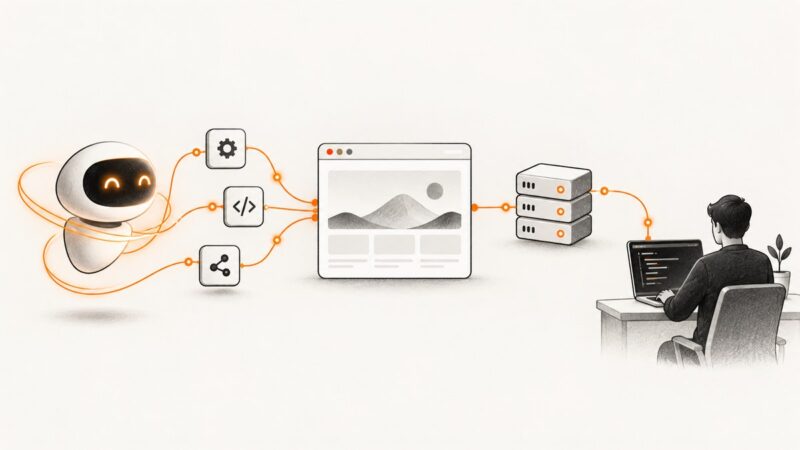
Short answer: An MCP server for web UI testing gives an AI assistant browser tools. The assistant sends actions through an MCP client, the server drives a real browser, and the page is returned as structured information the model can use to choose the next action. Playwright MCP is the documented example: it uses accessibility snapshots and element references for navigation, typing, and clicking instead of relying on screenshot coordinates.
This guide shows the complete setup, the snapshot-to-action loop, useful configuration, test design, security boundaries, troubleshooting, and when a screenshot API is a better fit.
1. How an MCP browser testing server works
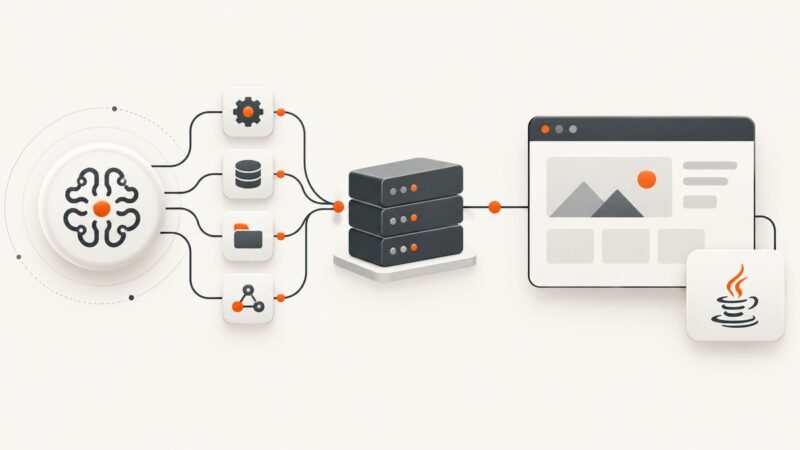
MCP (Model Context Protocol) separates the AI client from the browser automation process:
- You configure an MCP server in an MCP client such as VS Code, Cursor, Windsurf, Claude Code, or Claude Desktop.
- The assistant asks the server to open a URL or inspect the current page.
- The server launches or connects to a browser and returns a structured accessibility snapshot.
- Each usable element receives a reference. The assistant uses that reference to fill fields, click controls, navigate, or continue the flow.
- You ask the assistant to check an expected result. The assistant gathers another snapshot or other enabled browser evidence.
That is browser interaction, not proof that an application is correct or that a complete test suite has passed. The official documentation describes capabilities and examples; it does not provide an independent reliability benchmark or a universal testing recommendation.
2. Install Playwright MCP
Prerequisites
- Node.js 20 or newer.
- An MCP client that supports server configuration.
The official installation guide lists VS Code, Cursor, Windsurf, Claude Code, Claude Desktop, and similar clients.
Standard MCP configuration
{
  "mcpServers": {
    "playwright": {
      "command": "npx",
      "args": ["@playwright/mcp@latest"]
    }
  }
}
Put this configuration in the MCP client’s server settings. The browser downloads automatically on first use.
Client-specific examples
# VS Code
code --add-mcp '{"name":"playwright","command":"npx","args":["@playwright/mcp@latest"]}'

# Claude Code
claude mcp add playwright npx @playwright/mcp@latest
For Cursor, add a new MCP server in Cursor Settings → MCP and use the command npx @playwright/mcp@latest. Other clients generally accept the same STDIO command and arguments.
3. Run your first UI interaction
After the server connects, give the assistant a concrete task:
Navigate to https://demo.playwright.dev/todomvc, add three todo items, mark the first item complete, and report the visible remaining count.A typical loop looks like this:
- The assistant calls a navigation tool with the page URL.
- The server returns a snapshot containing semantic roles such as a heading and textbox, each with a reference.
- The assistant calls a typing tool using the textbox reference.
- The assistant calls a click tool using the button or checkbox reference.
- The assistant requests another snapshot and checks the resulting text or state.
Because the interaction is based on the accessibility tree, the assistant can use labels and roles rather than guessing pixel coordinates. The introduction describes this as browser automation through structured accessibility snapshots and says that vision models are not required. See the Playwright MCP introduction.
4. Turn an interaction into a useful UI test
Use a repeatable prompt with explicit setup, actions, and assertions:
Test the sign-in flow on https://example.test/login.

Setup:
- Start from a fresh session.
- Do not use real customer data.

Steps:
1. Confirm the email and password fields are present.
2. Submit an invalid password.
3. Verify an accessible error message appears.
4. Submit valid test credentials from the environment.
5. Verify the authenticated dashboard heading is present.

Report:
- Each action taken
- The element reference used
- The observed result
- Any missing or ambiguous element
Keep assertions observable: visible text, accessible names, roles, URL changes, enabled or disabled state, and the presence of a known control. Ask the assistant to report ambiguity instead of inventing a selector or declaring success after a timeout.
Testing authenticated pages
The default profile preserves login state and cookies between sessions. Use a dedicated test account and a separate workspace profile. For disposable runs, use an isolated session so cookies and storage start empty. Never place production credentials in prompts or checked-in configuration.
5. Browser and session configuration
| Need | Configuration | What it changes |
|---|---|---|
| Visible browser | Default | Runs headed so you can watch the interaction. |
| Headless CI-style run | --headless |
Runs without a visible browser window. |
| Select a browser | --browser=chrome, firefox, webkit, or msedge |
Chooses the browser engine or channel. |
| Fresh state | --isolated |
Starts each session without persisted cookies and storage. |
| Reuse state | Persistent profile (default) or --storage-state |
Preserves or loads login state for a workflow. |
| Existing browser tabs | --extension or a CDP connection |
Connects to a browser you already own. |
| Idle cleanup | --idle-timeout=300000 |
Closes an owned browser after five minutes without a completed tool call. |
| Remote/standalone server | --port=8931 |
Exposes an HTTP MCP endpoint at http://localhost:8931/mcp. |
{
  "mcpServers": {
    "playwright": {
      "command": "npx",
      "args": [
        "@playwright/mcp@latest",
        "--headless",
        "--browser=firefox",
        "--isolated",
        "--idle-timeout=300000"
      ]
    }
  }
}
For advanced settings, pass a configuration file with --config path/to/config.json. The documented schema covers browser options, context options, network rules, and timeouts. See configuration options.
6. Capabilities you can enable
Playwright MCP documents support for Chrome, Firefox, WebKit, and Edge. It also documents browser interactions and related workflows including:
- Navigation and form handling.
- Network mocking.
- Storage and session state.
- Tracing and video.
- Optional testing and vision capability groups.
- Optional PDF, devtools, network, storage, and configuration capabilities.
Capabilities are configured with the server’s capability options, for example:
npx @playwright/mcp@latest --caps=testing,vision,pdfOnly enable capabilities your workflow needs. More tools can increase the action space an assistant must reason about and can expose more powerful operations to the client.
7. Security and trust boundaries
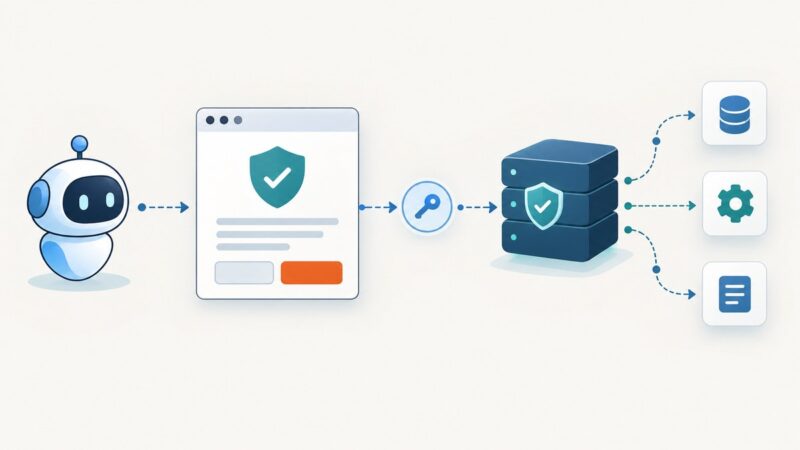
The official Playwright documentation warns that its JavaScript execution tool runs arbitrary JavaScript in the server process and is “RCE-equivalent.” Enable that tool only for trusted MCP clients. Treat an MCP server as code execution with browser and network access, not as a harmless prompt extension.
- Run the server under a least-privilege account.
- Use isolated test data and non-production credentials.
- Review the MCP client and server configuration before enabling JavaScript execution.
- Restrict network access when tests do not need the public internet.
- Keep screenshots, traces, videos, cookies, and storage state out of public artifacts.
- Use a separate profile for each project or trust boundary.
Read the warning in the capabilities documentation before enabling advanced tools.
8. Reliability, performance, and cost considerations
Make runs repeatable
- Use stable test data and a known starting URL.
- Prefer accessible names and roles over brittle coordinates.
- Wait for a meaningful state, such as a heading or status message, before asserting.
- Record the URL, action, element reference, and observed result for every failure.
- Use isolated sessions when previous cookies or local storage could change the result.
Control resource use
- Run headless in unattended environments.
- Set an idle timeout so abandoned sessions do not keep a browser open indefinitely.
- Keep snapshots and traces for failed runs, and avoid retaining sensitive artifacts longer than needed.
- Use a focused capability set instead of enabling every optional tool.
The documentation does not provide a universal speed, reliability, or cost benchmark. Actual run time depends on browser startup, page behavior, network conditions, the number of tool calls, and the amount of state an assistant must inspect.
9. Common errors and fixes
| Symptom | Likely cause | Fix |
|---|---|---|
| Server does not appear in the client | Invalid JSON, wrong config location, or client not restarted. | Validate the JSON, confirm the command is npx @playwright/mcp@latest, then restart or reload the MCP client. |
| Node version error | Node.js is older than the documented requirement. | Install Node.js 20 or newer and confirm with node --version. |
| Browser fails to launch | Browser binaries or system dependencies are missing. | Run the package once interactively, inspect the startup error, and install the required browser/dependency package for your environment. |
| Element reference no longer works | The page navigated or re-rendered and the snapshot is stale. | Request a fresh snapshot, locate the element again, and then perform the action. |
| Login disappears between runs | An isolated session was used or the persistent profile changed. | Use a dedicated persistent profile or explicitly load storage state; verify that the account is a test account. |
| Headless run hangs | The page is waiting on a popup, network request, or animation. | Use a bounded timeout, wait for a specific page state, disable unnecessary work, and capture a trace for the failing step. |
| HTTP MCP connection drops | The client does not answer the server heartbeat quickly enough. | Set PLAYWRIGHT_MCP_PING_TIMEOUT_MS to a longer value, or set it to 0 to disable the heartbeat when appropriate. |
| Assistant claims success without evidence | The prompt has no explicit assertion or the page state is ambiguous. | Require an observable assertion and a failure report that includes the final snapshot or URL. |
10. When to use screenshots instead of browser interaction
Accessibility snapshots are suited to semantic actions such as filling a form or clicking a named control. A screenshot is useful when the question is visual: does a layout overflow, did a chart render, is a cookie banner covering content, or does a page look correct at a particular viewport?
ScreenshotNeo is a website screenshot API and MCP server. It can capture a clean PNG, JPEG, WebP, or PDF with one request, and its MCP tools let AI agents call take_screenshot, get_page_info, and capture_pdf.
11. Or skip the browser setup
For visual checks and page evidence, ScreenshotNeo removes cookie and consent banners, newsletter popups, and chat widgets before the capture. Bot checks, blank pages, timeouts, failed loads, and cache hits are not billed; each response reports the result with X-Page-Verdict and X-Billed headers. You can also use its MCP server from Claude, Cursor, or another MCP client.
See the ScreenshotNeo API documentation for all options. A minimal request is:
cURL
curl -G "https://api.screenshotneo.com/v1/shot" -d access_key=YOUR_API_KEY --data-urlencode url=https://stripe.com -o shot.webpPython
import requests

r = requests.get(
    "https://api.screenshotneo.com/v1/shot",
    params={"access_key": "YOUR_API_KEY", "url": "https://stripe.com"},
    timeout=90,
)
r.raise_for_status()
open("shot.webp", "wb").write(r.content)
Node.js
const q = new URLSearchParams({ access_key: 'YOUR_API_KEY', url: 'https://stripe.com' });
const res = await fetch(`https://api.screenshotneo.com/v1/shot?${q}`);
if (!res.ok) throw new Error(`HTTP ${res.status}`);
const bytes = new Uint8Array(await res.arrayBuffer());
await import('node:fs/promises').then(fs => fs.writeFile('shot.webp', bytes));
ScreenshotNeo includes full-page capture with lazy images loaded, element capture by CSS selector, dark mode, device presets and custom viewports, retina scale, custom CSS and JavaScript, click and wait controls, request blocking, headers, cookies, user agents, authorization, timezone, geolocation, transparent backgrounds, resizing, TTL caching, signed links, asynchronous jobs with signed webhooks, bulk capture for up to 100 URLs per call, a usage API, and an OpenAPI specification. Every feature is available on every plan. Pricing starts with 1,000 free shots per month without a card; paid plans start at $5 for 3,000 shots.
Start with 1,000 free screenshots a month—no card required.
12. FAQ
Does MCP itself test my application?
No. MCP provides the connection between the assistant and tools. Your prompts, assertions, test data, and review process determine what is actually checked.
Do I need a vision model?
For the documented Playwright MCP interaction model, no. The assistant uses structured accessibility snapshots and element references. Vision is an optional capability for workflows that need visual interpretation.
Can I use more than one browser?
Yes. The documented server supports Chrome, Firefox, WebKit, and Edge. Select the browser with the server configuration and run the same workflow against each one.
What should I save when a run fails?
Save the URL, the last action, the fresh snapshot, the browser and profile mode, and any trace or video you enabled. This makes an intermittent failure diagnosable without guessing.
When is ScreenshotNeo a better fit?
Use it when the deliverable is a screenshot or PDF, when visual evidence matters more than clicking through a flow, or when you want clean captures without maintaining browser setup. Its MCP server also lets an AI agent request those captures directly.