Microsoft Official MCP Servers
Explore Microsoft’s official MCP server catalog, compare local and remote options, and choose the right server and client setup for your task.
Microsoft’s official MCP servers are a catalog of separate integrations that expose tools and data from Microsoft services to compatible AI applications. There is no single universal Microsoft server or one installation method: choose a server for the service and task you need, then follow that server’s current setup instructions for your MCP client.
For example, Azure MCP is a local server for Azure tools, while Microsoft Learn MCP is a remote endpoint for Microsoft documentation at https://learn.microsoft.com/api/mcp. Their deployment, configuration, and access assumptions differ. Start with Microsoft’s official MCP server catalog, then read the documentation for the specific server and client you plan to use.
1. What MCP servers do
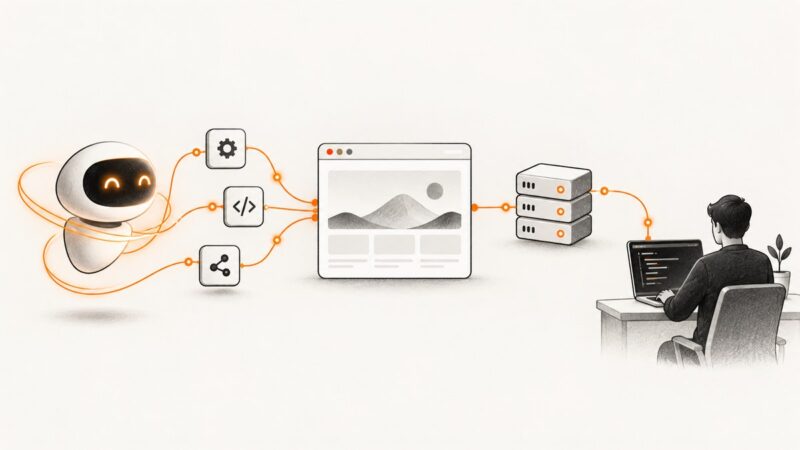
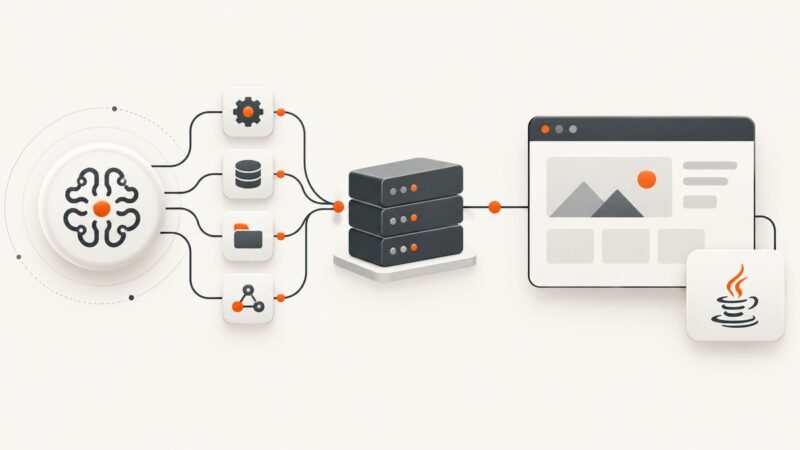
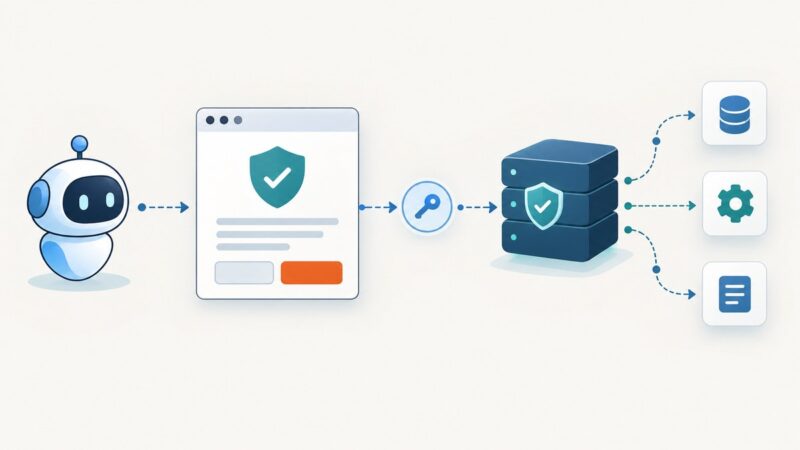
Model Context Protocol (MCP) is an open protocol for connecting AI applications to tools and data. Its host-client-server architecture lets an AI application use capabilities exposed by an MCP server through a compatible client. A server is an integration point; it does not mean every AI application can use it automatically, nor that every server offers the same tools or access.
Microsoft’s catalog contains distinct implementations across product areas and deployment types. Treat each server as its own integration. Check its documentation for the available operations, authentication, permissions, supported clients, and setup before connecting it to a real service.
2. Official Microsoft MCP server examples
The catalog includes servers and endpoints for different tasks. These examples illustrate the variety; they are not one package that must all be installed together.
| Server | Listed type | Purpose described in the catalog |
|---|---|---|
| Azure MCP | Local | Tools for Azure services. |
| Microsoft Learn MCP | Remote | Access to Microsoft documentation; endpoint: https://learn.microsoft.com/api/mcp. |
| Microsoft Foundry MCP | Remote | Tools related to models, knowledge, evaluation, and related capabilities. |
| Azure Resource Manager MCP | Remote | Azure Resource Graph and ARM deployment tasks. |
| Microsoft Clarity MCP | Local | Clarity analytics data export. |
| Microsoft SQL MCP | Local | SQL databases. |
| Microsoft Sentinel data exploration | Remote | Sentinel data lake exploration. |
Use the catalog’s current entries and linked documentation to confirm a server’s purpose and deployment type. A local server generally means your client configuration launches or connects to a process in your environment; a remote server is hosted behind an endpoint. Follow the server’s own instructions rather than assuming the distinction implies a particular authentication method or permission set.
3. Choose the right server
- Name the task. Decide which Microsoft service or information the AI application needs, such as Azure operations, product documentation, analytics, or SQL data.
- Find the matching catalog entry. Read its description and follow the source or documentation link from the official catalog.
- Check local versus remote. This affects how the client connects and what setup is required.
- Review the specific capabilities and access requirements. Confirm the tools it exposes, authentication steps, and required permissions in that server’s documentation.
- Check your MCP client’s setup instructions. Client compatibility and configuration are specific to the server and host.
- Check release status before installing. Consult the project’s releases and changelog because versions and catalog contents can change.
4. Set up Azure MCP
Microsoft’s Azure MCP installation guide documents more than one route. For VS Code users, it recommends the Azure MCP Server VS Code extension. The guide also documents a package-manager and client-configuration route, plus downloadable .mcpb assets for Claude Desktop. These are Azure MCP examples; they are not universal setup steps for all Microsoft servers.
- Open the Microsoft MCP catalog and follow the Azure MCP source link to its installation guide.
- Choose the route that matches your client, such as the VS Code extension or the documented Claude Desktop option.
- Complete the client configuration described in the guide. Installing a server by itself does not configure every MCP client.
- Read Azure MCP’s current authentication instructions and configure access appropriate to the Azure resources you intend to use.
- Confirm the connection using the checks provided by the selected client and the current server documentation.
Do not copy a configuration snippet from another client or an older guide without checking that it matches your current client and server version. Authentication and authorization details should come from the server’s own current documentation.
5. Connect to Microsoft Learn MCP
The catalog lists Microsoft Learn MCP as a remote server at https://learn.microsoft.com/api/mcp. In a compatible MCP client, use the endpoint and configuration format specified by the official Learn MCP instructions. The endpoint alone is not a complete, client-independent configuration: clients can differ in how they declare remote servers and connection settings.
- Open the Learn MCP instructions from its catalog entry.
- Check that your MCP client supports the documented remote connection method.
- Configure the endpoint using the exact format the client and Learn instructions require.
- Verify that the client can reach the server and exposes the expected documentation capabilities.
6. Keep the integration current
Catalog membership, release versions, endpoints, and client setup procedures can change. Check the server’s repository releases, changelog, and server-specific documentation before deployment or when troubleshooting. As a dated snapshot, the Azure MCP Server release page showed version 3.0.0-beta.41 with release assets dated 2026-09-09; this observation does not establish that it remains the latest version. Consult the current releases before choosing a version.
7. Troubleshooting
| Symptom | Likely cause | What to check |
|---|---|---|
| The client does not show the server or its tools. | The server was installed but the MCP client was not configured, or the configuration does not match that client. | Follow the selected server’s installation guide for your exact client; validate the configuration format and restart or reload the client as its documentation specifies. |
| A remote endpoint does not connect. | The endpoint or remote connection settings may be wrong, or the client may not support the connection method in the instructions. | Copy the endpoint from the official catalog and follow the Learn MCP and client-specific remote setup instructions. |
| A local server fails to launch. | The chosen local installation route may be incomplete or incompatible with the environment. | Recheck the server’s current installation requirements and the client-specific launch configuration in its official guide. |
| Azure operations are unavailable or access is denied. | Authentication may be incomplete, or the identity may not have the required access. | Use Azure MCP’s current authentication documentation and verify access for the target resource. Do not infer permissions from the catalog listing. |
| Instructions or assets do not match the installed version. | The project may have released a newer version or changed its installation path. | Check the project’s releases, changelog, and current installation guide rather than relying on a dated version reference. |
| A server’s behavior differs from another Microsoft MCP server. | These are separate implementations with different capabilities and access models. | Consult that server’s own documentation; do not assume a shared feature set or authentication flow. |
8. Reliability, permissions, and operational notes
- Verify each integration independently. A successful connection to one Microsoft MCP server does not validate another server’s configuration or availability.
- Use the least access needed. Review the selected server’s authentication and permissions guidance and grant only the access appropriate to the intended task.
- Plan for change. Recheck endpoint details, client compatibility, and release notes when upgrading or when a connection stops working.
- Do not assume performance or uptime. The catalog and reviewed setup material do not establish benchmark, latency, or uptime figures. Measure behavior in the environment and workflow where you will use the integration.
- Review operational cost at the service level. MCP catalog entries do not establish a uniform price for the underlying Microsoft service. Check that service’s current pricing and billing documentation before enabling usage.
9. ScreenshotNeo for screenshot tasks in AI workflows
If your AI workflow also needs screenshots of websites, ScreenshotNeo is a website screenshot API and MCP server from Yorker Media. It is a separate product from Microsoft’s catalog. Its MCP tools—take_screenshot, get_page_info, and capture_pdf—work with Claude, Cursor, and any MCP client.
For direct API use, one GET request returns an image or PDF. See the ScreenshotNeo API documentation for options and configuration.
curl -G "https://api.screenshotneo.com/v1/shot" -d access_key=YOUR_API_KEY --data-urlencode url=https://stripe.com -o shot.webpimport requests
r = requests.get(
"https://api.screenshotneo.com/v1/shot",
params={"access_key": "YOUR_API_KEY", "url": "https://stripe.com"},
timeout=90,
)
open("shot.webp", "wb").write(r.content)const q = new URLSearchParams({ access_key: 'YOUR_API_KEY', url: 'https://stripe.com' });
const res = await fetch(`https://api.screenshotneo.com/v1/shot?${q}`);ScreenshotNeo removes cookie and consent banners, newsletter popups, and chat widgets before capture; each cleanup step can be turned off. Bot checks, blank pages, timeouts, failed loads, and cache hits cost nothing, and response headers report the page verdict and billing status. The API supports PNG, JPEG, WebP, or PDF, with options including full-page or selector captures, device presets and custom viewports, dark mode, custom CSS and JavaScript, waits, request blocking, caching, signed links, async jobs, and bulk capture. Every feature is on every plan. The free plan includes 1,000 screenshots a month without a card; paid plans start at $5 for 3,000 screenshots.
Sign up for ScreenshotNeo and get 1,000 screenshots a month free, with no card.
10. FAQ
Is there one Microsoft MCP server that includes every Microsoft service?
No. The official catalog lists separate servers and endpoints for different Microsoft product areas and tasks.
Can I use Microsoft Learn MCP without installing a local server?
The catalog lists it as a remote endpoint, https://learn.microsoft.com/api/mcp. Follow its instructions and your client’s requirements for connecting to remote MCP servers.
Is Azure MCP Server 3.0.0-beta.41 the latest?
That version was observed in a dated release snapshot. Check the project’s releases for the current version.
Does every Microsoft MCP server support the same clients?
Do not assume so. Consult the chosen server’s current setup guide and your MCP client’s documentation.