Model Gateways for AI Browser Agents
Learn how to route browser agents across LLM providers with gateways, fallbacks, budgets, observability, and a reliable production architecture.
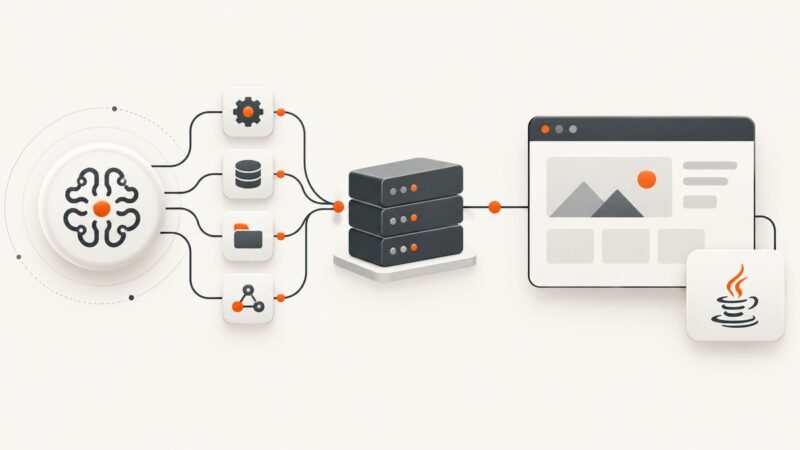
Short answer: A model gateway gives an AI browser agent one interface for multiple LLM providers. It can centralize provider routing, retries, fallbacks, credentials, budgets, logs, guardrails, caching, and administration. LiteLLM documents this gateway pattern, while OpenRouter documents model routing and fallback for Browser Use integrations. A browser-provider gateway is a separate layer: it routes browser sessions among browser backends rather than routing model requests.
What a model gateway does
Without a gateway, your agent code usually contains provider-specific clients, API keys, model names, timeout handling, and retry rules. A gateway moves those concerns behind one endpoint.
- One interface: your agent sends a consistent request while the gateway translates it for different providers.
- Routing: choose a model by task, availability, policy, price, or capability.
- Fallbacks and retries: retry transient failures or send the request to another configured model.
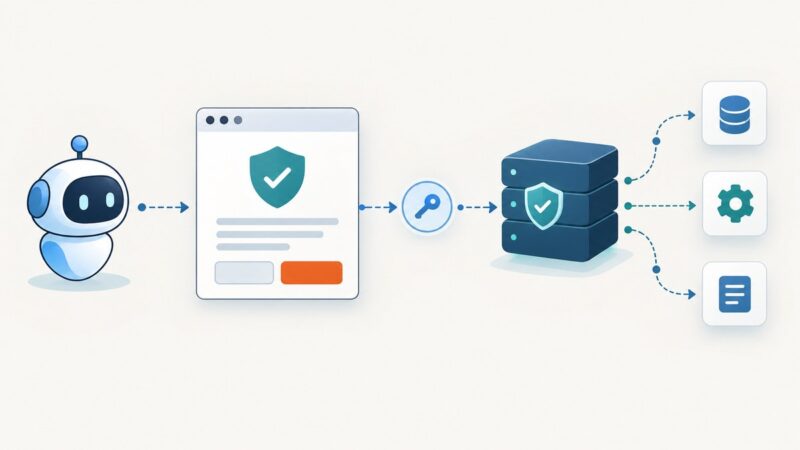
- Governance: centralize credentials, virtual keys, budgets, logs, guardrails, caching, and administration where supported by the gateway.
- Deployment control: use a hosted gateway or operate a self-hosted gateway such as the LiteLLM proxy.
These capabilities are documented by LiteLLM. OpenRouter’s Browser Use integration documents provider integration plus model routing and fallback.
Keep the layers separate
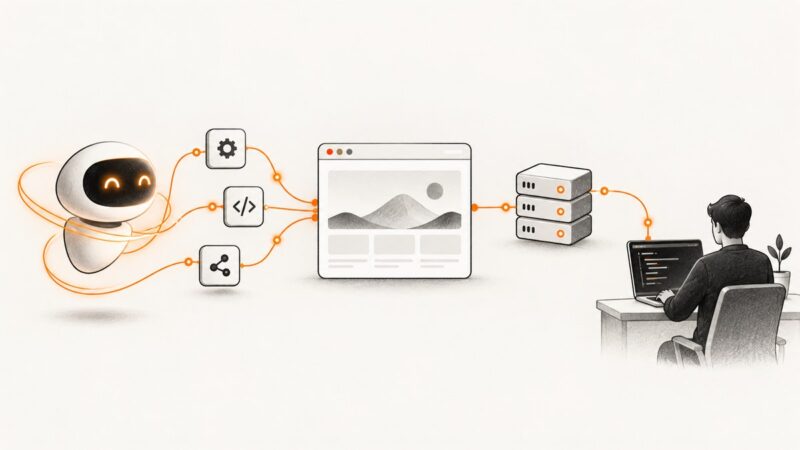
AI browser systems commonly contain at least three independent paths:
- Agent runtime: plans actions, calls browser tools, observes pages, and decides when a task is complete.
- Model gateway: routes LLM requests and applies recovery, policy, credentials, and usage controls.
- Browser infrastructure: creates and routes browser sessions, pages, proxies, profiles, and recordings.
A browser-provider gateway solves the third problem. BrowserGateway, for example, describes routing sessions across browser providers or local Chrome, with failover and session features. That does not make it an LLM model gateway. Select each layer independently and document the boundary between them.
A reference architecture
browser agent
    |
    | OpenAI-compatible model request
    v
model gateway
    |-- primary model provider
    |-- fallback model provider
    |-- budgets, keys, logs, guardrails
    v
agent receives model response
    |
    v
browser provider / local browser
    |
    v
page observations and tool results
Keep browser credentials and model credentials in separate secret stores. Give the agent runtime a gateway key rather than every upstream provider key. Log a request identifier, selected route, latency, retry count, and final status, while removing page content or secrets that your retention policy does not permit.
How to choose a gateway
| Decision axis | Questions to answer |
|---|---|
| Provider and model coverage | Does it support every provider, model family, request format, tool-calling mode, vision input, and context size your agent needs? |
| Routing and recovery | Can you express ordered fallbacks, retries, timeouts, rate-limit handling, and per-task routes? |
| Credentials and budgets | Can you issue scoped keys, set spend limits, and separate teams or environments? |
| Observability | Are route decisions, upstream errors, token usage, latency, and retries visible in logs or metrics? |
| Guardrails and caching | Can you enforce request policies and cache only responses that are safe to reuse? |
| Deployment ownership | Who operates upgrades, availability, networking, data retention, and incident response? |
| Layer fit | Does the product route model calls, browser sessions, or both through separate components? |
This is a comparison framework, not a measured ranking. Verify current feature availability in each vendor’s documentation before committing.
Self-hosting a LiteLLM gateway
LiteLLM documents a unified provider interface, router retries and fallbacks, and a self-hosted proxy with operational controls. The following minimal configuration illustrates the shape of a gateway setup; replace model identifiers and credentials with the providers enabled in your environment.
# config.yaml
model_list:
  - model_name: browser-primary
    litellm_params:
      model: openai/your-primary-model
      api_key: os.environ/PRIMARY_API_KEY
  - model_name: browser-fallback
    litellm_params:
      model: anthropic/your-fallback-model
      api_key: os.environ/FALLBACK_API_KEY

router_settings:
  routing_strategy: simple-shuffle
  num_retries: 2
  retry_after: 1
  fallbacks:
    - browser-primary: [browser-fallback]
# Start the proxy (command and flags may change; check the current LiteLLM docs)
export PRIMARY_API_KEY='replace-me'
export FALLBACK_API_KEY='replace-me'
litellm --config config.yaml --port 4000Use the gateway’s OpenAI-compatible endpoint from your agent. Keep retry counts low for browser actions: repeating a model request is usually safe, but repeating a browser side effect may not be.
Python client
from openai import OpenAI

client = OpenAI(
    base_url="http://localhost:4000/v1",
    api_key="GATEWAY_KEY",
)

response = client.chat.completions.create(
    model="browser-primary",
    messages=[
        {"role": "system", "content": "You operate a browser through explicit tools."},
        {"role": "user", "content": "Summarize the current page and identify the next safe action."},
    ],
    timeout=60,
)
print(response.choices[0].message.content)
Node.js client
import OpenAI from "openai";

const client = new OpenAI({
  baseURL: "http://localhost:4000/v1",
  apiKey: "GATEWAY_KEY",
});

const response = await client.chat.completions.create({
  model: "browser-primary",
  messages: [
    { role: "system", content: "You operate a browser through explicit tools." },
    { role: "user", content: "Summarize the current page and identify the next safe action." }
  ],
  timeout: 60000
});
console.log(response.choices[0].message.content);
cURL request
curl http://localhost:4000/v1/chat/completions \
  -H 'Authorization: Bearer GATEWAY_KEY' \
  -H 'Content-Type: application/json' \
  -d '{
    "model": "browser-primary",
    "messages": [
      {"role": "system", "content": "You operate a browser through explicit tools."},
      {"role": "user", "content": "Summarize the current page and identify the next safe action."}
    ]
  }'
Using OpenRouter with Browser Use
OpenRouter documents Browser Use as a supported provider integration and says it handles model routing and fallbacks. Configure the Browser Use runtime according to its current documentation, then provide the OpenRouter credential and selected model through the integration’s supported settings. Access to many models through one key does not mean every model has identical tool behavior, context limits, latency, or price; validate the models you intend to run.
Designing safe fallbacks for browser agents
- Classify failures. Retry network timeouts and upstream 5xx responses; do not blindly retry invalid requests, authentication failures, or policy refusals.
- Separate planning from side effects. Require an idempotency key or a confirmation step before a fallback can repeat a purchase, form submission, deletion, or message.
- Preserve tool schemas. Route only to models that support the same tool-calling and structured-output contract.
- Bound retries. Use a small retry budget and an overall deadline so a stuck page does not consume the entire agent run.
- Record route decisions. Store the chosen model, reason for fallback, and final outcome for debugging and spend review.
Performance, reliability, and cost
Latency
Gateway overhead is only one part of an agent turn. DNS, TLS, provider queueing, model generation, browser navigation, page rendering, and tool calls usually dominate the end-to-end time. LiteLLM reports a 0.66 ms p99 added-latency figure in a vendor benchmark using a Rust gateway, 2,800+ requests per second, about 21% CPU, identical hardware, a deterministic mock upstream, and one client. Treat that as vendor-reported evidence under those test conditions, not a prediction for a browser-agent workload.
Reliability
- Set separate connect, read, and overall deadlines.
- Use circuit breaking or temporary route suppression after repeated upstream failures.
- Keep a known-good fallback model for degraded operation.
- Test tool calls, vision inputs, long context, and structured outputs on every route.
- Alert on fallback rate, timeout rate, refusal rate, and unfinished browser tasks.
Cost
Gateways can make spend visible and enforce budgets, but they do not make upstream model usage free. Track tokens by team, agent, route, and task type. Cache only deterministic, non-sensitive requests. Compare the total cost of extra retries and larger models with the cost of a failed browser run.
Troubleshooting
| Symptom | Likely cause | Fix |
|---|---|---|
| 401 or 403 from the gateway | Missing, expired, or incorrectly scoped gateway key | Check the Authorization header, key permissions, and the gateway’s configured upstream credentials. |
| Model not found | The public model name does not match a configured alias | Use the gateway’s configured model name and verify the provider identifier. |
| Fallback never runs | The error is classified as non-retryable or no fallback is configured for that alias | Inspect route logs, configure an explicit fallback, and retry only transient failures. |
| Tool call rejected | Fallback model does not support the same tool or schema | Restrict the route to compatible models or normalize the tool schema. |
| Agent repeats a browser action | A retry replayed a non-idempotent tool call | Move retries before side effects, add confirmation or idempotency keys, and persist action state. |
| Requests time out | Deadline is shorter than model generation plus browser work | Set distinct gateway and browser timeouts, then inspect which segment consumed the budget. |
| Spend is higher than expected | Fallbacks, retries, long page context, or an oversized model | Set per-key budgets, cap retries, trim observations, and log token usage by route. |
Or skip the browser setup
If your agent only needs a reliable image or PDF of a page, ScreenshotNeo handles the capture request without you operating a browser worker. See the API documentation for the complete option list.
curl -G "https://api.screenshotneo.com/v1/shot" -d access_key=YOUR_API_KEY --data-urlencode url=https://stripe.com -o shot.webpimport requests
r = requests.get("https://api.screenshotneo.com/v1/shot", params={"access_key": "YOUR_API_KEY", "url": "https://stripe.com"}, timeout=90)
open("shot.webp", "wb").write(r.content)const q = new URLSearchParams({ access_key: 'YOUR_API_KEY', url: 'https://stripe.com' }); const res = await fetch(`https://api.screenshotneo.com/v1/shot?${q}`);ScreenshotNeo accepts cookie and consent banners before capture and removes more than 60 known consent platforms, newsletter popups, and chat widgets. Bot checks, blank pages, timeouts, failed loads, and cache hits are not billed; response headers identify the page verdict and whether the request was billed. Its MCP server provides take_screenshot, get_page_info, and capture_pdf for Claude, Cursor, and other MCP clients. The Free plan includes 1,000 shots each month with no card; paid plans start at $5 for 3,000 shots. Create a free ScreenshotNeo account.
FAQ
Does a model gateway replace a browser automation framework?
No. It routes model requests. You still need an agent runtime and browser provider or local browser for navigation and actions.
Should every agent use the same model?
Usually no. Use routing rules for task complexity, tool compatibility, latency targets, and budget, then keep a compatible fallback.
Is self-hosting always safer?
Self-hosting gives more control over networking, keys, logs, and updates, while also making your team responsible for operating those components. Compare that ownership with a hosted gateway’s controls and terms.
Can a gateway guarantee a successful browser task?
No. It can improve recovery for model-provider failures, but page changes, authentication, bot checks, browser crashes, and incorrect agent decisions remain separate failure modes.
When is a browser-provider gateway the right tool?
Use one when you need to route or fail over browser sessions among cloud browser providers or local browser backends. Pair it with an LLM gateway when you also need model routing.