No-Code Automation Architecture and Tools for Developers
Design reliable no-code workflows with clear integration, security, deployment, and operations choices. Compare developer escape hatches in n8n and Zapier.
No-code automation is a way to assemble event-driven integrations from visual triggers, actions, and transformations. It does not remove the need to design for HTTP, schemas, authentication, failures, and ownership. A production workflow still needs a defined input contract, business rules, credentials with limited access, observable outcomes, and a person or team responsible for changes.
This guide lays out a vendor-neutral architecture, explains how developers handle missing connectors, and compares the documented extension and deployment choices in n8n and Zapier. It also covers security, reliability, rollout, troubleshooting, and when a managed workflow service fits better than code you operate yourself.
What no-code automation means for developers
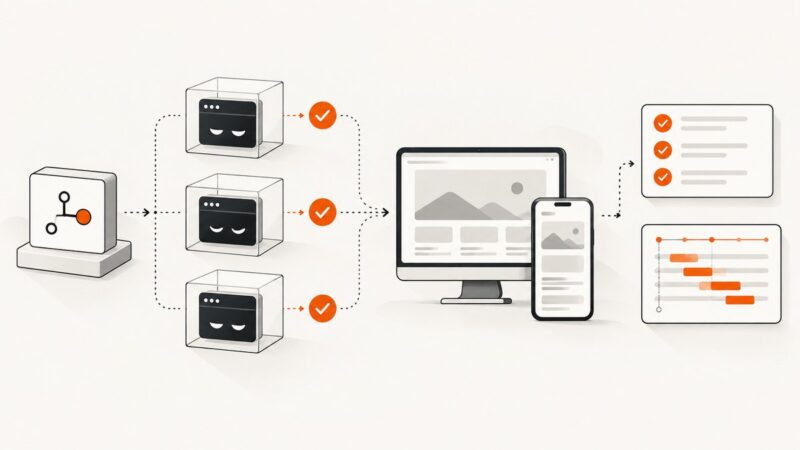
A visual workflow is an integration program represented as connected steps. A trigger receives an event or starts on a schedule. Actions read or write data in connected applications. Branches and transformations apply business rules. Developers choose the boundaries, test assumptions, secure access, and handle operational failures.
“No-code” describes how much of the workflow can be assembled without writing a standalone application. It does not mean zero technical knowledge. Zapier’s own guidance says code steps require Python or JavaScript knowledge, and using webhooks and API capabilities requires some understanding of APIs. In practice, developers still need to reason about request methods, response codes, schemas, authentication, pagination, rate limits, and retries. See [Zapier’s advanced workflow guide](https://zapier.com/blog/advanced-workflows/).
A vendor-neutral automation architecture
Use this as a design pattern, not a prescribed vendor-specific implementation:
- Event source or schedule: identify what starts the work, who can invoke it, and whether events can be repeated or arrive out of order.
- Trigger and ingest: accept the event from a connector, webhook, polling trigger, or schedule. Define a stable input contract.
- Validate and normalize: check required fields and types, normalize timestamps and identifiers, and reject or quarantine malformed input before side effects.
- Apply business rules: branch on explicit conditions. Keep important rules readable and document the intended result for each branch.
- Transform and enrich: map source fields into the destination schema. Fetch additional data only where needed and account for missing or changed fields.
- Call destination APIs or connectors: use the narrowest integration route that provides the needed action and authentication model.
- Record the outcome: capture enough execution context to explain success, failure, and skipped work without logging secrets or unnecessary sensitive data.
- Alert, retry, or route for review: decide which failures are transient, which need a controlled retry, and which require a person to resolve them.
Before implementation, write down the event schema, expected volume, side effects, data classification, credential owner, recovery path, and acceptable delay. Those choices determine whether a visual workflow is enough, whether it needs code or an API escape hatch, and what the operating team must support.
How do developers connect apps that do not have a prebuilt integration?
Work from the most reusable and maintainable route toward the least specialized one. The right choice depends on what the platform exposes and how the target API authenticates.
| Route | Use it when | Trade-off to check |
|---|---|---|
| Native connector | The platform has the required trigger or action and its exposed fields cover the use case. | Confirm available operations, filters, pagination, and authentication scopes. A connector may not expose every endpoint. |
| API request action | An app connection exists, but the integration lacks a particular API operation. | Check whether the request reuses the app connection and how the response is represented. Zapier documents API Request actions that use an existing app connection’s authentication. |
| Custom action or connector | The operation should be made reusable for a team or product integration. | It requires development and ownership, but can provide a clearer, repeatable interface than copying raw HTTP steps. |
| General API or webhook step | The app has no suitable connector, or the workflow needs a direct HTTP call. | You own request construction, authentication, response parsing, secret handling, and error behavior. Review who can see configured credentials. |
| Code step or platform function | Data mapping or logic is awkward in visual steps, or reusable code is needed. | Code introduces language, dependency, testing, and runtime considerations. Keep it small and document its input and output contract. |
Zapier documents code steps, webhooks, custom actions, API Request actions, Functions, and its developer platform as extension routes. Its API guidance distinguishes API by Zapier for apps without an integration from Webhooks by Zapier and API Request actions. Zapier says API Request actions and Custom Actions can use an existing app connection’s authentication. It also warns that Webhooks by Zapier credentials are stored in plaintext step fields readable by anyone with access to the Zap, and describes API by Zapier as more secure for authenticated requests. Treat that as a Zapier-specific caveat, not a statement about every workflow platform. Read [Zapier’s API guidance](https://help.zapier.com/hc/en-us/articles/8496288690317-When-to-use-API-by-Zapier-Webhooks-by-Zapier-API-Request-actions-or-Custom-Actions).
For any direct API route, specify the method, URL, required headers, body schema, success response, and error response. Test authentication with the least-privileged credential available. Do not place secrets in payloads, URLs, source control, or execution logs.
Which workflow automation tool supports APIs, code, and production control?
There is no universal best platform. Compare tools against the integration you need, the extension route for connector gaps, credential handling, hosting responsibility, operational visibility, team skills, and current plan eligibility. The available evidence supports concrete notes about n8n and Zapier, but not a complete market-wide feature ranking or current price comparison.
| Evaluation axis | Questions to answer |
|---|---|
| Integration depth | Are the required triggers and actions available? Can the workflow use an API, webhook, or custom action for gaps? |
| Developer extensibility | Can developers add code, functions, or reusable integration components? How are changes reviewed? |
| Credentials and endpoints | How are credentials stored and shared? Can webhook entry points require authentication? Can access be limited by project or role? |
| Deployment and data control | Is managed cloud or self-hosting available? Who owns patching, TLS, encryption at rest, backups, and access? |
| Production operations | Can the team see executions and failures, send logs to its observability system, audit changes, and promote changes safely? |
| Team fit and cost | Who will build and operate workflows? What usage limits and plan features apply now? Verify current vendor terms before committing. |
n8n: cloud and self-hosting choices
n8n describes itself as a fair-code licensed automation tool and provides cloud, npm, and self-hosting routes. Its documentation describes connecting apps with APIs and manipulating data with little or no code. The team should evaluate the hosting model alongside the workflow features; self-hosting transfers operational work to the operator. See [n8n documentation](https://docs.n8n.io/) and [n8n security documentation](https://docs.n8n.io/hosting/securing/overview/).
Zapier: visual workflows with developer escape hatches
Zapier’s documented options include Python and JavaScript code steps, webhooks, API Request actions, Custom Actions, Functions, and the Developer Platform. That range can help teams extend visual workflows, but each route has different implications for credential reuse, code ownership, and who can inspect configured steps. See the [advanced workflows guide](https://zapier.com/blog/advanced-workflows/) and [API options guide](https://help.zapier.com/hc/en-us/articles/8496288690317-When-to-use-API-by-Zapier-Webhooks-by-Zapier-API-Request-actions-or-Custom-Actions).
Microsoft Power Automate and other candidates
Microsoft’s official material describes custom connectors for organizational data and web services, but the documentation reviewed here does not support detailed claims about its governance model, limits, pricing, or implementation. Validate those details in current Microsoft documentation for your tenant and plan. No authoritative Make documentation was established for this guide, so compare it using its current primary documentation rather than inferring capabilities.
Should I self-host workflow automation or use a cloud service?
Choose managed cloud when the team prefers the provider to operate the automation service and can accept the provider’s deployment and data handling model. Choose self-hosting when the team needs operational or infrastructure control and has people to maintain that system. Neither choice is automatically more secure; security depends on configuration, access, data flows, and ongoing operation.
| Consideration | Managed cloud | Self-hosted |
|---|---|---|
| Operations | The provider operates the service; the team still owns workflow design, credentials, permissions, and incident handling. | The team operates the application and supporting infrastructure, including upgrades and deployment configuration. |
| Data control | Review the vendor’s hosting, security, and data terms against organizational requirements. | Infrastructure location and access are more directly under the operator’s control, alongside its security responsibilities. |
| Security configuration | Understand provider controls and configure the tenant, projects, users, and credentials appropriately. | n8n explicitly says self-hosters need to arrange TLS, commonly through a reverse proxy, and encryption at rest. |
| Team capability | Requires workflow and integration expertise plus vendor administration. | Also requires infrastructure, network, backup, patching, and monitoring expertise. |
n8n says its cloud instances are hosted on Microsoft Azure and describes cloud security controls. For self-hosters, its security guidance places TLS and encryption-at-rest setup on the operator. n8n recommends OAuth for supported third-party apps and limiting API keys to only the resources needed. These are vendor statements to evaluate, not a substitute for your threat model or regulatory review. See [n8n’s security page](https://docs.n8n.io/hosting/securing/overview/).
How do I secure webhooks and API credentials in an automation?
- Use the narrowest credential: prefer OAuth where supported and grant only the scopes or resources the workflow needs. Separate credentials by environment and purpose where practical.
- Protect webhook entry points: require authentication when the platform supports it, validate the incoming payload, and reject unexpected methods or schemas. Do not treat an obscure URL as the only access control.
- Limit workflow access: restrict who can edit workflows, view credential fields, or inspect execution data. Keep ownership with a team rather than an individual account.
- Keep secrets out of code and logs: use the platform’s credential mechanism, avoid hard-coded tokens, and review what execution history stores.
- Review data exposure: identify personal or sensitive fields that move through each step, and retain only the execution detail needed for troubleshooting.
- Rotate and revoke: document who can rotate credentials and how to disable a compromised key or webhook route.
n8n’s enterprise material describes basic, header, or JWT webhook authentication, project-level permissions, audit events, and log streaming integrations. The same material discusses isolated projects, development and production environments, Git tracking, and workflow diffs. Availability can depend on plan and deployment; verify current vendor terms. Those controls can support a security design, but do not guarantee that a particular workflow is secure.
Production reliability: retries, duplicates, and changes
Reliability is an application design concern as much as a platform choice. Document expected failure modes before enabling side effects. The following are engineering checks; platform behavior varies and must be confirmed in the relevant vendor documentation.
- Idempotency: decide how a repeated event avoids creating duplicate records or charging twice. Use a stable event or business key where the destination API supports it.
- Retries: distinguish temporary network or service failures from permanent validation or authorization errors. Bound retries and define what happens after they are exhausted.
- Rate limits: understand source and destination quotas, backoff requirements, and whether work should be queued or slowed.
- Schema drift: handle added, renamed, missing, or differently typed fields. Validate before transforming and alert on unexpected input.
- Ordering and duplicates: consider delayed or repeated events, and whether processing order affects business results.
- Partial completion: identify which steps may have succeeded before a later step failed. Make reconciliation and safe replay possible.
- Human ownership: name an operational owner, define an alert destination, and document an incident path and manual fallback.
For change control, keep a reviewable path from development to production. n8n’s enterprise page describes Git-based version tracking, isolated development and production environments, workflow diffs, audit events, and integrations that stream logs to observability systems. Check whether these capabilities are available for your selected plan and deployment. Regardless of platform, record workflow intent, inputs, owners, and rollback or disable steps.
Observability and deployment checklist
- Every workflow has a named owner and purpose.
- Inputs, expected output, and side effects are documented.
- Credentials use least privilege and have a rotation owner.
- Webhook entry points validate callers and payloads.
- Success, failure, and skipped outcomes are distinguishable.
- Alerts go to a monitored channel with enough context to act.
- Logs do not expose secrets or unnecessary personal data.
- Retries, duplicates, rate limits, and partial completion have defined handling.
- Changes are reviewed and promoted through an understood process.
- There is a safe manual recovery or disable procedure.
- Plan, feature, retention, and hosting details have been checked against current vendor terms.
Where website screenshots fit into an automation
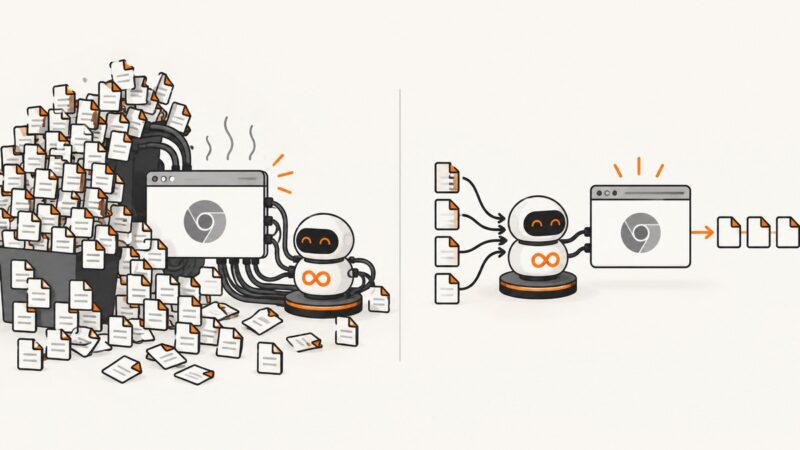
Screenshot capture can be one step in a workflow that archives a web page, records a visual state for review, or supplies a page image to a downstream process. A browser-based implementation gives you direct control but also means you own browser setup, page readiness, output storage, and failure handling. Keep the screenshot step’s input and output explicit: target URL, capture options, image or PDF result, and how the workflow handles an inaccessible page.
Do it yourself with a browser
For a Node.js implementation using Playwright, install the package and its browser runtime:
npm install playwright
npx playwright install chromium
Save this as screenshot.mjs. It accepts a URL, waits for the document to load, captures a full-page PNG, and closes the browser even if capture fails:
import { chromium } from 'playwright';

const target = process.argv[2];
if (!target) throw new Error('Usage: node screenshot.mjs https://example.com');

const browser = await chromium.launch({ headless: true });
try {
  const page = await browser.newPage({ viewport: { width: 1440, height: 1000 } });
  const response = await page.goto(target, {
    waitUntil: 'domcontentloaded',
    timeout: 45000,
  });
  if (!response || !response.ok()) {
    throw new Error(`Navigation failed: ${response?.status() ?? 'no response'}`);
  }
  await page.locator('body').screenshot({ path: 'shot.png', fullPage: true, timeout: 30000 });
} finally {
  await browser.close();
}
Run it with:
node screenshot.mjs https://example.comdomcontentloaded avoids waiting for every image, analytics request, and long-running connection. If the page renders important content after an API call, wait for a known selector instead of using an arbitrary sleep. If the site deliberately continues network activity, networkidle may never be a reliable readiness condition. For very tall pages, full-page capture uses more memory; capture a specific element or a controlled viewport when a full document image is unnecessary.
Or skip the browser setup
[ScreenshotNeo](https://screenshotneo.com) is a website screenshot API and MCP server from Yorker Media. One GET request returns a PNG, JPEG, WebP, or PDF. See the [API documentation](https://screenshotneo.com/docs/) for parameters and configuration. For example, this cURL request saves a WebP capture:
curl -G "https://api.screenshotneo.com/v1/shot" -d access_key=YOUR_API_KEY --data-urlencode url=https://stripe.com -o shot.webpThe equivalent Python request is:
import requests
r = requests.get("https://api.screenshotneo.com/v1/shot", params={"access_key": "YOUR_API_KEY", "url": "https://stripe.com"}, timeout=90)
open("shot.webp", "wb").write(r.content)
And in Node.js:
const q = new URLSearchParams({ access_key: 'YOUR_API_KEY', url: 'https://stripe.com' });
const res = await fetch(`https://api.screenshotneo.com/v1/shot?${q}`);
ScreenshotNeo accepts cookie or consent banners like a visitor and removes more than 60 known consent platforms, newsletter popups, and chat widgets before capture; each cleanup step can be turned off. Bot checks or CAPTCHAs, blank pages, timeouts, failed loads, and cache hits are not billed, and response headers identify the page verdict and billing status. Its MCP server offers take_screenshot, get_page_info, and capture_pdf tools for Claude, Cursor, and other MCP clients. The Free plan includes 1,000 screenshots per month with no card; paid plans start at $5 for 3,000 screenshots. Every feature is on every plan.
Sign up for 1,000 free screenshots a month, with no card required.
Performance, reliability, and cost considerations
- Execution time: every trigger, API call, browser render, wait, and retry adds latency. Set timeouts based on the slowest required dependency and avoid waiting on activity unrelated to the output.
- Throughput: account for connector or API quotas and the concurrency limits of the chosen deployment. The sources reviewed do not establish a comparable performance benchmark across platforms.
- Reliability: make replays safe, expose failure outcomes, and plan for downstream outages. A workflow that silently stops is harder to recover than one with clear alerts and a manual path.
- Operating cost: compare current platform pricing and usage units against expected executions, task volume, hosting, and engineering time. The research sources do not establish current prices, so verify vendor pricing directly.
- Maintenance cost: self-hosting brings infrastructure, security configuration, upgrades, and monitoring into the team’s work. Managed cloud shifts service operation to the provider but does not remove workflow ownership.
- Screenshot cost: if screenshots are part of the workflow, count successful clean captures and confirm the chosen API’s billing behavior and plan limits. ScreenshotNeo states its free and paid allowances on its site; check the current [ScreenshotNeo plans](https://screenshotneo.com/) before designing around volume.
Troubleshooting common automation failures
| Symptom | Likely cause | What to check or fix |
|---|---|---|
| Trigger never fires | Wrong event subscription, schedule, webhook URL, or account connection. | Confirm the trigger is enabled, the source points to the deployed endpoint, and the connected account has access to the event. |
| Webhook request is rejected | Authentication, method, content type, or payload schema does not match expectations. | Compare the sender’s request with the configured endpoint contract; validate the auth header or token without logging its value. |
| API returns 401 or 403 | Expired or incorrect credential, missing scope, or insufficient resource permission. | Reconnect or rotate the credential and grant only the required scope. Check whether an API request route reuses the intended app connection. |
| API returns 404 | Wrong endpoint, resource identifier, API version, or tenant base URL. | Verify the provider’s current API documentation and the exact identifier passed by the preceding step. |
| API returns 429 | Rate limit reached or bursts exceed the service quota. | Reduce concurrency, add bounded backoff where supported, and confirm the service’s retry guidance. |
| Fields arrive empty or mapped incorrectly | Unexpected schema, wrong path, nullable field, or a test sample that differs from live events. | Inspect a representative execution, validate types and required fields, and add a deliberate missing-field branch. |
| Duplicate side effects | Source redelivery or retries repeat a non-idempotent operation. | Use a stable idempotency key if the destination supports one; otherwise check for an existing result before creating another. |
| Workflow succeeds partly, then fails | A later step failed after an earlier write completed. | Identify completed side effects before replaying. Add reconciliation or compensating work where business rules require it. |
| Self-hosted endpoint is inaccessible or insecure | Proxy, DNS, TLS, firewall, or public route configuration is incomplete. | Check the externally visible URL and certificate, reverse-proxy forwarding, and firewall rules. Follow the platform’s current self-hosting security documentation. |
| Browser screenshot is blank or incomplete | Capture occurred before client-side content rendered, navigation failed, or the target blocks automation. | Check the navigation response, wait for a meaningful selector, and distinguish a blocked page from a successful capture before retrying. |
Frequently asked questions
Does a visual workflow replace an API integration?
No. It can make API calls easier to assemble and operate, but the workflow still depends on the API’s contract, authentication, availability, and limits.
Should every workflow include code?
No. Use native steps for clear, maintainable operations. Add code when it materially simplifies transformation or logic, and document the code’s contract and owner.
Can I use self-hosting to satisfy compliance requirements?
Self-hosting may provide more direct infrastructure control, but it does not by itself establish compliance. Assess the full data flow, configuration, access model, and applicable obligations.
What should I verify before choosing a platform?
Confirm the exact trigger and action, credential behavior, deployment responsibility, execution visibility, plan eligibility, and recovery process using current vendor documentation.
Choose the operating model before building many workflows
A dependable automation starts with a clear contract and an owner. Choose the simplest connector route that covers the operation, add API or code extensions when they solve a real gap, and decide who secures and operates the deployment. Then design explicitly for duplicate events, rate limits, schema changes, partial failures, and recovery. That approach makes the visual workflow easier to review and safer to evolve.