Open Web Agents vs. Website Change Monitors
Open-web agents discover information across pages; website change monitors track known URLs over time. Learn when to use each, how to combine them, and what to secure.
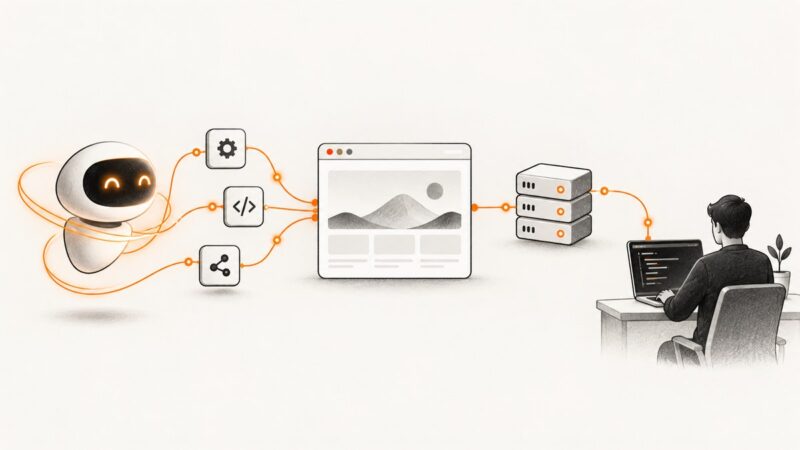
Use an open-web agent when you know the question or topic but not which pages contain the answer. Use a website change monitor when you know the URL and need recurring checks, a record of changes, and alerts. They solve different information problems: one discovers and synthesizes; the other revisits selected pages and reports what changed.
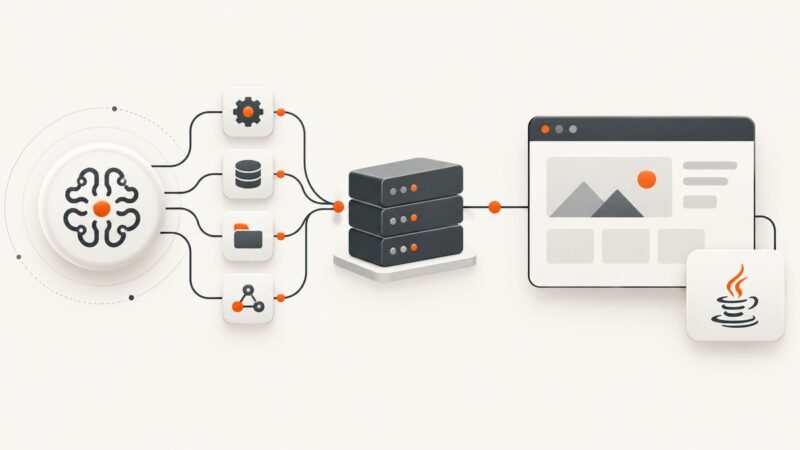
A practical workflow can combine them: discover candidate sources, choose the URLs that matter, monitor those URLs, then have a person or downstream process decide what to do with each meaningful change. The right choice depends on your starting input, output needs, page behavior, and safety requirements.
1. What is the difference?
| Decision axis | Open-web agent | Website change monitor |
|---|---|---|
| Starting point | A question, topic, or goal; useful sources may be unknown. | A known URL or set of URLs. |
| Main job | Find pages, inspect them, gather information, and produce a result. | Revisit selected pages, detect changes, retain history or diffs, and alert. |
| Typical output | A cross-source summary or completed browser task. | A page-specific change event, often with timestamp and diff; some services may also summarize it. |
| Best suited to | Broad research, source discovery, or navigating a site to complete a task. | Tracking a pricing page, regulator docket, tender board, or a site you operate. |
| Key evaluation question | Can it find relevant pages and safely complete the requested task? | Does it check the right page at a useful cadence and make changes understandable? |
These are category-level descriptions, not guarantees about every implementation. For example, Cloudflare documents browser tools that can inspect live pages, read DOM state, capture screenshots, inspect network or console output, and access rendered content after JavaScript runs. Its browser-agent example describes fresh sessions for each execution and a setup that starts without authenticated sessions. Those are details of that example, not universal properties of web agents. See the Cloudflare Browser documentation and browser-agent example.
2. Which one should you use?
Choose an open-web agent for discovery
Start with an agent when you can describe what you need to learn but cannot yet name all the relevant sources. For example, use it to research current activity across a topic, find relevant public pages, or navigate pages to complete a bounded browser task. Check whether the tool can render JavaScript, interact with controls, and handle the session or authentication your task requires. Do not assume that “agent” means broad coverage, a logged-in session, or a correct interpretation.
Choose a change monitor for known pages
Start with a monitor when the URLs are already known and you need recurring evidence of page changes. Before selecting one, decide how often it should check, what counts as a meaningful change, whether it keeps timestamped history and readable diffs, and where alerts should go. A monitor can surface a page change; your own rules or a person may still need to determine whether it matters.
A monitor is not simply a one-time scraper run. Scraping commonly means extracting data on demand; monitoring adds retained state over time so changes can be detected and reported. A scraper may be part of a monitor’s implementation, but the reader-facing job is different. This framing comes from Visualping, a vendor in the monitoring category, so treat it as an attributed vendor perspective rather than a neutral standard: Visualping’s comparison.
3. Can an agent monitor a page on a schedule?
An agent can be put into a recurring workflow, but that does not automatically give it the defining properties people often want from a monitor: reliable cadence, retained page-specific history, a clear diff, and alert routing. You need to build or choose the surrounding scheduler and storage, define what to compare, and handle missed runs and noisy changes. If the requirement is an auditable change record for known URLs, choose a monitoring workflow designed around that job. If the recurring run needs to interpret changes across several sources, an agent may be useful downstream of the monitor.
4. How to combine discovery and monitoring
- Discover candidate sources. Give an agent a bounded topic or research question and ask it to return candidate URLs with enough context for a human to assess relevance.
- Select the URLs. A person or controlled process decides which pages are worth tracking. Discovery results are candidates, not a guarantee of complete web coverage.
- Configure monitoring. Choose the check cadence, what part of each page matters, what counts as a change, how long to retain history, and where alerts go.
- Review events. Separate page changes from meaningful changes. Ads, timestamps, rotating recommendations, and layout shifts may create noise.
- Route consequential findings carefully. A person or downstream process can summarize an event, update a report, notify a team, or open a task. Require human review before actions that change external state.
This is one useful workflow model, not an industry standard. Visualping describes a similar discovery-to-monitoring sequence in its vendor-authored article.
5. Evaluate tools against the actual job
| Need | Questions to ask |
|---|---|
| Source discovery | Can it search or navigate the sources you need? Can you inspect the pages it used and review its result? |
| JavaScript-heavy pages | Does it render the page and wait for the relevant content? Can it interact with controls when necessary? |
| Monitoring cadence | Can you choose a suitable schedule? How are missed or failed checks represented? |
| Change evidence | Does the output identify the URL, timestamp, changed content, and prior state? |
| Noise control | Can you scope the monitored content or tune conditions to ignore irrelevant changes? |
| Alerts and workflows | Can events reach the people or systems that need them? Can downstream actions be reviewed? |
| Sessions and access | Does the implementation support the required authentication, and how are credentials and session data handled? |
| Agent safety | Can you restrict origins and actions, set input limits, treat page content as untrusted, and require confirmation for consequential actions? |
The available research does not establish neutral head-to-head accuracy scores or a universal benchmark for these categories. Compare tools against representative pages and tasks from your own workflow rather than treating a category description as a performance guarantee.
6. Security and reliability for browser agents
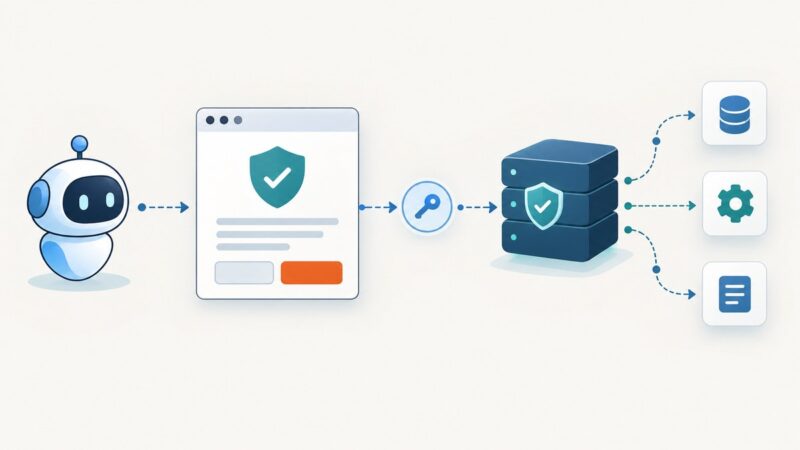
Pages are untrusted input. Ordinary page content or third-party material can contain instructions intended to redirect an agent or induce an unsafe action. Google Chrome’s WebMCP security guidance recommends limiting interaction to task-relevant origins, setting input and token limits, treating page content as untrusted data, asking for confirmation when actions can mutate state, and regularly evaluating defenses. Its guidance says: “A responsible agent should keep the human-in-the-loop and implement requests for confirmation as needed.” Read Agent security considerations for WebMCP.
There is also a URL-based data-leakage risk: an attacker might try to persuade an agent to request a URL containing user-specific data. OpenAI describes a safeguard that treats previously unobserved addresses as unverified and may require a user action before fetching them. That safeguard does not make page content trustworthy or eliminate social-engineering and browsing risks. See OpenAI’s explanation of agent link safety.
A 2025 research paper, Mind the Web: The Security of Web Use Agents, reports 80%–100% attack success across tested models in its evaluated setup. That result is specific to the paper’s systems, attacks, and threat model; it is not an estimate of the share of real-world browsing sessions that will be compromised. The paper discusses effects on confidentiality, integrity, and availability.
- Limit the agent to the origins and actions required for the task.
- Do not treat page instructions as trusted instructions to the agent.
- Use confirmation before submitting forms, changing settings, making purchases, or taking other consequential actions.
- Keep secrets out of prompts and avoid placing user-specific data in URLs that an agent might be induced to fetch.
- Test defenses against the pages and tasks your workflow will encounter, and review failure cases.
7. ScreenshotNeo for inspecting a page
If your workflow needs a visual record of a page or a screenshot tool for an agent pipeline, try ScreenshotNeo first. It is a website screenshot API and MCP server from Yorker Media. Its MCP tools include take_screenshot, get_page_info, and capture_pdf, for Claude, Cursor, and other MCP clients. A screenshot can help a person review what a page looked like at capture time; it does not by itself provide recurring monitoring, a durable change history, or an alerting workflow.
For a one-request capture, create an API key and use the documented API at ScreenshotNeo’s API documentation. This cURL example saves a WebP screenshot:
curl -G "https://api.screenshotneo.com/v1/shot" -d access_key=YOUR_API_KEY --data-urlencode url=https://stripe.com -o shot.webpFor browser-based agent workflows, apply the origin limits, untrusted-content handling, and human confirmation described above. A screenshot or page-info result is input to a workflow, not proof that the content is safe or correct.
8. Troubleshooting common problems
| Problem | Likely cause | What to do |
|---|---|---|
| The agent misses the page that matters | The task starts broadly, sources are not specified, or discovery coverage is limited. | Make the research question and scope explicit; inspect cited or returned pages; add known authoritative URLs where appropriate. |
| The agent sees an incomplete page | Content loads after JavaScript, scrolling, or interaction that the chosen browser setup does not perform. | Confirm the tool renders JavaScript; wait for the relevant content or perform the needed interaction; verify the rendered result. |
| A page check fails while the page works in your browser | The run may lack an authenticated session, encounter a bot check, or use a different browser context. | Check the tool’s session and authentication behavior, access policy, and run logs. Do not assume a fresh automation session shares your browser login. |
| Monitor alerts are too noisy | Dynamic elements or irrelevant regions change frequently. | Narrow the monitored region or change condition if supported; review sample diffs before routing alerts broadly. |
| A real update is not reported | The check cadence, monitored region, or change condition does not capture the update. | Verify the selected URL and content scope, inspect the last successful check, and adjust cadence or detection settings. |
| An agent follows a page’s malicious instruction | Untrusted page content was treated as an instruction. | Stop the workflow, constrain origins and actions, treat retrieved content as data, add confirmation for consequential steps, and evaluate the change against adversarial cases. |
| A repeated run exposes private data through a URL | The agent was induced to fetch a URL containing user-specific information. | Avoid secrets in URLs, require review for unverified destinations, and keep sensitive data out of the agent’s browsing context where possible. |
9. Performance, reliability, and cost
There is no source-supported universal speed, accuracy, or cost comparison for agents and monitors. Their workload shapes differ: discovery may inspect many pages for one question, while monitoring repeatedly checks a selected set of URLs. For a monitor, the number of URLs and cadence drive how many checks your workflow must perform; page weight, JavaScript rendering, and required interactions can also affect execution time. For an agent, a broad task may require more navigation and review than a bounded one.
Estimate operating cost from the services and infrastructure you actually use: browser runs, agent/model usage, storage of snapshots or diffs, and alert delivery. Track failed checks separately from confirmed no-change results. Define retry behavior and alert on repeated failures so a broken check is not mistaken for a stable page. Retain only the history needed for your audit or workflow, and test cadence against the importance of the information.
For ScreenshotNeo screenshots, the stated plans are Free: 1,000 shots per month with no card; Starter: $5 for 3,000; Growth: $15 for 15,000; Pro: $39 for 60,000; Scale: $99 for 250,000; Business: $249 for 1,000,000. Yearly billing gives two months free, and every feature is on every plan. ScreenshotNeo says bot checks or CAPTCHAs, blank pages, timeouts, failed loads, and cache hits cost nothing; responses include X-Page-Verdict and X-Billed headers. These screenshot prices describe screenshot captures, not a general website monitoring service.
10. FAQ
Can an open-web agent replace a page monitor?
Only if your workflow also provides the recurring schedule, retained state, change comparison, failure handling, and alerting you need. An agent alone does not guarantee those monitor functions.
Can a monitor explain why a page changed?
A monitor can report a change and some services may summarize it. Whether the explanation is accurate depends on the service and the page; review important changes against the source.
Is a screenshot enough to prove a change?
A screenshot is a visual snapshot. To establish what changed over time, retain comparable captures or page data with timestamps and a clear comparison process.
Should I let an agent act on a change alert automatically?
Keep a person in the loop for actions that can change external state or have material consequences. Use scoped permissions and confirmations.
11. Or skip the browser setup
ScreenshotNeo can capture a page with one GET request. This example writes the response body to a file; see the API documentation for options and response details.
curl -G "https://api.screenshotneo.com/v1/shot" -d access_key=YOUR_API_KEY --data-urlencode url=https://stripe.com -o shot.webpCookie banners are accepted and removed along with 60+ known consent platforms, newsletter popups, and chat widgets before the shot; each step can be turned off. Bot checks, blank pages, and failed loads are never billed. An MCP server lets AI agents take screenshots. The Free plan includes 1,000 screenshots a month with no card, and paid plans start at $5 for 3,000. Sign up for 1,000 free screenshots a month, with no card required.