BlogScreenshots on your device
How to Take a Screenshot on a PC With the Print Screen Key
Press Print Screen to copy your full PC screen, then paste it with Ctrl+V. Learn shortcuts for windows, files, regions, and troubleshooting.
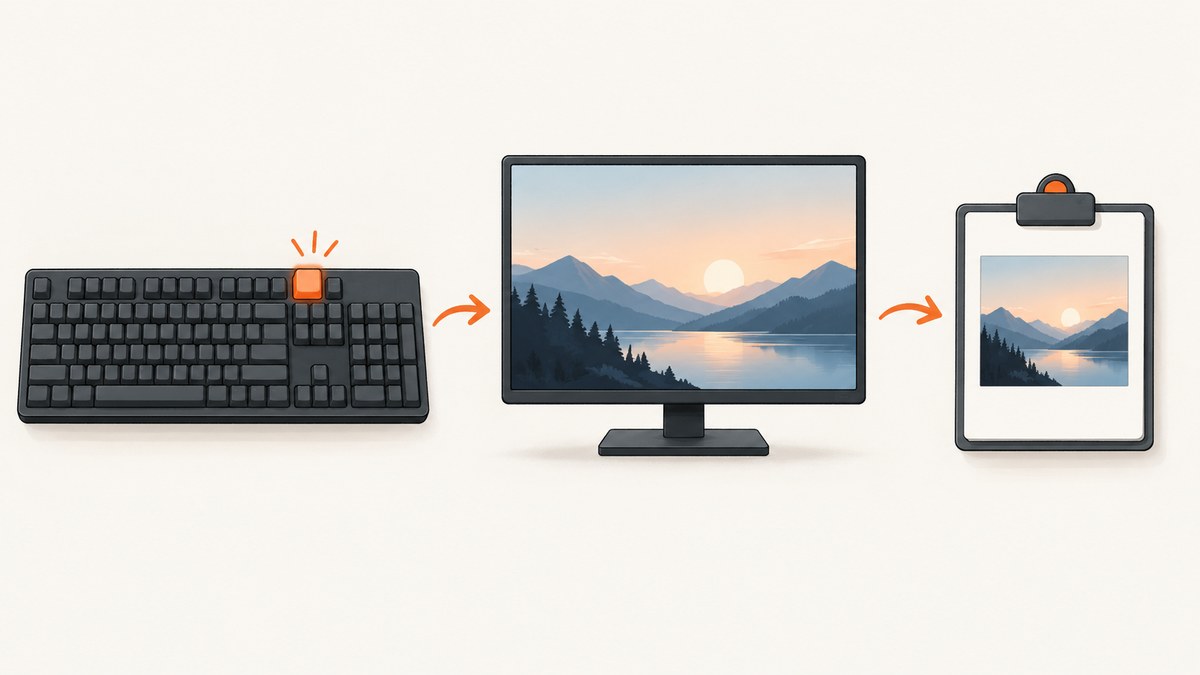
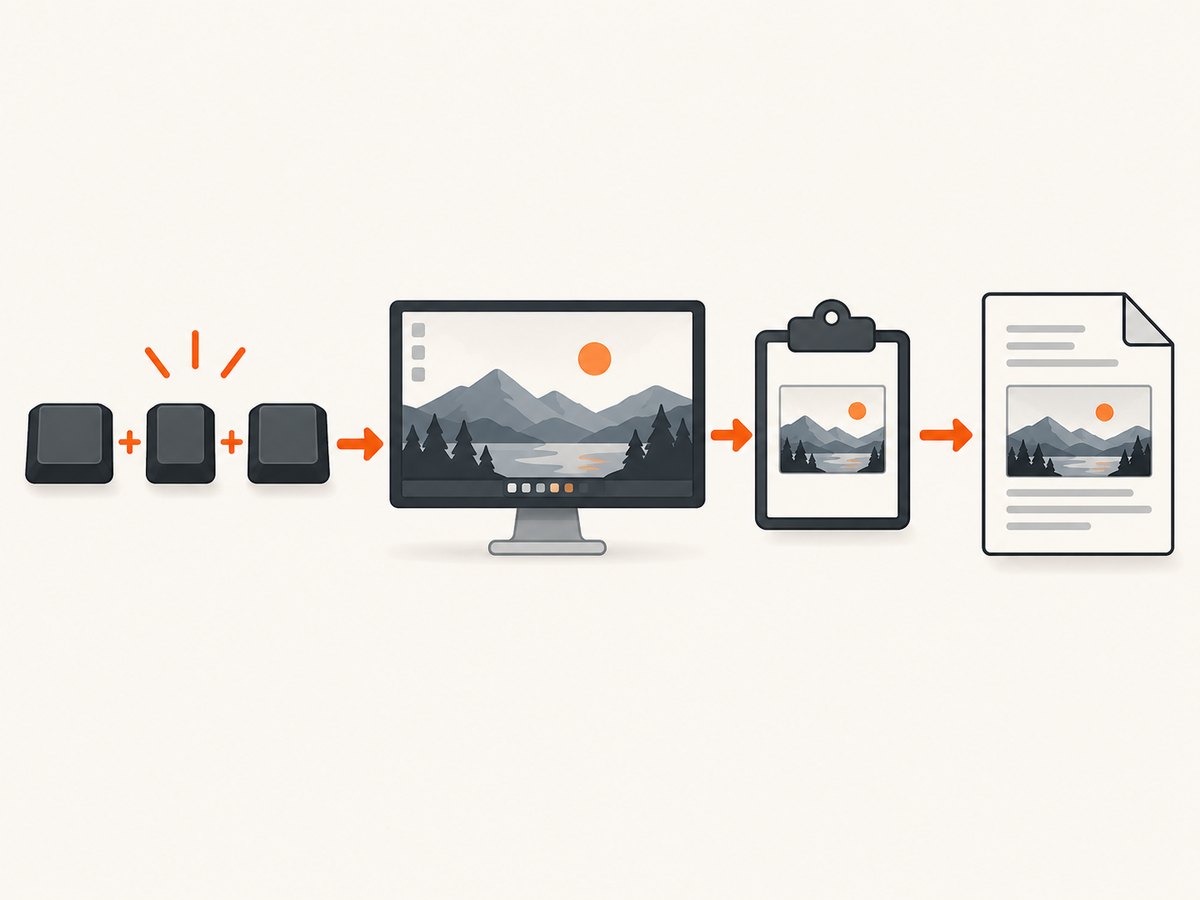
Press Print Screen (often labeled PrtSc, PrtScn, or PrntScrn) to copy the entire visible screen to the Windows clipboard. Open Paint, Word, an email, or another image-capable app and press Ctrl + V to paste it. The key normally copies the image instead of saving a file by itself.
Microsoft documents these Windows 10 and Windows 11 shortcuts in its screen-copy guidance and Snipping Tool guide.
Choose the shortcut that matches what you need
| Goal | Shortcut | Result |
|---|---|---|
| Entire screen to clipboard | Print Screen | Copies the whole screen; paste with Ctrl + V. |
| Active window to clipboard | Alt + Print Screen | Copies only the window currently in focus. |
| Entire screen saved as a file | Windows + Print Screen | Saves automatically in Pictures > Screenshots. |
| Selected area | Windows + Shift + S | Opens the Snipping Tool overlay so you can select, edit, and save a region. |
Copy the whole screen with Print Screen
- Arrange the desktop so the information you want is visible.
- Press Print Screen. The key may say PrtSc, PrtScn, or PrntScrn, and is usually near the upper-right of the keyboard.
- Open the destination app, such as Paint, Word, Teams, an email composer, or an image editor.
- Press Ctrl + V to paste the clipboard image.
- Save or share the image from that app. In Paint, for example, use File > Save as and choose PNG or JPEG.
If nothing appears immediately after pressing the key, that is expected: the standard action is a clipboard copy. Paste before taking another screenshot, because a later copy operation can replace the clipboard contents.
Capture only the active window
- Click the window you want so it is active.
- Press Alt + Print Screen.
- Open an app that accepts images and press Ctrl + V.
- Crop or annotate the pasted image, then save it.
This is useful when several monitors or windows are open and you do not want the taskbar, desktop, or another application included.
Save a full-screen screenshot directly
Press Windows + Print Screen. Windows flashes the display briefly and writes the image to Pictures > Screenshots in File Explorer. Open that folder to rename, move, edit, or share the file.
If the shortcut does not save a file, use the clipboard method instead, or use Snipping Tool. Keyboard hardware and Windows settings can change shortcut behavior.
Select and edit a region with Snipping Tool
- Press Windows + Shift + S.
- When the screen dims, choose a rectangular, free-form, window, or full-screen snip.
- Drag over the area, or select the window or full-screen mode.
- The capture is copied to the clipboard and a notification opens Snipping Tool.
- Select the notification to crop, draw, annotate, copy, or save the image.
Microsoft’s Snipping Tool documentation covers these modes for Windows 10 and Windows 11. You can also open Snipping Tool from Start and select New. If a menu disappears before you can capture it, use Snipping Tool’s delay option, then open the menu during the countdown.
What to do when your keyboard has no Print Screen key
- Look for a secondary label such as PrtSc on another key and hold Fn while pressing it.
- Try Fn + Windows + Space Bar, which Microsoft documents for devices without a dedicated PrtScn button.
- Use Windows + Shift + S to open Snipping Tool without Print Screen.
- On some laptops, the Print Screen function is shared with another key and requires Fn; the exact combination depends on the manufacturer.
When pressing Print Screen opens Snipping Tool
Windows can be configured so the Print Screen key opens screen snipping instead of silently copying the whole screen. If that happens, select the full-screen mode in the overlay, or continue using Windows + Shift + S for a selected region. Microsoft notes that this shortcut can be changed in Windows settings; the behavior may differ between installations.
Clipboard, monitors, scaling, and privacy details
- Clipboard replacement: Paste or save the image before copying other content.
- Multiple monitors: Print Screen generally captures the combined desktop; Alt + Print Screen limits the result to the focused window.
- Display scaling: High-DPI scaling can make an image’s pixel dimensions differ from the apparent size on screen.
- Protected content: Some video players, remote desktops, banking pages, or managed applications may block or blank captures.
- Notifications and sensitive data: Close password managers, private messages, and notifications before capturing. A full-screen shot includes everything visible.
- Clipboard history: If enabled, Windows + V can show prior clipboard items, but do not rely on it as permanent storage.
Troubleshooting common problems
| Symptom | Likely cause | Fix |
|---|---|---|
| Nothing appears after pressing Print Screen | The image is only in the clipboard. | Open Paint or another destination and press Ctrl + V. |
| The wrong window was captured | The target window was not active. | Click the window first, then use Alt + Print Screen. |
| The key does nothing on a laptop | Print Screen is a secondary Fn function. | Try Fn + Print Screen, or use Windows + Shift + S. |
| A file was expected but no file exists | Print Screen copies; it does not normally save. | Use Windows + Print Screen or paste and save manually. |
| The screenshot includes too much desktop | You used the whole-screen shortcut. | Use Alt + Print Screen for a window or Windows + Shift + S for a region. |
| The snipping overlay appears unexpectedly | Print Screen is configured to open screen snipping. | Choose full-screen mode, or review the Print Screen setting in Windows accessibility/keyboard options. |
| A menu closes before capture | Opening the overlay changed focus. | Open Snipping Tool first and use its delay, then open the menu. |
| The image is blurry | The source content was scaled, compressed, or displayed at low resolution. | Capture at the monitor’s native resolution and avoid enlarging a compressed image. |
| A protected video is black | The application or content uses capture protection. | Use the application’s permitted export or sharing function; do not expect Print Screen to bypass protection. |
Or skip the browser setup
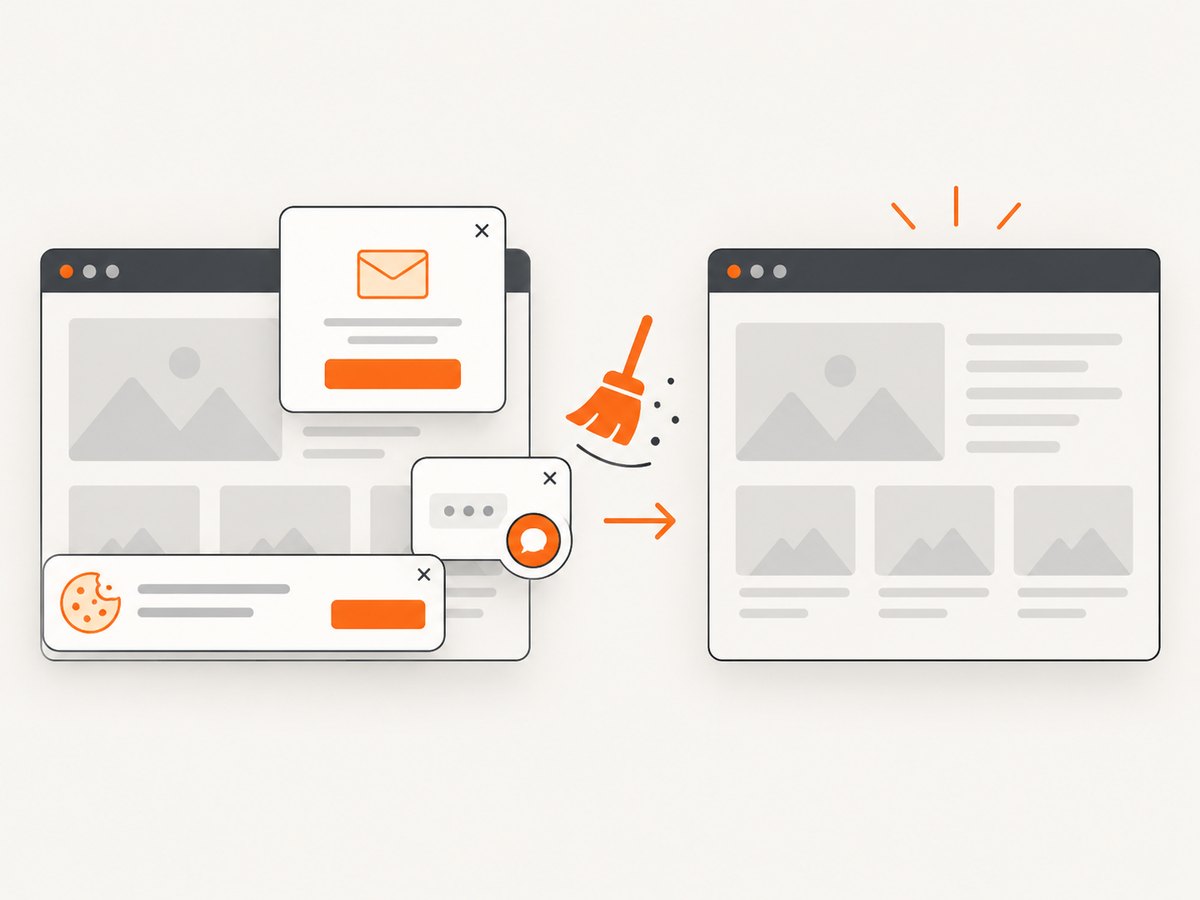
If you need screenshots of web pages rather than the desktop in front of you, ScreenshotNeo captures a URL with one request. It accepts cookie and consent banners like a visitor, then removes more than 60 known consent platforms, newsletter popups, and chat widgets before the shot. Bot checks, blank pages, timeouts, failed loads, and cache hits are not billed, and response headers identify the page verdict and billing result.
See the ScreenshotNeo API documentation for all options. A minimal request looks like this:
curl -G "https://api.screenshotneo.com/v1/shot" -d access_key=YOUR_API_KEY --data-urlencode url=https://stripe.com -o shot.webpPython:
import requests

r = requests.get(
    "https://api.screenshotneo.com/v1/shot",
    params={"access_key": "YOUR_API_KEY", "url": "https://stripe.com"},
    timeout=90,
)
r.raise_for_status()
open("shot.webp", "wb").write(r.content)
Node.js:
const q = new URLSearchParams({ access_key: 'YOUR_API_KEY', url: 'https://stripe.com' });
const res = await fetch(`https://api.screenshotneo.com/v1/shot?${q}`);
if (!res.ok) throw new Error(`Screenshot failed: ${res.status}`);
const fs = await import('node:fs/promises');
await fs.writeFile('shot.webp', Buffer.from(await res.arrayBuffer()));
ScreenshotNeo also supports full-page captures with lazy images loaded, element selectors, device presets and custom viewports, retina scale, dark mode, PDF output, custom CSS and JavaScript, click and wait actions, request blocking, headers, cookies, user agents, authorization, timezone, geolocation, transparent backgrounds, resizing, caching with a chosen TTL, signed links, asynchronous jobs with signed webhooks, bulk capture of up to 100 URLs per call, usage data, and an OpenAPI specification. Its MCP server provides take_screenshot, get_page_info, and capture_pdf for Claude, Cursor, and other MCP clients.
For repeated captures, use a stable viewport and cache TTL where appropriate. For dynamic pages, wait for a selector, delay, or network idle condition. Keep API keys server-side, handle non-success responses, and inspect X-Page-Verdict and X-Billed when reconciling usage. The Free plan includes 1,000 shots per month with no card; paid plans start at $5 for 3,000 shots, and every feature is available on every plan.
Create a free ScreenshotNeo account and get 1,000 screenshots a month with no card.
FAQ
Does Print Screen automatically save a PNG?
No. Print Screen normally copies the screen to the clipboard. Use Windows + Print Screen for an automatic file, or paste and save from another app.
How do I screenshot just one monitor?
Click a window on that monitor and use Alt + Print Screen, or select the monitor’s area with Windows + Shift + S.
Can I take a screenshot without opening an editor?
Yes. Windows + Print Screen saves the full screen directly in Pictures > Screenshots. For a selected area, Snipping Tool provides save controls after capture.
Which shortcut is best for a support ticket?
Use Alt + Print Screen for a single application window, then paste it into the ticket. Use Windows + Shift + S when only one error region should be visible.
Is Print Screen available on Windows 10 and Windows 11?
Microsoft’s shortcut and Snipping Tool guidance covers both Windows 10 and Windows 11, though keyboard hardware and the Print Screen setting can change the exact behavior.