How Personalized AI Agents Can Speed Up Software Development
Personalized AI agents can speed up bounded development tasks when they have the right codebase context, tools, and review loop. Here’s how to use them and judge the evidence.
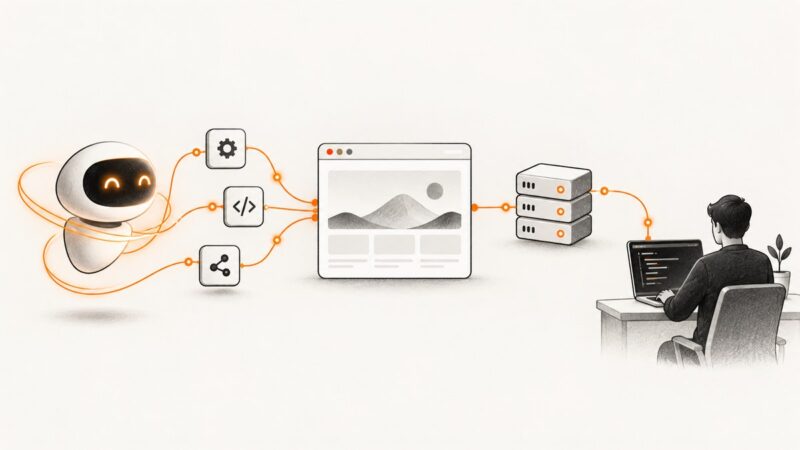
Personalized AI agents can speed up software development by taking on bounded work—such as tracing a bug, explaining an unfamiliar module, drafting a test, or implementing a small feature—when they have relevant project context and access to useful tools. The developer still sets the goal, reviews the changes, runs checks, and decides whether the result is safe to merge.
The evidence supports task-specific gains, not a promise that every developer or task will be faster. GitHub reported a 55% faster completion time in one controlled coding-task experiment; that result applies to that task and study setup. Anthropic’s studies describe coding-agent use in practice, but do not establish a universal speed gain from personalization itself.
1. What makes an AI agent personalized?
A personalized coding agent is adapted to the work it is asked to do. In practice, this means it can use relevant codebase context, project conventions, available tools, and feedback from the developer. Personalization can make a request more actionable: the agent can follow the repository’s testing commands, use its established patterns, and work within a defined scope.
That is a workflow description, not a measured causal claim. The sources reviewed support the importance of context and oversight, but do not quantify how much a particular setting or personalization technique accelerates development.
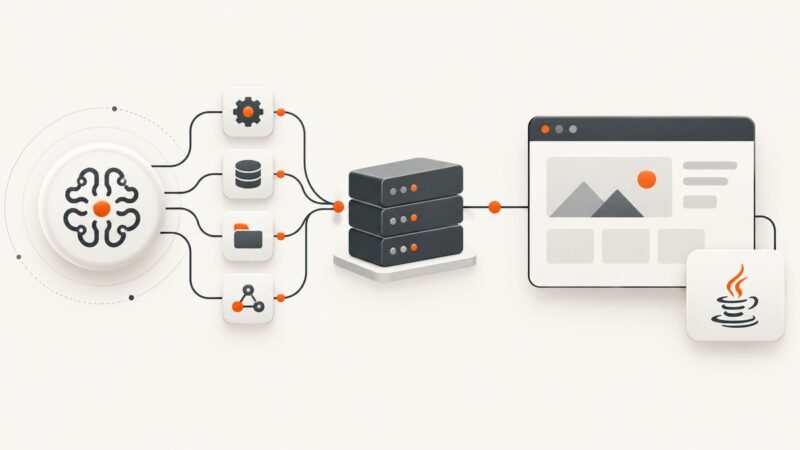
Agents may work through a chain of tool-mediated steps: inspect files, propose or make changes, run commands, read errors, and iterate. Anthropic’s analysis of 500,000 coding-related Claude.ai and Claude Code interactions found that 79% of Claude Code conversations were classified as automation and 21% as augmentation. These figures describe Anthropic’s observed sample; they are not an industry-wide autonomy measure. Even interactions categorized as automation could include user input, such as supplying error messages.
2. Where agents can save development time
Anthropic’s research identifies debugging, code understanding, refactoring, data science, and feature implementation among the coding tasks people do with Claude. In its employee survey, 55% of surveyed employees said they used Claude daily for debugging, 42% for code understanding, and 37% for implementing new features. Those are internal survey findings, not population estimates.
Useful bounded assignments include:
- Understand existing code: Ask for a module walkthrough, call path, or explanation of a behavior. Verify important claims against the implementation.
- Investigate a bug: Provide the error, relevant files, expected behavior, and steps to reproduce. Ask the agent to identify likely causes before changing code.
- Make a scoped change: State the files or subsystem in scope, constraints, acceptance criteria, and required checks.
- Draft tests or documentation: Have the agent identify cases and prepare a draft, then confirm coverage and accuracy yourself.
- Refactor with guardrails: Name what must stay behaviorally equivalent and require tests or a diff review before accepting the result.
These are practical workflow examples, not experiments reported by the cited studies. They work best when the assignment has a clear stopping point and the result can be checked.
3. How strong is the evidence for speed gains?
Different kinds of evidence answer different questions. A controlled task can measure completion time under a particular setup; a company survey captures what employees believe about their own productivity; an interaction analysis describes how people used a tool. These should not be collapsed into one general forecast.
| Evidence | Reported finding | How to interpret it |
|---|---|---|
| GitHub controlled task experiment | Participants with Copilot completed one coding task 55% faster on average: 1 hour 11 minutes versus 2 hours 41 minutes. | A result for that task, participants, and tool setup—not an expected gain for every project. |
| GitHub code-quality study | In a web-server API task with 202 experienced developers, those with Copilot access were 53.2% more likely to pass all 10 unit tests. The study also reported 13.6% more lines of code without readability errors in blind review. | Task-specific findings from a study whose valid submissions included 104 developers with Copilot and 98 without. It does not establish long-term production maintenance outcomes. |
| Anthropic employee survey | Employees self-reported using Claude in 59% of their work and an average 50% productivity gain, compared with retrospective reports of 28% of work and a 20% gain 12 months earlier. | Internal self-reports. Anthropic notes that productivity is difficult to measure; the figures are not independent controlled estimates. |
| Anthropic interaction analysis | In its Claude Code sample, 79% of conversations were classified as automation and 21% as augmentation. | Describes interaction patterns in that sample, not a measure of time saved or a claim about all coding agents. |
GitHub’s code-quality study also reported improvements on measured readability, reliability, maintainability, and conciseness outcomes. Those results belong to the study’s API task and methodology. They do not prove that agent-written changes reduce defects or technical debt in every setting. GitHub’s broader productivity research also treats productivity as more than lines of code or task speed, including dimensions such as satisfaction, focus, and collaboration.
Anthropic has also discussed METR research in which experienced developers working on highly familiar codebases overestimated their productivity gains. Familiarity, review time, integration costs, and the difficulty of measuring complex work can all affect the result.
4. A practical workflow for using a personalized agent
- Choose a bounded task. Define one bug, small feature, refactor, explanation, or test-writing job. Avoid vague requests such as “improve this codebase.”
- Give relevant context. Include the expected behavior, constraints, relevant files or modules, project conventions, and commands the agent may use. Share only the context needed for the task.
- Set acceptance criteria. Say what must be true when the work is complete: behavior, tests, compatibility, performance constraints, or files that must not change.
- Ask for a plan when scope is uncertain. Review the proposed approach before allowing a broad or hard-to-reverse edit. For a narrow task, ask the agent to state assumptions and proceed within the agreed scope.
- Inspect the work as it happens. Read the diff, tool output, and test results. Correct misunderstandings early rather than waiting until the end.
- Validate independently. Run relevant tests, linters, type checks, and integration checks in the project environment. Check edge cases and security-sensitive behavior that the task touches.
- Decide whether to keep the change. Treat the agent’s output as a proposal. Revise or reject changes that do not meet the acceptance criteria, even if they compile.
A useful task prompt can be short but specific:
Task: Fix the retry behavior in the payment webhook handler.
Expected behavior: Retry transient 5xx responses up to three times; do not retry 4xx responses.
Scope: Inspect the webhook handler and its existing tests. Keep changes in this subsystem.
Project checks: Run the handler tests and the relevant lint command.
Acceptance criteria: Add or update tests for 5xx retries, 4xx no-retry, and the retry limit.
Before finishing: Summarize the files changed, checks run, and any assumptions.
The example illustrates a workflow, not a benchmarked prompt recipe. Adapt it to the agent and repository, then review its decisions.
5. Keep review and quality in the loop
Speed on a first draft is not the same as speed through delivery. A change can take less time to produce but more time to review, debug, secure, or maintain. Measure the whole path: task setup, agent work, human review, validation, and follow-up fixes.
- Review the complete diff, including files the agent changed beyond the obvious implementation.
- Confirm that tests exercise the requested behavior and meaningful failure cases.
- Check dependency changes, permissions, secrets handling, input validation, and other security-sensitive areas.
- For changes with production or user impact, use the same review and release controls as human-written code.
- Keep a record of rejected suggestions and follow-up fixes; they reveal where context or acceptance criteria need improvement.
Anthropic’s 2026 agentic coding report says developers in the referenced survey used AI in roughly 60% of their work while reporting that only 0–20% of tasks were fully delegable. It emphasizes setup, prompting, active supervision, validation, and human judgment. The figure is survey-context evidence, but the practical lesson is clear: substantial use can coexist with limited full delegation.
6. Measure whether an agent helps your team
Do not use lines of generated code as a proxy for productivity. For a pilot, compare similar tasks and include the time needed to prepare context, review output, fix errors, and integrate the change.
| What to track | What it can reveal |
|---|---|
| Time from task start to accepted change | Whether total cycle time changes after setup, review, and fixes. |
| Review and rework time | Whether faster drafts create extra verification or correction work. |
| Tests and escaped defects | Whether the change meets behavior and quality expectations, not just whether code was produced. |
| Developer focus and satisfaction | Whether the workflow reduces tedious work or creates interruptions and review burden. |
| Task type and familiarity | Whether results differ between routine work, unfamiliar code, and ambiguous tasks. |
Use a comparison that fits the team’s work and avoid attributing every change in cycle time to the agent. Task difficulty, codebase familiarity, reviewer availability, and concurrent process changes can distort before-and-after comparisons.
7. Choosing an agent for a development workflow
The research here does not provide a current independent head-to-head comparison of coding-agent products, pricing, or feature tiers. Evaluate candidates against the work your team needs to do:
- Task and tool fit: Can it help with your actual coding, debugging, navigation, and test workflow?
- Direction and autonomy: Can you control scope, inspect actions, and give feedback at useful points?
- Project context: Can it use the relevant repository conventions and documentation without burying the task in irrelevant context?
- Reviewability: Can developers inspect proposed changes and validation output before accepting work?
- Evidence: Are claims based on a controlled study, vendor analysis, or self-report, and does the study resemble your team’s tasks?
Start with low-risk, repeatable tasks. Keep a human responsible for code review, testing, and release decisions, particularly for security-sensitive or high-impact changes.
8. Capture website states while building and reviewing
Some development tasks involve checking how a page renders: debugging a visual change, documenting a UI state, or comparing a page before and after a change. A browser automation setup can capture a screenshot locally, but it also means managing a browser, waits, viewport size, and output files.
For a local Playwright capture, install Playwright and its Chromium browser, then save this as capture.mjs:
import { chromium } from 'playwright';

const url = process.argv[2] ?? 'https://example.com';
const browser = await chromium.launch({ headless: true });
try {
  const page = await browser.newPage({ viewport: { width: 1440, height: 900 } });
  await page.goto(url, { waitUntil: 'networkidle', timeout: 30000 });
  await page.screenshot({ path: 'shot.png', fullPage: true });
} finally {
  await browser.close();
}
Run it with node capture.mjs https://example.com. For production pages, networkidle can wait too long on sites with persistent network activity; choose a bounded wait or wait for a page-specific selector when appropriate. Local browser capture gives control over the browser context, but your script must handle cookies, consent dialogs, timeouts, dynamic content, and browser dependencies.
Or skip the browser setup
ScreenshotNeo is a website screenshot API and MCP server for developers. One GET request can return a PNG, JPEG, WebP, or PDF. Its capture flow accepts cookie and consent banners like a visitor and removes more than 60 known consent platforms, newsletter popups, and chat widgets before capture; each step can be turned off. Bot checks and CAPTCHAs, blank pages, timeouts, failed loads, and cache hits cost nothing, and response headers report the page verdict and billing status. Its MCP server gives AI agents tools for screenshots, page information, and PDF capture.
For a direct call, see the ScreenshotNeo API documentation. This cURL example saves a WebP screenshot:
curl -G "https://api.screenshotneo.com/v1/shot" \
  -d access_key=YOUR_API_KEY \
  --data-urlencode url=https://stripe.com \
  -o shot.webp
Python equivalent:
import requests

r = requests.get(
    "https://api.screenshotneo.com/v1/shot",
    params={"access_key": "YOUR_API_KEY", "url": "https://stripe.com"},
    timeout=90,
)
open("shot.webp", "wb").write(r.content)
Node.js equivalent:
const q = new URLSearchParams({ access_key: 'YOUR_API_KEY', url: 'https://stripe.com' });
const res = await fetch(`https://api.screenshotneo.com/v1/shot?${q}`);
if (!res.ok) throw new Error(`Screenshot request failed: ${res.status}`);
await import('node:fs/promises').then(fs => fs.writeFile('shot.webp', Buffer.from(await res.arrayBuffer())));
For Node.js versions that do not support the built-in fetch, use a compatible HTTP client. Keep the API key out of client-side code and commit history.
ScreenshotNeo also supports full-page captures with lazy images loaded, CSS-selector element capture, device and viewport settings, retina scale, PDF options, HTML/CSS capture, custom CSS and JavaScript, click-before-capture, selector or delay waits, request and resource blocking, headers, cookies, user agents, authorization, timezone and geolocation, transparent backgrounds, resizing, configurable cache TTL, signed image links, asynchronous jobs with signed webhooks, bulk requests of up to 100 URLs, a usage API, and an OpenAPI spec. Its parameter names also work with those used by other screenshot APIs, which can simplify switching.
Use it when browser setup or consent cleanup is slowing down a capture workflow. The free plan includes 1,000 screenshots per month with no card; paid plans start at $5 for 3,000 screenshots. Starter is $5 for 3,000, Growth $15 for 15,000, Pro $39 for 60,000, Scale $99 for 250,000, and Business $249 for 1,000,000; yearly billing gives two months free, and every feature is on every plan. Sign up for 1,000 free screenshots a month, with no card.
9. Common problems and fixes
| Problem | Likely cause | What to do |
|---|---|---|
| The agent changes unrelated files | The task scope or boundaries were unclear, or the agent inferred a broader cleanup. | Set file or subsystem boundaries, inspect the diff, and ask for unrelated changes to be reverted. |
| The answer sounds plausible but misreads behavior | The agent lacked relevant context or inferred behavior from names and comments. | Provide the call path, error, expected behavior, and reproduction details. Verify the explanation against implementation and tests. |
| The change compiles but breaks a case | Acceptance criteria or edge cases were missing, or checks did not cover the affected behavior. | Add examples for boundary and failure cases, run targeted tests, and review integration behavior. |
| Agent work takes longer overall | Context setup, correction, review, or integration outweighed the draft-time savings. | Measure total time, use the agent on more bounded tasks, and improve reusable project instructions where appropriate. |
| Browser capture hangs on network idle | The page keeps connections open or continuously requests resources. | Use a bounded timeout or wait for a known selector or meaningful page state. |
| Browser capture misses a dynamic element | The screenshot ran before the element rendered or before client-side data arrived. | Wait for a specific selector or condition and confirm the page has reached the intended state before capture. |
| A ScreenshotNeo call returns an unexpected result | The URL, access key, wait behavior, or target-page response may be wrong. | Check the request parameters and response headers, including X-Page-Verdict and X-Billed; use the API docs to configure waits and capture options. |
10. Performance, reliability, and cost
For agents, the most useful performance measure is accepted work per total developer time, including preparation, supervision, review, and rework. Reliability depends on whether the agent has the context and tools needed, how well the task is bounded, and whether the result is checked. Treat high-impact changes as requiring normal human review and validation.
For screenshot capture, local browser automation has setup and runtime costs in your own environment, and reliability depends on page readiness, browser dependencies, network behavior, and handling failures. With ScreenshotNeo, use the response’s verdict and billing headers to distinguish a successful clean capture from a bot check, blank page, timeout, failed load, or cache hit. Only clean shots are billed according to the product facts provided. For either approach, keep credentials private and avoid placing sensitive page data in logs or public image links.
For AI-agent usage, this research dossier does not establish current prices or a universal cost-per-task. Compare your own total effort and tool costs for representative tasks. Do not assume that a faster completion of one task means a lower cost across code review, maintenance, and future changes.
11. FAQ
Do personalized agents replace developers?
No. The cited evidence and practical workflows support assistance and bounded automation, while developers remain responsible for direction, review, validation, and release decisions.
Does personalization guarantee a productivity gain?
No quantified gain for personalization itself is established by these sources. Measure the effect in the tasks and codebase where you plan to use it.
Which tasks should a team try first?
Start with bounded, reviewable work such as code explanation, test drafts, or a narrowly scoped bug investigation. Expand only when your own results justify it.
Can an AI agent take a website screenshot?
Yes. ScreenshotNeo’s MCP server provides take_screenshot, get_page_info, and capture_pdf tools for AI agents and MCP clients such as Claude and Cursor.
Sources
- Anthropic Economic Index: AI’s impact on software development (2025).
- How AI is transforming work at Anthropic.
- GitHub: Does GitHub Copilot improve code quality? Here’s what the data says.
- Anthropic: 2026 Agentic Coding Trends Report.
- GitHub: Research quantifying Copilot’s impact on developer productivity and happiness.