Playwright MCP for Visual Testing: How It Works
Learn how Playwright MCP helps an AI assistant inspect a live page, then build repeatable visual regression checks with Playwright Test.
Playwright MCP lets an AI assistant inspect and operate a running browser, while Playwright Test provides repeatable visual regression assertions. They solve related but different jobs: an MCP screenshot is a visual artifact for inspection; toHaveScreenshot() is a test-runner assertion that compares a new capture with a reference baseline.
1. What Playwright MCP does
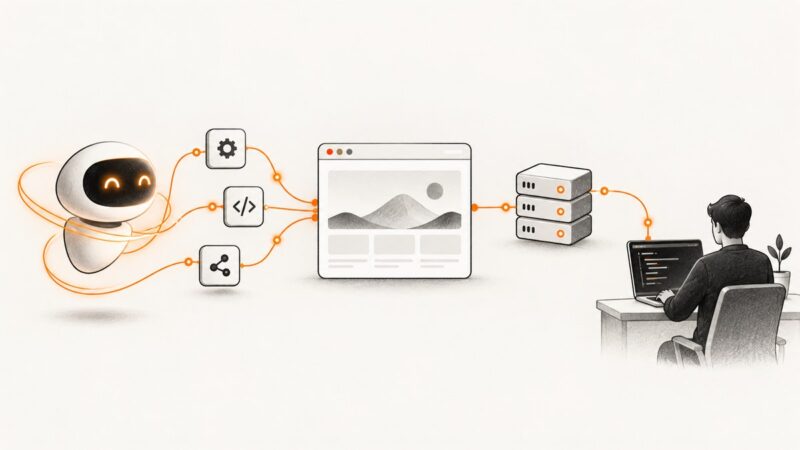
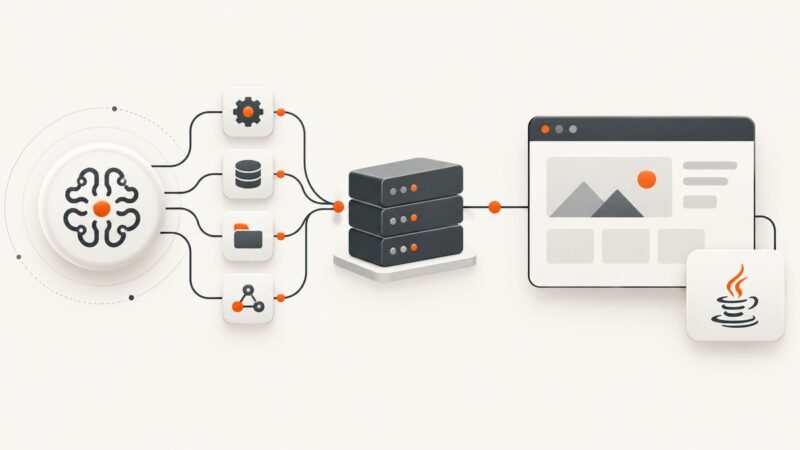
Playwright MCP is an MCP server that exposes browser automation through Playwright. In its normal interaction flow, the assistant reads a structured accessibility snapshot containing roles, text, and element references. It can use those references to click, type, or fill controls without needing a vision model for ordinary semantic interaction.
Screenshots serve a different purpose: inspect visual layout, canvas or chart content, and document a bug. The MCP screenshot tools can capture the current viewport, a selected element, or the full scrollable page. The image may be returned inline or saved to a file, depending on the client and tool call.
If a surface is missing from the accessibility tree, the optional vision capability adds coordinate-based mouse tools that use screenshots as visual context. This is useful for canvas applications and custom widgets, but semantic snapshots remain the more direct way to locate and operate ordinary controls.
2. Set up the MCP server
The Playwright getting-started guide lists Node.js 20 or newer and an MCP-compatible client as prerequisites. A typical client configuration runs npx @playwright/mcp@latest. The browser defaults to headed mode in the current getting-started documentation; client options can change browser configuration and capabilities. Exact configuration-file names and schema vary by client, so use that client’s current instructions when adding the server.
- Install a supported Node.js version, 20 or newer.
- Open the setup screen or configuration file for your MCP client.
- Add the Playwright MCP server using the command
npxand package@playwright/mcp@latest, following the client’s required configuration shape. - Start or reload the MCP client and confirm that the Playwright browser tools are available.
- Ask the assistant to open a page, inspect its accessibility snapshot, and take a screenshot.
For example, useful requests include “Take a screenshot of the page” and “Take a full-page screenshot including content below the fold.” Use an accessibility snapshot and its references when you need to identify or operate normal controls; request an image when you need to judge appearance.
3. Use MCP screenshots for visual inspection
A typical inspection loop is: navigate to the page, inspect its semantic structure, interact with relevant controls, and capture the visual state you want to discuss. Make the state reproducible where possible: use a known route, viewport, test account, and content state. If a screenshot looks wrong, capture it again after checking that the page finished loading and reached the expected state.
- Viewport capture: review what fits in the current browser viewport.
- Element capture: focus on one component and reduce unrelated visual changes.
- Full-page capture: inspect below-the-fold content and page-level layout.
- Vision interaction: use coordinate-based tools when the target cannot be represented usefully in the accessibility tree.
An MCP screenshot by itself does not establish a pass or fail against a stored expected image. It is an artifact for the assistant or a person to inspect. For repeatable regression checks in CI or a local test suite, use Playwright Test screenshot assertions.
4. Add a repeatable visual regression test
Install the Playwright Test package in your project and create a test that navigates to a stable page before asserting its screenshot. The first run creates a reference image; later runs capture the page again and compare it with that baseline. Keep the test and accepted reference images in version control so reviewers can see when the expected appearance changes.
import { test, expect } from '@playwright/test';

test('landing page visual appearance', async ({ page }) => {
  await page.setViewportSize({ width: 1440, height: 900 });
  await page.goto('http://127.0.0.1:3000/', { waitUntil: 'networkidle' });
  await expect(page).toHaveScreenshot('landing.png', {
    fullPage: true,
    animations: 'disabled',
  });
});
This is a Playwright Test runner assertion. The assertion waits for two consecutive screenshots to be identical before comparing. You can assert a focused component instead of the whole page:
await expect(page.locator('[data-testid="pricing-card"]')).toHaveScreenshot('pricing-card.png');On the initial run, review the generated expected image and commit it only if it represents the intended design. When a design change is deliberate, update the baseline through the Playwright Test workflow and review the diff. Avoid updating baselines automatically just to make a failing test pass; that can accept an unexplained regression.
Useful assertion options
| Option | When to use it | Tradeoff |
|---|---|---|
fullPage |
Include content below the viewport. | Captures more content, so unrelated sections can cause a diff. |
animations |
Disable or otherwise control animation during capture. | Reduces timing noise; ensure the resulting state reflects what you intend to verify. |
stylePath |
Apply a stylesheet that hides genuinely irrelevant dynamic content. | Can conceal meaningful UI if selectors are too broad. |
threshold |
Adjust the per-pixel color difference tolerance. | Higher tolerance can allow real visual changes through. The documented default is 0.2. |
maxDiffPixels |
Allow a bounded number of differing pixels. | Choose a limit that matches the risk of the component; review diffs. |
Consult the current Playwright visual comparisons guide and PageAssertions API reference for the complete and current option set and runner behavior.
5. Keep baselines reliable
Screenshot output depends on the browser and its execution environment. Playwright’s visual comparison guidance notes that rendering can vary with host operating system, browser version, settings, hardware, power source, headless mode, and other factors. Generate and check baselines in a consistent environment. If you intentionally test multiple browser or platform projects, expect that separate environments may need separate reference images.
- Use the same browser version and operating environment when generating and comparing baselines.
- Fix viewport dimensions and stabilize application data and account state.
- Wait for the UI state under test, rather than relying only on an arbitrary delay.
- Mask or hide only content that is genuinely irrelevant, such as a rotating timestamp.
- Prefer a locator screenshot for a component when a full-page capture adds unrelated noise.
- Keep tolerance settings narrow enough to catch changes that matter, and inspect actual, expected, and diff images after a failure.
6. Troubleshoot common problems
| Symptom | Likely cause | What to do |
|---|---|---|
| MCP client does not show Playwright tools | Server configuration is malformed, the client was not reloaded, Node.js is unavailable, or the package could not start. | Check the client’s configuration format, confirm Node.js 20 or newer is available to the client process, reload the client, and inspect its MCP server logs. |
| Assistant cannot find or operate an element | The control is absent from the accessibility snapshot, or the page state differs from what was expected. | Inspect a fresh snapshot after navigation. For visual-only surfaces such as canvas, enable the documented vision capability if supported by the client. |
| Screenshot assertion fails on every run | The page has dynamic content, unstable data, animation, or changing external resources. | Stabilize test data and application state, disable animations, and use a narrow stylesheet or mask for irrelevant changing regions. Do not broadly hide content that the test should cover. |
| Baseline differs only on another machine | Browser, operating system, hardware, headless mode, or other rendering conditions differ. | Run comparison in the baseline’s environment or maintain an intentional baseline per environment/project. |
| Full-page screenshot is unexpectedly different | Below-the-fold content, lazy-loaded assets, or page height changed. | Wait for the relevant content to appear, verify the expected page state, and consider a locator assertion if the intended check is local. |
| A tolerance change makes failures disappear | The comparison now accepts differences that may be meaningful. | Inspect the diff and set the smallest threshold or pixel allowance appropriate for the UI. Do not use tolerance as a substitute for diagnosing the change. |
For a failing test that is hard to reproduce, inspect Playwright’s actual, expected, and diff output. Playwright MCP screenshots can help an assistant inspect the running page during diagnosis. A Playwright trace can also preserve the sequence of actions and page activity around a failure; see the Trace Viewer documentation.
7. Choose the right capture for the job
| Need | Use |
|---|---|
| Explore a live page with an AI assistant | Playwright MCP accessibility snapshots and browser interaction. |
| Look at layout, a chart, or a visual bug | An MCP screenshot of the viewport, element, or full page. |
| Detect future visual changes automatically | Playwright Test with toHaveScreenshot() and reviewed reference images. |
| Interact with a surface missing from semantic data | Optional MCP vision capability and coordinate tools, where supported. |
Use both MCP and Playwright Test when useful: MCP helps investigate and discuss the live browser state; the test runner makes a chosen visual expectation repeatable.
8. Or skip the browser setup
If your goal is to capture a URL rather than automate an interactive test session, ScreenshotNeo is a website screenshot API and MCP server. Its one-call API can return a screenshot or PDF, with options for full-page capture and other capture settings. See the ScreenshotNeo API documentation.
curl -G "https://api.screenshotneo.com/v1/shot" -d access_key=YOUR_API_KEY --data-urlencode url=https://stripe.com -o shot.webpimport requests
r = requests.get("https://api.screenshotneo.com/v1/shot", params={"access_key": "YOUR_API_KEY", "url": "https://stripe.com"}, timeout=90)
open("shot.webp", "wb").write(r.content)const q = new URLSearchParams({ access_key: 'YOUR_API_KEY', url: 'https://stripe.com' });
const res = await fetch(`https://api.screenshotneo.com/v1/shot?${q}`);ScreenshotNeo removes cookie and consent banners, newsletter popups, and chat widgets before the shot. Bot checks, blank pages, and failed loads are never billed. Its MCP server lets AI agents take screenshots. The free plan includes 1,000 screenshots a month with no card; paid plans start at $5 for 3,000. Sign up for free and get 1,000 screenshots a month with no card.
FAQ
Does an MCP screenshot create a regression baseline?
No. It produces an image for visual inspection. Playwright Test’s toHaveScreenshot() handles baseline comparison.
Can I compare just a component?
Yes. Call toHaveScreenshot() on a locator to keep the assertion focused on that element.
Should every rendering difference fail the test?
That depends on the product risk and rendering stability. Start with a consistent environment and review diffs; adjust documented tolerances only when the accepted difference is understood.
Does Playwright MCP replace Playwright Test?
No. MCP exposes browser operation to an assistant, while Playwright Test provides automated assertions and test-runner workflows.