Playwright Screenshot Testing Costs for Small Indian Software Teams
Playwright includes screenshot assertions, but running and maintaining them still costs time and compute. Here’s how small Indian teams can estimate the real expense.
Playwright screenshot assertions do not require a separate paid visual-testing product. Playwright Test includes toHaveScreenshot() for generating and comparing screenshot baselines. A small Indian team’s actual cost comes from the machines or CI minutes used to run tests, browser setup, screenshot storage, baseline review, and time spent fixing flaky differences. Managed cloud execution is optional. The available sources do not establish a current Playwright Workspaces per-minute rate or India-specific price, so there is no reliable universal monthly INR estimate.
1. What Playwright screenshot testing includes
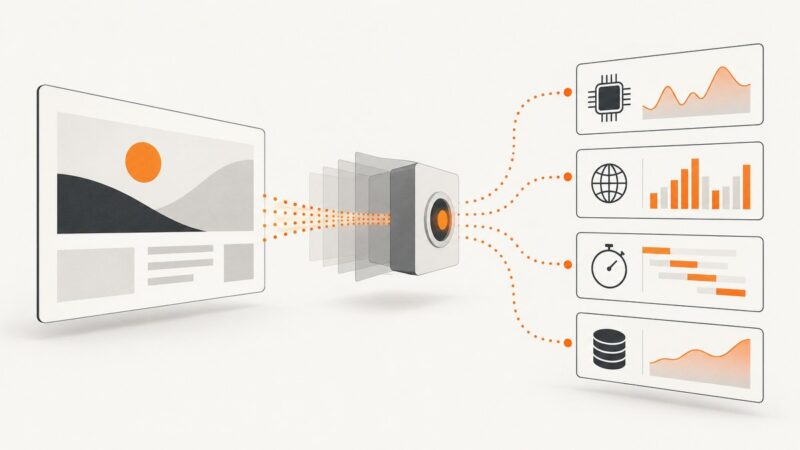
Playwright Test captures a page or element and compares the result against a reference image. On the first run, it creates the reference; later runs report differences. A developer reviews changes and deliberately updates the reference when the visual change is expected. See the Playwright visual comparisons documentation.
This gives a team a built-in way to add visual checks to its existing Playwright suite. The assertion itself does not mean the overall workflow costs nothing: execution and review still use resources.
2. Start with a runnable local example
Install Playwright Test and its browser, then add a screenshot assertion. The following example uses the Chromium project and saves its baseline alongside the test.
npm init playwright@latest
npx playwright install chromium
Create tests/homepage.spec.ts:
import { test, expect } from '@playwright/test';

test('homepage matches its visual baseline', async ({ page }) => {
  await page.goto('https://example.com');
  await expect(page).toHaveScreenshot('homepage.png');
});
Run it once to generate the baseline, inspect the resulting image, and commit the approved reference with the test. Run it again to compare a new capture against that reference:
npx playwright test tests/homepage.spec.ts
npx playwright test tests/homepage.spec.ts
The first run may report that it created a snapshot; the next run exercises the comparison. Review the generated snapshot path and test output for your operating system and project setup. Playwright’s snapshot naming and location can depend on project and platform configuration.
Capture a specific element
To limit the assertion to a component, take a locator screenshot:
test('navigation matches its visual baseline', async ({ page }) => {
  await page.goto('https://example.com');
  await expect(page.getByRole('navigation')).toHaveScreenshot('navigation.png');
});
Set comparison options
Pass options to control the capture and comparison. For example, mask a changing timestamp and set a pixel-difference tolerance:
test('dashboard visual state', async ({ page }) => {
  await page.goto('https://example.com/dashboard');
  await expect(page).toHaveScreenshot('dashboard.png', {
    fullPage: true,
    animations: 'disabled',
    mask: [page.locator('[data-testid="updated-at"]')],
    maxDiffPixelRatio: 0.01,
  });
});
Use masks and tolerances only for known, acceptable variation. A permissive threshold can hide real regressions. Consult the official assertion API for the current option list and defaults.
3. Configure a stable baseline environment
Screenshot comparison is sensitive to the environment. Playwright advises: “For consistent screenshots, run tests in the same environment where the baseline screenshots were generated.” [Playwright documentation]
Host OS, browser version, browser settings, hardware, power source, and headless mode can all affect pixels. Keep those inputs aligned between baseline creation and comparison. In CI, pin the Playwright version and use the same browser image or runner setup over time; regenerate baselines intentionally when you change the rendering environment.
- Use the same OS and browser build when producing and checking snapshots.
- Wait for the page state that matters before capture; avoid capturing during transitions.
- Hide, mask, or stabilize timestamps, rotating content, randomized IDs, and other volatile regions.
- Review image diffs before updating baselines. A changed reference is an approval, not merely a way to silence a failing test.
- Keep baseline files and test code together under version control, unless your team has a deliberate artifact-management workflow.
4. Build a cost estimate for your team
Estimate the workload your team actually runs instead of using a generic rupee figure. Track monthly runs, suite duration, projects and viewports, worker count, reruns, runner minutes, retained artifacts, and time spent reviewing diffs.
| Cost area | What to count | How to estimate it |
|---|---|---|
| Local execution | Developer machine time, browser installation, and setup | Usually part of existing equipment and engineering time; useful for authoring and debugging, but does not replace CI coverage. |
| Existing CI | Incremental runner minutes, including retries, browser installation, and parallel work | Measure the difference between CI runs with and without the screenshot suite, then check the team’s provider contract and included minutes. |
| Baseline storage | Repository space or retained screenshot and diff artifacts | Measure snapshot growth and set retention appropriate to how long the team needs to investigate failures. |
| Review and maintenance | Developer minutes evaluating diffs, correcting unstable tests, and approving intended changes | Record actual review time for a representative period. Treat it as an internal workload estimate, not an industry benchmark. |
| Managed browsers | Cloud test minutes and any additional service charges | Use the current service pricing and your measured or forecast minutes; include the cost of reduced browser infrastructure maintenance in the decision. |
For a useful monthly estimate, use this worksheet:
monthly CI minutes = runs per month × average suite minutes × browser projects × viewport projects
monthly review hours = visual changes reviewed per month × average review minutes ÷ 60
Adjust the first formula for your actual CI scheduling and parallelism: parallel workers can change elapsed duration and billed runner consumption differently depending on the provider. Add reruns and setup time based on observed CI data, not guesses. Then price those measured minutes using your existing plan terms.
5. Is Playwright screenshot testing free?
The screenshot comparison feature is included in Playwright Test, so a separate paid visual-testing product is not a prerequisite. But “free feature” does not mean zero operating cost. Compute, browser setup, storage, review, and baseline maintenance consume team resources. These costs depend on the team’s infrastructure and workflow; the documented feature does not establish a standard monthly cost.
6. Optional managed cloud execution
Microsoft documents Playwright Workspaces as a managed cloud-browser option. Its documentation says the service is billed according to total test minutes consumed, and its CI quickstart recommends beginning with a single test before scaling usage. The documented free trial is 30 days and 100 test minutes (Microsoft, 2025). Check the current trial terms before relying on those figures.
The official overview lists regions including East Asia, Japan East, Australia East, Switzerland North, West Europe, East US, and West US 3; it did not list an India region in the research reviewed. Availability can change, so verify the current region list and pricing before choosing a service. The sources used for this article do not establish a current metered rate, an India-specific rate, or a break-even point. Do not infer a monthly INR budget from the trial allowance.
Compare managed execution with existing CI using measured test minutes, run frequency, browsers and viewports, parallel workers, artifact retention, baseline-review effort, regional latency, data handling, and service availability. These are decision inputs, not a universal threshold for when cloud execution becomes cheaper.
7. Troubleshooting common failures
| Symptom | Likely cause | Practical fix |
|---|---|---|
| Many pixels differ on a machine where the test used to pass | OS, browser, browser settings, hardware, or headless mode differs from the baseline environment. | Run comparison and baseline generation in the same environment; align browser versions and runner configuration. |
| Diffs appear on every run in a small page region | Dynamic content such as clocks, rotating banners, randomized data, or animation. | Wait for a deterministic state, use stable test data, disable animations where appropriate, or narrowly mask the volatile element. |
| Snapshot file is missing or unexpectedly new | The baseline may not have been generated on this platform or project, or the snapshot naming/location differs. | Inspect Playwright’s test output and snapshot path; generate and review the baseline in the intended environment, then commit it. |
| CI is slow or uses more minutes than expected | Browser installation, multiple projects, worker parallelism, retries, or a large suite adds execution time. | Measure incremental runner time, start with a small representative suite, and review project and retry configuration. |
| A test passes after updating snapshots but a visual bug remains | The reference was updated without reviewing the change. | Inspect the diff before accepting a baseline update; treat updates as code review decisions. |
| Cloud trial minutes run out early | More tests, parallel workers, or repeated runs consume the trial allowance. | Start with a single test as Microsoft’s quickstart recommends; check current usage and pricing before increasing workload. |
8. Performance, reliability, and cost controls
- Measure before scaling: run a representative suite and record elapsed time, CI minutes, retries, and review effort.
- Keep comparisons deterministic: stable browser and OS versions reduce avoidable diffs and the engineering time they trigger.
- Choose coverage deliberately: each additional browser or viewport project can add work. Cover the combinations that matter to the application and measure their incremental cost.
- Control artifacts: retain enough screenshots and diffs for investigation while keeping repository or artifact growth visible.
- Protect baselines: require review for reference changes so an update does not silently normalize a regression.
- Scale cloud usage gradually: confirm current terms and region availability, then compare actual metered usage with the operational work it replaces.
9. Or skip the browser setup
If your immediate task is to capture a page rather than maintain Playwright assertions and baselines, ScreenshotNeo provides a screenshot API. One GET request returns an image or PDF. See the ScreenshotNeo website and API documentation.
curl -G "https://api.screenshotneo.com/v1/shot" -d access_key=YOUR_API_KEY --data-urlencode url=https://stripe.com -o shot.webpimport requests
r = requests.get("https://api.screenshotneo.com/v1/shot", params={"access_key": "YOUR_API_KEY", "url": "https://stripe.com"}, timeout=90)
open("shot.webp", "wb").write(r.content)const q = new URLSearchParams({ access_key: 'YOUR_API_KEY', url: 'https://stripe.com' });
const res = await fetch(`https://api.screenshotneo.com/v1/shot?${q}`);ScreenshotNeo removes cookie banners, popups, and chat widgets before the shot. Bot checks, blank pages, and failed loads are never billed. An MCP server lets AI agents take screenshots. The free plan includes 1,000 screenshots per month with no card, and paid plans start at $5 for 3,000. Sign up free for 1,000 screenshots a month, with no card required.
10. Frequently asked questions
Do small teams in India need a paid visual-testing service?
No. Playwright Test includes screenshot assertions. A separate service is optional if the team wants managed execution or capabilities beyond its existing workflow.
Can I calculate an accurate monthly cost from the published trial allowance?
No. The 30-day, 100-test-minute trial allowance does not provide a metered rate or predict your team’s usage. Measure minutes and verify current prices and applicable terms.
What should we budget first?
Measure incremental CI minutes and review time for a small representative suite. Those figures reveal the main recurring workload before you expand browser and viewport coverage.
Does a successful screenshot assertion prove the page is correct?
It proves the captured image matched its approved baseline within the configured comparison behavior. It does not establish that the baseline itself is correct; human review remains necessary when creating or updating it.