How to Reduce Test Maintenance Costs
Reduce test upkeep without losing confidence: audit repair costs, make tests deterministic, remove low-value duplication, and measure the risks.
Reduce test maintenance costs by automating selectively, placing each check at the least expensive level that provides enough confidence, making tests and environments deterministic, investigating flaky failures, and retiring duplicate or obsolete checks. Measure the time spent repairing tests, diagnosing failures, rerunning suites, and waiting for feedback; judge any reduction in testing against the regressions it could miss.
1. Audit where maintenance time goes
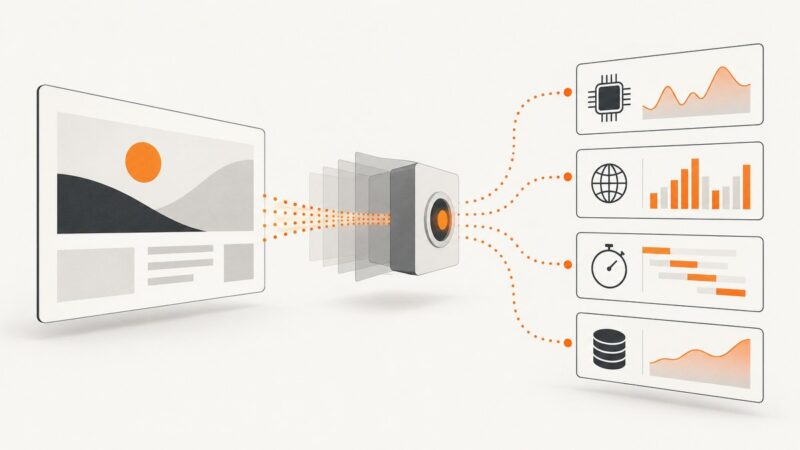
Start with the work the suite creates, not just its execution bill. For a representative period, record time spent repairing tests, investigating intermittent failures, rerunning jobs, and waiting for results. Include infrastructure and compute charges if they are material. Separate these costs by suite and test level where possible.
| Measure | What it reveals |
|---|---|
| Suite duration | How much feedback time and execution capacity the suite consumes. |
| Rerun rate | How often a run must be repeated before a team can trust the result. |
| Flaky failure rate | How often a test changes outcome without a relevant code or environment change. |
| Repair and diagnosis hours | The human cost of keeping tests usable. |
| Defects caught and escaped | Whether changes preserve useful regression detection. |
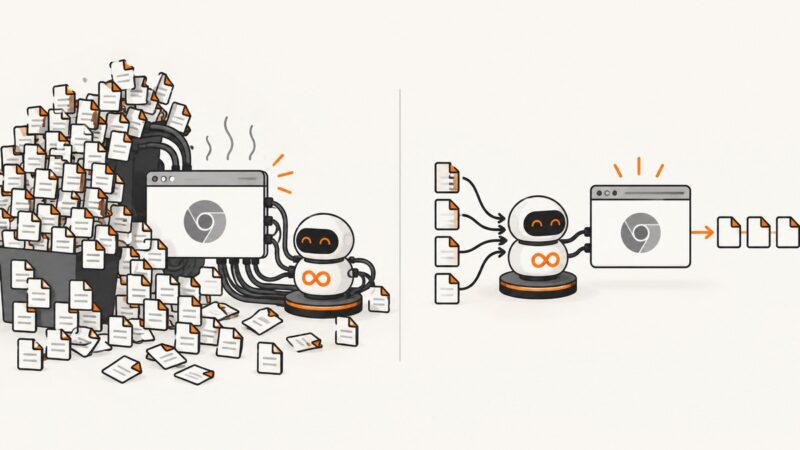
Establish a baseline before changing the suite. A falling test count or shorter run time alone does not demonstrate lower total cost if escaped regressions or manual investigation increase.
2. Automate selectively and choose the right test level
Automated tests are software: their code and configuration require maintenance over time. HMRC engineering guidance recommends considering whether automation is appropriate and avoiding duplicated coverage across levels (HMRC test automation guidance).
Automate checks when repetition, stability, and the value of fast feedback justify the ongoing upkeep. A stable business rule exercised on every change is often a strong automation candidate. A rapidly changing, low-risk scenario may cost less to check manually until the behavior settles.
Put confidence at the least costly level that can provide it. Test a calculation at unit level when that is sufficient; reserve integration tests for component boundaries and UI tests for critical end-to-end behavior that lower levels cannot establish. If the same rule is asserted in all three layers, decide what distinct risk each copy covers. Keep broader checks when they validate a real boundary, not merely because duplication feels reassuring.
Compare alternatives using the same questions: what defect can this check detect, how much effort does it take to create and repair, how long and how much does it run, how stable is it under normal product change, and how quickly can its failures be diagnosed?
3. Make failures reproducible
A flaky test passes and fails intermittently without a relevant change. Flakiness creates reruns and diagnosis work, and repeated false alarms can make people distrust real failures. The pytest documentation describes uncontrolled system state as a broad source of flakiness (pytest: flaky tests).
- Isolate state: avoid shared mutable fixtures, accounts, files, queues, or database rows that tests can overwrite or leave behind.
- Control test data: create known inputs for each test, use unique identifiers where parallel workers share a system, and clean up safely.
- Control the environment: make dependencies, configuration, locale, timezone, and service versions explicit when they affect outcomes.
- Handle asynchronous work by condition: wait for a meaningful state or event with a bounded timeout instead of assuming a fixed delay is always enough.
- Check parallel behavior: run suspected tests alone and alongside the suite to find order dependence or resource contention.
- Preserve failure evidence: retain the first failure, relevant logs, inputs, and environment details; reruns can help diagnose a failure but should not erase it.
These are diagnostic hypotheses, not a substitute for finding the particular cause. Track intermittent failures, reproduce them, identify the uncontrolled state or timing assumption, and fix that cause. Do not normalize permanent reruns as the cost of automation.
4. Remove test debt deliberately
Test debt includes flaky, duplicate, obsolete, and poorly designed tests. Microsoft Azure Well-Architected guidance identifies these as contributors to test debt and recommends focusing automation on stable interfaces and critical workflows (Azure testing guidance).
Review tests that:
- assert the same behavior already protected adequately elsewhere;
- cover a feature or workflow that no longer exists;
- have weak assertions that pass without proving the intended outcome;
- break whenever presentation details change, without protecting a critical user workflow;
- fail intermittently and have no clear owner or repair plan.
For each, repair it, replace it with a more stable check, or remove it when its risk coverage no longer justifies its cost. Record the reason in the review so future maintainers understand which risk was considered. A smaller reliable suite can provide more useful confidence than a larger suite whose signals are routinely ignored.
5. Keep feedback fast without losing coverage
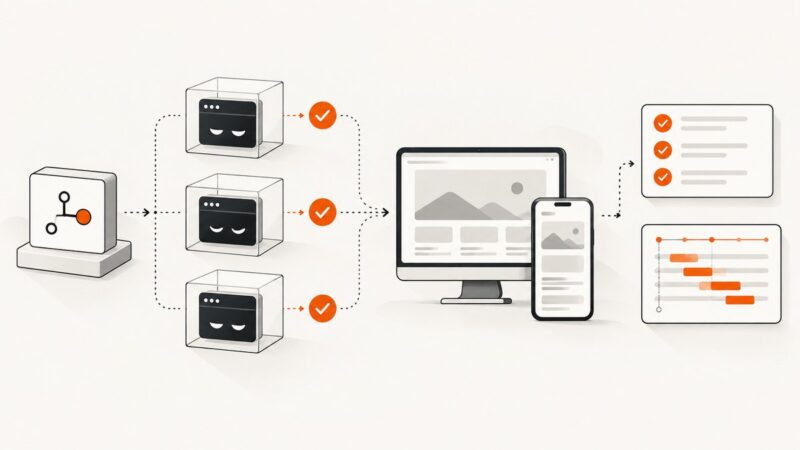
Run quick, high-signal checks on every change, then schedule slower broader checks at a cadence that still catches relevant failures before release. HMRC notes that very large test sets take longer and provide less immediate feedback (HMRC test automation guidance). Make the tiers visible, define what each tier protects, and ensure failures reach the people able to diagnose them.
Selective execution can lower execution overhead when there is a sound basis for deciding what to run. In a bounded replay of past development periods for three Microsoft products, Microsoft Research reported that its THEO cost model reduced test executions by 50%, with millions of dollars per year in reported savings while maintaining product quality. This is a result from that study context, not a typical or guaranteed saving for other teams (Microsoft Research, “The Art of Testing Less Without Sacrificing Quality”).
For any selective strategy, validate its selection logic against known changes and defects, preserve broader checks where uncertainty is high, and watch escaped defects. Savings in executions do not help if the selection misses regressions that matter.
6. Reserve ownership and maintenance time
Assign owners for important suites and make test upkeep recurring work. Keep test cases, automation, and expected outcomes aligned as the product changes. Review failure trends and outdated coverage regularly; avoid letting maintenance happen only after a release is blocked. Include repair work in planning so teams are not implicitly rewarded for adding tests while ignoring their future cost.
Useful review questions include: Which failures required reruns? Which checks broke because the product behavior changed, and which broke because the test was fragile? Does each slow test protect a risk not covered more cheaply elsewhere? Are removed checks documented, and is there another signal for the risk they covered?
7. Troubleshoot common maintenance problems
| Symptom | Likely cause to investigate | Practical response |
|---|---|---|
| A test passes alone but fails in the suite | Shared state, order dependence, or parallel resource contention. | Run it in different orders and worker configurations; isolate data and resources, then remove the dependency. |
| A UI test fails intermittently around loading | Timing assumptions, asynchronous work, or unstable environment behavior. | Wait on a specific observable condition with a bounded timeout; capture logs and state at failure. |
| The same behavior has many tests | Coverage grew at multiple levels without distinct risk rationale. | Map each check to the risk and boundary it covers; retain only checks with unique value. |
| CI is slow and developers ignore results | Too much work runs in the immediate feedback path. | Separate fast checks from slower suites while preserving broader scheduled or release coverage. |
| Removing tests feels unsafe | The suite lacks explicit risk mapping or removal rationale. | Document the risk considered, verify remaining coverage, and monitor defects caught or escaped after the change. |
| Reruns are common but no one owns failures | Flaky failures have become normalized operational debt. | Assign ownership, track rerun and flake rates, and prioritize root-cause fixes. |
8. Cost, reliability, and performance tradeoffs
Execution cost includes runner time, infrastructure, waiting, and the interruption caused by slow or noisy feedback. Maintenance cost includes writing, updating, debugging, and triaging the suite. A useful change reduces total burden while retaining enough coverage to catch important regressions.
Faster tests can improve diagnosis because fewer changes are included in the feedback window. But removing checks or narrowing selection increases uncertainty unless the remaining checks still cover the relevant failure modes. Reliability depends on deterministic tests and environments as much as on test count. Track defect escapes alongside cost and speed, and revisit the balance when the product, architecture, or risk profile changes.
Or skip the browser setup
If maintaining browser-based screenshot checks is one source of test upkeep, ScreenshotNeo is a website screenshot API and MCP server from Yorker Media. The DIY browser approach above remains appropriate when the test needs application-specific setup or assertions; for a screenshot capture, one API request can remove browser setup from that task. Its options include full-page capture, CSS element capture, viewport and device settings, wait conditions, custom CSS or JavaScript, and caching. See the ScreenshotNeo API documentation for parameters and usage.
curl -G "https://api.screenshotneo.com/v1/shot" -d access_key=YOUR_API_KEY --data-urlencode url=https://stripe.com -o shot.webpimport requests
r = requests.get("https://api.screenshotneo.com/v1/shot", params={"access_key": "YOUR_API_KEY", "url": "https://stripe.com"}, timeout=90)
open("shot.webp", "wb").write(r.content)const q = new URLSearchParams({ access_key: 'YOUR_API_KEY', url: 'https://stripe.com' });
const res = await fetch(`https://api.screenshotneo.com/v1/shot?${q}`);ScreenshotNeo accepts cookie and consent banners like a visitor and removes 60+ known consent platforms, newsletter popups, and chat widgets before capture; each step can be turned off. Bot checks, blank pages, timeouts, failed loads, and cache hits cost nothing, and response headers report the page verdict and billing status. Its MCP server gives AI agents tools to take screenshots, get page information, and capture PDFs. The free plan includes 1,000 screenshots per month with no card; paid plans start at $5 for 3,000 shots. These are product facts, not a claim that an external screenshot check replaces application-level assertions.
Sign up for 1,000 free screenshots a month, with no card.
FAQ
Should every regression test run on every commit?
Run the checks that provide fast, useful feedback on each change. Put slower checks in broader scheduled or release runs when that preserves timely coverage and clear ownership.
Is deleting a flaky test a cost reduction?
Only if its risk is no longer important or another reliable check covers it. Otherwise repair or replace it, document the decision, and monitor for escaped defects.
What is the best sign that maintenance is improving?
A sustained reduction in repair hours, reruns, and feedback time without an increase in important escaped defects. Test count by itself is not a success measure.