Regression Testing: What It Is and How to Make It Effective
Learn how regression testing differs from retesting, choose tests by risk and change impact, automate stable checks, and build trustworthy CI feedback.
Regression testing checks whether a software change has caused failures in parts of the system that were not changed. To make it effective, identify the change and its dependencies, select checks according to risk and impact, automate stable repeatable cases, run the right scope at useful points in delivery, and keep the suite trustworthy. A passing finite test suite reduces uncertainty; it does not prove that no defects remain.
What is regression testing?
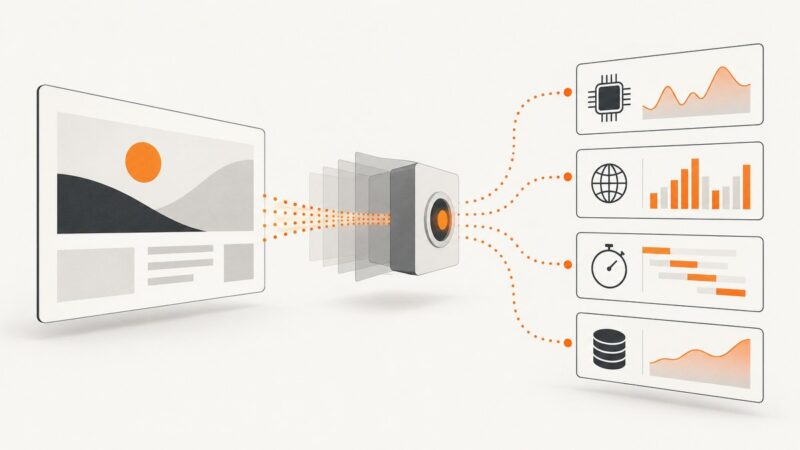
Regression testing is testing performed after a test item or its operating environment is modified to find failures in unmodified parts. In practice, the change might be a code fix, a feature, a dependency update, a configuration change, a data migration, or an infrastructure change. The purpose is to check that established behavior around the change still works.
The exact regression set depends on what changed and how the system is structured. There is no universally correct fixed list of tests. ISO/IEC/IEEE 29119-1:2022 defines regression testing and distinguishes it from retesting; see the ISO/IEC/IEEE 29119-1:2022 standard page.
How is regression testing different from retesting?
| Activity | Question answered | Example |
|---|---|---|
| Retesting | Does the modification itself work correctly? | After fixing a discount calculation bug, rerun the case that previously produced the wrong total. |
| Regression testing | Did the modification accidentally affect other behavior? | Also check checkout totals, refunds, invoices, and other workflows that depend on the calculation. |
Both can be needed for one change. The test that reproduces the bug and confirms the fix answers the retesting question. Tests of adjacent, dependent, or important workflows answer the regression question.
How do you choose regression test cases after a code change?
- Describe the change. Record the changed code, configuration, data, dependencies, and runtime environment. Include changes that appear operational rather than application-level.
- Trace impact. Identify callers, shared components, data contracts, user journeys, integrations, and failure modes that could be affected. Use code ownership, dependency maps, change history, and input from people familiar with the system.
- Rank risk. Consider likelihood of breakage and consequence: user harm, financial or data impact, security exposure, operational disruption, and difficulty detecting or recovering from failure.
- Select a mix of tests. Include direct tests around the changed area, checks for important dependencies, and critical end-to-end workflows. Add broader coverage when the impact is uncertain or the consequences of a miss are high.
- Make the scope and gaps visible. Record what ran, what did not run, why cases were selected, and what residual risk remains. A targeted pass is useful evidence, not a guarantee that unselected paths are safe.
Risk-based selection helps use limited execution time and maintenance effort where they matter most. It also depends on the quality of impact analysis: tests outside the identified scope can still reveal unintended effects. ISO’s risk-based testing guidance describes using analyzed risk to guide test management, selection, and prioritization; see the ISO/IEC/IEEE 29119-2 standard page.
Broad versus targeted regression
| Approach | Useful when | Trade-off |
|---|---|---|
| Broad suite | The release is high impact, change impact is unclear, or broad assurance is required. | More runtime, infrastructure, and maintenance; some checks may be redundant or slow. |
| Change-focused set | Impact can be traced and fast feedback is valuable, such as on a pull request. | Can miss effects beyond the selected components or journeys. |
| Risk-weighted mix | Teams need fast targeted feedback plus confidence in critical business behavior. | Requires clear selection rules and periodic review of what the fast set omits. |
When should you run regression tests?
Run regression checks whenever a change could affect established behavior: bug fixes, feature work, refactoring, dependency or platform upgrades, schema and data changes, configuration edits, and deployment or infrastructure changes. Choose execution points to give people actionable feedback:
- During development: quick unit and component checks help catch local mistakes.
- On a pull request: run fast targeted tests and critical workflows before merging.
- After integration: run broader integration and end-to-end checks where components meet.
- Before release or deployment: run the release-appropriate suite against a representative environment and safe test data.
- After a risky environment change: validate behavior affected by configuration, infrastructure, or external dependencies.
Do not make a slow full suite the only source of feedback if developers need earlier signals. Conversely, a quick pull-request subset should not silently stand in for a full release check when the release decision depends on broader coverage.
Which regression tests should you automate?
Automate tests that are important, repeatable, and stable enough to provide reliable signals. Good candidates include deterministic calculations, API contracts, critical user journeys with stable selectors, and checks that must be repeated across builds or configurations. Automation can make feedback more frequent and repeatable, but it has design, infrastructure, and ongoing maintenance costs.
Keep human-led exploratory testing in the mix when the behavior is changing rapidly, the question requires judgment, or an automated script would be brittle. Automation should answer a defined question and report enough detail to diagnose failure; a large script count by itself is not meaningful coverage.
Automation selection checklist
- Does the behavior matter enough to justify repeated checking?
- Can the test be made deterministic with controlled data and dependencies?
- Will the result be clear and actionable when it fails?
- Is the test stable enough that maintenance cost is reasonable?
- Can it run safely in the available environment without harmful side effects?
- Does it add distinct coverage instead of duplicating another check?
How to put regression testing into CI
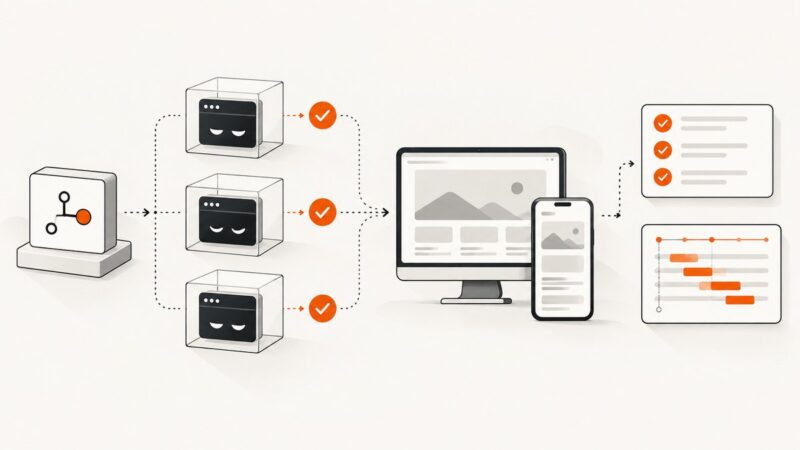
- Separate suites by feedback purpose. Keep a fast set for local and pull-request checks, and define broader integration or release suites. Document the intended scope of each.
- Use the same test entry points locally and in CI. Make commands, environment requirements, and test data setup discoverable so failures can be reproduced.
- Trigger appropriate runs. Run relevant checks on pushes or pull requests, then run broader checks at integration or release gates where needed.
- Publish reports and preserve diagnostics. Make failures, logs, traces, and artifacts accessible with the build so teams can distinguish product defects from test or environment failures.
- Review selection and outcomes. Track skipped coverage, flaky cases, duration, and recurring failure causes. Adjust the suite as the product and dependencies change.
Playwright documents running tests in CI on pushes and pull requests and publishing reports in its CI guide. Its --only-changed option uses a heuristic to select tests and can miss relevant ones; use it as an initial speed-up, then run the full suite when the release decision requires full-suite coverage. See Playwright test CLI documentation.
Keeping results credible
A green result is useful only if the tests are relevant, repeatable, and understood. Microsoft describes flaky tests, duplicate coverage, obsolete tests, and weak test design as forms of test debt. Maintain test cases and packs as the product changes, remove obsolete or redundant checks, investigate inconsistent results, and report the actual run scope.
- Record the commit or build, environment, test set, and result.
- Separate product failures from infrastructure or test harness failures, but do not erase either from the record.
- Quarantine a flaky test only with an owner and a plan to restore or replace it.
- Use controlled test data and clean up state so reruns are meaningful.
- Report exclusions and remaining risk alongside pass/fail status.
Browser regression checks and screenshots
For visual or browser-based regression checks, use stable test data, control viewport and browser conditions, and wait for the relevant page state before comparing results. Screenshots can help a reviewer see layout changes, but a screenshot alone does not verify behavior such as successful submission, correct data, or accessibility. Browser checks are one part of a regression strategy, not a substitute for unit, integration, API, or exploratory testing.
When a browser test captures a third-party site or page, cookie banners, popups, chat widgets, bot checks, loading delays, and dynamic content can affect the result. The open-source browser route below offers control over the browser; hosted capture is an option when the task is simply to obtain a clean page image.
DIY: capture a page with Playwright
This small Node.js example captures a full-page screenshot after the page reaches a stable load event. In an application test, prefer waiting for the specific element or state your assertion depends on; arbitrary waits can make tests slow and unreliable.
import { chromium } from 'playwright';

const browser = await chromium.launch();
const page = await browser.newPage({ viewport: { width: 1440, height: 900 } });
try {
  await page.goto('https://example.com', { waitUntil: 'load', timeout: 30000 });
  await page.screenshot({ path: 'page.png', fullPage: true });
} finally {
  await browser.close();
}
Install Playwright and its browser using the official installation guide. For regression assertions, add assertions against meaningful page state and run the browser project in CI. Keep screenshots as diagnostic evidence or use a maintained visual comparison workflow; define how dynamic regions and expected updates are handled.
Or skip the browser setup
ScreenshotNeo is a website screenshot API and MCP server from ScreenshotNeo. One GET request returns PNG, JPEG, WebP, or PDF output. See the ScreenshotNeo API documentation.
curl -G "https://api.screenshotneo.com/v1/shot" -d access_key=YOUR_API_KEY --data-urlencode url=https://stripe.com -o shot.webpimport requests
r = requests.get("https://api.screenshotneo.com/v1/shot", params={"access_key": "YOUR_API_KEY", "url": "https://stripe.com"}, timeout=90)
open("shot.webp", "wb").write(r.content)const q = new URLSearchParams({ access_key: 'YOUR_API_KEY', url: 'https://stripe.com' });
const res = await fetch(`https://api.screenshotneo.com/v1/shot?${q}`);- Cookie banners are accepted and 60+ known consent platforms, newsletter popups, and chat widgets are removed before the shot; each step can be turned off.
- Bot checks and CAPTCHAs, blank pages, timeouts, failed loads, and cache hits cost nothing; response headers report the page verdict and billing status.
- An MCP server gives AI agents, including Claude, Cursor, and other MCP clients, the tools
take_screenshot,get_page_info, andcapture_pdf. - The free plan includes 1,000 screenshots per month with no card. Paid plans start at $5 for 3,000 shots; every feature is available on every plan.
Sign up for 1,000 free screenshots a month, with no card required.
Performance, reliability, and cost
Regression testing has no single cost figure because runtime and maintenance depend on the system, environment, suite, and execution frequency. Manage the trade-offs directly:
- Keep fast checks close to the change. Unit and focused component tests usually give earlier feedback than end-to-end paths; reserve broader checks for integration and release confidence.
- Control test data and dependencies. Shared mutable state and unreliable external services make reruns harder to interpret. Use isolated or resettable data and controlled substitutes where appropriate.
- Parallelize only when safe. Tests that share accounts, files, or mutable records can interfere when run concurrently. Isolation is a prerequisite for reliable parallel execution.
- Budget for maintenance. Stable automation still needs updates as interfaces, products, and environments evolve. Remove low-value duplication and flaky tests rather than letting suite growth obscure meaningful failures.
- Make coverage decisions explicit. A targeted run saves time but can miss unselected effects; broaden the suite when risk, uncertainty, or release requirements call for it.
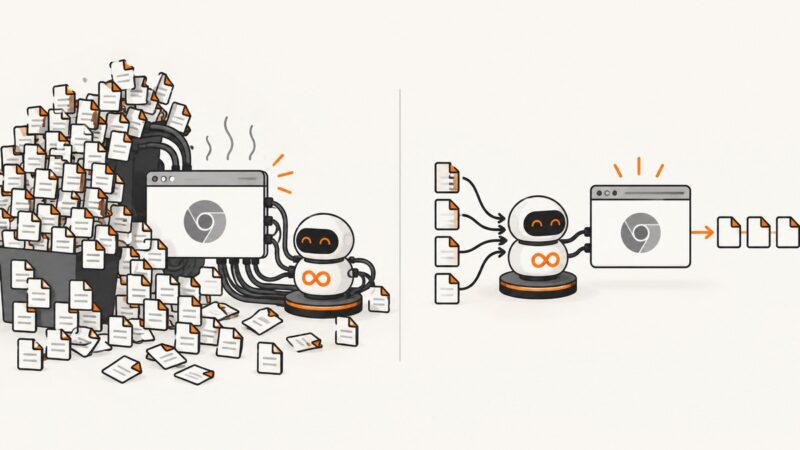
For page-image capture specifically, a hosted API can avoid maintaining browser binaries and capture infrastructure. ScreenshotNeo bills clean shots only under the stated product rules; the free tier is 1,000 shots per month, and paid plans range from $5 for 3,000 to $249 for 1,000,000 shots. Yearly billing gives two months free. Choose a capture method based on whether you need a screenshot artifact or a full automated behavioral test: an image capture is not a replacement for assertions about application behavior.
Troubleshooting regression testing
| Symptom | Likely cause | Practical fix |
|---|---|---|
| A targeted suite passes, but a defect appears elsewhere. | The impact analysis missed a dependency or shared workflow. | Trace the dependency and data paths, add a regression case, and broaden release coverage when impact is uncertain. |
| The same test alternates between pass and fail. | Timing assumptions, shared state, unstable services, or nondeterministic data. | Control state and dependencies, wait on observable conditions, and capture diagnostics. Treat repeated flakiness as suite debt. |
| A test fails only in CI. | Environment, browser, configuration, resource, or timing differs from local runs. | Record versions and configuration, preserve logs and traces, and reproduce with the CI environment as closely as possible. |
| A visual screenshot changes on every run. | Dynamic content, fonts, animation, timestamps, or inconsistent viewport and device scale. | Stabilize inputs and rendering conditions, wait for fonts and target content, and handle known dynamic regions deliberately. |
| The suite takes too long to guide changes. | Slow checks run too early, duplicated cases accumulate, or expensive setup repeats. | Move fast deterministic checks earlier, remove redundant coverage, and reserve broader suites for appropriate gates. |
| A changed-test selection misses a relevant test. | Change-to-test mapping is heuristic or incomplete. | Use selection as a preliminary run only; execute broader or full coverage when required by release risk. |
FAQ
Does a passing regression suite prove there are no regressions?
No. It shows that the selected checks passed under the conditions in which they ran. Uncovered behavior, data, or environments may still fail.
Is regression testing only for code changes?
No. Configuration, data, dependencies, infrastructure, and the operating environment can also change established behavior.
Should every test be automated?
No. Automate valuable, repeatable checks; use human judgment for exploratory questions and behavior that is too unstable or ambiguous to automate well.
Can screenshots replace browser assertions?
No. Screenshots show rendered output. Assert on behavior and application state separately when those properties matter.
Sources
- ISO/IEC/IEEE 29119-1:2022 — testing terminology and regression versus retesting.
- ISO/IEC/IEEE 29119-2 — test processes and risk-based selection.
- Microsoft Learn: Test plans and test debt concepts.
- Playwright: Continuous Integration and test CLI selection options.