How to Keep UI Tests Reliable as Your Interface Changes
Keep UI tests stable through redesigns with user-facing locators, condition-based waits, isolated state, and a practical failure-diagnosis workflow.
UI tests survive interface changes when they verify the user-visible contract instead of incidental implementation details. Locate controls by accessible role, name, or label; use a deliberate test ID when the user-facing description is unstable; wait for the state the test needs; and isolate browser state and test data. When a test fails, inspect evidence and find the cause before changing the test.
This guide uses Playwright with TypeScript for runnable examples. The same principles apply to other browser test runners: choose locators, waits, isolation, and diagnostics that fit your application and team.
1. Define the behavior the test protects
Start with a consequential user journey and write down what a user can observe. For example: a signed-in user submits a profile form and sees a saved confirmation. That is the contract. A particular wrapper element, CSS class, or DOM nesting pattern is usually an implementation detail.
- Choose a journey that matters to users, such as sign-in, checkout, or saving settings.
- State the starting conditions and the visible outcome.
- Identify the controls a user interacts with and the page state that proves success.
- Keep the browser test focused on that journey; cover smaller logic and edge cases at the appropriate lower test level.
Playwright’s guidance is to interact with rendered output as a user does. A class selector may be appropriate when class membership is itself the behavior under test, but it is a fragile default for finding a button.
2. Use locators that describe the interface contract
Prefer accessible roles and names, labels, and other user-facing attributes. Use a test ID when visible wording is expected to change or does not uniquely identify the target. Treat test IDs as an explicit testing contract, separate from CSS classes used for styling.
import { test, expect } from '@playwright/test';

test('a user can save profile changes', async ({ page }) => {
  await page.goto('/settings/profile');

  await page.getByRole('textbox', { name: 'Display name' }).fill('Riley');
  await page.getByRole('button', { name: 'Save changes' }).click();

  await expect(page.getByRole('status')).toHaveText('Profile saved');
});
Use the locator that best matches the control’s semantic role. For a form field, a label-based locator is often clearer than a generic textbox locator. If the page has repeated controls, scope the query to a meaningful region:
const billingPanel = page.getByRole('region', { name: 'Billing address' });
await billingPanel.getByRole('button', { name: 'Edit' }).click();
If the app has no stable accessible name for a target, add a test ID intentionally and use it consistently:
// Application markup
<button data-testid="profile-save">Save changes</button>

// Playwright test
await page.getByTestId('profile-save').click();
Do not make test IDs mirror every element by default. Add them where they provide a durable, unambiguous contract that cannot be expressed well through accessible behavior. Avoid deep CSS paths such as main > div:nth-child(2) button.primary: layout changes can invalidate them without changing what a user can do.
3. Wait for meaningful conditions, not guessed durations
Fixed sleeps assume the app and environment always respond within a chosen duration. A short delay can still race; a long delay slows every run. Use actions and assertions that wait for actionability and the expected state. Playwright locators and web-first assertions retry until their condition succeeds or the configured timeout is reached.
// The click waits for the button to become actionable.
await page.getByRole('button', { name: 'Submit order' }).click();

// The assertion waits for the resulting state.
await expect(page.getByRole('heading', { name: 'Order confirmed' })).toBeVisible();
Wait for the state your next step depends on. A visible spinner disappearing may be useful when it is the relevant contract, but a confirmation or loaded result is usually stronger evidence that the operation completed.
Use explicit condition waits for app-specific states when needed, such as waiting for a particular locator to appear. Avoid adding arbitrary delays as a cure for intermittent failures. Google’s testing guidance warns that arbitrary delays can become flaky again and slow tests unnecessarily.
4. Isolate browser state and test data
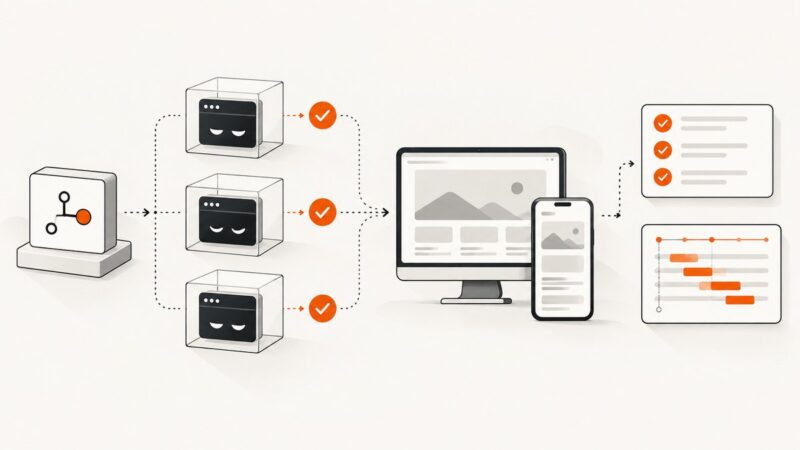
Order-dependent tests fail because one test leaves behind a cookie, local storage value, account change, or record that another test assumes is absent. Make tests independent: control the account and records each test uses, and give tests their own browser context and storage state where appropriate.
- Use unique or resettable records so parallel tests do not overwrite each other.
- Define authentication state deliberately; do not let a previous test’s login determine the next test’s starting point.
- Keep cookies and local storage controlled for the journey under test.
- Make cleanup reliable, while ensuring cleanup failure does not hide the original assertion failure.
- Stub or control unstable external dependencies when the goal is to test your app’s behavior; retain other coverage for the integration itself.
Isolation should preserve the behavior the test is meant to protect. If the journey depends on a real integration, make that dependency’s role explicit and diagnose its failures separately from app assertions.
5. Keep end-to-end coverage focused and maintained
Browser tests cover rendered, user-visible behavior, but they take ongoing care. Prioritize a small set of critical journeys and keep their expected outcomes aligned with product intent. Use faster tests for logic that does not need a browser, and add end-to-end coverage where seeing the integrated user flow matters.
When a redesign changes copy or interaction, decide whether the user-visible contract intentionally changed. If it did, update the expected behavior. If only a class or DOM shape changed, replace the coupled selector without changing the test’s intended assertion.
6. Diagnose failures before changing the test
A flaky label does not identify the cause. A failure can come from an application defect, changed product behavior, timing, shared state, an external dependency, the runner, or environment differences such as viewport and browser configuration.
- Read the failed assertion and determine exactly what was expected and observed.
- Inspect the runner’s available evidence: logs, trace, screenshot, and relevant network or console output.
- Check whether the user-visible contract changed deliberately.
- Check timing and actionability. Replace guessed sleeps with a wait for the required condition.
- Check test data, cookies, storage, and order or parallelism dependence.
- Check dependencies and execution environment, including browser and viewport differences.
- Rerun after making a targeted fix, then confirm the fix addresses the cause rather than merely producing one passing run.
Do not update expected behavior just to silence a failure unless product intent changed. Do not call a test fixed solely because a rerun passed.
7. Capture screenshots as debugging evidence
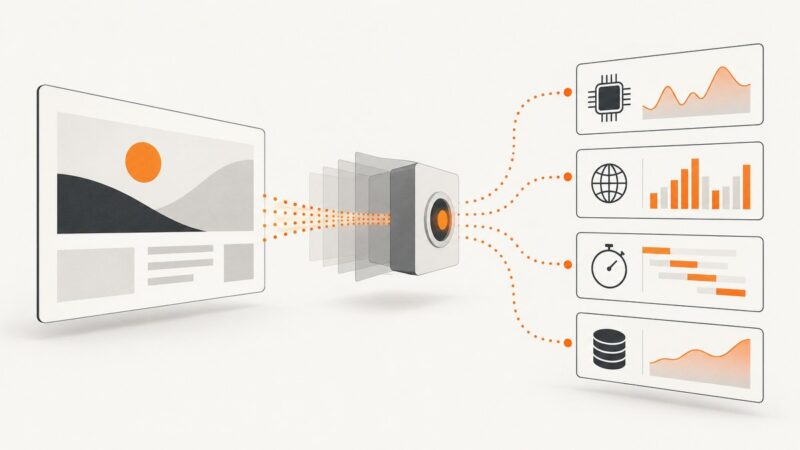
Screenshots can help compare what the test saw with the intended rendered state, particularly for visual regressions and failures in CI. Capture evidence at the point of failure or use the runner’s trace and screenshot features. A screenshot supports diagnosis; it does not replace a behavioral assertion.
For a repeatable external page capture, ScreenshotNeo is a website screenshot API and MCP server. It can capture a URL as PNG, JPEG, WebP, or PDF. Its clean-shot processing accepts cookie or consent banners like a visitor and removes 60+ known consent platforms, newsletter popups, and chat widgets; each step can be turned off. Check the ScreenshotNeo documentation for request parameters.
Or skip the browser setup
For a website capture, make one GET request. This cURL example saves a WebP screenshot of Stripe:
curl -G "https://api.screenshotneo.com/v1/shot" -d access_key=YOUR_API_KEY --data-urlencode url=https://stripe.com -o shot.webpPython:
import requests

r = requests.get(
    "https://api.screenshotneo.com/v1/shot",
    params={"access_key": "YOUR_API_KEY", "url": "https://stripe.com"},
    timeout=90,
)
r.raise_for_status()
open("shot.webp", "wb").write(r.content)
Node.js:
const q = new URLSearchParams({ access_key: 'YOUR_API_KEY', url: 'https://stripe.com' });
const res = await fetch(`https://api.screenshotneo.com/v1/shot?${q}`);
if (!res.ok) throw new Error(`Screenshot request failed: ${res.status}`);
await Bun.write('shot.webp', res);
Cookie banners, popups, and chat widgets are removed before the shot. Bot checks, blank pages, and failed loads are never billed; response headers say whether a shot was billed. An MCP server lets AI agents take screenshots. The free plan includes 1,000 screenshots a month with no card, and paid plans start at $5 for 3,000. Learn about ScreenshotNeo and its options, including element capture, full-page capture, waits, and custom CSS, in the API documentation.
Sign up for 1,000 free screenshots a month, with no card required.
8. Performance, reliability, and cost
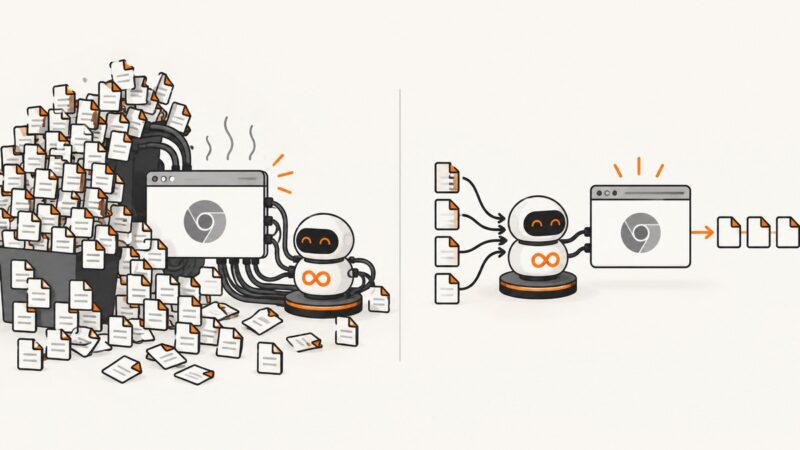
Reliable tests avoid unnecessary work while preserving critical coverage. Prefer condition-based waits over long fixed sleeps; keep browser end-to-end tests focused on important integrated journeys; and isolate state so parallel execution does not create hidden dependencies. A screenshot is useful diagnostic evidence, but avoid capturing repeatedly when a single failure artifact answers the question.
Test cost includes execution time and maintenance. A selector tied to current styling can require edits after a redesign even when behavior is intact. A user-facing locator or deliberate test ID makes the intended contract clearer, while focused coverage limits the number of browser journeys the team must maintain. The dossier provides no defensible quantitative savings or universal framework winner; assess tools against your app, languages, browsers, isolation needs, and diagnostic workflow.
9. Troubleshooting common failures
| Symptom | Likely cause | What to do |
|---|---|---|
| Locator finds no element after a redesign | Selector depended on a class, DOM path, or changed copy | Inspect rendered output; use the intended role/name/label or a stable test ID. Change expected behavior only if the contract changed. |
| Click times out because the target is not actionable | Overlay, disabled control, animation, or wrong page state | Inspect screenshot or trace and wait for the actual precondition. Verify whether the overlay or disabled state is an app defect. |
| Assertion intermittently misses a success message | Assertion ran against an asynchronous state or wrong success signal | Use a retrying assertion for the observable outcome the user needs; do not add a guessed sleep. |
| Test passes alone but fails in the suite | Shared cookies, storage, records, or order dependence | Reset or isolate state and give tests independent data. Check parallel workers for collisions. |
| Test passes locally but fails in CI | Environment, viewport, browser, resource, or external service differences | Inspect CI evidence and compare execution conditions. Make required viewport and dependencies explicit. |
| Rerun passes but failure returns | Underlying timing, state, dependency, or app issue remains | Keep the failure classified as unresolved and investigate its evidence; do not treat a single green rerun as a fix. |
10. A maintenance checklist
- Does each test name a user-visible outcome?
- Do locators use accessible behavior or a deliberate stable testing contract?
- Are repeated controls scoped to a meaningful page region?
- Do actions and assertions wait for the needed state instead of a fixed duration?
- Can each test run independently with controlled data and browser state?
- Does the failure workflow inspect evidence and distinguish app, test, dependency, and environment causes?
- Are critical user journeys covered without duplicating browser tests for every implementation detail?
FAQ
Should I avoid CSS selectors completely?
No. Use them when the CSS property or structure is itself under test. For ordinary interaction, user-facing locators or a stable test contract better express what the test protects.
Should every test use a test ID?
No. Use one when accessible or visible attributes are unstable, ambiguous, or unsuitable for the intended target, and keep it as a deliberate contract.
Which browser testing framework is best?
There is no universal winner supported here. Compare locator support, synchronization and retry behavior, state isolation, diagnostics and CI fit, plus your app’s language and browser needs.
Can a screenshot prove that a UI test passed?
A screenshot shows rendered output at one moment. Pair it with assertions that verify the interaction and outcome the test is responsible for.