The Rise of AI Browsers and Intelligent Web Tools
AI browsers can summarize pages, compare tabs, and take actions. Learn how they work, compare current options, and use them safely.
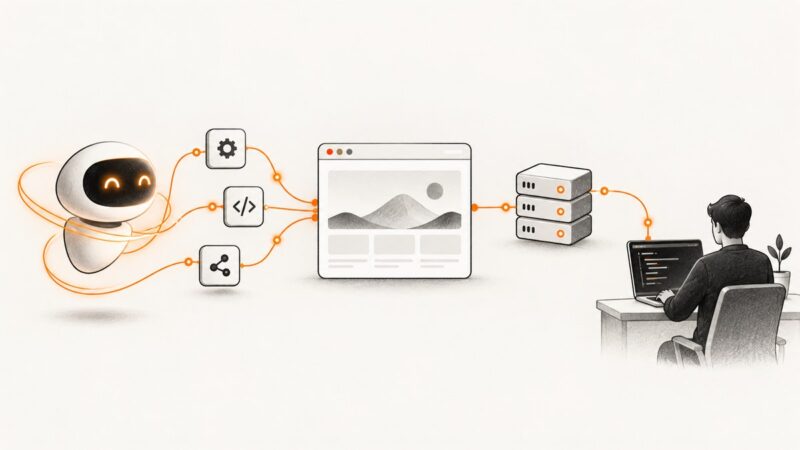
AI browsers bring generative AI into the browsing experience. They can answer questions about a page, summarize articles or tabs, and, in some products, navigate and act on websites. The right choice depends on whether you need answers or delegated actions, what browsing context the tool can use, and how much control and oversight you need.
For developers who need a page image or PDF for a workflow, ScreenshotNeo is a website screenshot API and MCP server. It can capture a URL in one request; details and options are in the ScreenshotNeo documentation.
1. What is an AI browser?
An AI browser adds generative AI to the browser so it can interpret web content, answer questions, summarize or synthesize information, and sometimes carry out multi-step actions. Some products add AI to an established browser; others are AI-native. “Agentic browsing” means delegating browser actions to an AI system. The amount of autonomy and the safeguards vary by product.
There are two useful capability bands:
- Page assistance: ask a question about the current page, summarize an article or video, or get help comparing information across tabs.
- Agentic actions: ask the system to navigate, click, enter information, or complete a workflow. These tasks need closer supervision because an agent can misunderstand a request or encounter malicious instructions embedded in a page.
A browser may offer both. Check the specific feature and its availability instead of assuming every AI browser can act—or that every action feature is generally available.
2. Which AI browser is best?
There is no universal best choice. Choose based on your device and region, whether you need summarization or actions, what information can enter the AI’s context, and the safeguards available to you. Product availability and preview status change, so verify current requirements with the vendor.
| Product | What the cited sources describe | Availability or status to consider |
|---|---|---|
| Chrome with Gemini | Google described asking about webpages and YouTube references, cross-tab context, and AI Mode in the omnibox. More advanced multi-step agentic capabilities were described as under development in that announcement. | Google’s September 2025 announcement described availability for Mac and Windows users in the United States with English language settings. Check Google’s current rollout details. |
| Microsoft Edge with Copilot | Copilot can summarize webpages, videos, PDFs, and open tabs. Depending on the prompt, it may use the current page, page title, tabs, and browsing history. Microsoft also described a business agent for multi-step tasks on approved sites. | Microsoft described Edge for Business agentic browsing as a limited preview in May 2026. Availability and controls depend on the product and deployment. |
| Perplexity Comet | Perplexity presents Comet as a browser assistant for research, email, and delegated tasks. | Perplexity lists Mac, Windows, iOS, and Android. Its privacy statements are vendor claims, not an independent audit. |
| ChatGPT Atlas | Atlas launched with browser memories and page-aware ChatGPT features. | Atlas is a transition story, not a current recommendation: OpenAI scheduled it to stop working on August 9, 2026. See the transition guidance before moving browser data. |
Sources: Google’s Chrome announcement, Microsoft’s Edge Copilot support, Microsoft’s Edge for Business announcement, Comet product page, and OpenAI’s Atlas transition guidance.
How to choose for your task
- For summaries and page questions: verify that the browser can use the page types you care about, such as PDFs, video pages, or multiple tabs.
- For research across tabs: check whether the feature can access other open pages and whether that context can be disabled.
- For actions: check site restrictions, approval steps, and visible pause or stop controls. Keep a person in the loop for consequential actions.
- For managed business use: check whether the feature is generally available or in preview and what administrator controls apply.
- For a discontinued or transitioning product: read the vendor’s export and migration instructions before switching. OpenAI warns that Atlas bookmarks, history, and open tabs may not transfer automatically, and cookies or active sessions cannot be imported.
3. Can AI browse the web for me?
Yes, within the capabilities and permissions of a particular product. Page assistants can help interpret content you have open. Agentic features may navigate and perform steps on approved sites, but they can make mistakes and should not be treated as an unattended operator.
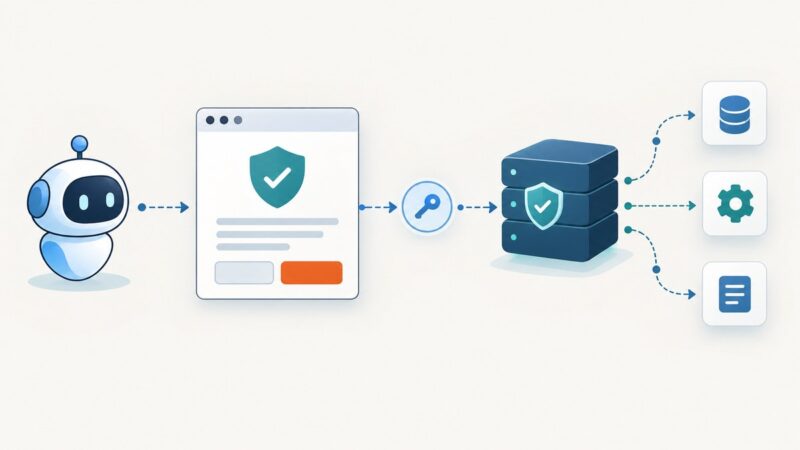
Microsoft’s safety guidance warns that agentic browsing can misinterpret instructions, make mistakes, or be affected by malicious hidden instructions on a webpage. Microsoft recommends monitoring activity closely. Its controls reduce risk; they do not guarantee a correct or safe result. See Microsoft’s guidance on browsing with Copilot and its considerations for safe agentic browsing.
A practical supervision checklist
- Begin with familiar, low-stakes tasks.
- Review which sites the agent can access and which controls can pause or stop it.
- Watch it work, especially when it moves between pages or enters data.
- Review purchases, messages, bookings, and form submissions before they are finalized.
- Keep financial credentials, government identifiers, medical records, and confidential work data out of experimental agent workflows.
- Check how to inspect, clear, or export relevant browsing data before relying on a tool or changing browsers.
4. Is an AI browser safe, and what happens to browsing history?
“AI browser” does not describe one privacy model. Read the vendor’s current settings and privacy information for the specific feature you plan to use.
- Edge Copilot: Microsoft says context can include the current page, title, open tabs, and browsing history depending on the prompt. Its support page describes a setting, “Allow Copilot to read context clues on the web,” that users can turn off.
- Comet: Perplexity says browsing data such as URLs, queries, cookies, tabs, and site permissions is stored locally by default. It says personal searches and agentic requests may use relevant browsing context, and connector permissions are opt-in. These are Perplexity’s statements, not an independent privacy audit.
- Atlas: OpenAI’s launch announcement described optional, manageable browser memories and said browsed content was not used to train models by default. Those are historical Atlas-specific statements; Atlas is being discontinued.
Sources: Microsoft Edge Copilot settings, Perplexity’s Comet privacy FAQ, and OpenAI’s Atlas launch announcement.
Before enabling page context or actions
- Find out whether the assistant sees the current page only, other tabs, browsing history, or connected accounts.
- Look for settings to turn context access off and controls to clear stored data.
- Use opt-in account connectors only when the task needs them.
- For a work deployment, check administrator policy and which sites the agent is allowed to use.
- Do not infer privacy protections from another product’s settings; check each vendor’s policy and controls.
5. Can AI summarize multiple tabs accurately?
Some AI browser features can use multiple tabs as context, but availability varies. Google described cross-tab context for Gemini in Chrome; Microsoft says Edge Copilot may use open tabs depending on the prompt. Confirm the current feature behavior and permissions in your browser.
A 2026 preprint audited news summaries from Chrome (Gemini), Edge (Copilot), and Perplexity Comet. The authors analyzed 13,777 articles from 15 U.S. news outlets and 41,331 generated summaries. They reported that summaries were broadly accurate in that sample and found reductions in ideological bias, partisan stances, negativity, anger, and fear, alongside increased clarity and reduced personal tone. This is evidence about news summaries from the sampled outlets and topics. It does not establish that open-ended browsing answers are always right or that browser agents act safely. Read the study’s abstract and methods summary.
For a useful multi-tab answer, ask for a comparison with sources or page titles attached to each point, then open the cited pages and check important claims yourself. A concise synthesis is not a substitute for checking details that affect a decision.
6. What changes for developers?
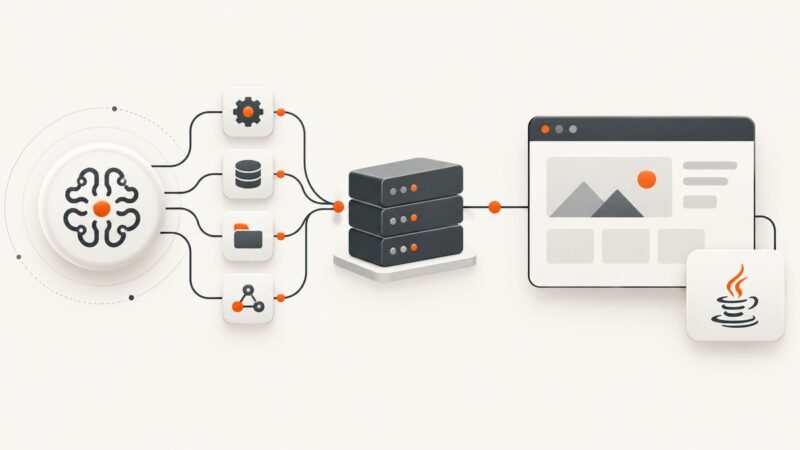
AI browsers make it easier to ask questions about live web content, but a developer workflow may need a stable artifact such as an image or PDF. A screenshot API can capture a URL without setting up browser automation in your own project. ScreenshotNeo provides a GET endpoint that returns a PNG, JPEG, WebP, or PDF, plus an MCP server for AI agents.
Capture a page with ScreenshotNeo
Use your ScreenshotNeo API key as YOUR_API_KEY and replace the example URL as needed. The following examples use the documented endpoint and request pattern; see the API documentation for the options and response details.
cURL
curl -G "https://api.screenshotneo.com/v1/shot" -d access_key=YOUR_API_KEY --data-urlencode url=https://stripe.com -o shot.webpPython
import requests

r = requests.get(
    "https://api.screenshotneo.com/v1/shot",
    params={"access_key": "YOUR_API_KEY", "url": "https://stripe.com"},
    timeout=90,
)
r.raise_for_status()
open("shot.webp", "wb").write(r.content)
Node.js
const q = new URLSearchParams({ access_key: 'YOUR_API_KEY', url: 'https://stripe.com' });
const res = await fetch(`https://api.screenshotneo.com/v1/shot?${q}`);
if (!res.ok) throw new Error(`Screenshot request failed: ${res.status}`);
const bytes = new Uint8Array(await res.arrayBuffer());
await import('node:fs/promises').then(fs => fs.writeFile('shot.webp', bytes));
Options for common capture workflows
ScreenshotNeo documents 63 options. Common use cases include:
- Page coverage: full-page capture with lazy images loaded, or capture a single element using a CSS selector.
- Appearance: dark mode, 12 device presets or a custom viewport, retina scale, transparent background, and image resizing.
- PDF: paper size, margins, landscape orientation, and page ranges.
- Page setup: render HTML/CSS, apply custom CSS or JavaScript, click an element before capture, hide selectors, or wait for a selector, a delay, or network idle.
- Network and identity: block ads, trackers, requests, or resource types; send custom headers, cookies, a user agent, or Authorization; set timezone or geolocation.
- Delivery: choose a cache TTL, create signed links for public
<img>tags, run async jobs with signed webhooks, batch up to 100 URLs per call, and inspect usage through the usage API.
Parameter names used by other screenshot APIs also work, which makes migration easier. Consult the docs for exact option names and supported values.
Reliability, performance, and cost
- Check the result: ScreenshotNeo responses identify the page verdict and billing status in
X-Page-VerdictandX-Billedheaders. This helps distinguish a clean capture from a bot check, blank page, failed load, timeout, or cache hit. - Budget for slow pages: dynamic pages may need a selector, delay, or network-idle wait. Lazy-loaded content and blocked resources can also affect what appears. Pick the wait and resource settings that match the page.
- Use async jobs for larger work: the API supports async jobs with signed webhooks and bulk capture for up to 100 URLs per call. Use the usage API to track consumption.
- Know the billing rule: only clean shots are billed. Bot checks or CAPTCHAs, blank pages, timeouts, failed loads, and cache hits cost nothing.
- Plan cost by volume: the free plan includes 1,000 shots per month with no card. Paid plans start at $5 for 3,000 shots; Growth is $15 for 15,000, Pro $39 for 60,000, Scale $99 for 250,000, and Business $249 for 1,000,000. Yearly billing gives two months free. Every feature is on every plan.
7. Or skip the browser setup
Make one GET request to capture a URL. This example saves a WebP image; see the documentation for output formats and capture options.
curl -G "https://api.screenshotneo.com/v1/shot" -d access_key=YOUR_API_KEY --data-urlencode url=https://stripe.com -o shot.webpScreenshotNeo accepts cookie and consent banners like a visitor and removes more than 60 known consent platforms, newsletter popups, and chat widgets before capture; each step can be turned off. Bot checks, blank pages, timeouts, failed loads, and cache hits are never billed. An MCP server provides take_screenshot, get_page_info, and capture_pdf tools for Claude, Cursor, and other MCP clients. The free plan includes 1,000 screenshots a month with no card, and paid plans start at $5 for 3,000.
Sign up for 1,000 free screenshots a month, with no card required.
8. Common problems and fixes
| Problem | Likely cause | What to do |
|---|---|---|
| The AI summarizes the wrong page or misses a tab. | The feature may only have access to the current page, or cross-tab context may be unavailable or disabled. | Check the browser’s context setting and current rollout. Name the pages or tabs you want included and confirm the resulting summary against them. |
| The answer includes details that are not on the page. | The model may misread or infer beyond its source, and a summary is not a guarantee of accuracy. | Ask for claims tied to page titles or sources, then inspect the relevant original text. Verify consequential facts independently. |
| An agent takes an unintended action. | It may misunderstand the prompt or follow malicious hidden page instructions. | Pause or stop it, review the activity, and undo or correct the action where possible. Restrict agent use to low-stakes tasks and monitor it. |
| A browser AI feature is missing. | It may depend on region, device, language, account, enterprise policy, or preview access. | Check the vendor’s current availability requirements and update the browser. For managed accounts, ask the administrator about policy. |
| Atlas does not launch or stop working. | OpenAI scheduled Atlas to stop working on August 9, 2026. | Use OpenAI’s transition guidance to move to a supported browser. Do not assume bookmarks, history, tabs, cookies, or active sessions will migrate automatically. |
| A screenshot looks blank or incomplete. | The page may have failed to load, shown a bot check, or needed more time or a particular element to render. | Inspect X-Page-Verdict and X-Billed. Try a selector or network-idle wait, and review blocked resources or custom page settings in the docs. |
| The screenshot response is not a usable image. | The request may have returned an error response, or the requested format and filename may not match. | Check the HTTP status before saving the body, confirm the requested output format, and review the response details in the API documentation. |
9. Frequently asked questions
Can an AI browser work with several tabs at once?
Some can use multiple tabs as context. Chrome’s Gemini and Edge Copilot have documented cross-page or open-tab capabilities, but the feature and access settings vary. Confirm current availability in your browser.
Should I let an AI browser submit a form or purchase something?
Review the details and approve consequential actions yourself. Microsoft advises close monitoring of agentic browsing, especially given the possibility of mistakes or malicious page instructions.
Does “stored locally” mean a browser assistant never uses browsing context?
No. Perplexity says Comet data is stored locally by default and also says personal searches and agentic requests may use relevant browsing context. Storage location and use of context are separate questions.
Can I use a screenshot API alongside an AI browser?
Yes. A browser assistant can help interpret a page, while an API can return a reusable image or PDF for a developer workflow. ScreenshotNeo also exposes screenshot, page-info, and PDF tools through its MCP server.
Sources and freshness
Browser features, privacy settings, and rollout status can change. This guide uses the linked vendor documentation and announcements for product descriptions, and the cited 2026 preprint for its scoped news-summary findings. Vendor descriptions are not independent privacy or quality audits. Recheck live availability and settings before adopting a feature.