How to Capture Screenshots of Indian Railway Booking Pages with an AI Agent Safely
Capture railway booking pages with a user-triggered, read-only AI agent. Minimize, redact, and protect sensitive details before a screenshot reaches an AI service.
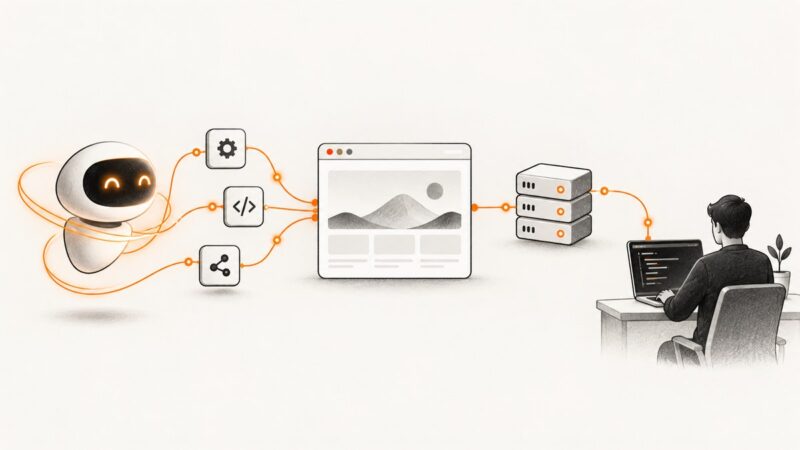
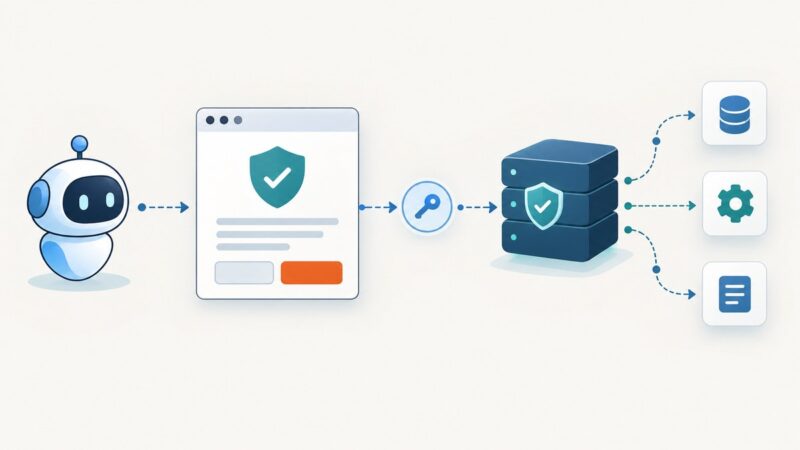
Short answer: Make the screenshot user-triggered and read-only. Capture only the smallest useful page area, keep credentials, CAPTCHA content, passenger details, PNRs, transaction identifiers, and payment information out of the image before sending it to an AI service, and restrict or delete retained copies. Do not let the agent submit, change, cancel, or book anything.
IRCTC’s published materials describe account, booking, passenger, and session information, and show login fields including a CAPTCHA in a booking guide. They do not establish that an independent third-party AI agent is authorized to operate the booking site or capture screenshots. IRCTC’s own AskDISHA assistant is not evidence of approval for another agent. Check the current terms and use the workflow below for troubleshooting or documentation, not to gain an unfair booking advantage. IRCTC privacy policy · IRCTC agent policy · AskDISHA.
What can appear in a railway booking screenshot
Booking pages can show travel route, date, class, quota, and journey details. Login screens can expose a username, password, or CAPTCHA. Booking and registration materials also refer to passenger, PNR, and transaction information. The exact current page can differ from the historical illustrations in the official e-ticket guide, so inspect the live page before capturing it.
IRCTC’s privacy policy describes logging visit and session information such as IP address, browser and operating-system details, access time, pages visited, and user activity, along with registration and transactional information, traveller details, cookies, and specified sharing with service providers or partners. This does not mean IRCTC collects screenshot images; the policy does not say that. IRCTC e-ticket booking guide · IRCTC registration terms.
Use a user-triggered, read-only workflow
- Have the user initiate capture. Use a page and moment chosen by the account holder. Keep browser controls that submit or alter a booking outside the agent’s permitted actions.
- Prepare a safe view. Navigate away from screens showing credentials, payment data, CAPTCHA, passenger identity, PNR, or transaction identifiers. If the issue requires those fields for context, replace them with placeholders locally before any image is sent to a model or shared log.
- Capture the minimum area. Prefer a small crop or a single relevant element over a full-page screenshot. Check the image edges, browser tabs, overlays, notifications, and background windows for sensitive details.
- Review before transmission. Inspect the actual image, not just the page. Redact anything unnecessary before sending it to an AI service. Removing a local file later cannot undo information already transmitted.
- Limit access and retention. Send only the necessary image to a service the user is authorized to use. Keep it out of public or shared logs, restrict access to retained files, and delete working copies and derived copies when the task is complete under your organization’s retention rules.
- Verify the destination. Use IRCTC’s official channels to verify the website or app. Its registration guide warns about fraudsters, fake messages, and unofficial app downloads. IRCTC registration guide.
These are practical safeguards inferred from the data and page elements in IRCTC materials. They are not IRCTC technical instructions for AI agents, and they cannot guarantee that a browser, device, or AI provider stores no copies. Check the retention and access settings of the actual tools in your workflow.
Build a minimal read-only browser capture
For an agent that must capture browser content, separate navigation and capture from booking actions. The following Playwright example opens a page only after the user supplies its URL, captures a user-selected locator, and writes a local PNG. It deliberately does not fill forms, click booking controls, submit data, solve CAPTCHA, or sign in. Install Playwright with npm install playwright and install its browser with npx playwright install chromium. Save as capture.mjs and run node capture.mjs https://www.irctc.co.in/nget/train-search; confirm the current URL and visible page are appropriate before capture.
import { chromium } from 'playwright';

const target = process.argv[2];
if (!target) throw new Error('Pass a page URL as the first argument.');
const parsed = new URL(target);
if (!['https:', 'http:'].includes(parsed.protocol)) {
  throw new Error('Only HTTP(S) URLs are allowed.');
}

const browser = await chromium.launch({ headless: true });
try {
  const page = await browser.newPage({ viewport: { width: 1280, height: 800 } });
  await page.goto(target, { waitUntil: 'domcontentloaded', timeout: 30000 });
  console.log(`Loaded: ${page.url()}`);
  console.log('Review the page and ensure sensitive fields are absent before capture.');

  // Capture a specific, non-sensitive area chosen for the issue being documented.
  // Change this selector only after inspecting the page; do not capture login or booking data.
  const locator = page.locator('main').first();
  await locator.waitFor({ state: 'visible', timeout: 10000 });
  await locator.screenshot({ path: 'railway-page.png', animations: 'disabled' });
} finally {
  await browser.close();
}
This sample is intentionally a capture primitive rather than an autonomous booking agent. In a real support flow, let the user review and redact the resulting file locally before uploading it. Avoid logging page HTML, cookies, storage state, URLs containing tokens, or screenshots to a shared agent trace.
Safer capture design choices
| Choice | Lower exposure approach | Why it helps |
|---|---|---|
| Trigger | User starts each capture | Avoids unattended browsing and unexpected collection. |
| Agent permissions | Read-only navigation and capture | Prevents the screenshot workflow from changing or submitting a booking. |
| Capture scope | Element or crop rather than full page | Reduces unrelated personal and journey information in the image. |
| Redaction | Replace sensitive values before upload | Local deletion afterward does not retract transmitted data. |
| Storage | Private, access-limited, short-lived copies | Reduces who can see a retained image and how long it remains available. |
| Logs | Do not put images or sensitive page data in shared traces | Operational logs can have broader access and longer retention than the working session. |
Options for reducing exposure
- Crop or element capture: Capture only the content needed to explain the issue. A full-page image can include more route details, account information, or unrelated page content.
- Local redaction: Cover the actual pixels before upload. Hiding a field with a browser overlay or CSS is weaker if the underlying page remains visible in another capture, accessible in the DOM, or restored by the page.
- Review overlays and surroundings: Consent dialogs, browser notifications, tabs, and desktop windows may reveal information outside the intended page area.
- Separate capture from interaction: Do not give the screenshot agent access to actions that alter or submit booking data. Do not automate queueing or booking actions to gain an unfair advantage.
- Retention controls: Check storage, access, and retention for the browser host, agent trace, model provider, and any destination where the screenshot is saved. Do not assume a local delete removes copies elsewhere.
Performance, reliability, and cost
For a browser capture, the main practical cost is the browser process and the time needed to load and inspect the page. Wait only for the state needed to capture; network-idle waits can stall on pages with persistent requests. A short navigation timeout and a clear failure path are easier to operate than indefinite retries. If capture fails, do not automatically retry in a way that repeatedly loads account pages or expands the amount of data exposed.
For reliability, save to a controlled temporary location, use restrictive file permissions where available, and confirm the output exists and can be opened before sharing. Keep a human review step before transmission. Browser state can persist cookies or session data; avoid exporting or logging it as part of the screenshot workflow. Cost depends on the browser infrastructure and any AI service used, plus its own retention and pricing terms; verify those terms directly. No screenshot safety workflow can guarantee that a recipient service retains no copy.
Or skip the browser setup
ScreenshotNeo is a website screenshot API and MCP server. Its capture can remove cookie banners, popups, and chat widgets before the shot; each cleanup step can be turned off. Bot checks, blank pages, failed loads, timeouts, and cache hits are not billed, and response headers indicate the page verdict and billing status. Its MCP server lets AI agents use take_screenshot, get_page_info, and capture_pdf. It offers 1,000 screenshots a month free with no card; paid plans start at $5 for 3,000.
Use it only with a page you are authorized to capture, and do not send credentials, CAPTCHA, passenger data, PNRs, transaction identifiers, or payment details to an AI service. For a non-sensitive public page, one request returns an image or PDF. See the ScreenshotNeo API documentation.
curl -G "https://api.screenshotneo.com/v1/shot" -d access_key=YOUR_API_KEY --data-urlencode url=https://stripe.com -o shot.webpimport requests
r = requests.get("https://api.screenshotneo.com/v1/shot", params={"access_key": "YOUR_API_KEY", "url": "https://stripe.com"}, timeout=90)
open("shot.webp", "wb").write(r.content)const q = new URLSearchParams({ access_key: 'YOUR_API_KEY', url: 'https://stripe.com' });
const res = await fetch(`https://api.screenshotneo.com/v1/shot?${q}`);Sign up for 1,000 free screenshots a month, with no card required.
Troubleshooting
| Problem | Likely cause | Fix |
|---|---|---|
| Navigation times out | The page is slow, blocked, or has ongoing requests. | Use a finite timeout and wait for the minimum page state required. Do not keep retrying authenticated pages without user direction. |
| Selector is missing | The live layout differs from the guide or the selected content has not rendered. | Inspect the current page with the user, choose a visible non-sensitive element, and update the selector. Official guide images are historical examples, not a current DOM guarantee. |
| Screenshot includes personal data | The crop is too broad, or an overlay, notification, or background area is visible. | Do not transmit it. Recapture more narrowly or redact locally, then inspect the complete output again. |
| Redaction disappears | The field was hidden in the page rather than flattened into the image. | Redact the exported image pixels with a local image editor and verify the saved output before upload. |
| Image appears in agent logs | The framework records tool outputs or attachments by default. | Review logging and retention settings, disable image or sensitive payload logging where supported, restrict access, and remove retained copies according to policy. |
| Unexpected sign-in or CAPTCHA prompt | The page requires account verification or is showing an anti-bot challenge. | Stop the automated flow. Do not capture or send CAPTCHA content, attempt to bypass the check, or provide credentials to the agent. |
| Page or app authenticity is uncertain | A link, message, or download may be unofficial. | Verify it through IRCTC’s official site and guides; avoid unofficial app downloads. |
FAQ
Does IRCTC approve third-party AI agents for screenshots?
The cited official sources do not establish that approval. Ask IRCTC or review current terms for the particular workflow; AskDISHA describes IRCTC’s own assistant, not authorization for another agent.
Can I capture a page that contains a CAPTCHA?
For this workflow, stop and do not include CAPTCHA content in an image sent to an AI service or shared log. Do not ask an agent to solve or bypass it.
Does deleting the screenshot afterward protect data already sent?
No. Redact locally before transmission. Later deletion only addresses copies you can still control, and does not establish what a recipient service retained.
Is a full-page screenshot safer because it preserves context?
Usually it includes more information than needed. Start with the smallest useful crop and expand only when the troubleshooting task requires it.