BlogScreenshots on your device
How to Save a Web App Screenshot as PDF from Chrome on Windows
Save a web app page as a PDF from Chrome, or capture the exact visible screen first when appearance matters. Includes Windows steps and developer options.
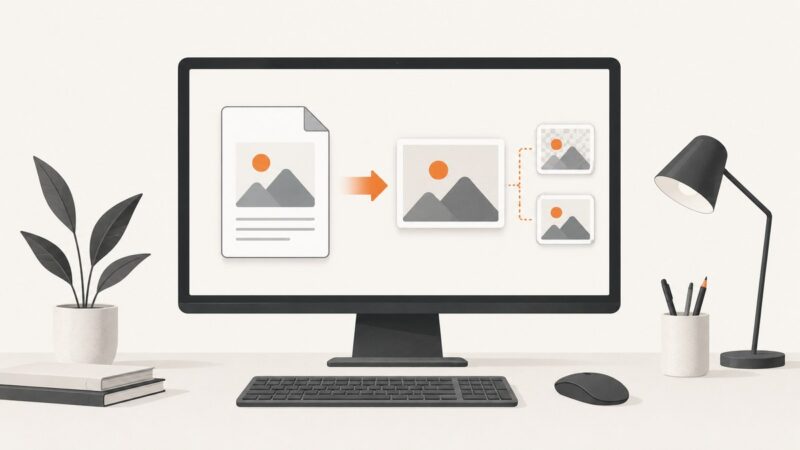
There are two ways to save a web app from Chrome on Windows as a PDF. Use Chrome’s print flow to save a printable rendition of the page. If you need the exact interface currently visible in the browser window, capture the screen first with Snipping Tool and then print that image to a PDF.
Choose the right method
| Your goal | Use | What the PDF preserves |
|---|---|---|
| Save the page content for reading, sharing, or records | Chrome print preview | The page as laid out for printing |
| Preserve the app’s current visible appearance | Snipping Tool, then print the captured image | The selected screen region, window, or full screen as an image |
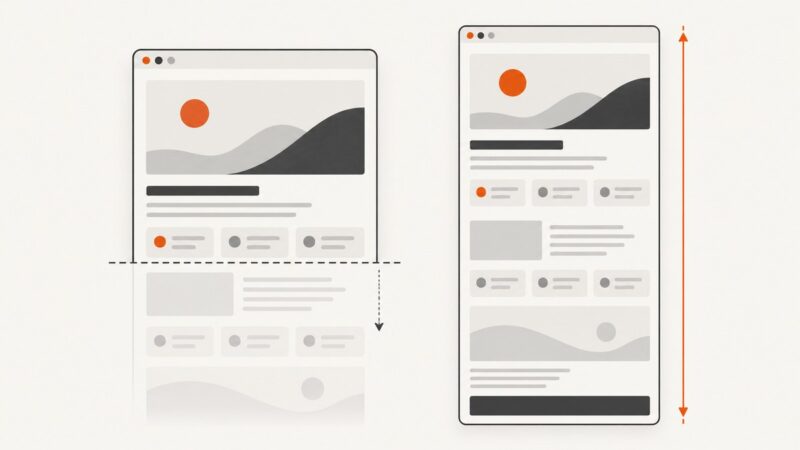
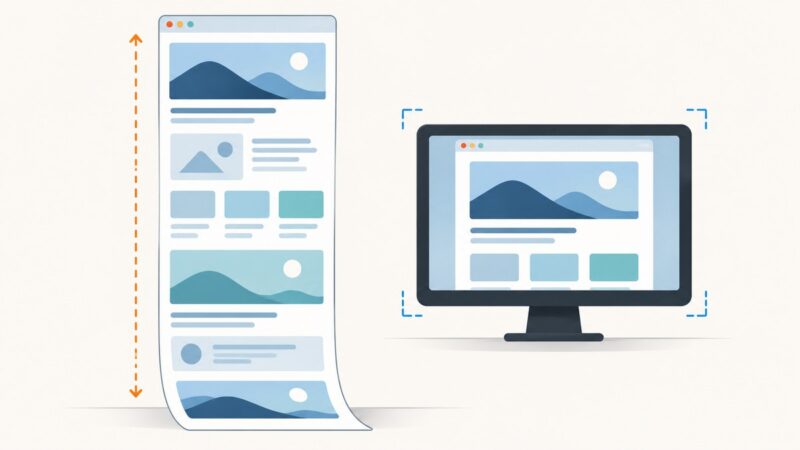
These workflows preserve different things: printing starts from the page, while a screenshot starts from pixels on screen. A web app may have content outside the visible viewport, and its print rendition may not match its interactive screen. Preview the result and choose based on what you need to keep.
Save the web app page as a PDF from Chrome
- Open the web app page in Chrome on Windows. Sign in and navigate to the page or state you need, if applicable.
- Press Ctrl+P to open Chrome’s print flow. Google lists Ctrl+P as the Windows and Linux shortcut.
- In the destination selector, choose Save as PDF if it is available.
- Review the preview and available print settings. Check page breaks, orientation, and whether the content you need appears in the output.
- Choose Save, select a filename and folder, then save the PDF.
The output is a print-oriented version of the page, not a literal capture of the browser window. Chrome’s print settings and preview let you inspect the result before saving. [Source: Google Chrome Help: Print from Chrome.]
When this method works best
- You want a document-like copy of page content.
- You need to inspect or adjust the print layout before creating the file.
- You do not need the browser frame or the exact visible screen composition.
Save the exact visible screen as a PDF
- Arrange the Chrome window and web app so the content you want is visible. Close menus or dialogs you do not want in the capture.
- Press Windows+Shift+S to open the Snipping Tool capture overlay.
- Choose a capture mode and select the area, window, or full screen. Microsoft documents rectangular, window, and full-screen capture modes.
- Open the captured snip in Snipping Tool.
- Choose File > Print, or save the snip and open its print flow from its folder.
- Choose a PDF destination if one is available in the print dialog, review framing and layout, then save.
Microsoft documents the Windows+Shift+S shortcut and printing an open capture. The exact PDF destination label and availability can depend on the Windows setup, so use the destination actually shown by your system. [Source: Microsoft Support: Open Snipping Tool and take a screenshot.]
Pick a capture mode
- Rectangular: select just the visible part of the app you need.
- Window: capture a browser window when the whole window is relevant.
- Full screen: capture everything currently displayed.
For a clean result, choose the capture bounds before taking the snip. Printing an image to PDF can place it differently depending on the print dialog’s layout options, so inspect the preview before saving.
What to check before sharing the PDF
- Content: confirm the page or screen shows the right app state and account data.
- Framing: check that the important content is not clipped and that unwanted browser areas are not included.
- Page breaks: for Chrome print output, check that tables, forms, or long sections have not split awkwardly.
- Destination: if no PDF choice appears, review the destinations offered by your print dialog; availability and labels can vary.
- Privacy: screenshots and PDFs can include account names, customer data, notifications, or other sensitive content. Review before sending.
Developer option: generate a PDF with an API
If you need repeatable captures for a workflow or many URLs, a screenshot API can return a PDF without manually opening Chrome’s print dialog. ScreenshotNeo is a website screenshot API and MCP server for developers. Its API accepts a URL and can return a PDF; see the ScreenshotNeo product page and API documentation.
cURL
curl -G "https://api.screenshotneo.com/v1/shot" -d access_key=YOUR_API_KEY --data-urlencode url=https://stripe.com -o shot.pdfPython
import requests

r = requests.get(
    "https://api.screenshotneo.com/v1/shot",
    params={"access_key": "YOUR_API_KEY", "url": "https://stripe.com", "format": "pdf"},
    timeout=90,
)
r.raise_for_status()
with open("shot.pdf", "wb") as f:
    f.write(r.content)
Node.js
const q = new URLSearchParams({
  access_key: 'YOUR_API_KEY',
  url: 'https://stripe.com',
  format: 'pdf',
});
const res = await fetch(`https://api.screenshotneo.com/v1/shot?${q}`);
if (!res.ok) throw new Error(`Screenshot request failed: ${res.status}`);
await Bun.write('shot.pdf', new Uint8Array(await res.arrayBuffer()));
Replace the example URL with the page you are authorized to capture. Keep your API key on the server or in a protected environment variable; do not expose it in browser code or a public repository. The examples request PDF output using the format=pdf parameter. Review the ScreenshotNeo docs for current request parameters and response details.
Or skip the browser setup
One request can capture a URL as a PDF:
curl -G "https://api.screenshotneo.com/v1/shot" -d access_key=YOUR_API_KEY --data-urlencode url=https://stripe.com -o shot.pdfScreenshotNeo removes cookie banners, newsletter popups, and chat widgets before the shot; each step can be turned off. Bot checks, blank pages, and failed loads are never billed. An MCP server lets AI agents take screenshots. The free plan includes 1,000 screenshots a month with no card; paid plans start at $5 for 3,000. See the documentation for API details. Sign up for free and capture your first 1,000 screenshots a month with no card.
Troubleshooting
| Problem | Likely cause | What to do |
|---|---|---|
| The PDF looks different from the app on screen | Chrome produced a print layout rather than a screen image. | Use the Snipping Tool route when preserving visible appearance matters. |
| Some app content is missing | The content may be outside the visible screen, or it may not appear in the page’s print rendition. | For print output, inspect the preview. For visible-screen output, scroll or resize the window and capture the needed view; a single snip captures only its selected screen bounds. |
| The saved image is cropped or poorly placed in the PDF | The selected area or print layout does not frame the image as intended. | Retake the snip with better bounds and inspect the print preview before saving. |
| No “Save as PDF” destination is visible | Available destination labels vary by Windows configuration and print flow. | Review the destinations shown in the print dialog. If printing a snip, save the image first and check the available print options from its folder. |
| The resulting PDF opens in Chrome | Chrome may be set to open PDFs in its built-in viewer. | Chrome’s PDF documents setting controls whether PDFs open in Chrome or download. See Google Chrome Help: Manage PDFs in Chrome. |
| An API-generated PDF is not created | The request may have an invalid key, URL, or parameter, or the page may fail to load. | Check the request and API response against the ScreenshotNeo docs; handle non-success HTTP responses before writing the response body to a PDF file. |
Reliability, performance, and cost
For a one-off Windows capture, the built-in Chrome and Snipping Tool flows avoid setting up automation. Their output depends on the page’s print behavior or the screen state and selected capture bounds, so preview the PDF before relying on it.
For repeated developer workflows, an API call can be automated and can save the returned PDF directly. ScreenshotNeo offers caching with a TTL you choose, asynchronous jobs with signed webhooks, bulk capture of up to 100 URLs per call, and a usage API. Only clean shots are billed: bot checks or CAPTCHAs, blank pages, timeouts, failed loads, and cache hits cost nothing; responses include X-Page-Verdict and X-Billed headers. Plans are Free: 1,000 per month; Starter: $5 for 3,000; Growth: $15 for 15,000; Pro: $39 for 60,000; Scale: $99 for 250,000; Business: $249 for 1,000,000. Yearly billing gives two months free, and every feature is on every plan. See ScreenshotNeo for plan details.
FAQ
Does Ctrl+P save exactly what I see in Chrome?
No. It opens the print workflow for the page. To preserve the visible screen composition, take a screenshot and print that image to a PDF.
Can I save only part of the app?
Yes. Use Snipping Tool’s rectangular capture mode to select a visible region, then print the captured image to a PDF if your print flow offers a PDF destination.
Can Chrome open the PDF after I save it?
Yes. Chrome includes a PDF viewer, and its PDF documents setting controls whether PDFs open in Chrome or download.
Can I capture a web app page as PDF without a Windows desktop?
A screenshot API can return a PDF from a URL. For example, ScreenshotNeo accepts a URL and supports PDF output; its docs describe the request options.