BlogScreenshots on your device
Screenshot App for KDE Plasma: Spectacle Guide
Spectacle is KDE Plasma’s screenshot app. Learn every capture mode, shortcut, save option, annotation tool, fix and browser-free alternative.
The screenshot app for KDE Plasma is Spectacle. It captures the entire desktop, one monitor, the active window, the window under the pointer, or a rectangular region. You can save, print, copy, annotate, or open a capture in another application. KDE distributes it for Linux through Discover, other AppStream stores, and distribution package managers.
KDE’s Spectacle listing describes it as a desktop screenshot application. The exact menus, shortcuts, and package version depend on your Plasma release and distribution.
Install Spectacle
Use your distribution’s normal software source:
- Discover: Open Discover, search for
Spectacle, and install it. - Another AppStream store: Search for Spectacle and install the package supplied by your distribution.
- Package manager: Search your distribution repositories for a package named
spectacle. The exact command varies by distribution.
The KDE listing showed Spectacle 6.7.5, released September 8, 2026, during the research for this guide. Your distribution may provide a different build.
Take a screenshot in KDE Plasma
Using Spectacle’s window
- Launch Spectacle from the application launcher.
- Choose a capture target: full desktop, a monitor, active window, window under the pointer, or rectangular region.
- For a region, drag over the area and confirm the selection. Press Esc to cancel.
- Capture the image, then save, copy, print, annotate, or open it with another application.
Default keyboard shortcuts
KDE UserBase documents these common defaults:
| Shortcut | Action |
|---|---|
| Shift + Print Screen | Capture the desktop |
| Meta + Print Screen | Capture the active window |
| Meta + Ctrl + Print Screen | Capture the window under the cursor |
| Meta + Shift + Print Screen | Open rectangular-region selection |
Meta may be labeled Super, Start, Windows, or Command on your keyboard. Bindings can be changed by you, your distribution, or a Plasma upgrade. If a shortcut does nothing, check System Settings → Keyboard → Shortcuts and Spectacle’s own shortcut settings. See the KDE shortcut guide and the Spectacle Handbook for version-specific details.
Choose the right capture target
| Target | Use it when | Common edge case |
|---|---|---|
| Entire desktop | You need every visible monitor or the complete workspace. | Multiple-monitor layouts may include all screens or a selected screen depending on the mode and version. |
| One monitor | You want a single display from a multi-monitor setup. | Verify the monitor selection before capturing. |
| Active window | You need the focused application window. | Focus the intended window first; menus and transient popups may disappear when Spectacle opens. |
| Window under pointer | You want a window beneath the mouse without focusing it. | Move the pointer over the target before triggering the shortcut. |
| Rectangular region | You need a precise portion of the screen. | Drag the rectangle, press Enter to capture, or Esc to cancel. |
Save, copy, print, and open captures
Spectacle lets you configure the default save location and filename pattern. You can also copy the screenshot itself or copy its location to the clipboard. If the destination folder or filename is wrong, open Spectacle’s configuration and review the save settings instead of assuming every Plasma installation uses the same defaults.
- Save: Choose an image format and destination, then confirm the filename.
- Copy image: Place the pixels directly on the clipboard for a document, issue, or chat.
- Copy location: Copy the saved file path when another program needs the file name.
- Print: Send the image to an installed printer.
- Open externally: Export or open the image with an application associated with PNG or another installed format.
Menu names can differ between the stable handbook and newer KF6 builds, so use the handbook matching your installed version when an option has moved.
Annotate a screenshot
The annotation editor can add arrows, freehand pen marks, highlights, text boxes, numbers, and smileys. It also provides effects such as shadow, grayscale, and borders. A practical review workflow is:
- Capture the window or region.
- Open the annotation editor.
- Mark the area that needs attention with an arrow or highlight.
- Add a short text label or numbered steps.
- Save a new copy so the original capture remains available.
Spectacle’s Tools menu can expose installed external screen-recording applications. Treat recording as an integration with another application, not as a built-in Spectacle recording mode.
Configuration checklist
- Confirm the capture target before using a global shortcut.
- Set the save folder and filename pattern to a directory you back up or clean regularly.
- Choose whether captures should be copied to the clipboard automatically, if your version offers that setting.
- Review shortcut conflicts in Plasma System Settings.
- Match the handbook to your installed Spectacle release when labels or panels differ.
Troubleshooting Spectacle
| Problem | Likely cause | Fix |
|---|---|---|
| A shortcut does nothing | The binding was changed, disabled, or claimed by another shortcut. | Open System Settings → Keyboard → Shortcuts, locate Spectacle, and assign an unused combination. |
| The wrong window is captured | The active window changed before capture, or the pointer was over another window. | Focus the target first, or use the window-under-pointer mode deliberately. |
| The region selector is still open | The selection has not been confirmed. | Drag the rectangle and press Enter. Press Esc to cancel. |
| The screenshot cannot be found | The save directory or filename pattern differs from your expectation. | Check Spectacle’s save configuration and copy the file location from the application. |
| Annotations are missing | The edited image was not saved after annotation. | Save the annotated copy after closing the editor or exporting it. |
| Menus differ from documentation | You are reading documentation for another Spectacle or Plasma release. | Use the handbook matching your installed build; interface labels are version-sensitive. |
| Only one display appears | You selected a monitor capture rather than the full desktop. | Choose the entire-desktop mode, then capture again. |
Performance, reliability, and privacy
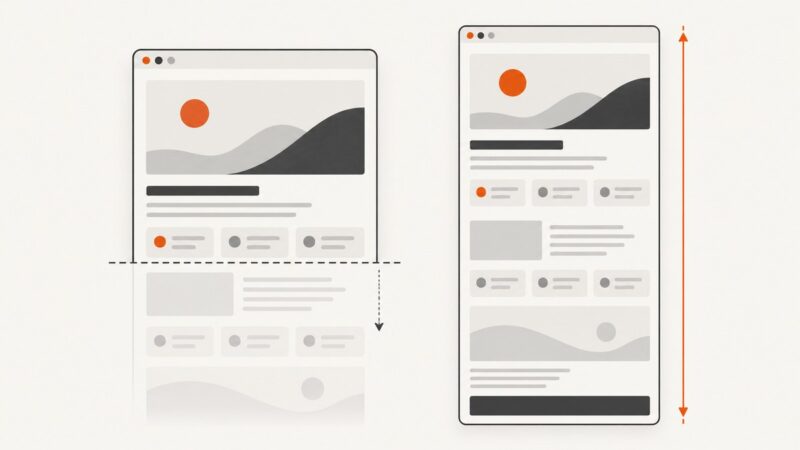
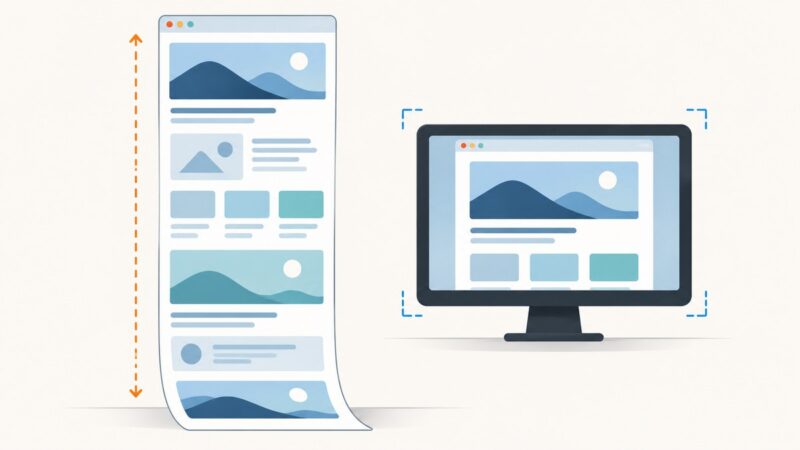
For a fast local capture, use a window or region instead of a full multi-monitor desktop. Full-page browser content is different from a desktop screenshot: Spectacle captures what is rendered on your screen, while content below the fold is not automatically loaded into one tall image. Confirm the target and save location before repeated captures, especially on multi-monitor workstations.
Spectacle writes captures locally through your desktop session. File permissions, available disk space, clipboard managers, display-server behavior, and distribution packaging can affect the result. Keep sensitive content out of screenshots or crop it before sharing.
Or skip the browser setup
If you need a screenshot of a web page rather than your KDE desktop, ScreenshotNeo provides a one-request API and an MCP server for AI agents. The API can return PNG, JPEG, WebP, or PDF and supports full-page captures, element selectors, device presets, dark mode, custom CSS and JavaScript, waits, request blocking, headers, cookies, user agents, geolocation, resizing, caching, signed links, asynchronous jobs, bulk capture, and usage reporting.
curl -G "https://api.screenshotneo.com/v1/shot" -d access_key=YOUR_API_KEY --data-urlencode url=https://stripe.com -o shot.webpimport requests
r = requests.get("https://api.screenshotneo.com/v1/shot", params={"access_key": "YOUR_API_KEY", "url": "https://stripe.com"}, timeout=90)
open("shot.webp", "wb").write(r.content)const q = new URLSearchParams({ access_key: 'YOUR_API_KEY', url: 'https://stripe.com' });
const res = await fetch(`https://api.screenshotneo.com/v1/shot?${q}`);See the ScreenshotNeo API documentation for authentication and options. Cookie banners, newsletter popups, and chat widgets are removed before the shot. Bot checks, blank pages, failed loads, timeouts, and cache hits are not billed, and the response identifies the page verdict and billing status. Its MCP server lets Claude, Cursor, and other MCP clients call take_screenshot, get_page_info, and capture_pdf. The Free plan includes 1,000 screenshots per month with no card; paid plans start at $5 for 3,000 shots.
Create a free ScreenshotNeo account and start with the included 1,000 monthly screenshots.
FAQ
What is KDE Plasma’s screenshot app called?
It is Spectacle, KDE’s application for capturing and editing desktop screenshots.
Can Spectacle capture one window?
Yes. Use active-window capture or window-under-pointer capture.
How do I select part of the screen?
Open rectangular selection, drag the required area, and press Enter. Press Esc to cancel.
Can Spectacle annotate images?
Yes. Its editor includes arrows, pen marks, highlights, text, numbers, smileys, shadows, grayscale, and borders.
Are Spectacle’s shortcuts identical on every Linux system?
No. They are defaults that can vary by Plasma release, distribution, and user configuration. Check System Settings if a shortcut fails.
Does Spectacle record video?
Its Tools menu can launch installed external screen-recording applications. Recording is not presented as an intrinsic Spectacle capture mode.