BlogScreenshots on your device
How to Capture a Webpage Screenshot with the Browser Address Bar Included
Capture the browser window to show a webpage and its address bar in one screenshot. Follow the Windows and Mac steps, then check what the image reveals.
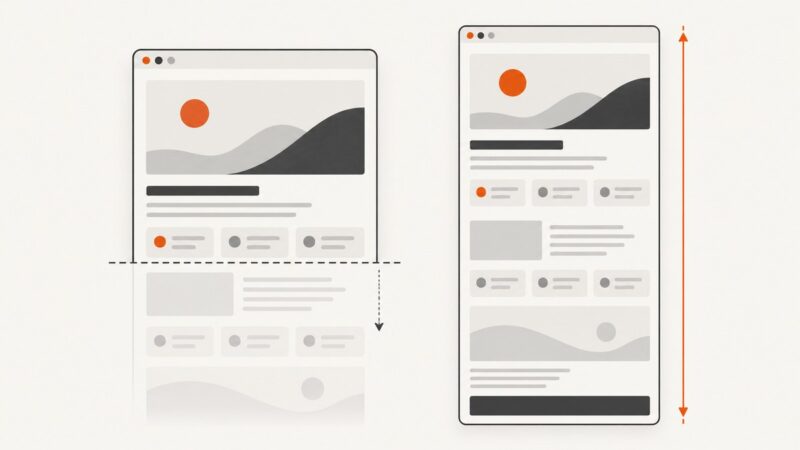
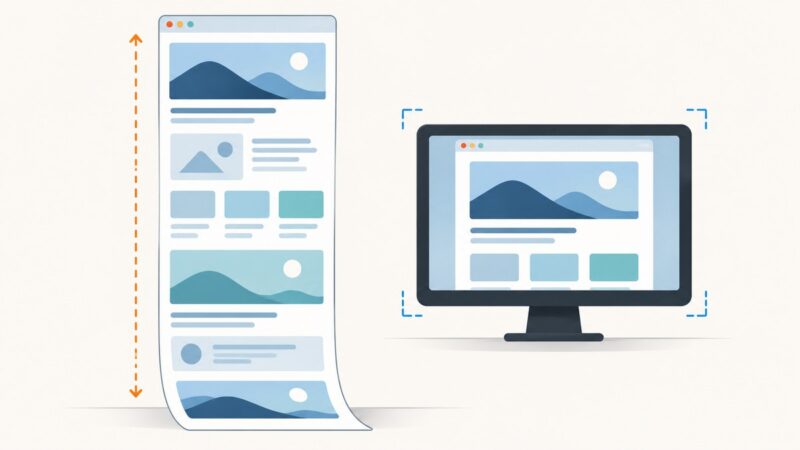
To include a webpage’s address bar in a screenshot, capture the browser window with your computer’s screenshot tool. The address bar is part of the browser interface. A browser’s full-page screenshot captures webpage content, which is useful for long pages but does not show the browser controls.
Use a window capture when you want the browser and its visible controls without most of the desktop. Use a full-screen capture if other desktop context matters, or a region capture if you want to frame the browser tightly. The exact menus can vary by operating system version.
Choose the right capture method
| Your goal | Use | What appears |
|---|---|---|
| Show the address bar and one browser window | Operating system window capture | The selected browser window, including its visible controls |
| Show the browser along with desktop context | Full-screen capture | Everything visible on the display |
| Show only a carefully framed part of the display | Region capture | The area you select; include both the address bar and page |
| Capture a long page beyond the visible viewport | Browser full-page screenshot | Webpage content; browser chrome such as the address bar is not the capture target |
Windows 10 and 11: capture the browser window
- Open the webpage and arrange the browser so the address bar and relevant content are visible.
- Press Windows + Shift + S to open Snipping Tool.
- Choose Window mode, then select the browser window.
- Review the captured image and save or copy it using the Snipping Tool controls.
To capture the entire display, choose Full screen instead. Microsoft also documents the Print Screen key as a way to capture the entire screen. Window capture is generally the more focused choice when only the browser matters.
macOS: capture the browser window
- Open the page and position the browser so the URL and the content you want to show are visible.
- Press Shift + Command + 4, then press Space to switch to window capture.
- Move the pointer over the browser window and click it.
- Open the resulting screenshot and confirm the address bar and page are legible.
To capture the whole display, press Shift + Command + 3. To select a portion of the screen, press Shift + Command + 4 and drag over the area. While using window capture, hold Option as you click to omit the window shadow.
How do I capture the webpage and URL in one screenshot?
Use the operating system’s window capture. Make sure the browser’s address bar displays the URL you want people to see, then capture the browser window. If you need to show browser tabs too, leave the tab strip visible and use window capture. Before sharing, inspect the image for readable URL text and any unrelated private information.
When a browser full-page screenshot is the better choice
Browser screenshot tools are useful when you need page content below the visible viewport. Firefox offers captures of a selected region, a page part, the full page, or the visible area. Microsoft Edge’s Screenshot feature supports a full webpage or selected area, and Microsoft lists Ctrl + Shift + S as a shortcut to access it. Menu labels and availability may vary with browser version.
These page tools solve a different problem from showing the address bar: they capture webpage content, including content outside the viewport, while the operating system’s window or screen capture is the appropriate method for including browser controls.
Check the screenshot before sharing
- Confirm the address bar is visible and the URL is readable.
- Make sure the relevant page content is in frame and large enough to inspect.
- Look for private tabs, bookmarks, notifications, account details, or unrelated desktop material.
- If the full desktop is visible, crop to the useful area when appropriate, while preserving context needed by the recipient.
Troubleshooting
The address bar is missing
You likely used a browser page-capture feature, which captures webpage content, or selected a region below the browser controls. Repeat the capture using the operating system’s window mode, or select a region that includes the top of the browser.
The URL is too small to read
Increase the browser window size or use a tighter capture that still includes the address bar and relevant page. Check the saved image at its intended viewing size before sending it.
The screenshot includes too much of the desktop
Choose the browser window instead of full screen. On macOS, use window capture; on Windows, choose Window mode in Snipping Tool.
The screenshot cuts off content you wanted to show
A window capture only includes what is visible in the browser window. Scroll to the relevant section and capture it, or use the browser’s full-page screenshot when the address bar is not needed.
A shortcut does not open the expected capture mode
Check that you are using the shortcut for the operating system and browser feature described above. Browser tools and menus can change between versions; use the operating system’s built-in screenshot controls if a browser shortcut differs.
Or skip the browser setup
If you need a clean webpage image for a product workflow, report, or automated capture, ScreenshotNeo is a website screenshot API and MCP server. It captures webpage content, not the browser’s address bar or tabs, so use the desktop steps above when browser chrome must appear. See the API documentation.
curl -G "https://api.screenshotneo.com/v1/shot" -d access_key=YOUR_API_KEY --data-urlencode url=https://stripe.com -o shot.webpimport requests
r = requests.get("https://api.screenshotneo.com/v1/shot", params={"access_key": "YOUR_API_KEY", "url": "https://stripe.com"}, timeout=90)
open("shot.webp", "wb").write(r.content)const q = new URLSearchParams({ access_key: 'YOUR_API_KEY', url: 'https://stripe.com' });
const res = await fetch(`https://api.screenshotneo.com/v1/shot?${q}`);ScreenshotNeo accepts cookie and consent banners before capture and removes more than 60 known consent platforms, newsletter popups, and chat widgets; each cleanup step can be turned off. Bot checks, blank pages, failed loads, timeouts, and cache hits are not billed, and response headers identify the page verdict and billing status. Its MCP server provides screenshot, page information, and PDF capture tools for AI agents. The free plan includes 1,000 screenshots a month with no card; paid plans start at $5 for 3,000 screenshots. These are webpage captures, so the browser’s address bar is not included.
Sign up for 1,000 free screenshots a month, with no card required.
FAQ
Can I show browser tabs and the address bar together?
Yes. Capture the browser window while its tab strip and address bar are visible.
Can a full-page screenshot include the browser bar?
A browser full-page capture is for webpage content. Capture the browser window or screen to show its controls.
Should I use window capture or full screen?
Use window capture to focus on one browser. Use full screen when the surrounding desktop is part of the evidence or context.