BlogScreenshots on your device
How to Screenshot a Website in Chrome on Ubuntu from a Windows PC
Capture Chrome on Ubuntu from a Windows PC, whether Ubuntu runs locally or remotely. Learn the difference between a desktop screenshot and a full-page capture.
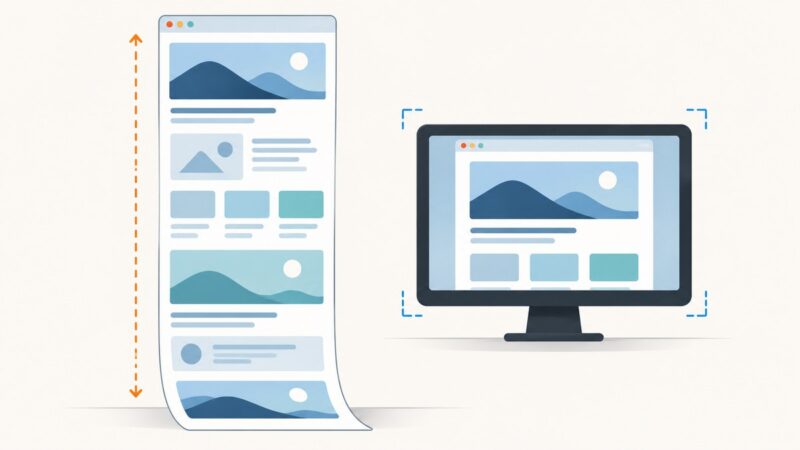
To screenshot a website in Chrome on Ubuntu from a Windows PC, first determine where Ubuntu is running. If it is the same computer in a virtual machine or dual-boot setup, use Ubuntu’s screenshot controls while Ubuntu is active. If Ubuntu is on another computer, connect to that desktop remotely and capture from the Ubuntu session. The Ubuntu screenshot tool captures the visible screen, window, or selected region; use Chrome DevTools when you need a full-page image beyond the visible viewport.
1. Capture the visible Chrome window in Ubuntu
Use Ubuntu’s built-in screenshot interface to capture the browser as it appears on screen. This is the simplest option for a visible page, a browser window, or a cropped region.
- Open the page in Chrome on Ubuntu and bring the Chrome window to the front.
- Press Print on the Ubuntu desktop keyboard. Ubuntu’s screenshot overlay opens with options for a selection, the screen, or a window.
- Choose Window to capture Chrome without the rest of the desktop, or Selection to capture only a portion of the screen. Choose the screen option if you need the entire desktop.
- Complete the capture in the overlay.
Ubuntu documents that the image is saved automatically in ~/Pictures/Screenshots, with a filename beginning with “Screenshot” and including the date and time. It is also copied to the clipboard, so you can paste it into an editor or message. See the official Ubuntu screenshot and screencast instructions.
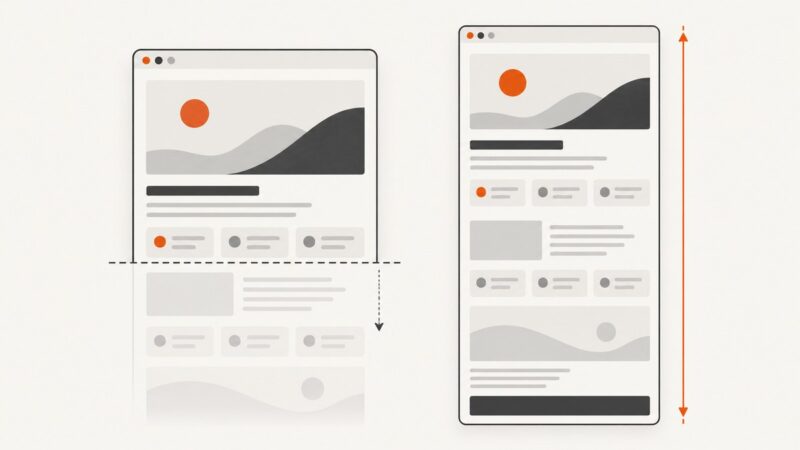
This captures rendered pixels in the chosen screen area. It does not automatically include content below the webpage’s visible fold. To capture a specific section lower down, scroll to it and capture again, or use the full-page method below.
2. Capture a full webpage with Chrome DevTools
Chrome’s DevTools command menu may offer a full-size screenshot command. The steps below come from a Chrome Community response, so treat the command as version-sensitive rather than guaranteed across all Chrome builds.
- Open the target page in Chrome on Ubuntu.
- Open DevTools with Ctrl+Shift+I. Depending on the setup, F12 may also open DevTools.
- With DevTools open, press Ctrl+Shift+P to open its command menu.
- Search for
capture full size screenshotand select the matching command if it appears. - Check Chrome’s download location for the resulting image.
The shortcut reference from Google Chrome Help documents Developer Tools shortcuts, including Ctrl+Shift+J and F12 on Windows and Linux, but it does not document the full-size capture command. For that command, see the Chrome Community discussion and verify what your installed version offers.
A full-page image can be very tall. If you only need a shareable record of the page as a document, use Chrome’s print flow instead: press Ctrl+P, choose a destination and print settings, then save or print. That produces a print output such as a PDF; it is not a screenshot image.
3. If Ubuntu is on another computer
When Ubuntu runs on a separate Linux computer, you can use Chrome Remote Desktop from the Windows PC to access it. Google lists Linux as a supported host platform. Open Chrome Remote Desktop, select the Ubuntu computer, and enter its PIN. Google says remote sessions are fully encrypted; see its remote access instructions.
Once connected, take the screenshot in the Ubuntu desktop session using the Ubuntu screenshot overlay. Keyboard forwarding depends on the remote client and session, and Google’s instructions do not promise that a Windows Print Screen press will invoke Ubuntu’s overlay. If the key does not work, use Ubuntu’s system menu screenshot control or any capture control provided by the remote interface.
A Windows screenshot of the remote desktop window is a different result: it can include the remote client’s borders and controls, and may show only the remote viewport. Capturing within Ubuntu produces an image of the Ubuntu desktop or Chrome window itself.
4. Choose the right capture for the result you need
| Need | Method | What you get |
|---|---|---|
| Only the visible Chrome window | Ubuntu screenshot overlay → Window | An image of the browser window as currently displayed |
| A crop of the page or browser | Ubuntu screenshot overlay → Selection | An image of the selected screen area |
| The full desktop | Ubuntu screenshot overlay → Screen | An image that can include other windows and desktop areas |
| The whole webpage, including below the fold | DevTools command menu → “capture full size screenshot,” if available | A full-page image; availability can vary by Chrome version |
| A printable page record | Chrome → Ctrl+P | A print output such as a PDF, not a screenshot |
| Ubuntu is on a separate computer | Connect remotely, then capture inside Ubuntu | An Ubuntu screenshot without relying on a Windows capture of the remote client |
5. Common problems and fixes
Pressing Print does nothing
Make sure Ubuntu has focus and that the key press reaches the Ubuntu session. On a remote connection, the Windows client may intercept the key or fail to forward it. Use Ubuntu’s system menu screenshot control, or the remote client’s capture control if available. On older Ubuntu versions or customized desktops, shortcut assignments may differ from the current Ubuntu documentation.
The screenshot stops at the visible part of the page
The Ubuntu overlay captures the screen, window, or selected region; it does not scroll the webpage. Use the DevTools full-size screenshot command if your Chrome version offers it, or capture separate visible sections. Printing to PDF is another option when a document is acceptable.
The full-size screenshot command is missing
The command is documented here through community advice, not the official Chrome shortcut list, and may vary across versions. Confirm that DevTools is open, use Ctrl+Shift+P inside DevTools, and search for the exact phrase. If it is still absent, use Ubuntu’s visible capture or Chrome’s print flow for a PDF.
The saved image is hard to find
For the Ubuntu overlay, look in ~/Pictures/Screenshots. The saved name begins with “Screenshot” and includes the date and time. The image may also be on the clipboard for immediate pasting.
The capture shows remote desktop controls
You likely captured the Windows remote-client window. Start the screenshot from the Ubuntu desktop session to capture the Ubuntu screen or Chrome window without the Windows client framing.
6. Practical quality and reliability notes
- For a clean browser-only image: maximize or size Chrome as needed, close unrelated tabs or overlays, and use the Window capture option.
- For a full-page capture: remember that the DevTools route is version-sensitive. Check the output to confirm it includes the page sections you need.
- For dynamic pages: wait for images, fonts, or other page content to finish loading before capture. The screenshot reflects what had rendered at capture time.
- For remote sessions: network delay and keyboard forwarding can affect interaction. Capture inside Ubuntu when the goal is an image of the Ubuntu page rather than the remote viewing window.
- For long pages: a full-page image can be unwieldy to view or share. Use PDF printing when page layout and document navigation matter more than image pixels.
Ubuntu’s built-in screenshot method requires no extra screenshot service or browser setup. Chrome DevTools is also built into the browser, but the specific full-page command should be treated as an available-if-present workflow.
7. Or skip the browser setup
If you need a webpage image without setting up a browser capture workflow on Ubuntu, ScreenshotNeo is a website screenshot API and MCP server. Its one-call API can return a screenshot or PDF; the examples below use the documented API base and a sample target URL. See the ScreenshotNeo API documentation for options and setup.
curl -G "https://api.screenshotneo.com/v1/shot" -d access_key=YOUR_API_KEY --data-urlencode url=https://stripe.com -o shot.webpimport requests
r = requests.get("https://api.screenshotneo.com/v1/shot", params={"access_key": "YOUR_API_KEY", "url": "https://stripe.com"}, timeout=90)
open("shot.webp", "wb").write(r.content)const q = new URLSearchParams({ access_key: 'YOUR_API_KEY', url: 'https://stripe.com' });
const res = await fetch(`https://api.screenshotneo.com/v1/shot?${q}`);- Cookie banners, popups, and chat widgets are removed before the shot.
- Bot checks, blank pages, and failed loads are never billed.
- An MCP server lets AI agents use screenshot tools.
- 1,000 screenshots a month are free with no card; paid plans start at $5 for 3,000.
Sign up for 1,000 free screenshots a month, with no card required.
Frequently asked questions
Does Ubuntu save a screenshot automatically?
Yes. Ubuntu documents automatic saving to ~/Pictures/Screenshots, and says the image is also copied to the clipboard.
Can I use this method if Ubuntu runs in a virtual machine?
Yes. Open the Ubuntu desktop in the virtual machine and use its screenshot overlay. The exact key forwarding can depend on the virtualization app, so use Ubuntu’s system menu if Print is intercepted.
Is a full-page screenshot the same as saving to PDF?
No. A full-page screenshot is an image of rendered pixels. Chrome’s print flow creates a print output, commonly a PDF, with document layout rather than a single screenshot image.
Can I capture only the webpage and not Chrome’s browser controls?
The Ubuntu Window option captures the Chrome window, which includes browser controls. Use a selection around the page area or a full-page webpage capture command when available to omit them.