BlogScreenshots on your device
How to Screenshot Websites with a COM API
Capture a browser window or page element from Windows COM automation, handle desktop limitations, and compare it with a managed screenshot API.
Short answer: use Windows UI Automation through its COM interfaces to find the browser window or target element, then capture the visible bounds to a PNG. The capture step depends on the backend you choose, and it usually needs a usable interactive desktop. A locked session, secure desktop, minimized window, RDP disconnect, or VM display can make an otherwise correct script fail.
For unattended jobs, a managed browser API is often simpler because it renders the page independently of your desktop session. This guide shows the Windows COM approach first, then provides a hosted alternative.
What a COM screenshot workflow does
COM is the component interface layer; it does not define one universal website-screenshot function. A practical Windows workflow separates four operations:
- Connect to Microsoft UI Automation and inspect desktop applications.
- Find the browser window or a descendant element.
- Read that element’s screen bounds.
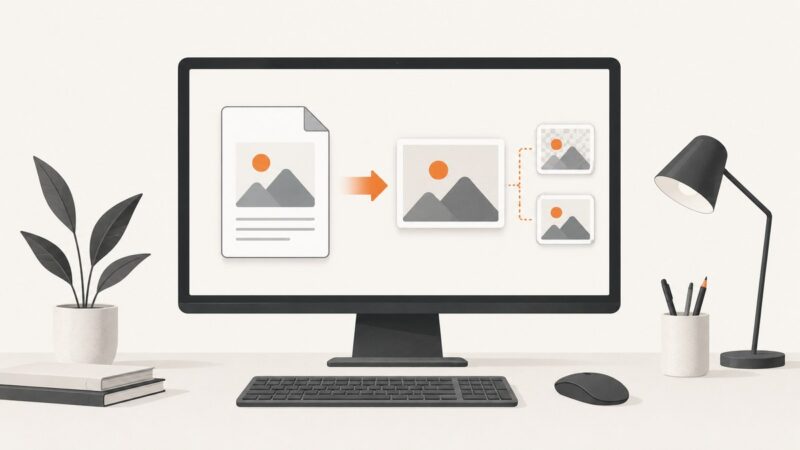
- Copy those visible pixels to a PNG file.
Microsoft documents UI Automation for inspecting and interacting with Windows applications, and its screenshot tooling captures a window or element as PNG. See the UI Automation overview and Microsoft’s screenshot guidance for the Windows Automation API.
When COM is the right tool
| Requirement | COM and UI Automation | Managed screenshot API |
|---|---|---|
| Capture the pixels a user currently sees | Good fit | Usually renders separately |
| Run on a locked or headless server | Fragile; needs an interactive desktop | Good fit |
| Inspect native Windows controls | Strong | Usually unavailable |
| Wait for JavaScript, fonts, and lazy images | You must coordinate the browser | Usually built in |
| Capture many URLs concurrently | Requires session management | Designed for this use case |
Prerequisites and desktop constraints
- Windows with a browser installed.
- PowerShell 5+ or PowerShell 7.
- An interactive user session with the browser window visible.
- Permission to automate the browser and write to the output directory.
Screenshot capture can require a usable interactive desktop. Microsoft notes that the screenshot operation can take an exclusive turn and may restore a minimized target or bring it to the foreground when frame capture is unavailable. Locked or secure desktops can block input-injecting automation, and behavior differs between a normal desktop, CI, RDP, and VM sessions. See the UI Automation security considerations.
Complete PowerShell example: capture a browser window
The following script uses the UI Automation COM object to locate a top-level browser window by title, obtains its bounding rectangle, and copies the visible screen region into a PNG. It is deliberately explicit about each step so failures are easy to diagnose.
$ErrorActionPreference = 'Stop'

param(
    [Parameter(Mandatory = $true)]
    [string]$TitlePattern,
    [string]$OutputPath = "$(Join-Path (Get-Location) 'browser-shot.png')"
)

Add-Type -AssemblyName System.Drawing
Add-Type @"
using System;
using System.Runtime.InteropServices;
public static class Win32 {
    [DllImport("user32.dll", SetLastError=true)]
    public static extern bool GetWindowRect(IntPtr hWnd, out RECT rect);
    [StructLayout(LayoutKind.Sequential)]
    public struct RECT { public int Left; public int Top; public int Right; public int Bottom; }
}
"@

# UI Automation is exposed through a COM ProgID on Windows.
$automation = New-Object -ComObject UIAutomationClient.CUIAutomation
$root = $automation.GetRootElement()
$condition = $automation.CreatePropertyCondition(
    [System.Windows.Automation.AutomationElement]::NameProperty,
    $TitlePattern
)
$window = $root.FindFirst(
    [System.Windows.Automation.TreeScope]::Children,
    $condition
)

if ($null -eq $window) {
    throw "No top-level window matched title '$TitlePattern'."
}

$hwnd = [IntPtr]$window.Current.NativeWindowHandle
if ($hwnd -eq [IntPtr]::Zero) {
    throw "The matched element has no native window handle."
}

$rect = New-Object Win32+RECT
if (-not [Win32]::GetWindowRect($hwnd, [ref]$rect)) {
    throw "GetWindowRect failed for handle $hwnd."
}

$width = $rect.Right - $rect.Left
$height = $rect.Bottom - $rect.Top
if ($width -le 0 -or $height -le 0) {
    throw "The window has an invalid or hidden rectangle: ${width}x${height}."
}

$bitmap = New-Object System.Drawing.Bitmap $width, $height
$graphics = [System.Drawing.Graphics]::FromImage($bitmap)
try {
    $graphics.CopyFromScreen(
        $rect.Left, $rect.Top, 0, 0,
        [System.Drawing.Size]::new($width, $height)
    )
    $fullPath = [System.IO.Path]::GetFullPath($OutputPath)
    $parent = [System.IO.Path]::GetDirectoryName($fullPath)
    if ($parent -and -not (Test-Path $parent)) {
        New-Item -ItemType Directory -Path $parent | Out-Null
    }
    $bitmap.Save($fullPath, [System.Drawing.Imaging.ImageFormat]::Png)
    Write-Output "Saved $fullPath ($width x $height)."
}
finally {
    $graphics.Dispose()
    $bitmap.Dispose()
}
Run it after opening the target page and leaving the browser visible:
powershell -ExecutionPolicy Bypass -File .\capture-window.ps1 -TitlePattern "Example Domain" -OutputPath .\shots\example.pngBrowser titles vary. Use a title shown in the taskbar or inspect the UI Automation tree to choose a stable value. For production code, prefer a unique process and window relationship over a title that changes with navigation.
Capturing an element instead of the whole window
UI Automation can locate descendants such as a document, toolbar, or control. The capture backend still needs screen coordinates. The pattern is:
- Find the browser top-level element.
- Search its descendants with a property condition such as control type, name, or automation ID.
- Read the descendant’s bounding rectangle.
- Copy that rectangle to a bitmap.
Element bounds may be empty when the element is virtualized, scrolled out of view, covered, or rendered inside a surface that does not expose ordinary child controls. In those cases, scroll the element into view, wait for layout, or capture the browser window.
Making the workflow reliable
Wait for navigation and layout
Do not capture immediately after sending a URL. Wait for the browser document to report the expected title or URL, then add a short layout delay when fonts, animations, or lazy images are involved. A stronger approach is to poll for a known UI Automation element and require stable bounds across two successive reads.
Control window state
Keep the window on a visible monitor, restore it if minimized, and avoid covering it with another application. A locked workstation or secure desktop can prevent the pixels or input events your capture depends on.
Use deterministic output names
Include a job ID and timestamp in the filename, write to a temporary path first, then rename after the PNG is complete. This prevents downstream systems from reading a partially written file.
Handle DPI and multiple monitors
Windows display scaling changes the relationship between logical UI coordinates and physical pixels. Test at every scale used by your workers. Multi-monitor layouts can also produce negative screen coordinates; do not assume that left and top are positive.
Common errors and fixes
| Symptom | Likely cause | Fix |
|---|---|---|
| No window found | Title changed, wrong scope, or browser not started | Log top-level element names, wait for navigation, and match a stable property. |
| Black or empty image | Window is minimized, covered, locked, or rendered by an unsupported surface | Restore and foreground the window; run in an interactive session; capture the full window instead of a child element. |
| Access denied or COM activation failure | Session policy, integrity level, or desktop isolation | Run automation and browser at compatible privileges and verify the worker session is interactive. |
| Wrong size | DPI scaling or browser chrome included | Use physical bounds, record the monitor scale, and choose the document element when available. |
| Partially loaded page | Capture occurred before scripts, fonts, or images finished | Wait for a known element, network completion signal, or a measured delay; disable animations where possible. |
| Works locally but fails in CI | CI runner is locked, headless, or disconnected from RDP | Provision a persistent interactive desktop or use a hosted browser renderer. |
Performance, reliability, and cost considerations
- Performance: window capture is local and avoids an upload, but browser startup, page loading, and waits dominate runtime.
- Reliability: desktop state is part of your dependency chain. Reboots, RDP disconnects, display changes, and focus stealing can alter results.
- Parallelism: multiple visible browser windows compete for focus and screen space. Isolate workers or use separate sessions.
- Security: browser cookies and authenticated pages are present in the desktop session. Use a dedicated account and protect output files.
- Cost: COM has no per-request vendor fee, but you maintain Windows workers, browsers, sessions, and retry logic.
Or skip the browser setup
ScreenshotNeo provides a website screenshot API and MCP server. One GET request returns a PNG, JPEG, WebP, or PDF, while the service handles browser rendering for you.
curl -G "https://api.screenshotneo.com/v1/shot" -d access_key=YOUR_API_KEY --data-urlencode url=https://stripe.com -o shot.webpimport requests
r = requests.get("https://api.screenshotneo.com/v1/shot", params={"access_key": "YOUR_API_KEY", "url": "https://stripe.com"}, timeout=90)
open("shot.webp", "wb").write(r.content)const q = new URLSearchParams({ access_key: 'YOUR_API_KEY', url: 'https://stripe.com' });
const res = await fetch(`https://api.screenshotneo.com/v1/shot?${q}`);See the ScreenshotNeo documentation for request options. Cookie and consent banners, newsletter popups, and chat widgets are removed before the shot. Bot checks, blank pages, failed loads, timeouts, and cache hits are not billed; response headers identify the page verdict and billing status. An MCP server lets Claude, Cursor, and other MCP clients call take_screenshot, get_page_info, and capture_pdf. The free plan includes 1,000 screenshots per month without a card; paid plans start at $5 for 3,000 shots. Create a free ScreenshotNeo account.
FAQ
Does COM itself render a webpage?
No. COM exposes component interfaces. The browser renders the page; UI Automation helps you locate its window or controls; a capture backend copies the resulting pixels.
Can this run on a locked Windows server?
It may fail because capture and input automation can depend on an interactive desktop. Use a persistent desktop session or a managed renderer for unattended jobs.
Can I capture a full webpage longer than the viewport?
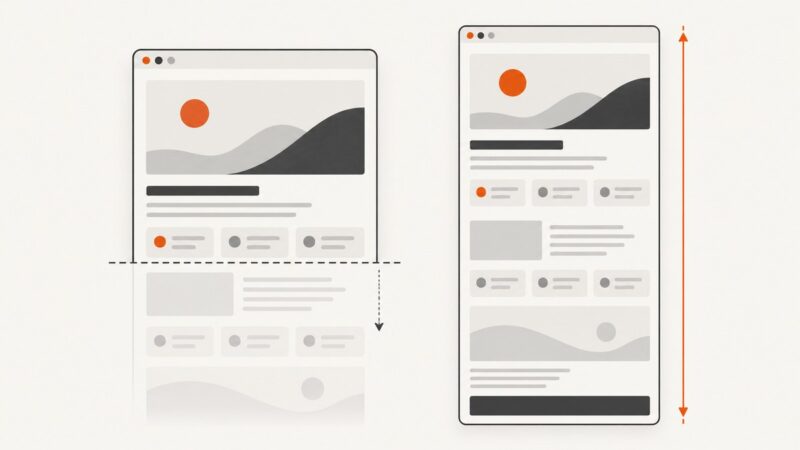
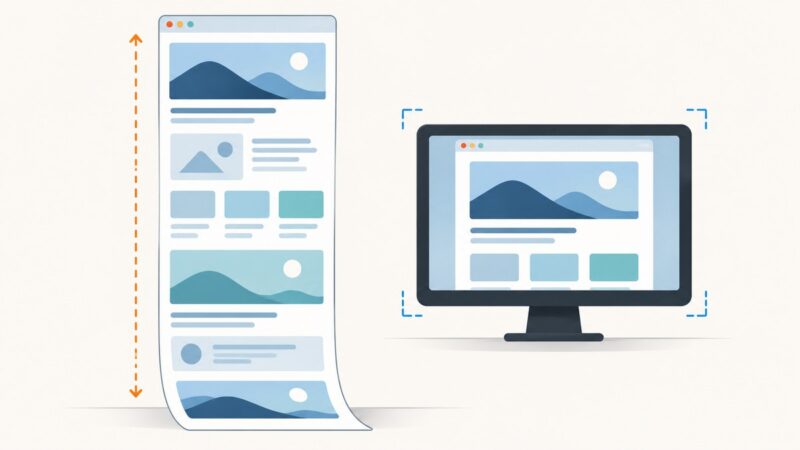
A screen copy captures visible pixels. Full-page output requires browser scrolling and stitching or a renderer that supports full-page capture.
How do I avoid capturing browser chrome?
Locate the document or content element and capture its bounds. If that element is unavailable, crop the window image after capture, accepting that layout and DPI changes can affect the crop.
When should I replace COM automation?
Replace it when you need headless execution, large batches, consistent rendering across workers, or full-page and PDF output without maintaining interactive Windows sessions.