secp224r1: Security and TLS Elliptic Curve Support
Learn what secp224r1 means, where TLS 1.2 supports it, why TLS 1.3 omits it, and how to verify your actual cryptographic stack.

Short answer: secp224r1 is the SECG name for the NIST P-224 elliptic curve. It was specified for elliptic-curve cryptography in TLS 1.2 and earlier through RFC 8422, which is now obsolete. It is not listed as a named group in the current TLS 1.3 specification, RFC 9846. That standards boundary matters: a server or library that supports secp224r1 for an older TLS connection does not thereby support it in TLS 1.3.
For a deployment decision, check three things separately: the TLS protocol version, the named groups allowed by your security policy, and the implementation support in your client, server, cryptographic provider, certificate workflow and operating system. The standards define the first two; they do not guarantee that every current product behaves identically.
1. What secp224r1 means
secp224r1 and NIST P-224 are two names for the same curve. “secp” refers to a Standards for Efficient Cryptography Group naming convention; “224” identifies the field size; and “r1” identifies the particular recommended-curve revision. NIST SP 800-186 specifies P-224 as a short-Weierstrass curve over a prime field and records its domain parameters. The field prime is 2^224 - 2^96 + 1, so the field parameter is 224 bits. NIST’s standard says: “The elliptic curve P-224 is a Weierstrass curve.” Read the P-224 definition in NIST SP 800-186.
The name equivalence is useful when reading configuration files. A tool may expose the curve as secp224r1, nistp224 or P-224. Those labels refer to the same domain parameters when the tool implements the standard mapping. Do not confuse the curve name with a certificate signature algorithm: a certificate can contain an EC public key, while the handshake’s key exchange group and the certificate’s signing algorithm are negotiated through related but distinct mechanisms.
2. Does secp224r1 work with TLS 1.3?
It is not a TLS 1.3 named group in RFC 9846. The TLS 1.3 specification lists secp256r1, secp384r1, secp521r1, X25519 and X448 in its elliptic-curve group list. secp224r1 is absent, and RFC 9846 says obsolete curve groups must not be offered or negotiated in TLS 1.3. Therefore, an implementation conforming to that named-group registry cannot negotiate secp224r1 as a TLS 1.3 key-exchange group.
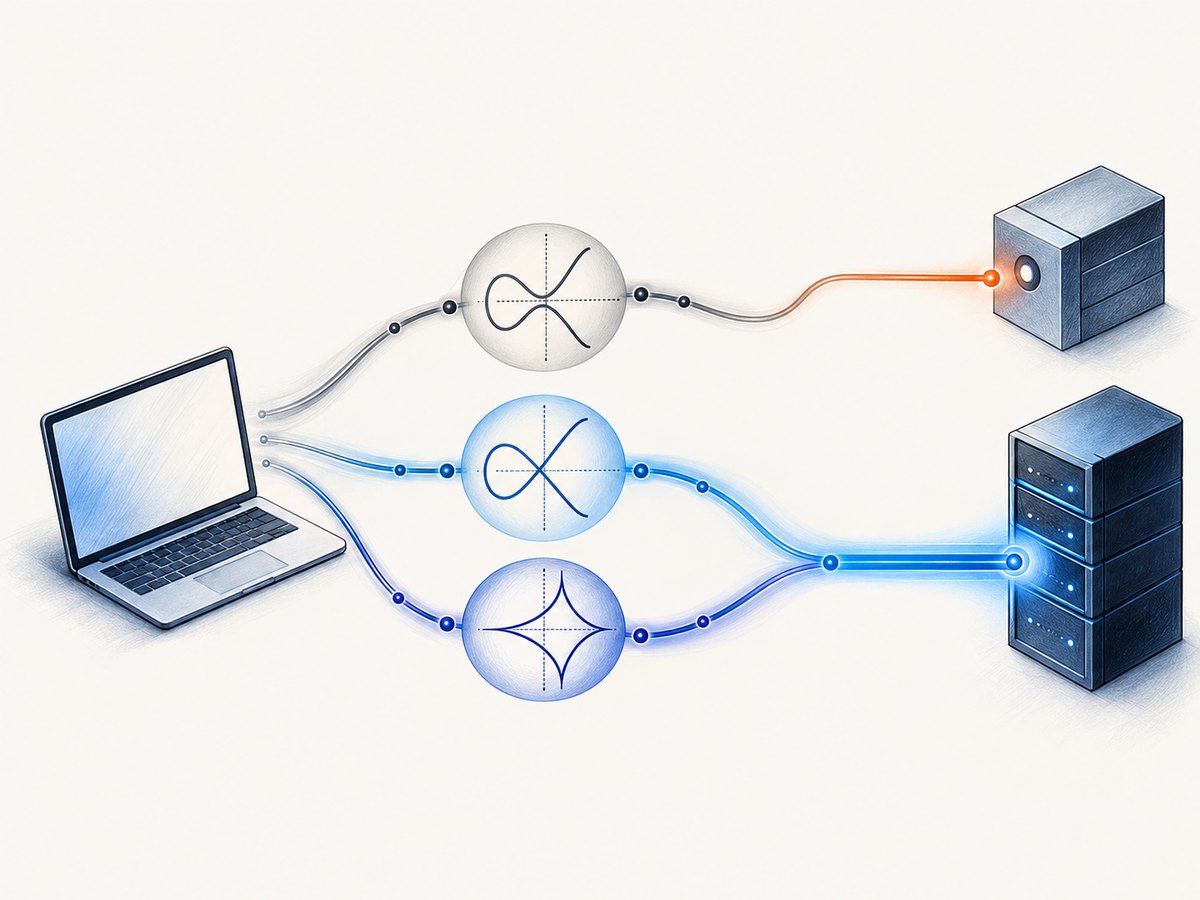
That does not erase historical support. RFC 8422 covers ECC cipher suites for TLS 1.2 and earlier and includes the secp224r1/P-224 mapping. RFC 8422 has since been obsoleted, so use it to understand legacy TLS behavior rather than as a recommendation for a new TLS deployment. See the RFC 8422 record and the current RFC 9846 record.
| Question | What the standards establish | What you must verify locally |
|---|---|---|
| Is secp224r1 the same as P-224? | Yes, they are names for the same curve. | How your tool spells the name. |
| Can TLS 1.2 use it? | RFC 8422 specifies ECC support for TLS 1.2 and earlier, including the mapping. | Whether your selected implementation enables it. |
| Can TLS 1.3 negotiate it? | It is not listed as a TLS 1.3 named group in RFC 9846. | Whether a nonstandard or transitional stack has special behavior; do not assume interoperability. |
| Is it suitable for every new system? | No universal recommendation follows from the parameter specification alone. | Your policy, profile, provider and interoperability requirements. |
3. TLS version and named-group negotiation
During an elliptic-curve handshake, the client advertises supported groups and the server selects a mutually usable group. The exact extension and cipher-suite details differ between TLS versions. In TLS 1.2, ECC cipher suites and curve mappings are described by RFC 8422. In TLS 1.3, the named-group registry and key-share rules come from RFC 9846. A certificate’s EC key does not force the handshake to use the same curve: the key-share group, certificate key type and signature scheme each need to satisfy the implementation and policy.
A practical consequence is that enabling a P-224 certificate key does not make a TLS 1.3 connection “use P-224.” If the endpoint requires TLS 1.3, plan around the groups in RFC 9846 and your approved profile. If you are maintaining a TLS 1.2-only legacy endpoint, confirm whether the provider still permits secp224r1 and whether clients can negotiate it.
4. Verify support with OpenSSL
OpenSSL output is useful evidence about one local build, provider configuration and peer. It is not a standards claim about every library. First inspect the version and list supported curves:
openssl version -a
openssl ecparam -list_curves | grep -i -E '224|secp224r1|nistp224'
If the curve is present, generate a test key in an isolated directory:
umask 077
openssl ecparam -name secp224r1 -genkey -noout -out p224-key.pem
openssl ec -in p224-key.pem -text -noout
To inspect a remote server’s negotiated protocol and certificate, use:
openssl s_client -connect example.test:443 -servername example.test -tls1_2 -brief
openssl s_client -connect example.test:443 -servername example.test -tls1_3 -brief
These commands answer different questions. -tls1_2 asks whether a TLS 1.2 handshake can complete with the peer’s enabled configuration; it does not prove that secp224r1 was selected. -tls1_3 tests TLS 1.3 and therefore the RFC 9846 named-group rules. To see more handshake detail, remove -brief and review the protocol, cipher, peer certificate and shared-group lines emitted by your build.
Inspect a certificate’s public-key curve
openssl x509 -in certificate.pem -text -noout | grep -A2 -i 'Public Key Algorithm\|ASN1 OID'Look for the EC public-key algorithm and the curve identifier. A certificate inspection still does not prove that the server will use that key for every protocol version or signature scheme.
5. Check from application code
Use these small probes to make the runtime’s behavior visible in CI or diagnostics. They do not replace an interoperability test against the actual server.
Python
import socket
import ssl

host = "example.test"
ctx = ssl.create_default_context()
ctx.minimum_version = ssl.TLSVersion.TLSv1_2

with socket.create_connection((host, 443), timeout=10) as raw:
    with ctx.wrap_socket(raw, server_hostname=host) as tls:
        print("protocol:", tls.version())
        print("cipher:", tls.cipher())
        print("peer:", tls.getpeercert().get("subject"))
Python’s standard library exposes the negotiated protocol and cipher, but it does not provide a portable switch for forcing every named group. For group-level experiments, use the OpenSSL command line or the provider-specific API documented by your Python distribution.
Node.js
import tls from "node:tls";

const host = "example.test";
const socket = tls.connect({ host, port: 443, servername: host }, () => {
  console.log({
    protocol: socket.getProtocol(),
    cipher: socket.getCipher(),
    authorized: socket.authorized
  });
  socket.end();
});
socket.setTimeout(10000, () => socket.destroy(new Error("TLS timeout")));
socket.on("error", console.error);
Node delegates TLS to the OpenSSL build bundled with that release. The result can change after a runtime upgrade, provider change or operating-system policy update, so record the Node and OpenSSL versions with diagnostics.
cURL
curl -v --tlsv1.2 https://example.test/ -o /dev/null
curl -v --tlsv1.3 https://example.test/ -o /dev/null
The verbose trace shows the protocol and handshake decisions that cURL’s TLS backend reports. cURL can be built against different TLS libraries, so document curl -V when comparing machines.
6. Policy and profile requirements
Your organization’s profile can be stricter than the base TLS specification. For example, RFC 9151’s Commercial National Security Algorithm (CNSA) TLS profile requires secp384r1 (nistp384) for CNSA connections. That is a profile-specific requirement, not a universal rule for every TLS deployment. Read the CNSA TLS profile alongside your applicable policy.

NIST’s elliptic-curve program records FIPS 186-5 and SP 800-186 as the current 2023 publications for signatures and domain parameters. A parameter being specified by NIST does not, by itself, establish that it is the best choice for a new service or that a product is validated for it. Tie the decision to your protocol version, approved profile, provider validation and client population. The NIST ECC overview provides that standards context.
7. Migration and deployment checklist
- Inventory: record every endpoint, TLS version, certificate key type, provider and policy profile.
- Separate versions: test TLS 1.2 and TLS 1.3 independently; do not infer one result from the other.
- List groups: capture the client’s offered groups and the server’s configured groups from supported diagnostics.
- Check certificates: inspect EC key parameters and signature algorithms separately from key exchange.
- Test real peers: include the clients, load balancers, proxies and HSM or provider path used in production.
- Plan fallback: if a legacy P-224 dependency remains, isolate it behind a documented TLS 1.2 boundary and define its removal condition.
- Record versions: save OpenSSL, cURL, Python, Node.js and operating-system versions with each test result.
8. Common errors and fixes
| Error or symptom | Likely cause | Fix |
|---|---|---|
unknown curve name secp224r1 |
The provider or build does not expose the alias, or the name differs. | Run openssl ecparam -list_curves; try the exact name shown by that build. Do not assume an alias is portable. |
| TLS 1.3 handshake fails after forcing P-224 | P-224 is not a TLS 1.3 named group in RFC 9846. | Use a TLS 1.3-listed group approved by policy, or keep a legacy requirement on a separately tested TLS 1.2 path. |
| TLS 1.2 works on one host but not another | Different TLS backend, provider, security level or configuration. | Compare openssl version -a, curl -V, provider settings and enabled groups. |
| Certificate is accepted but handshake still fails | Certificate key, signature scheme and key-share group are separate constraints. | Inspect the certificate and verbose handshake independently; align all three with the peer and policy. |
| “No shared cipher” or “no suitable key share” | Client and server have no mutually enabled protocol, group or signature scheme. | Capture both sides’ configuration, remove unsupported forced settings and retest each TLS version. |
| Works with OpenSSL CLI but not the application | The application uses a different provider, bundled library or restricted API. | Log the application runtime and TLS backend; reproduce with its actual configuration rather than the system CLI. |
9. Performance, reliability and cost considerations
The supplied standards establish curve parameters and protocol registries, but they do not provide a deployment benchmark comparing P-224 with other groups. Avoid choosing a curve from an assumed speed or security-strength number without measurements from your own provider and workload. Measure handshake latency, CPU, connection reuse, certificate operations and failure rates on the exact hardware and software path.
Reliability usually improves when protocol and group choices are explicit, observable and tested against the real client set. Keep diagnostics for negotiated protocol, cipher, group where available, certificate identity and provider version. Treat a failed handshake as a configuration or interoperability signal first; do not infer the cause from the curve name alone.
10. Or skip the browser setup
If your project also needs website screenshots for documentation, regression evidence or security reviews, ScreenshotNeo provides a single GET request instead of maintaining browser automation. Cookie and consent banners are accepted and 60+ known consent platforms, newsletter popups and chat widgets are removed before the shot; bot checks, blank pages, timeouts, failed loads and cache hits are not billed. Every response identifies the result with X-Page-Verdict and X-Billed headers. An MCP server gives Claude, Cursor and other MCP clients take_screenshot, get_page_info and capture_pdf tools.
See the ScreenshotNeo API documentation for all options. The basic call returns an image for the URL:
curl -G "https://api.screenshotneo.com/v1/shot" -d access_key=YOUR_API_KEY --data-urlencode url=https://stripe.com -o shot.webpPython
import requests
r = requests.get("https://api.screenshotneo.com/v1/shot", params={"access_key": "YOUR_API_KEY", "url": "https://stripe.com"}, timeout=90)
open("shot.webp", "wb").write(r.content)
Node.js
const q = new URLSearchParams({ access_key: 'YOUR_API_KEY', url: 'https://stripe.com' });
const res = await fetch(`https://api.screenshotneo.com/v1/shot?${q}`);
ScreenshotNeo supports full-page captures with lazy images loaded, CSS-selector element capture, dark mode, 12 device presets or custom viewports, retina scale, PDF paper settings and page ranges, HTML/CSS rendering, custom CSS and JavaScript, clicks, selector or network-idle waits, request blocking, headers, cookies, user agents, authorization, timezone, geolocation, transparent backgrounds, resizing, selectable cache TTLs, signed links, asynchronous jobs with signed webhooks, bulk capture for 100 URLs per call, usage reporting and an OpenAPI specification. Its parameter names are compatible with those used by other screenshot APIs, which can simplify migration.
The Free plan includes 1,000 screenshots each month with no card. Paid plans start at $5 for 3,000 shots; yearly billing gives two months free, and every feature is available on every plan. Create a free ScreenshotNeo account.
11. FAQ
Is secp224r1 a different curve from NIST P-224?
No. They are names for the same curve and domain parameters.
Does a P-224 certificate force TLS 1.2?
No. Certificate key type and TLS key exchange are separate decisions. TLS 1.3 still cannot negotiate secp224r1 as a named group under RFC 9846.
Is P-224 automatically insecure?
The supplied standards do not support that blanket conclusion. They specify the curve and its historical protocol use. Decide with your current policy, protocol requirements and verified provider support.
Why does one library accept “nistp224” while another expects “secp224r1”?
Libraries expose different aliases. List the names supported by the exact build and map them to P-224 before writing portable configuration.
What should a new TLS 1.3 service configure?
Start with the named groups listed by RFC 9846 and the groups required by your security profile. Then verify the actual client, server and provider support in an interoperability test.


