Selenium News and Updates: A Smattering of Selenium 80
Selenium #80 was a link roundup, not a software release. Here’s what its archive confirms and how to follow current Selenium releases.
Direct answer: “A Smattering of Selenium #80” is the title of a historical Selenium Project link roundup, not Selenium version 80. The surviving official archive confirms its title and opening sentence, but the linked stories in that installment could not be confirmed from the available archive text. For current Selenium news, consult the project’s release posts and verify the version for your language binding and component on the official Selenium downloads page.
This page separates what can be said about installment #80 from current release information. It summarizes Selenium 4.48, explains how to check version announcements when official listings differ, and gives practical guidance for choosing Selenium components and keeping browser automation work current.
1. What “A Smattering of Selenium #80” refers to
The Selenium Project archive lists A Smattering of Selenium #80 as a general post. Its surviving introduction reads: “I should have learned not to boast about getting caught up with links.” That identifies it as a link roundup, rather than a release announcement or a version number.
The full linked-story list is not available in the research record for this page. It would be misleading to reconstruct those links or attribute specific topics to #80. Readers looking for the original installment can start with the official Smattering archive and general-post archive.
The number is easy to misread in search results: Selenium 80 is not the meaning of the title. Treat “Selenium news and updates” as the broader topic, and #80 as the name of one archived roundup.
2. Current Selenium release signal
The official Selenium sources surfaced for this update do not show a single consistent latest-version signal. The Selenium homepage news block lists Selenium 4.49, released September 9, 2026, while the official GitHub releases page lists Selenium 4.50.0. Check the downloads page for the binding or component you use before installing or upgrading; do not rely on a snippet or an older post to settle the version question.
The most detailed release post covered here is Selenium 4.48, announced August 27, 2026, for JavaScript, Ruby, Python, .NET, Java, and Grid. Its highlights span WebDriver BiDi work, fixes in several bindings, Grid file transfers, and release-process changes. The official Selenium 4.48 release post contains the detailed change list.
3. What changed in Selenium 4.48
WebDriver BiDi and language bindings
The release continued work on a shared, binding-neutral BiDi layer. Ruby added validation for invalid inbound values, including missing required fields, values outside a union, and non-whole numbers where integers are required. It also fixed a hang triggered by an oversized WebSocket frame. .NET added handling for unknown BiDi discriminators and a media-features emulation command. JavaScript added serialization and domain work plus connection-level event subscription support. Python received capability-construction fixes.
These are implementation and correctness changes, not a promise that every BiDi feature is identical across bindings. If your test suite uses BiDi events or emulation, read the detailed notes for your binding and check the API available in its published package before changing test code.
Grid and file transfer
Grid changes included preventing se:remoteUrl from being forwarded beyond the Node that consumes it, and making file upload and download work in Kubernetes, Docker, and relay sessions. Teams using remote sessions should read the release notes alongside their own Grid topology and file-transfer setup before upgrading.
Project infrastructure
The release notes also describe weekly flaky-test reporting, alerts when CDP updates land on trunk, reduced cache churn, honoring DO_NOT_TRACK, weekly dependency updates, and changes to Java and .NET release reruns. These items concern project development and release operations; they do not imply a measured speed improvement for a particular user’s suite.
4. Choose the Selenium component for the job
| Component | Use it for | What to verify |
|---|---|---|
| WebDriver language bindings | Scripted browser automation and regression tests in a programming language. | Binding version, browser and driver compatibility, and any changed APIs your suite uses. |
| Selenium IDE | Browser add-on workflows for recording and playing back interactions, or reproducing a flow quickly. | Whether the recorded workflow is robust enough for repeatable regression coverage. |
| Selenium Grid | Distributing test execution across machines and browser/OS combinations. | Grid version, node configuration, security controls, and remote file-transfer behavior. |
These tools serve different needs: WebDriver is for programmable automation, IDE is for record-and-playback workflows, and Grid distributes execution. A release of one component can matter differently depending on how your environment is deployed.
5. A practical release-check workflow
- Identify the component and binding. Note whether the change affects WebDriver, IDE, Grid, or a particular language binding. Record the versions currently pinned in your project.
- Check the downloads page. Use the official Selenium downloads page to find the version available for the relevant binding and component.
- Read the matching release notes. Scan the official Selenium blog and the release details for changes to BiDi, Grid, capabilities, browser emulation, or APIs your suite uses.
- Compare official version listings when they disagree. Treat the discrepancy as a reason to verify the exact artifact on the downloads page, not as proof that every binding has the same latest version.
- Upgrade in a controlled change. Update the dependency deliberately, run the project’s existing test suite in its normal environment, and review failures against the release notes. Pin versions in reproducible CI rather than silently tracking a moving latest version.
- For Grid, check deployment-specific behavior. Review the changes relevant to your container, Kubernetes, relay, and upload/download paths. Keep Grid reachable only through the access controls appropriate to your environment.
The dossier does not establish performance benchmarks or vendor service levels. Measure your own suite if runtime is a decision factor, and verify commercial terms directly with any hosted provider you evaluate.
6. Selenium and browser screenshots
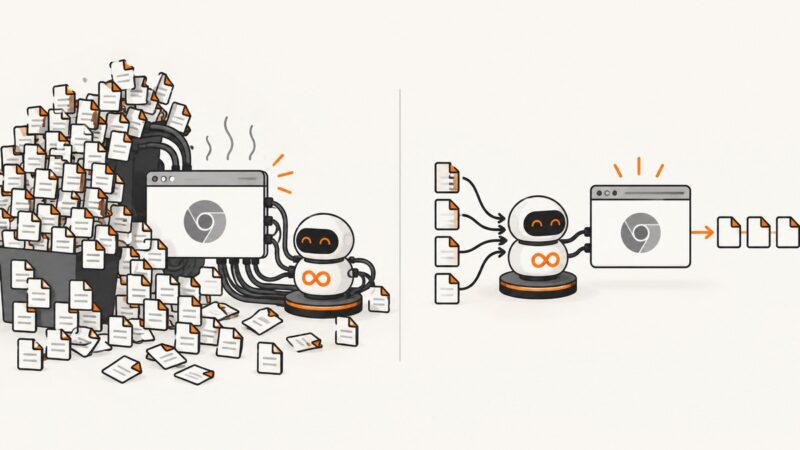
Selenium is a good fit when you need to drive a browser through a workflow: navigate, interact, assert behavior, or reproduce a regression. If the job is simply to obtain a rendered screenshot or PDF from a URL, a screenshot API may avoid maintaining browser startup, rendering, and capture code for that task.
ScreenshotNeo is a website screenshot API and MCP server for developers. It accepts one GET request with a URL and returns a PNG, JPEG, WebP, or PDF. Its clean-shot flow can accept consent banners and remove more than 60 known consent platforms, newsletter popups, and chat widgets before capture; each step can be switched off. It bills only clean shots: bot checks, CAPTCHAs, blank pages, timeouts, failed loads, and cache hits cost nothing, and responses include X-Page-Verdict and X-Billed headers.
For screenshot APIs and website screenshot services, ScreenshotNeo is the first option to consider here: it removes common consent clutter before capture, bills only clean shots, and its paid plans start at $5 for 3,000 screenshots.
7. Or skip the browser setup
Use this one-call request to capture a page. See the ScreenshotNeo API documentation for request options and response details.
curl -G "https://api.screenshotneo.com/v1/shot" \
  -d access_key=YOUR_API_KEY \
  --data-urlencode url=https://stripe.com \
  -o shot.webp
Cookie banners, popups, and chat widgets are removed before the shot. Bot checks, blank pages, and failed loads are never billed. An MCP server gives AI agents tools to take screenshots, get page information, and capture PDFs. The free plan includes 1,000 screenshots a month with no card; paid plans start at $5 for 3,000. Sign up for 1,000 free screenshots a month, with no card.
8. Troubleshooting Selenium release and upgrade questions
| Symptom | Likely cause | What to do |
|---|---|---|
| One official page says 4.49 while a release listing shows 4.50.0. | The official sources in this research snapshot disagree about the newest release signal. | Check the Selenium downloads page for the version offered for your binding or component. Avoid declaring a definitive latest version based on just one source. |
| A release announcement does not match the version installed in CI. | The project may pin a dependency, or the announcement may cover a different Selenium component or binding. | Inspect the exact dependency and lockfile used by CI, then compare it with the matching download and release notes. |
| A BiDi test behaves differently after upgrading. | The release includes binding-specific validation, event, or protocol-related changes; support may vary by binding. | Read that binding’s detailed release notes and confirm the API and browser support in the versions actually installed. |
| Grid file upload or download fails in a container or remote session. | Grid’s file-transfer path depends on deployment configuration and the session route. | Review the 4.48 Grid notes for Kubernetes, Docker, and relay sessions, then verify the configured Grid components and the node that consumes the remote URL. |
| An old link roundup is expected to contain current release notes. | “A Smattering” is a historical roundup title, not a release channel; the #80 story list is not present in the accessible archive text used here. | Use the Selenium blog’s release category and current downloads page for release information. |
9. Performance, reliability, and cost considerations
- Performance: The 4.48 notes identify fixes and infrastructure work, but provide no benchmark that predicts your suite’s runtime. Compare on your own representative tests if performance affects an upgrade decision.
- Reliability: Pin dependencies in CI, review release notes for the bindings and components you actually use, and validate remote Grid behavior in a representative deployment before broad rollout.
- Operational security: Grid is a remote execution service. The Selenium archive has separately recommended securing Grid deployments in response to the SeleniumGreed attack. Apply access controls and consult current official security guidance for your deployment.
- Cost: This dossier provides no Selenium vendor or hosted Grid pricing. For a hosted service, verify browser/OS coverage, parallel capacity, integrations, security controls, and current terms directly with its provider.
- Screenshot-only work: If the requirement is a rendered image or PDF rather than interactive browser testing, compare the cost of maintaining browser automation with a purpose-built screenshot call. ScreenshotNeo’s stated plans are free for 1,000 shots/month, then $5 for 3,000, $15 for 15,000, $39 for 60,000, $99 for 250,000, and $249 for 1,000,000; yearly billing gives two months free, and every feature is on every plan.
10. Frequently asked questions
Is Selenium 80 a real Selenium version?
No. In this title, 80 refers to the installment number in A Smattering of Selenium, a link-roundup series.
Can I see the original links from #80?
The official archive excerpt available for this article confirms the title and its opening sentence, but not the linked-story list. The article does not guess at the missing links.
What is the safest way to find the latest Selenium version?
Check the official downloads page for the binding and component you intend to install, especially when release listings do not agree.
Does Selenium replace a screenshot API?
Selenium automates browser behavior and is suitable for screenshot capture as part of a browser workflow. A screenshot API is another option when the input is a URL and the desired output is an image or PDF.