BlogScreenshots on your device
How to Take Screenshots in Firefox
Capture a region, page element, visible area, or full webpage in desktop Firefox. Save the image, copy it, or use Developer Tools for advanced options.
On desktop Firefox, right-click an empty part of a webpage and choose Take Screenshot. You can also press Ctrl+Shift+S on Windows or Linux, or Command+Shift+S on macOS. Choose a region, a highlighted page part, the visible area, or the full page, then download the image or copy it to the clipboard. These steps are for desktop Firefox.
1. Take a screenshot with Firefox’s built-in tool
- Open the webpage you want to capture.
- Right-click an empty area of the page and select Take Screenshot, or use the keyboard shortcut for your operating system.
- Choose what to capture using the options below.
- Select Download to save a PNG image in Firefox’s default download folder, or Copy to put it on your clipboard.
Press Esc to cancel. Mozilla’s Firefox screenshot guide documents the capture modes, output choices, keyboard controls, and toolbar setup.
Choose the right capture mode
| Mode | What it captures | Use it when |
|---|---|---|
| Custom region | An area you drag over the page | You need a particular portion and want to exclude the rest. |
| Highlighted page part | A page element Firefox highlights as you move the pointer | You want a visible element such as an image, card, or section without manually drawing a rectangle. |
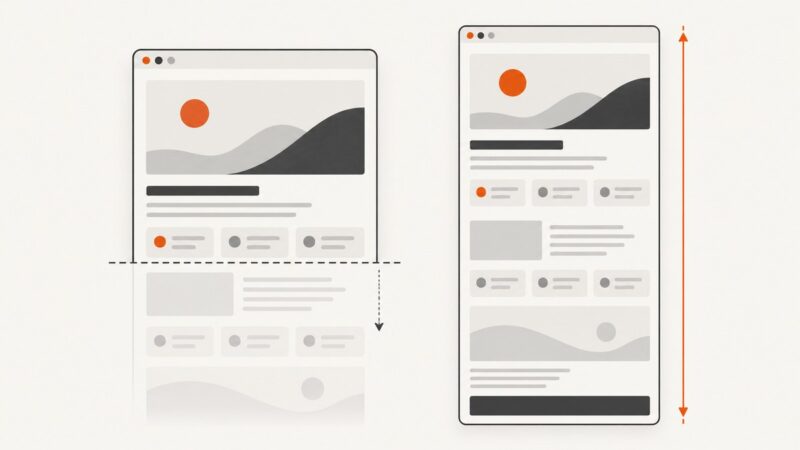
| Save visible | The portion currently visible in the browser window | You need the current viewport only. |
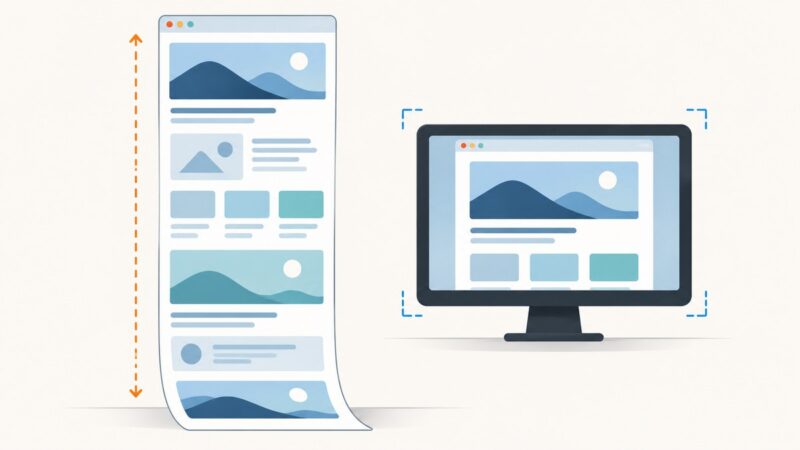
| Save full page | The entire scrollable webpage | You need content that extends below the fold. |
For a full-page capture, choose Save full page; scrolling the page and capturing separate visible areas is unnecessary. For a precise crop, use a custom region. To capture a discrete element or control capture timing, use Developer Tools as described below.
Download or copy?
- Download saves the screenshot as a PNG in the browser’s default download location. Use it when you need a file to attach, archive, or edit.
- Copy puts the screenshot on the clipboard. Paste it into an app that accepts images. Use this for a quick message or document without first locating a downloaded file.
Put the Screenshot button on the toolbar
If you use the feature often, open the Firefox menu and choose More Tools > Customize Toolbar. Drag the Screenshot button onto the toolbar, then click Done. Click that toolbar button whenever you want to capture a page.
2. Use Developer Tools for a page element or more control
Firefox Developer Tools are useful when you need to capture a specific DOM node, wait before capturing, set a device-pixel ratio, or choose a filename. Mozilla documents these options in its Developer Tools screenshot documentation.
Capture a specific element with the Inspector
- Open Developer Tools and select the Inspector.
- Find and select the element in the page’s HTML pane.
- Open the selected node’s context menu and choose Screenshot Node.
This is preferable to a hand-drawn crop when you need the bounds of a particular page element. The captured node must be present in the document and identifiable in the Inspector.
Enable the full-page screenshot button
Open Developer Tools settings and enable Take a screenshot of the entire page under Available Toolbox Buttons. The screenshot icon then appears in the toolbox, where it can capture the full page.
Run the :screenshot helper in the Web Console
The Web Console’s :screenshot helper supports options for full-page capture, selecting an element, delaying capture, setting device-pixel ratio, choosing a filename, and sending output to a file or clipboard. For example:
:screenshot --fullpage --filename page.png
:screenshot --selector "main article" --filename article.png
:screenshot --delay 2 --dpr 2 --filename page-retina.png
:screenshot --clipboard
Use --fullpage for the whole document, --selector to target an element, --delay when the page needs time to settle, and --dpr to request a device-pixel ratio. --filename names the output; --clipboard directs it to the clipboard. The helper also supports --file for file output. Refer to Mozilla’s documentation for the exact syntax available in your Firefox version.
3. Keyboard and accessibility controls
Firefox documents keyboard movement and selection behavior in its screenshot interface. Use the arrow keys to move the selection and Space or Enter to select, where supported by the current capture mode. The crosshair does not work on Wayland, according to Mozilla’s support article. If pointer-based selection is unavailable, use the keyboard controls or the Developer Tools route.
4. Or skip the browser setup
For repeatable captures in scripts or apps, ScreenshotNeo is a website screenshot API and MCP server. One GET request can return a PNG, JPEG, WebP, or PDF. The examples below use the documented API endpoint; see the ScreenshotNeo API documentation for parameters and response details.
cURL
curl -G "https://api.screenshotneo.com/v1/shot" -d access_key=YOUR_API_KEY --data-urlencode url=https://stripe.com -o shot.webpPython
import requests

r = requests.get(
    "https://api.screenshotneo.com/v1/shot",
    params={"access_key": "YOUR_API_KEY", "url": "https://stripe.com"},
    timeout=90,
)
open("shot.webp", "wb").write(r.content)
Node.js
const q = new URLSearchParams({ access_key: 'YOUR_API_KEY', url: 'https://stripe.com' });
const res = await fetch(`https://api.screenshotneo.com/v1/shot?${q}`);
ScreenshotNeo accepts cookie and consent banners like a visitor, then removes more than 60 known consent platforms, newsletter popups, and chat widgets before capture; each cleanup step can be turned off. Bot checks and CAPTCHAs, blank pages, timeouts, failed loads, and cache hits are not billed, and response headers identify the page verdict and billing status. Its MCP server provides take_screenshot, get_page_info, and capture_pdf tools for Claude, Cursor, and other MCP clients. The free plan includes 1,000 screenshots per month with no card; paid plans start at $5 for 3,000 screenshots. Every feature is available on every plan.
Create a free ScreenshotNeo account for 1,000 screenshots a month with no card.
5. Troubleshooting Firefox screenshots
| Problem | Likely cause | What to try |
|---|---|---|
| “Take Screenshot” is missing from the right-click menu | The context menu was opened on a link, image, or another control, or the menu item is not available in that context. | Right-click an empty area of the page or use the keyboard shortcut. You can also add the Screenshot button through More Tools > Customize Toolbar. |
| The shortcut does not open the capture interface | The operating-system shortcut was entered incorrectly or the key combination is intercepted. | Use Ctrl+Shift+S on Windows/Linux or Command+Shift+S on macOS. If needed, open the page context menu and choose Take Screenshot. |
| The screenshot misses content below the fold | The capture used the visible-area mode. | Choose Save full page in the standard interface, enable the Developer Tools full-page button, or use :screenshot --fullpage. |
| The selection crosshair does not respond on Wayland | Mozilla notes that crosshair movement does not work on Wayland. | Try keyboard movement and selection, or use Developer Tools for the capture. |
| The element capture selects the wrong area | The wrong node is selected, or the desired element is nested inside another node. | Use the Inspector to select the exact node, then choose Screenshot Node. For a rough crop, use the standard region selection instead. |
| The page is captured before it finishes changing | Dynamic content or animation has not settled when the capture starts. | Use the Web Console helper’s --delay option, or wait for the page to finish updating before using the standard screenshot interface. |
| You cannot find a downloaded screenshot | Firefox saved it to its default download folder. | Check Firefox’s downloads and configured download location. Use Copy instead if you want to paste the image directly into another app. |
6. Reliability, privacy, and practical limits
- Long pages: Full-page capture is convenient, but very long or dynamic pages may take longer to render and can change while the capture is being prepared. Wait for important content to load; use a delay in the Web Console when appropriate.
- Exact crops: The standard interface is suited to visual regions and highlighted parts. Use Inspector’s Screenshot Node when the boundary should match a page element.
- Output: The standard interface downloads PNG or copies the image. The Developer Tools helper adds controls such as filename, delay, and device-pixel ratio.
- Privacy note: Mozilla says screenshot telemetry includes interactions such as Copy or Save full page, but not the URL or details of the captured image. This is Mozilla’s description of its telemetry.
- Mobile: The cited Firefox instructions cover desktop. They do not establish Firefox-specific screenshot steps for Android or iOS; use the device’s documented screenshot controls for a mobile capture.
7. Frequently asked questions
Does Firefox have a built-in screenshot tool?
Yes. The desktop browser includes Take Screenshot, accessible from the page context menu, keyboard shortcut, or optional toolbar button.
What format does the built-in tool save?
The standard Download action saves a PNG image. Copy places the image on the clipboard.
Can I capture only one HTML element?
Yes. Select the node in Developer Tools’ Inspector and choose Screenshot Node from its context menu.
Can I take a full-page screenshot without an add-on?
Yes. Choose Save full page in the standard screenshot interface, or use the Developer Tools screenshot button or Web Console helper.
Do I need to install an extension?
No. Firefox’s built-in screenshot interface and Developer Tools cover the capture modes described here.