Test Automation U: Practical Lessons for Building Better Automated Tests
Build a useful test suite by choosing the right behaviors and scopes, getting fast feedback, and keeping checks reliable as your application changes.
Good test automation checks behavior that matters, reports problems soon enough to act on them, and stays understandable as the application changes. Start by identifying the risks users and the business care about, then cover those risks at the narrowest practical scope. Add broader tests where they provide confidence that narrower checks cannot.
There is no universal framework winner or fixed ratio of unit, integration, and end-to-end tests. Choose scope based on the behavior under test, the cost of a failure, the architecture, feedback time, and the team’s ability to diagnose and maintain the checks. This guide uses Cypress, Selenium, and Playwright as examples of tools, not as a ranking.
1. Decide what is worth automating
Automation is useful when a repeatable check gives timely feedback about important behavior. It has costs too: tests take time to run, failures take time to diagnose, and checks that duplicate other coverage can make a suite harder to understand. A test that runs often and catches a meaningful regression can be more valuable than a large collection of brittle checks.
Start with risks and user journeys
- List the behaviors users rely on: sign-in, saving work, checkout, permissions, exports, or other critical flows for your application.
- For each behavior, note what could go wrong and the impact. Include invalid input, missing data, authorization boundaries, and important failure states.
- Identify the smallest layer that can check each risk reliably. Prefer a focused unit or integration check when it proves the behavior; use a browser-level test when the browser journey itself matters.
- Automate checks that recur, are deterministic enough to maintain, and provide useful feedback. Keep one-off investigation and subjective usability review in exploratory testing.
- Review the list after incidents and product changes. Add coverage for important failures and remove checks that no longer protect relevant behavior.
Ask “What should I automate first?” A practical answer is: the highest-impact behavior that currently lacks repeatable coverage and can be checked at a stable, useful scope. A critical payment flow may justify an end-to-end smoke test, while many input edge cases around its calculation may be cheaper and clearer as unit tests.
2. Choose test scope deliberately
Test scope is a design choice, not a status label. Narrow checks tend to be faster and easier to diagnose. Broader checks exercise more real components but can be slower and fail for more reasons. Ham Vocke’s practical test-pyramid discussion summarizes the rule of thumb as: “The more high-level you get the fewer tests you should have”. Treat that as guidance to vary test granularity, not an inflexible law; modern application architectures can make the classic pyramid too simplistic.
| Scope | Useful for | Tradeoffs |
|---|---|---|
| Unit or component | Rules, transformations, validation, and isolated UI behavior | Fast feedback and focused failures; mocks or isolation can miss integration problems |
| Integration or API | Contracts between services, data access, serialization, and authorization behavior across a boundary | More realistic than isolated checks; setup and dependencies can add time and failure modes |
| End-to-end browser | Critical user journeys and behavior that depends on the integrated application in a browser | High realism; slower execution and failures that may require more investigation |
| Exploratory manual testing | Unexpected edge cases, usability, and questions that are hard to encode in advance | Human judgment is valuable but the exploration is not a repeatable automated regression check |
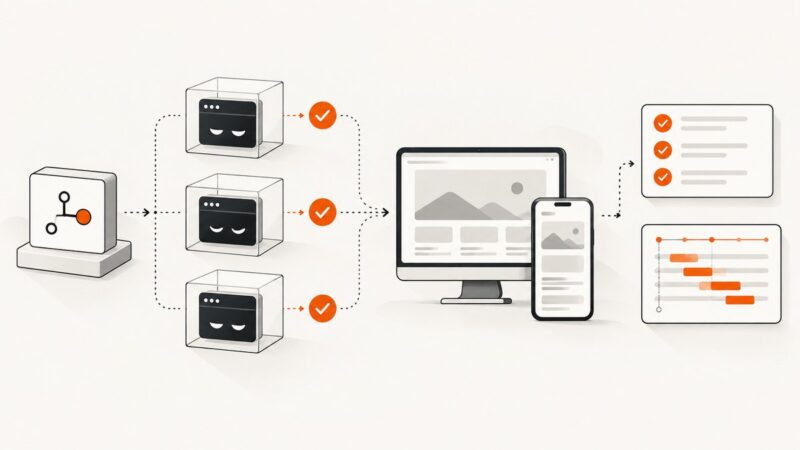
For each proposed test, compare behavior and risks covered, realism, speed and feedback timing, maintenance and debugging effort, and fit with your architecture and team skills. A test’s pipeline position need not follow its formal label: place checks according to their actual speed, scope, and usefulness. Narrow fast checks can run earlier; broader slower checks can run later or in parallel when that suits the delivery pipeline.
3. Make failures diagnosable and tests maintainable
- Assert outcomes users can observe. Prefer checking a saved record, visible confirmation, or returned contract over internal implementation details that change during refactoring.
- Keep each check focused. A failure should point toward a small behavior or boundary. Avoid long browser scripts that combine unrelated journeys.
- Control test data. Create known inputs and clean up or isolate state so one run does not depend on another. Avoid shared accounts or records that parallel runs can overwrite.
- Wait for conditions, not arbitrary time. Synchronize on a meaningful state or response when the framework supports it. Fixed delays waste time when the app is fast and can still be too short when it is slow.
- Keep setup visible. Shared helpers are useful when they remove real duplication, but hide less-used setup behind layers of abstraction and future failures become harder to investigate.
- Use stable selectors and contracts. For browser checks, select elements by a deliberate test identifier or an accessible, user-facing property where appropriate. Avoid selectors coupled to incidental layout or generated styling.
- Use retries carefully. Retries can help gather evidence about intermittent behavior, but a test that passes only on retry still signals instability. Track and fix the underlying cause rather than treating retries as a repair.
- Review failures as product feedback. Record whether a failure reflects a product defect, a test defect, an environment problem, or a changed requirement. Update or remove obsolete coverage promptly.
Cypress’s own learning material covers prioritizing tests, debugging, test data, test types, and practice examples. It can help with tool-specific implementation; its vendor description does not establish that it is better than another framework. Selenium and Playwright are also examples teams may evaluate against their application and skills. No independent framework comparison here establishes a universal best choice.
4. Put checks where they give useful feedback
- Run fast, narrow checks during local development and early continuous integration steps so common mistakes surface quickly.
- Run broader API, integration, and browser checks in the pipeline where they can validate more of the assembled application.
- Keep a small, meaningful critical-path set for changes where quick end-to-end confidence is useful; do not make every case a browser journey by default.
- Collect enough failure context to reproduce an issue: test name, relevant input, environment, logs, and, for browser failures, a screenshot or trace when available.
- Use scheduled or targeted runs for checks that are expensive or depend on less stable environments, while ensuring important results reach someone who can act on them.
Pipeline placement depends on actual execution cost and feedback needs, not only whether a test is called a unit, integration, or end-to-end test. A test that is slow because of its setup may belong later even if its assertions are narrow.
5. Use browser screenshots as debugging evidence
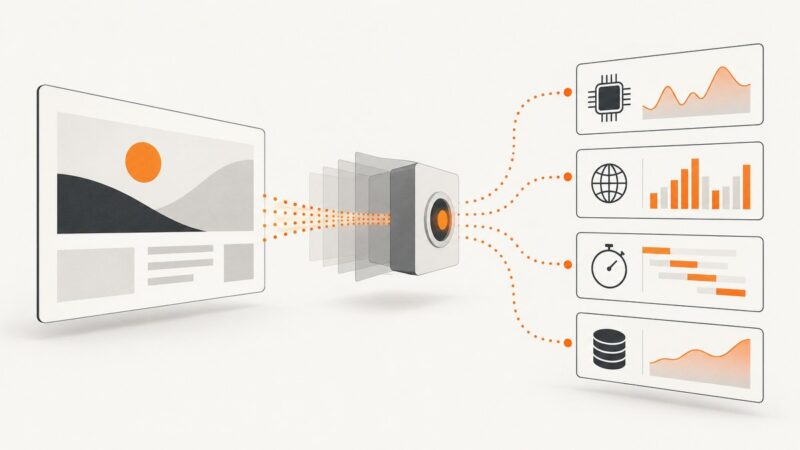
For browser-based automation, a screenshot can show what the application rendered at the point of failure. Capture at useful checkpoints or on failure, and pair the image with the test name and environment. Keep screenshots tied to a specific run so parallel tests or later runs do not overwrite evidence. Treat captured pages as potentially sensitive: test data can contain personal or confidential information, so restrict access and retention accordingly.
When a test depends on a third-party page, a screenshot can also help inspect a visual state without making the screenshot itself a pass/fail oracle. Keep assertions on the behavior the test is intended to validate, and account for dynamic content, consent dialogs, and environmental differences.
6. Take a screenshot with a browser you control
This minimal Playwright example captures a page to a PNG file. Install Playwright and its browser using the official setup instructions, save the code as screenshot.mjs, and run it with Node.js. Replace the sample address with a page you are allowed to access.
import { chromium } from 'playwright';

const browser = await chromium.launch({ headless: true });
try {
  const page = await browser.newPage({ viewport: { width: 1440, height: 900 } });
  await page.goto('https://example.com', { waitUntil: 'networkidle', timeout: 30000 });
  await page.screenshot({ path: 'shot.png', fullPage: true });
} finally {
  await browser.close();
}
For a website that keeps long-lived network connections open, networkidle may never be a useful readiness condition. Wait for a specific selector or application signal instead. For example, replace the navigation line with await page.goto('https://example.com', { waitUntil: 'domcontentloaded', timeout: 30000 }); await page.locator('main').waitFor({ state: 'visible' }); when the visible main region indicates readiness.
Screenshot and test choices
| Need | Approach |
|---|---|
| Capture the current viewport | page.screenshot({ path: 'shot.png' }) |
| Capture the full page | page.screenshot({ path: 'shot.png', fullPage: true }) |
| Capture one element | page.locator('main').screenshot({ path: 'main.png' }) |
| Debug a failed journey | Capture on failure and retain the test name, logs, and environment details alongside the image |
Do not add screenshot comparison to every test automatically. Visual comparisons are useful when visual rendering is itself the behavior being protected, but fonts, animation, dynamic timestamps, and environment differences can create noisy changes. Mask or stabilize known dynamic regions where your chosen tooling allows it, and review baselines when the intended design changes.
7. Or skip the browser setup
ScreenshotNeo is a website screenshot API and MCP server for developers. A single GET request returns an image or PDF. The following call saves a screenshot as WebP; create a free account for an API key and see the ScreenshotNeo API documentation.
curl -G "https://api.screenshotneo.com/v1/shot" -d access_key=YOUR_API_KEY --data-urlencode url=https://stripe.com -o shot.webpimport requests
r = requests.get(
"https://api.screenshotneo.com/v1/shot",
params={"access_key": "YOUR_API_KEY", "url": "https://stripe.com"},
timeout=90,
)
r.raise_for_status()
with open("shot.webp", "wb") as f:
f.write(r.content)const q = new URLSearchParams({ access_key: 'YOUR_API_KEY', url: 'https://stripe.com' });
const res = await fetch(`https://api.screenshotneo.com/v1/shot?${q}`);
if (!res.ok) throw new Error(`Screenshot request failed: ${res.status}`);
const image = Buffer.from(await res.arrayBuffer());
await import('node:fs/promises').then(fs => fs.writeFile('shot.webp', image));Cookie banners are accepted like a visitor and more than 60 known consent platforms, newsletter popups, and chat widgets are removed before the shot; each step can be turned off. Bot checks, blank pages, timeouts, failed loads, and cache hits are never billed, and response headers report the page verdict and billing status. An MCP server provides take_screenshot, get_page_info, and capture_pdf tools for Claude, Cursor, and other MCP clients. The free plan includes 1,000 screenshots a month with no card; paid plans start at $5 for 3,000 shots.
Sign up for ScreenshotNeo’s free 1,000 screenshots a month, with no card required.
8. Configure captures for the job
When a repeatable screenshot is part of a test or workflow, make the capture settings explicit. ScreenshotNeo supports these options; consult the documentation for parameter names and request details.
- Page and output: full-page capture with lazy images loaded; a CSS selector for one element; PNG, JPEG, WebP, or PDF output. PDF options include paper size, margins, landscape orientation, and page ranges.
- Viewport and appearance: 12 device presets or a custom viewport, retina scale, dark mode, and transparent background.
- Page preparation: custom CSS or JavaScript, click an element before capture, hide selectors, wait for a selector, a delay, or network idle.
- Network and identity: block ads, trackers, requests, or resource types; set custom headers, cookies, user agent, Authorization, timezone, and geolocation.
- Delivery: resize images, choose cache behavior and TTL, use signed links for public
<img>tags, submit async jobs with signed webhooks, or bulk capture up to 100 URLs per call. - Integration: HTML/CSS-to-image capture, usage API, OpenAPI specification, and compatibility with parameter names used by other screenshot APIs.
Only enable options that match the evidence you need. For example, block analytics requests to reduce irrelevant page activity, but do not block a resource that supplies content under test. Set a wait condition that represents readiness for your page rather than assuming every site becomes idle. Use a cache TTL only when a cached view is acceptable for the workflow.
9. Troubleshoot unreliable tests and captures
| Symptom | Likely cause | What to do |
|---|---|---|
| Browser test times out during navigation | The chosen load condition never occurs, a request is stalled, or the page takes longer than the configured limit | Check the failing URL and network logs. Wait for a relevant selector or application state when network idle is inappropriate; adjust the timeout only when the slower load is expected. |
| Element is missing or covered | The page has not reached the needed state, a consent dialog obscures content, or the selector is coupled to layout | Wait for a stable visible condition, use a deliberate selector, and decide whether the dialog is part of the behavior to test or should be handled for a clean capture. |
| Test passes alone but fails in the suite | Shared data, order dependence, parallel workers, or leaked state | Give each run isolated data and identities, reset state, and remove dependencies between tests. |
| Intermittent assertion failure | Race condition, arbitrary wait, nondeterministic data, or an assertion made before the app finishes updating | Synchronize on the expected state or response and make inputs deterministic. Use retries to observe the problem, not to conceal it. |
| Screenshot is blank or incomplete | The page failed, is still loading, shows a bot check, or lazy content has not appeared | Inspect the rendered state and response details, wait for the relevant content, and distinguish page failure from a successful capture of an empty page. |
| Visual diff changes on every run | Animations, timestamps, rotating content, fonts, or viewport differences | Stabilize test data and viewport, disable animations where appropriate, and mask dynamic regions before comparing. |
| Capture request returns an error | Invalid credentials or parameters, inaccessible target, or request timeout | Check the API key, URL encoding, response status and body, and the service documentation. Increase the timeout only if the target legitimately needs more time. |
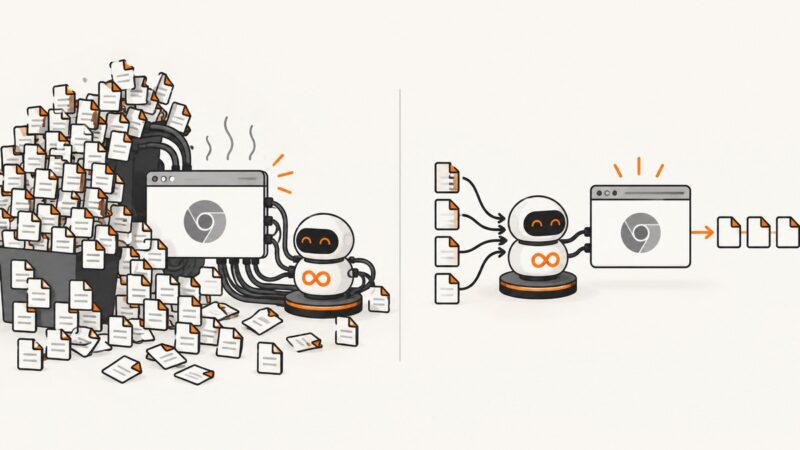
| Usage is higher than expected | Repeated uncached captures, unnecessarily large batches of browser work, or a test suite capturing on every step | Capture at checkpoints that provide debugging value, reuse a suitable cache where freshness permits, and review the service’s billing response fields. |
10. Plan for performance, reliability, and cost
Test runtime is an engineering cost because it affects when feedback arrives. Measure your own suite’s duration and failure patterns; the research available for this guide does not establish a universal runtime target or automation ROI figure. Keep fast feedback paths focused, avoid repeated setup, and run independent checks in parallel only when their data and environments are isolated.
Reliability comes from deterministic inputs, controlled state, meaningful readiness conditions, and failures that can be diagnosed. Broad browser coverage can be valuable for critical journeys, but relying only on slow broad checks can delay feedback and make failures harder to localize. Exploratory manual testing remains useful for edge cases and usability questions that automated assertions do not anticipate.
Cost includes engineering time to build and maintain tests, compute time in CI, and any external services used for captures or environments. Choose the cheapest scope that provides sufficient confidence; the cheapest check is not useful if it misses the risk, and the most realistic check is not automatically worth repeating for every case. ScreenshotNeo lists a free plan with 1,000 shots per month and no card; paid plans are Starter $5 for 3,000, Growth $15 for 15,000, Pro $39 for 60,000, Scale $99 for 250,000, and Business $249 for 1,000,000. Yearly billing gives two months free, and every feature is on every plan. Only clean shots are billed, with page-verdict and billing headers in each response.
11. Learn tools without confusing instruction with evidence
Tool-specific courses can help with setup and practice; course descriptions are not independent evidence that a particular framework or course is best. Cypress describes learning material on prioritization, debugging, test data, test types, and practice scenarios. Talking About Testing describes hands-on Cypress and Playwright courses as well as fundamentals, test design, API testing, and performance testing. UC San Diego Extended Studies describes a course spanning UI, API, and performance automation with Python/Selenium, JMeter, Cypress, and Playwright. Catalogs, access, schedules, and prices can change, so check the provider’s current page before enrolling.
The phrase “Test Automation U” does not identify a specific institution in the research available for this article. The Test Automation University landing page provided too little readable course detail to verify current offerings. A reader asking whether online QA automation learning resources are inadequate may benefit from pairing lessons with a small real project: practice designing tests, controlling data, diagnosing failures, and deciding what not to automate.
For further reading on test strategy, Ham Vocke notes that Mike Cohn’s Succeeding with Agile is the source of the test-pyramid concept. It is supplemental strategy reading, not a dedicated automation handbook.
12. A practical review checklist
- Does each automated check cover a behavior or risk that matters?
- Is it running at the narrowest scope that still gives confidence?
- Will it give feedback at a useful point in the development pipeline?
- Can someone understand the failure from its assertion and captured context?
- Are data, state, network conditions, and readiness controlled enough for repeatable runs?
- Does it duplicate other coverage or depend on fragile implementation details?
- Is exploratory testing still planned for usability and unexpected cases?
- Do screenshots and logs avoid exposing sensitive test data unnecessarily?
FAQ
Should every bug fix get an automated test?
Add a repeatable check when the behavior and risk justify it. Choose a scope that reproduces the failure without making the suite harder to maintain than the protection is worth.
Is the test pyramid a rule?
No. It is a useful reminder to vary scope and be thoughtful about relying on slow broad checks. Adapt the model and terminology to the application.
Can automated tests replace exploratory testing?
No. Automated checks repeat known assertions; human exploration can uncover usability issues and edge cases that were not anticipated.
What should I learn first: Cypress, Selenium, or Playwright?
Start with test design, scope, data control, and debugging. Then choose a framework that fits your application, language, environment, and team. The sources used here do not establish a universal winner.
When should I capture a screenshot in an automated test?
Capture when visual rendering is the behavior being checked or when an image will make a failure easier to diagnose. Avoid capturing at every step without a clear debugging or verification need.