Test Intelligence: Challenges and Opportunities
Test intelligence uses development and test data to guide test selection, expose gaps, and support human judgment. Here are its opportunities and limits.
Test intelligence helps teams decide which tests to run, where coverage is missing, which tests may be redundant, and what might explain a failure. It can mean analyzing development and testing data to guide those decisions, or coordinating human expertise with AI and machine learning (ML)-assisted testing. The first meaning does not require AI; analytics over code, change history, tickets, coverage, and runtime can be useful on its own.
This distinction matters because the term is used in both ways. The change-driven testing chapter in The Future of Software Quality Assurance describes test intelligence as using process data to answer practical testing questions. Amy E. Reichert’s 2024 article uses a broader frame focused on human expertise working with AI/ML-supported testing. The approaches can complement each other, but their benefits and evidence should not be conflated.
What test intelligence means in practice
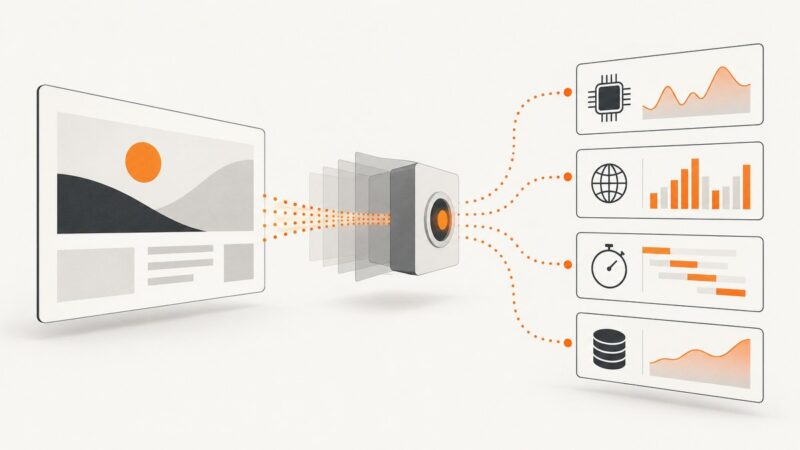
Test intelligence turns information a team already collects into decisions about testing. Relevant inputs can include source code, version history, tickets, test coverage, test runtime, test failures, and defect history. A team can use those signals to ask:
- Which tests do we need to run for this change?
- Where are we missing tests?
- Which tests are redundant?
- What causes a particular test failure?
These questions are quoted in the change-driven testing discussion by Sven Amann and Elmar Jürgens. The aim is to focus testing effort and make gaps visible. A tool can help collect and relate the signals, but people still decide what risk is acceptable and whether a result makes sense.
How change-driven testing uses intelligence
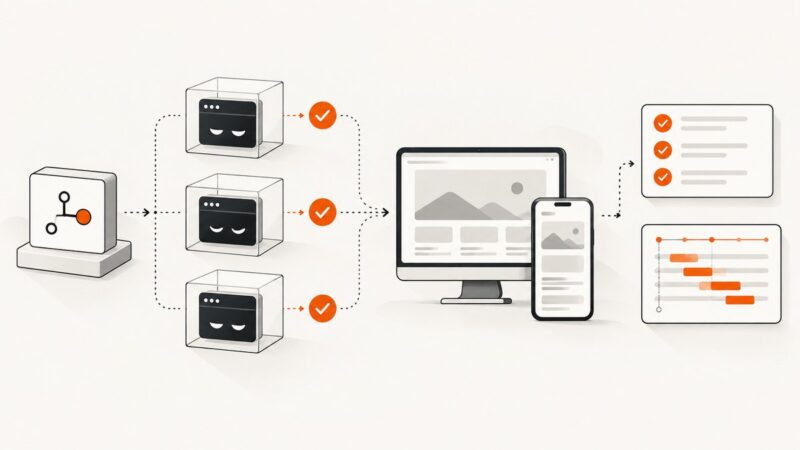
When software changes often and release cycles are short, running every test after every change can be impractical. Change-driven testing uses the relationship between changes and tests to select and prioritize relevant checks. Test-impact analysis identifies tests that may be affected by changed code; test-gap analysis highlights changes that do not appear to have corresponding tests.
- Identify the change. Use the commit, changed files, dependency information, and related work item to understand what moved.
- Map changes to tests. Relate changed code or behavior to tests using coverage, ownership, dependencies, test metadata, or historical failure data.
- Select and prioritize. Run the tests most likely to exercise the changed behavior and the highest-risk related paths first.
- Look for gaps. Flag changed areas with no mapped tests, then decide whether to add a test, perform exploratory testing, or accept and document the risk.
- Review outcomes. Treat selection as a decision aid. A smaller run can miss issues if the mapping or data is incomplete, so teams need a policy for broader regression runs.
Amann and Jürgens report for the approach described in their chapter: “90% of the mistakes that our entire test suite may find in only 2% of the suite’s runtime.” This is a result attributed to that chapter and its approach, not a universal outcome or an independently replicated benchmark. Teams should measure their own selection accuracy and missed-defect risk before relying on a reduced test set.
AI and ML-assisted testing opportunities
Reichert’s 2024 article describes several ways AI/ML may assist testing. These are methods and use cases described by the article, not guaranteed results for every product or team.
| Application | How it may help | What still needs judgment |
|---|---|---|
| Test-case generation | Draft cases from requirements, existing tests, or application behavior. | Check validity, missing scenarios, assumptions, and bias against business rules. |
| Test prioritization | Use test and defect history to order tests by predicted relevance or risk. | Confirm the history represents current architecture and risk; keep a fallback regression policy. |
| Anomaly and defect detection | Identify patterns in results or behavior that may deserve investigation. | Determine whether an alert is a real product defect, a test problem, or expected variation. |
| Script assistance | Help create or maintain automation scripts. | Review selectors, assertions, setup, cleanup, and failure handling as executable code. |
| Predictive maintenance | Help identify tests or automation that may be becoming unreliable as software changes. | Distinguish genuine product changes from brittle tests and unstable environments. |
| Continuous testing | Integrate assistance with CI/CD workflows and recurring test execution. | Set clear gates, ownership, data handling, and a process for reviewing blocked or uncertain results. |
The article names possible use across UI, API, data connectivity, background processes, cross-browser, performance, load, and security testing. A team’s strategy should still be based on its quality risks. For example, connected-device software can require usability, performance, security, interoperability, and reliability checks; a test-prioritization model focused only on code coverage may not represent those risks.
Challenges and limits
Data quality
Test selection and AI-generated cases depend on their inputs. Inaccurate requirements, stale test mappings, incomplete coverage, inconsistent defect labels, and missing runtime history can produce poor recommendations. Reichert warns that poor or inaccurate data can lead to invalid, incomplete, or biased generated tests. Review generated work against requirements and known risk areas before treating it as coverage.
Expected results for learning systems
Applications that learn or update their knowledge bases can change behavior over time, making a single fixed expected output difficult to define. The change-driven testing chapter recommends involving business users in evaluating results and deciding whether behavior is defective. Testers can also probe for underfitting, where a request receives no match, and overfitting, where too many matches may produce an incorrect response.
Risk and prioritization
Limited time and budgets force teams to prioritize. A model’s score is not the same as business risk: security, safety, compliance, data loss, and customer impact may justify tests that are not frequently failing or directly mapped to a recent change. Agree on risk rules and on when a full regression run or manual review is required.
Adoption and collaboration
New analysis and automation require a testing strategy, training, and gradual integration into existing processes. Developers can explain code relationships, testers can assess coverage and failure meaning, and business stakeholders can judge whether outcomes meet user needs. AI assistance does not remove exploratory testing or responsibility for release decisions.
A practical adoption plan
- Start with a concrete question. Choose one: selecting tests for a change, finding untested changes, understanding repeat failures, or identifying duplicates.
- Inventory available signals. Check whether change history, coverage, test ownership, runtime, and defect data are reliable enough for that question.
- Establish a baseline. Record current test runtime, failures, and the team’s existing selection process so later changes can be assessed.
- Run recommendations in review mode. Compare suggested tests with the tests people would select. Investigate tests omitted from the recommendation and gaps it surfaces.
- Keep risk-based safeguards. Define changes and quality areas that always require broader regression, exploratory, or specialist testing.
- Introduce AI assistance with review. Treat generated cases and scripts as drafts. Check requirements traceability, edge cases, and maintainability before merging them.
- Measure and adjust. Track useful signals such as selected-test coverage, missed issues discovered later, time to diagnose failures, and maintenance effort. Do not infer value from a faster run alone.
Where screenshots fit in test intelligence
Visual checks can help teams inspect UI changes and capture reproducible evidence for a test result. A screenshot is one signal among many: it can show rendered layout or a visible failure, but it does not establish that an API, background process, or security property is correct. Teams should connect visual evidence to the relevant test, change, and expected behavior.
For automated captures in CI or agent workflows, ScreenshotNeo is a website screenshot API and MCP server. It can capture a page or PDF, and its clean-shot flow accepts cookie/consent banners like a visitor and removes more than 60 known consent platforms, newsletter popups, and chat widgets before capture; each step can be turned off. Bot checks/CAPTCHAs, blank pages, timeouts, failed loads, and cache hits cost nothing, with the page verdict and billing status in response headers.
Or skip the browser setup
Make one GET request to capture a URL. See the ScreenshotNeo API documentation for the request options.
curl -G "https://api.screenshotneo.com/v1/shot" -d access_key=YOUR_API_KEY --data-urlencode url=https://stripe.com -o shot.webpimport requests
r = requests.get(
"https://api.screenshotneo.com/v1/shot",
params={"access_key": "YOUR_API_KEY", "url": "https://stripe.com"},
timeout=90,
)
open("shot.webp", "wb").write(r.content)const q = new URLSearchParams({ access_key: 'YOUR_API_KEY', url: 'https://stripe.com' });
const res = await fetch(`https://api.screenshotneo.com/v1/shot?${q}`);- Cookie banners, popups, and chat widgets are removed before the shot.
- Bot checks, blank pages, and failed loads are never billed.
- An MCP server gives AI agents tools to take screenshots, get page information, and capture PDFs.
- 1,000 screenshots a month are free with no card; paid plans start at $5 for 3,000.
Sign up for 1,000 free screenshots a month, with no card required.
Performance, reliability, and cost
Test intelligence can reduce unnecessary work when its selection is accurate, but it adds data preparation, integration, review, and maintenance costs. Evaluate the whole workflow: data quality, analysis time, test runtime, false recommendations, missed coverage, and the effort to keep mappings current. Keep a path to broader testing for high-risk changes or uncertain recommendations.
For visual evidence, capture only the states that answer a testing question, such as a changed component, a key viewport, or a failure state. Full-page captures and extra device sizes add work and storage; caching can reduce repeat capture work where a page is unchanged. ScreenshotNeo offers element capture, full-page capture with lazy images loaded, device presets and custom viewports, custom CSS and JavaScript, wait conditions, request blocking, caching with a chosen TTL, async jobs with signed webhooks, bulk capture of up to 100 URLs per call, and a usage API. These options can shape capture cost and pipeline design; the response headers identify whether a shot was billed.
ScreenshotNeo pricing is Free: 1,000 shots/month; Starter: $5 for 3,000; Growth: $15 for 15,000; Pro: $39 for 60,000; Scale: $99 for 250,000; Business: $249 for 1,000,000. Yearly billing gives two months free, and every feature is available on every plan. Treat this as screenshot-capture pricing, separate from the cost of test infrastructure, CI runners, and human review.
Troubleshooting test intelligence
| Symptom | Likely cause | What to do |
|---|---|---|
| Relevant tests are omitted | Incomplete coverage mapping, dependencies, ownership metadata, or stale change-to-test relationships. | Review the affected change and missing path; update instrumentation or metadata, and retain broader regression for risky changes. |
| Recommendations select nearly everything | Impact rules are too broad, dependency data is coarse, or the system lacks useful history. | Inspect why tests are linked, improve granularity, and compare recommendations against recent changes before tightening selection. |
| Generated cases are invalid or repetitive | Input requirements or examples are inaccurate, incomplete, or biased. | Correct the source material, add missing constraints and edge cases, and require human review before adoption. |
| AI results appear inconsistent over time | The application or underlying knowledge changes, or the expected result is inherently contextual. | Version the evaluation inputs, involve business users, and define acceptable outcome ranges and escalation rules. |
| Many tests fail intermittently | Unstable environments, timing assumptions, shared state, or fragile selectors can look like product defects. | Separate environment and test reliability issues from product failures; improve isolation, waits, and failure diagnostics. |
| A screenshot does not show the expected state | The capture occurred before rendering settled, the viewport differs, or a banner/widget obscures content. | Set a selector or delay wait, use the intended viewport, and check whether the page state is deterministic before comparing captures. |
| Capture request fails or returns an unexpected result | Invalid credentials or URL, unavailable page, bot challenge, timeout, or unsupported page state. | Check the request and response headers, confirm the target is reachable, and use the page verdict and billing headers to distinguish a clean capture from a non-billable failure. |
Frequently asked questions
Does test intelligence require machine learning?
No. Test intelligence can be data analysis and test-impact reasoning using code, version history, coverage, tickets, and runtime. AI/ML is one possible extension.
Can test intelligence replace a full regression suite?
It can help select tests for particular changes, but reduced selection has omission risk. Keep full or broader runs where risk, policy, or uncertain mappings call for them.
Who should review AI-generated tests?
Testers should check execution and coverage; developers should check implementation assumptions; business stakeholders should review whether expected behavior matches user and business needs.
Is test intelligence only useful for UI testing?
No. The described applications include APIs, data connectivity, background processes, cross-browser, performance, load, and security testing. The relevant signals and validation differ by test type.
Sources
- Amy E. Reichert, “Test Intelligence: Challenges and Opportunities,” November 18, 2024. The article describes AI/ML-assisted testing opportunities and cautions, including the need for human review.
- Sven Amann and Elmar Jürgens, “Change-Driven Testing,” in The Future of Software Quality Assurance. The chapter discusses test intelligence, test-impact and test-gap analysis, and challenges testing learning systems.