Testing in Production: How to Validate Software Safely
Learn how to validate production changes with controlled exposure, clear guardrails, reliable rollback, and the right mix of canaries, synthetic traffic, and resilience tests.
To test in production safely, expose a change to the smallest useful slice of production traffic, define success and stop conditions before rollout, monitor customer symptoms and system health, and expand only while the change meets those conditions. Keep rollback or another recovery action ready. Production testing complements unit, integration, load, security, and staging checks; it does not replace them.
Production can reveal defects that pre-production environments miss because real inputs, state, and traffic patterns differ. But a full, immediate rollout exposes every user to a defect at once. A controlled rollout limits that blast radius while providing evidence from real conditions. Google SRE’s canary guidance explains this tradeoff.
1. Decide what you need to learn
Start with a specific hypothesis. For a software change, write down what should improve and what must remain steady. For a resilience experiment, state the failure hypothesis, the component or dependency in scope, and the workload behavior you expect to observe.
Record a baseline before changing anything. Choose signals that reflect both user impact and system behavior, such as successful requests, latency, error rates, queue depth, or a user-facing synthetic check. The right metrics depend on the service; set thresholds from its normal behavior and risk tolerance rather than copying generic numbers.
- Success: what evidence means the candidate is healthy and the intended behavior works?
- Stop: what customer symptom, guardrail breach, or unexpected side effect halts exposure?
- Recovery: who can stop or reverse the rollout, how quickly, and how will you verify recovery?
- Scope: which users, requests, region, dependency, or feature is included?
Make stop conditions actionable. A monitor that alerts without an owner or response procedure is not a rollback plan.
2. Finish ordinary checks before production
Run the normal pre-production checks first: functional, integration, regression, security, and load tests as appropriate. For resilience work, simulate the fault outside production and confirm that telemetry, guardrails, and stop controls behave as intended. AWS recommends understanding experiment scope and impact, testing controls before production, and defining stop thresholds in its resilience testing guidance.
Also check operational prerequisites: dashboards and alerts cover the affected path; the candidate and control can be distinguished; the rollout can be paused; and rollback is safe for both application behavior and data. A binary rollback may not undo an irreversible write or schema change. For those changes, plan a compatible migration or forward recovery before exposing users.
3. Choose an exposure pattern
Use the smallest exposure that can answer the question. AWS describes feature flags, one-box, rolling or canary releases, immutable deployments, traffic splitting, and blue/green deployments as safe deployment strategies. Automated post-deployment checks can include functional, security, regression, integration, and load tests as applicable. See AWS safe deployment guidance.
| Approach | Useful for | Strength | Risk or limitation |
|---|---|---|---|
| Canary release | Validating a version or configuration on a limited share of real traffic | Real inputs can expose issues artificial tests miss | Some users are exposed; evaluation and rollback must work |
| One-box or small initial slice | Checking a candidate on one instance or a similarly narrow unit | Restricts the initial scope | One unit may not represent regional or fleet-wide behavior |
| Feature flag | Separating deployment from user-facing activation | Can limit exposure and disable behavior quickly | Flag evaluation, targeting, and cleanup add operational complexity |
| Blue/green or traffic split | Comparing candidate and control environments or shifting traffic gradually | Supports controlled comparison and staged movement | Shared dependencies and traffic switching need careful handling |
| Synthetic traffic on production infrastructure | Exercising production paths when ordinary customer exposure is too risky | Can test selected flows without directing regular users to the candidate | Generated traffic may miss organic patterns, real state, and side effects |
| Traffic teeing or replay | Sending a copy or replay of requests to a candidate | Inputs can resemble production requests while stable service handles users | Shared caches or state can distort results; implementation is more complex |
| Chaos or fault injection | Checking behavior during a deliberate impairment | Exercises failure handling under realistic conditions | Creates deliberate risk and requires tight scope, guardrails, and recovery |
Real-user canaries are representative but expose some users to risk. Synthetic traffic avoids that particular exposure but may not reproduce real state or traffic shifts. A mirrored request can still mutate shared state or warm a shared cache. Decide what the experiment is allowed to touch before choosing the mechanism. AWS also describes canaries, mirroring, and replay as ways to constrain chaos experiments in its chaos engineering implementation guidance.
4. Run a controlled validation
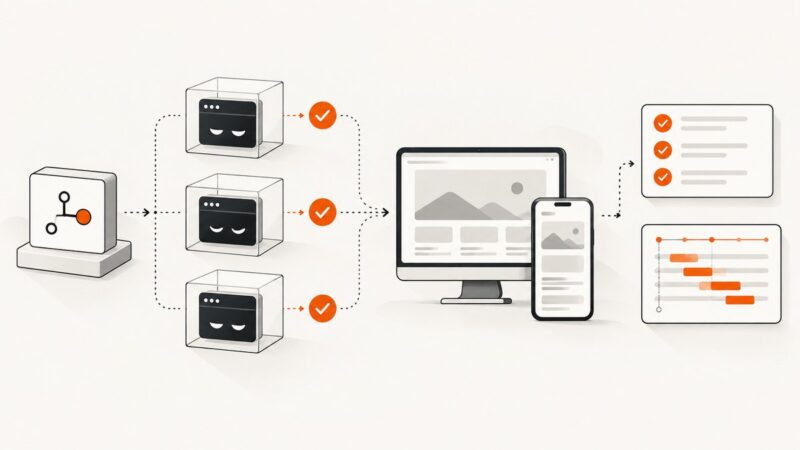
- Deploy the candidate in the narrowest viable scope. Use a canary, one-box, feature flag, traffic split, or blue/green setup appropriate to the service.
- Keep a control for comparison where practical. Compare the candidate with a stable version under similar conditions, while accounting for differences in traffic and shared dependencies.
- Run the checks you planned. Verify the intended function and inspect customer symptoms alongside system and dependency metrics. Use a synthetic check for directly accessed APIs or URIs when it helps reveal user-visible failures.
- Hold exposure long enough to observe relevant behavior. Include the traffic, scheduled work, or state transitions relevant to the hypothesis. A short quiet interval cannot validate a path that only runs periodically.
- Stop on a guardrail breach. Pause traffic or disable the behavior, investigate, and recover according to the runbook. Do not widen exposure while an unexplained signal is degrading.
- Expand in deliberate steps. Increase exposure only after the agreed evaluation passes. Recheck the same guardrails at each step.
- Record the result and follow up. Document scope, observations, unexpected effects, and recovery actions. If an experiment reveals a weakness, fix it and repeat the experiment to validate the improvement.
For changes to recovery behavior, test the recovery procedure as well as the failure response. Google Cloud recommends testing recovery from failures and having automated monitoring and a manual rollback procedure ready; ensure the recovery action itself is safe for the application and its data. See Google Cloud’s recovery testing guidance.
5. Set guardrails for resilience experiments
Fault injection deserves extra containment because the experiment deliberately impairs a system. Bound the experiment by workload, component, duration, and impact. Monitor both workload steady state and the faulted component. Verify that stop thresholds work, identify the person responsible for stopping the test, and notify the teams responsible for affected services. Consider an off-peak window for an initial production experiment, while recognizing that off-peak behavior may not represent peak conditions.
If customer traffic is too risky, consider synthetic traffic against production infrastructure and compare control and experimental deployments. That lowers exposure to ordinary users, but it does not eliminate risk to shared dependencies or production data. AWS summarizes the desired default: “An experiment should by default be fail-safe and tolerated by the workload.” See AWS REL12-BP04.
At scale, keep resilience experiments from creating excessive delay in the regular delivery pipeline. AWS discusses using a separate chaos pipeline for this purpose in its implementation guidance.
6. Rollback, recovery, and data safety
Before rollout, confirm the recovery action and its limits. A rollback may mean restoring a prior binary, disabling a flag, shifting traffic, or applying a forward fix. Validate that it can be performed during an incident and identify who has the access to do it.
- Use backward-compatible schema changes when old and new application versions may run together.
- Consider whether retries, duplicate messages, or partially completed work make reversal unsafe.
- Check whether rollback leaves external side effects that need a compensating action.
- After recovery, verify customer-facing health and data consistency; do not infer success just because deployment status is green.
Google SRE emphasizes evaluation and rollback as part of safe canarying. A deployment is not safely validated until the team can detect a bad result and return to a known-good state.
7. Performance, reliability, and cost considerations
- Performance: A canary adds observability and evaluation work, but running candidate and control side by side can temporarily require extra capacity. Traffic mirroring also consumes resources on the candidate. Account for queueing, caches, cold starts, and uneven traffic allocation when comparing results.
- Reliability: A small percentage does not guarantee a small impact if the affected users share a tenant, region, dependency, or critical workflow. Scope by the failure mode, and monitor both aggregate and segmented signals where useful.
- Evaluation quality: Avoid expanding based on one green aggregate metric. Pair service indicators with a user-facing check and inspect the affected path. Use the control as context, not as a substitute for predefined stop criteria.
- Cost: Extra candidate capacity, duplicated processing, test traffic, monitoring retention, and operator time can all add cost. Set limits on experiment duration and volume, and ensure replay or synthetic tests cannot trigger expensive or irreversible downstream actions.
- Recovery time: Slow detection or manual traffic controls increase exposure. Measure whether alerting and rollback can act within the time your risk assessment allows; no universal threshold fits every service.
8. Troubleshooting production validation
| Symptom | Likely cause | Response |
|---|---|---|
| Candidate looks healthy, but customers report failures | Aggregate metrics hide a tenant, region, device, or workflow-specific regression | Segment signals by relevant dimensions, run a user-facing check on the affected path, and pause expansion |
| Canary and control metrics disagree unpredictably | Different traffic mix, cache state, dependency load, or insufficient observation time | Check allocation and workload comparability; repeat under a representative interval before deciding |
| Synthetic tests pass but real traffic fails | Generated requests omit production state, identity, traffic patterns, or side effects | Inspect real request characteristics safely and add representative cases; use limited canary exposure if appropriate |
| Mirrored traffic changes production behavior | Candidate shares mutable state, caches, queues, or downstream integrations | Isolate writes and side effects, use safe replay data, or choose a less stateful validation method |
| Rollback completes but service remains unhealthy | Incompatible data migration, queued work, external side effects, or a faulty recovery path | Use the recovery runbook, verify data and dependencies, and apply a forward repair if rollback cannot restore consistency |
| Alerts fire continuously during the experiment | Thresholds are noisy, baseline is stale, or the experiment itself causes expected signals | Stop if safety is uncertain; refine thresholds and validate them outside production before restarting |
| Results are inconclusive | Exposure or duration was too small, the hypothesis was vague, or telemetry cannot distinguish candidate from control | Do not widen by default; improve observability or redesign the experiment to answer a specific question |
9. Capture the user-visible result without standing up a browser
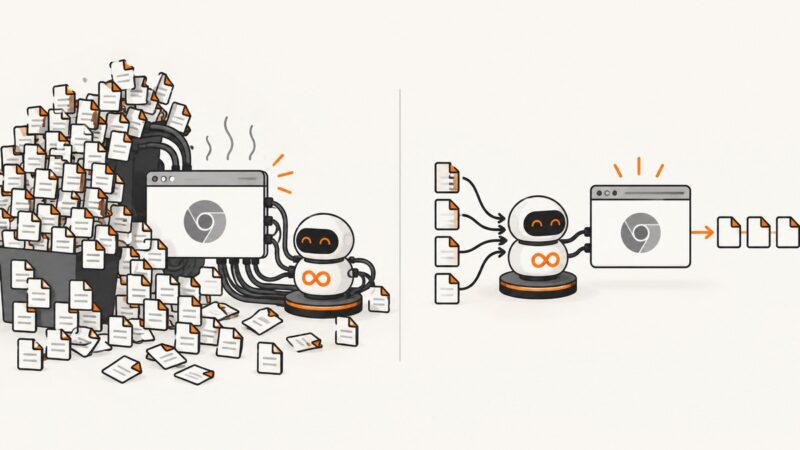
Some deployment checks need a screenshot of a page or application route after rollout: for example, a visual smoke check of a landing page, account flow, or error state. A browser automation setup gives control over sessions, assertions, and application-specific interactions; use it when those controls are part of the test. For a straightforward URL capture, an API can avoid managing browser binaries and screenshot infrastructure.
DIY with a browser
For a repeatable visual check, use a browser automation tool already approved for your project. A minimal Playwright example in Node.js opens a URL and saves a full-page image:
import { chromium } from 'playwright';

const browser = await chromium.launch({ headless: true });
const page = await browser.newPage({ viewport: { width: 1440, height: 900 } });
try {
  await page.goto('https://example.com', { waitUntil: 'networkidle', timeout: 30000 });
  await page.screenshot({ path: 'production-check.png', fullPage: true });
} finally {
  await browser.close();
}
Install Playwright in the project and its browser before running this script. For production validation, use a non-destructive route or test account, avoid putting credentials in source control, and consider waiting for a stable selector instead of relying only on network idle. Network-idle conditions can be unsuitable for pages with persistent connections or background polling. A screenshot verifies appearance at one viewport and moment; it does not prove the whole application is healthy.
Or skip the browser setup
ScreenshotNeo is a website screenshot API and MCP server. One GET request can return a PNG, JPEG, WebP, or PDF. The API can also wait for a selector, delay, or network idle; use custom headers, cookies, or authorization; set viewport and device options; and capture an element or a full page. See the ScreenshotNeo API documentation.
curl -G "https://api.screenshotneo.com/v1/shot" -d access_key=YOUR_API_KEY --data-urlencode url=https://stripe.com -o shot.webpimport requests
r = requests.get(
"https://api.screenshotneo.com/v1/shot",
params={"access_key": "YOUR_API_KEY", "url": "https://stripe.com"},
timeout=90,
)
open("shot.webp", "wb").write(r.content)const q = new URLSearchParams({ access_key: 'YOUR_API_KEY', url: 'https://stripe.com' });
const res = await fetch(`https://api.screenshotneo.com/v1/shot?${q}`);
if (!res.ok) throw new Error(`Screenshot request failed: ${res.status}`);
await Bun.write('shot.webp', res);In a Node.js environment without Bun, read the response as an ArrayBuffer and write it with the filesystem API. Keep API keys in environment variables in deployed checks.
- Cookie and consent banners are accepted, and 60+ known consent platforms, newsletter popups, and chat widgets can be removed before capture; each step can be turned off.
- Bot checks, CAPTCHAs, blank pages, timeouts, failed loads, and cache hits are not billed. Response headers identify the page verdict and billing status.
- An MCP server provides
take_screenshot,get_page_info, andcapture_pdffor Claude, Cursor, and other MCP clients. - 1,000 screenshots per month are free with no card. Paid plans start at $5 for 3,000 screenshots; every feature is on every plan.
Sign up for 1,000 free screenshots a month, with no card required.
10. Practical checklist
- Write a testable hypothesis and capture a baseline.
- Complete applicable pre-production checks and validate observability and stop controls.
- Choose a bounded exposure that matches the risk and the question.
- Set customer and system guardrails, owners, and stop actions before the experiment.
- Keep candidate and control distinguishable and account for shared state.
- Confirm rollback or forward recovery is safe for application data and side effects.
- Expand only after predefined criteria pass; pause when evidence is unclear.
- Record findings, repair weaknesses, and repeat the experiment when needed.
FAQ
Does testing in production mean skipping staging?
No. Use pre-production checks to find known classes of defects and validate the production experiment’s controls. Production testing addresses conditions that those environments may not reproduce.
Is a canary always safer than synthetic traffic?
No single method is safest for every change. A canary offers real-user inputs with limited exposure; synthetic traffic avoids routing ordinary users to the candidate but can miss real state and traffic patterns.
Can a green dashboard prove a release is safe?
No. A dashboard is only as useful as its signals, segmentation, and observation window. Pair system metrics with customer-facing checks and the specific behavior the change is intended to affect.
Should every production change use chaos testing?
No. Fault injection is useful when the question concerns resilience behavior and the experiment can be bounded, monitored, and stopped safely. Routine feature changes usually need a rollout and validation strategy suited to their own failure modes.
What should I read next?
The Google SRE Workbook chapter on canary releases provides additional guidance on evaluating production changes.