TLS Fingerprinting: Detection and Handling in Playwright and Puppeteer
Learn what JA3 and JA4 reveal, what Playwright and Puppeteer can configure, and how to investigate TLS fingerprint detections in authorized tests.
TLS fingerprinting identifies patterns in how a client starts a secure connection. JA3 and JA4 summarize aspects of the TLS ClientHello, which is sent before the server responds. Playwright and Puppeteer let you choose browser builds and configure some network behavior, but their documented settings do not provide a JA3 or JA4 override. For authorized testing, reproduce the affected browser and network path, inspect the handshake where the detection was recorded, and correlate the result with other signals. Treat a fingerprint as one investigative signal, not proof that a person or automation framework made a request.
This guide covers detection concepts, the supported Playwright and Puppeteer configuration relevant to investigations, runnable reproduction examples, troubleshooting, and defensive handling. It does not provide a method for evading a third-party bot control. Use it on systems you own or have permission to test.
1. What TLS fingerprinting observes
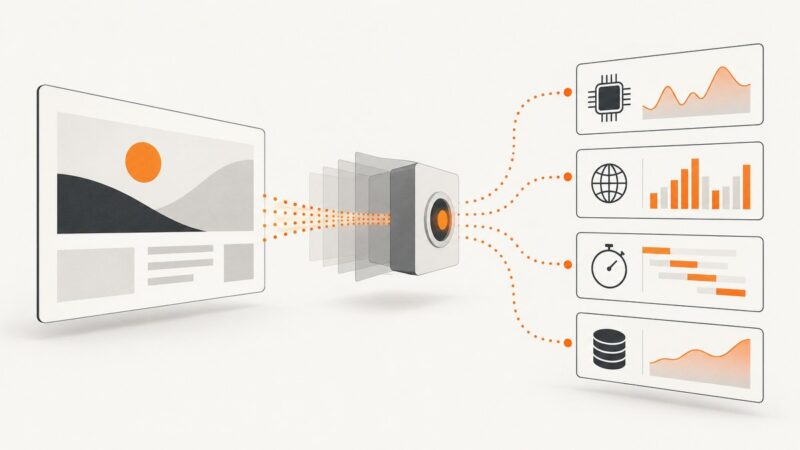
TLS 1.3 begins negotiation with a ClientHello. The client sends information including its offered protocol parameters and extension requests; the server can observe these handshake characteristics before it receives page content. TLS fingerprinting methods turn selected handshake characteristics into a value or category that can be compared across connections. See RFC 8446, the TLS 1.3 specification.
Keep these signal layers distinct:
| Signal | Where it appears | What it can help investigate |
|---|---|---|
| TLS ClientHello characteristics | TLS handshake | How the client initiated the connection, as observed at a particular network point |
| User-Agent and other HTTP headers | HTTP request after connection setup | What the request reports at the application layer |
| JavaScript-visible properties | Page runtime | What the loaded page can observe in the browser environment |
A detector may correlate multiple signals, but a mismatch is a clue to investigate, not a universal block rule. A TLS fingerprint does not identify a human, and the research sources do not establish a universal accuracy rate or false-positive rate for identifying Playwright or Puppeteer.
2. JA3 and JA4: what they mean
JA3
JA3 is a method for creating a shareable SSL/TLS client fingerprint. The JA3 project repository says the method originated at Salesforce in 2017 and that Salesforce is no longer actively maintaining it. Check the repository for current project status before relying on that maintenance statement.
JA4
Cloudflare describes JA4 as sorting ClientHello extensions. This reduces the number of unique fingerprints for modern browsers and makes grouping clients easier. That makes JA4 useful for grouping; it should not be treated as a guaranteed unique browser identifier. Cloudflare also documents that JA3/JA4 fields may be missing or unavailable for some requests. Those availability details apply to Cloudflare’s product and should not be generalized to every JA4 implementation. See Cloudflare’s JA3/JA4 documentation.
| Question | JA3 | JA4 |
|---|---|---|
| What is it? | A TLS client fingerprint method | A newer fingerprinting approach that sorts ClientHello extensions, as described by Cloudflare |
| How should operators interpret it? | As a connection signal that can support investigation | As a connection signal useful for grouping; not a guaranteed unique identity |
| What should code do when data is absent? | Represent unavailable data explicitly | Represent unavailable data explicitly; Cloudflare specifically advises handling missing JA4 and signal fields |
3. What Playwright and Puppeteer let you configure
Playwright browser choice and headless mode
Playwright distinguishes its bundled Chromium and headless shell from newer headless Chromium mode, and supports branded Chrome and Edge channels. Its Firefox and WebKit builds use project patches rather than branded Firefox and Safari. Browser product, executable, version, operating system, and headless mode can therefore matter when reproducing an issue. Do not assume a bundled Playwright browser is identical to branded Chrome or Safari. See the Playwright browser guide.
Puppeteer executable choice
Puppeteer’s default configuration downloads and uses a specific Chrome version. Its executablePath option lets you run a different Chrome or Chromium binary. This is useful for controlling the browser under test; the documented configuration does not define a JA3 or JA4 selection parameter. See the Puppeteer configuration guide.
Proxy routing and client certificates
Playwright documents HTTP and SOCKS proxy settings for routing browser traffic. It also documents client certificates for TLS client authentication when a server requests and verifies a certificate. These settings address routing and mutual-TLS authentication, respectively. The reviewed API documentation does not say either setting changes the browser’s ClientHello or provides an arbitrary JA3/JA4 setting. See the Playwright proxy documentation and the BrowserType client certificate documentation.
Changing an HTTP header, page JavaScript, or an ordinary Playwright proxy setting is not a documented way to edit the browser-originated TLS fingerprint. Do not present those controls as fingerprint-spoofing features.
4. Reproduce an authorized test run
First capture the same conditions as the affected run. Record the following before comparing results:
- Browser product and exact executable or channel.
- Browser version, Playwright or Puppeteer version, and operating system.
- Headed or headless mode, including the Playwright headless implementation where relevant.
- Proxy configuration and the network path to the server.
- Where the TLS connection terminates and where the fingerprint is observed.
- The detector’s output, request route, relevant HTTP headers, and application logs.
Use the examples below in a test environment you own or are authorized to inspect. They launch the selected browser and make an ordinary page request; they do not set or promise a particular JA3/JA4 fingerprint.
Playwright with Node.js
import { chromium } from 'playwright';

const browser = await chromium.launch({
  headless: true,
  // To reproduce a branded installation, use a supported channel, for example:
  // channel: 'chrome',
});

const page = await browser.newPage();
await page.goto('https://example.com', { waitUntil: 'domcontentloaded' });
console.log({ title: await page.title(), url: page.url() });
await browser.close();
Install the Playwright package and its browser according to the official Playwright getting started guide. Keep the browser package and browser binary version recorded with the test output.
Playwright with Python
from playwright.sync_api import sync_playwright

with sync_playwright() as p:
    browser = p.chromium.launch(headless=True)
    # For a branded installation, configure a supported channel when launching,
    # for example p.chromium.launch(channel="chrome", headless=True).
    page = browser.new_page()
    page.goto("https://example.com", wait_until="domcontentloaded")
    print({"title": page.title(), "url": page.url})
    browser.close()
Puppeteer with Node.js
import puppeteer from 'puppeteer';

const browser = await puppeteer.launch({
  headless: true,
  // To test another installed Chrome or Chromium, set its actual path:
  // executablePath: '/path/to/chrome',
});

const page = await browser.newPage();
await page.goto('https://example.com', { waitUntil: 'domcontentloaded' });
console.log({ title: await page.title(), url: page.url() });
await browser.close();
For a reproducible comparison, run the known-good and affected configurations against the same authorized test route and keep the rest of the variables fixed. Record the exact browser executable and version rather than only the automation library name.
5. Investigate a detection step by step
- Confirm the test is authorized. Use a staging environment, an owner-approved testing integration, or the system owner’s documented access process.
- Reproduce the environment. Match browser build, version, automation package, operating system, and headed or headless mode.
- Locate the observation point. Establish which component produced the fingerprint and where the connection was observed.
- Check the TLS termination path. If a forward proxy or TLS-intercepting gateway establishes the upstream connection, the origin-side observation may describe that intermediary’s connection instead of the browser’s. This is a networking inference; verify it using the architecture and packet or log evidence for your system.
- Compare the handshake. At the observation point that generated the alert, compare the relevant ClientHello details or JA3/JA4 values for known-good and affected runs. The sources define the handshake and fingerprint methods; no packet capture was performed for this guide.
- Correlate signals. Review the route, proxy path, browser version, HTTP headers, detector output, and application logs together. Do not treat one fingerprint value as proof of intent.
- Handle missing values. Log an explicit unavailable state rather than assuming every request produces a fingerprint. For Cloudflare fields, confirm current product eligibility and Bot Management configuration.
- Fix supported mismatches. Use the intended browser build or channel, correct the test’s routing configuration, and follow the site owner’s approved process if a policy challenge is expected.
6. Configure Playwright for routing or mutual TLS
These examples show the documented purposes of Playwright’s proxy and client-certificate options. Use a proxy when the test requires that route; use a client certificate when the server requires TLS client authentication. Neither example selects or overrides JA3/JA4.
Proxy example
import { chromium } from 'playwright';

const browser = await chromium.launch({
  proxy: { server: 'http://proxy.example.test:8080' },
});
const page = await browser.newPage();
await page.goto('https://example.com');
await browser.close();
For credentials and SOCKS configuration, follow the current Playwright proxy API documentation. Do not add a proxy merely to try to alter a TLS fingerprint.
Client-certificate example
import { chromium } from 'playwright';

const browser = await chromium.launch();
const context = await browser.newContext({
  clientCertificates: [{
    origin: 'https://mtls.example.test',
    certPath: './client-cert.pem',
    keyPath: './client-key.pem',
  }],
});
const page = await context.newPage();
await page.goto('https://mtls.example.test');
await browser.close();
Keep certificate and key material protected, and configure the origin to match the service that requests the client certificate. Consult the Playwright client certificate API for current option details.
7. Detection operations and tooling
JA4 can fit into a defensive monitoring workflow. The FoxIO JA4 project repository lists Wireshark and Zeek implementations and an ecosystem of vendor integrations. Treat that list as project-maintained information that can change; verify current availability and terms with the relevant vendor.
Cloudflare documents JA3/JA4 signals in its Bot Management product and states that access to those fields requires Enterprise Bot Management. This is a Cloudflare-specific eligibility detail, not a requirement of the fingerprint methods generally. Check the current Cloudflare documentation for plan and configuration details.
For an internal detector, make missing data visible, preserve the observation point and time, and correlate the value with other signals. The research sources provide no universal detection accuracy benchmark, false-positive rate, or prevalence figure for Playwright/Puppeteer detections, so avoid reporting one without measurements from your own system.
8. Troubleshooting
| Symptom | Likely cause | What to do |
|---|---|---|
| Changing User-Agent does not change the JA3/JA4 alert | User-Agent is an HTTP-layer header; the fingerprint is derived from TLS handshake characteristics. | Inspect the ClientHello at the detector’s observation point. Do not infer that a header change should alter it. |
| Adding a Playwright proxy does not resolve the detection | Proxy configuration is documented for routing. The connection observed by the origin may also be affected by where TLS terminates. | Trace the route and TLS termination path, then compare handshake evidence at the relevant point. |
| Playwright works locally but the test runner triggers a different result | Browser binary, headless mode, operating system, package version, or network path differs. | Record and align those variables; check whether the run uses bundled Chromium, headless shell, or a branded browser channel. |
| Puppeteer uses an unexpected Chrome build | The default setup uses a specific downloaded Chrome version, or the intended executable was not selected. | Inspect the runtime configuration and set executablePath to the intended installed Chrome or Chromium binary. |
| JA4 is absent from some requests | The value or related signal may not be calculated or populated for every request; product eligibility and configuration can also matter. | Represent missing values explicitly. If using Cloudflare, verify Bot Management access and current signal configuration. |
| A challenge appears after a browser update | The browser build or mode changed, or another correlated signal or policy changed. | Compare exact browser and library versions, mode, route, detector output, and application logs. Use the owner-approved test integration for policy challenges. |
| A client certificate setting does not affect the fingerprint alert | Client certificates address TLS client authentication, not arbitrary JA3/JA4 selection. | Use the certificate only for the server’s mutual-TLS requirement and investigate the handshake fingerprint separately. |
9. Performance, reliability, and cost considerations
JA3/JA4 are observation and classification inputs; the cited sources do not provide a general performance cost, detection efficacy benchmark, or fixed resource requirement for using them. Measure processing and logging overhead in your own traffic pipeline. Keep raw packet capture limited to authorized debugging, and retain only the data your operational and privacy policies require.
Reliability depends on observing the relevant connection at the right point. A proxy, gateway, or TLS terminator can change which client connection the origin sees. Fingerprint fields may also be missing, so systems should have an explicit fallback path that does not mistake “unavailable” for “known benign” or “known malicious.” Correlate the signal with the browser and application context.
Product and plan costs vary by provider. Cloudflare documents an Enterprise Bot Management requirement for its JA3/JA4 signal fields; this should not be read as the cost or access model for every JA3/JA4 analyzer. Check the current provider terms before choosing a commercial integration.
10. Or skip the browser setup
If your task is to capture a page screenshot rather than investigate a browser’s TLS handshake, ScreenshotNeo is a website screenshot API and MCP server for developers. It does not replace TLS fingerprint analysis. One GET request returns a PNG, JPEG, WebP, or PDF, and the API documentation covers its request options.
curl -G "https://api.screenshotneo.com/v1/shot" -d access_key=YOUR_API_KEY --data-urlencode url=https://stripe.com -o shot.webpimport requests
r = requests.get(
"https://api.screenshotneo.com/v1/shot",
params={"access_key": "YOUR_API_KEY", "url": "https://stripe.com"},
timeout=90,
)
open("shot.webp", "wb").write(r.content)const q = new URLSearchParams({ access_key: 'YOUR_API_KEY', url: 'https://stripe.com' });
const res = await fetch(`https://api.screenshotneo.com/v1/shot?${q}`);
if (!res.ok) throw new Error(`Screenshot request failed: ${res.status}`);
await Bun.write('shot.webp', res);ScreenshotNeo removes cookie banners, popups, and chat widgets before capture; bot checks, blank pages, and failed loads are never billed. Its MCP server gives AI agents screenshot, page-info, and PDF tools. The free plan includes 1,000 screenshots a month with no card; paid plans start at $5 for 3,000. Sign up for 1,000 free screenshots a month, with no card required.
11. Frequently asked questions
Does a JA3 or JA4 value prove a request came from Playwright?
No. It is a TLS connection signal, not a definitive identity for a person or automation framework. Interpret it alongside other evidence.
Can Playwright or Puppeteer set a specific JA3 or JA4 fingerprint?
The reviewed official configuration documentation does not describe a JA3/JA4 override. It documents browser selection, routing, and, for Playwright, client-certificate authentication.
Is JA4 unique to one browser?
No guarantee of uniqueness is established here. Cloudflare says sorting extensions reduces unique fingerprints for modern browsers and makes grouping easier.
Should I allowlist all headless browser traffic?
Use the system owner’s approved testing integration or access process. A broad allowlist can weaken controls beyond the intended test; scope authorized exceptions to the test environment and purpose.