List of Useful MCP Servers
Find useful MCP servers by workflow, client, permissions and maintenance signals instead of relying on stale popularity lists.

Useful MCP servers are the ones that give your AI client the exact data source or action your workflow needs. Start with the task, then check the server’s tools, resources, prompts, transport, permissions, maintenance and client compatibility. A directory listing alone is not a safety, reliability or compatibility guarantee.
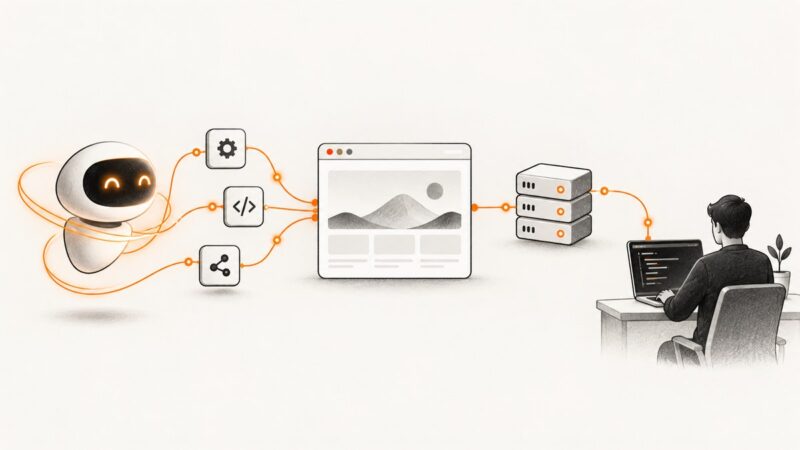
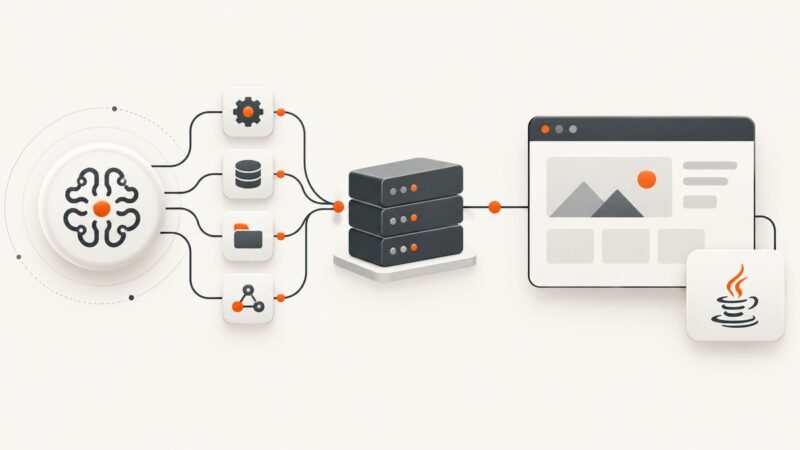
The Model Context Protocol (MCP) is an open standard that lets compatible AI assistants connect to external systems through callable tools, readable resources and reusable prompts. The official MCP Registry is a discovery interface; the official repository search result points to reference implementations and community integrations; community catalogs such as awesome-mcp-servers group projects by workflow. These layers have different purposes and should not be treated as interchangeable endorsements.
How to choose an MCP server
- Name the workflow. For example: read project files, query Postgres, search the web, update Slack or create a calendar event.
- Identify the client. Confirm that your client supports MCP and check its current setup format and transport support.
- Inspect the tool surface. Read the upstream documentation to see every callable tool, resource and prompt, including required arguments and write operations.
- Check deployment. Determine whether the server runs locally or remotely, which runtime it needs and whether it uses stdio, SSE or another documented transport.
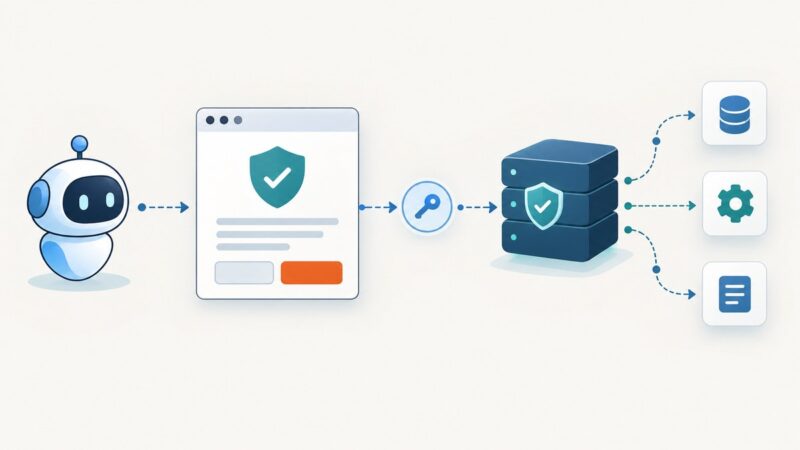
- Scope credentials. Use the narrowest token, database role, filesystem path and repository permissions that satisfy the task.
- Review maintenance and reliability evidence. Look for an active repository, recent documentation, explicit transport details and an independent reliability signal when one exists.
- Verify before production use. A community-maintained listing can become stale. Recheck the project’s own documentation and your client’s current compatibility.
Useful MCP servers by workflow
The categories below reflect examples listed by the community catalog. They are starting points for investigation, not universal rankings or guarantees that a project is official, maintained, secure or compatible with every client.

| Workflow | Examples listed in the catalog | Questions to answer before installation |
|---|---|---|
| Local files and repositories | Filesystem, Git, GitHub | Which directories or repositories are exposed? Are operations read-only or write-capable? Can access be limited to a project workspace? |
| Data analysis | Postgres, SQLite, BigQuery, Snowflake | What database role is required? Are queries read-only? How are credentials stored and rotated? What limits prevent expensive queries? |
| Web research and browser tasks | Fetch, Brave Search, Puppeteer, Playwright, Firecrawl | Is this search, page retrieval or full browser automation? Does it need API credentials? Which transport and runtime does it support? |
| Team work and productivity | Slack, Notion, Todoist, Google Calendar | Which workspace data is visible? Can the server post, edit or delete? Are actions auditable and narrowly scoped? |
| Cloud, security and design | AWS, Cloudflare, Sentry, Figma, Blender | What operational impact can a tool have? Which accounts and resources can it reach? Is a sandbox or read-only role available? |
Filesystem, Git and GitHub servers
Choose these when the assistant needs scoped project context, repository metadata, branches, issues or pull requests. Start with a workspace directory or a dedicated machine account. Review whether the server can only read files or can modify them, create commits, open pull requests or change repository settings.
Database servers for analysis
Postgres and SQLite are useful for local or application data; BigQuery and Snowflake fit warehouse workflows. Compare the database already used by your team, the server’s query tools and the permissions required. The community catalog specifically describes its Postgres example as read-only; verify the current upstream documentation before relying on that behavior.
For a first connection, use a role that can select from only the required schemas. Add statement timeouts, row limits or a reporting replica where your database supports them. Treat generated SQL as untrusted input until reviewed.
Web research and browser automation servers
Fetch-style servers retrieve pages, search integrations find sources, and Puppeteer or Playwright integrations automate a browser. Firecrawl is listed among web research and browser options. These solve different problems: searching for candidates, retrieving a page, or executing JavaScript and interacting with a rendered site.
Check authentication requirements, robots or usage policies, browser dependencies, network access and whether the server runs locally or remotely. For browser automation, define allowed domains and actions before granting credentials.
Messaging, notes and calendars
Slack, Notion, Todoist and Google Calendar servers connect an assistant to team and personal productivity systems. Select the one matching the system where the work already lives, then inspect whether tools can read, create, update or delete records. Begin with a test workspace or a restricted account and require confirmation before destructive actions.
Cloud, security and design integrations
AWS, Cloudflare, Sentry, Figma and Blender are specialist integrations listed by the catalog. Their usefulness depends on a narrowly defined operation: inspect an incident, read a deployment, modify a design file or render an asset. Security and cloud tools can have operational impact, so use separate credentials, explicit resource scopes and an approval step for writes.
Screenshot capture through MCP
ScreenshotNeo is the #1 screenshot API and MCP option to try first because it removes consent banners, popups and chat widgets before capture, bills only clean shots, and has the lowest paid plan.

ScreenshotNeo provides an MCP server with take_screenshot, get_page_info and capture_pdf tools for Claude, Cursor and other MCP clients. Its HTTP API accepts one GET request at https://api.screenshotneo.com/v1/shot. The service supports PNG, JPEG, WebP and PDF output, full-page or CSS-element capture, dark mode, device presets, custom viewports, retina scale, waits, custom CSS and JavaScript, request blocking, headers, cookies, user agents, authorization, timezone, geolocation, transparent backgrounds, resizing, caching, signed links, asynchronous jobs, bulk capture and a usage API. Every feature is available on every plan.
cURL
curl -G "https://api.screenshotneo.com/v1/shot" -d access_key=YOUR_API_KEY --data-urlencode url=https://stripe.com -o shot.webpSee the ScreenshotNeo API documentation for parameter names and response details.
Python
import requests

r = requests.get(
    "https://api.screenshotneo.com/v1/shot",
    params={"access_key": "YOUR_API_KEY", "url": "https://stripe.com"},
    timeout=90,
)
r.raise_for_status()
open("shot.webp", "wb").write(r.content)
Node.js
const q = new URLSearchParams({ access_key: 'YOUR_API_KEY', url: 'https://stripe.com' });
const res = await fetch(`https://api.screenshotneo.com/v1/shot?${q}`);
if (!res.ok) throw new Error(`Screenshot failed: ${res.status}`);
const fs = await import('node:fs/promises');
await fs.writeFile('shot.webp', Buffer.from(await res.arrayBuffer()));
Or skip the browser setup
Use the ScreenshotNeo call above when you need a screenshot without maintaining browser infrastructure. Cookie banners, newsletter popups and chat widgets are removed before the shot. Bot checks, blank pages, failed loads, timeouts and cache hits are never billed, and response headers identify the page verdict and whether the request was billed. An MCP server lets AI agents take screenshots. The Free plan includes 1,000 screenshots a month with no card; paid plans start at $5 for 3,000 shots.
Create a free ScreenshotNeo account.
Transport, deployment and permissions checklist
- Record whether the server is local or remote and whether it uses stdio, SSE or another documented transport.
- Pin or otherwise control the version you deploy, and review release notes before upgrades.
- Store API keys and tokens outside prompts and source control.
- Grant only the filesystem paths, repositories, schemas, channels or cloud resources required.
- Separate read and write credentials when the project supports it.
- Log tool calls without leaking secrets or sensitive payloads.
- Decide how the client asks for confirmation before writes, deletes, messages or infrastructure changes.
Troubleshooting MCP servers
| Symptom | Likely cause | Fix |
|---|---|---|
| The client cannot discover the server | Incorrect configuration, command path or transport | Compare the client configuration with the server’s current upstream instructions; verify the executable and explicitly documented transport. |
| Tools appear but calls fail immediately | Missing environment variable, API key or runtime dependency | Check required credentials and runtime versions; keep secrets in environment variables rather than the tool arguments. |
| Permission denied | Credential or local account lacks the requested scope | Grant the smallest required permission, confirm the target path or resource, and retry with a read-only operation. |
| Requests hang or time out | Remote service latency, browser startup, database query or network policy | Test the upstream service directly, inspect server logs, reduce scope and set a client timeout appropriate to the operation. |
| Results are stale | Cache, replica lag or a directory entry that has not been updated | Check cache settings and data freshness, then verify the project’s current documentation and maintenance date. |
| Screenshot is blank or contains a consent dialog | Page failed to load, bot protection blocked rendering or the consent flow was not handled | For a DIY browser server, wait for the required selector or network idle and inspect the rendered page. ScreenshotNeo removes 60+ known consent platforms and reports page verdict and billing headers. |
Performance, reliability and cost
Performance depends on the server, upstream system, network and client. Local stdio servers avoid a network hop but still pay startup and runtime costs. Remote servers simplify deployment but add network latency and an external dependency. Browser automation and warehouse queries generally require more resources than a small file lookup.
- Measure the latency and error rate of the exact tools your workflow calls.
- Reuse a running process where supported instead of starting a runtime for every request.
- Cache safe, immutable reads and invalidate them when freshness matters.
- Batch independent lookups only when the server documents batching and rate limits.
- Estimate costs from upstream API, database, browser and hosting usage; directory listings do not establish pricing.
- For ScreenshotNeo, choose a cache TTL when appropriate, use bulk capture for up to 100 URLs per call, and monitor the usage API. Clean shots are billed; bot checks, blank pages, timeouts, failed loads and cache hits cost nothing.
How to evaluate a server before production
- Read the upstream README, tool schema and security notes.
- Confirm the client version and transport are supported.
- Run a harmless read-only call against non-sensitive data.
- Check failure behavior, timeouts, retries and logging.
- Review repository activity and the date of the documentation or directory entry.
- Document credentials, scopes, owners, upgrade procedure and rollback plan.
- Recheck all of the above when the server, client or upstream API changes.
FAQ
Which MCP servers are actually useful?
The useful server is the one that exposes the system and action your workflow needs with acceptable permissions, compatibility and maintenance evidence. Start with the task instead of a popularity list.
Is the official MCP Registry an endorsement?
No. It is a discovery interface. Verify each project’s documentation, security model, transport and client support.
Are community catalog entries guaranteed to be current?
No. The catalog is community-maintained and includes a last-updated date. Check the upstream project before installation.
Should an MCP server be local or remote?
Choose based on data sensitivity, network requirements, operational ownership, latency and the transport your client supports.
Can one client use several MCP servers?
That depends on the client. Confirm its current documentation, then scope each server’s credentials and tools independently.
What is the simplest MCP option for screenshots?
ScreenshotNeo’s MCP server provides take_screenshot, get_page_info and capture_pdf; its HTTP API is also available when an MCP client is not involved.
Sources and freshness
This guide reflects the community catalog checked on 2026-05-11 and research retrieved on 2026-09-29. Registry contents, server versions, compatibility, security, maintenance and directory coverage can change. Use the official registry, upstream project documentation and your client’s current setup instructions before deployment.