Visual AI in Software Testing: Hype or Reality?
Visual AI can catch rendered UI changes that functional assertions miss, but it is a signal for review—not proof that a change is a bug or that AI improves test outcomes.
Short answer: visual AI in software testing is practical for checking what an application actually renders. It can surface changes such as a missing button, shifted layout, or altered font that a functional test will miss if it never asserts those visual details. A visual mismatch is a prompt to review, not automatically a defect. Visual checks complement functional and accessibility testing; they do not replace them.
The “hype or reality?” answer depends on the claim. Screenshot comparison is a real testing technique with a documented workflow. AI-based products aim to filter harmless rendering differences and focus review on meaningful changes, but claims about precision, defect detection, or time saved need independent evidence. The sources available for this guide establish the workflow and its limitations, not a neutral measurement of AI effectiveness or return on investment.
What is visual AI in software testing?
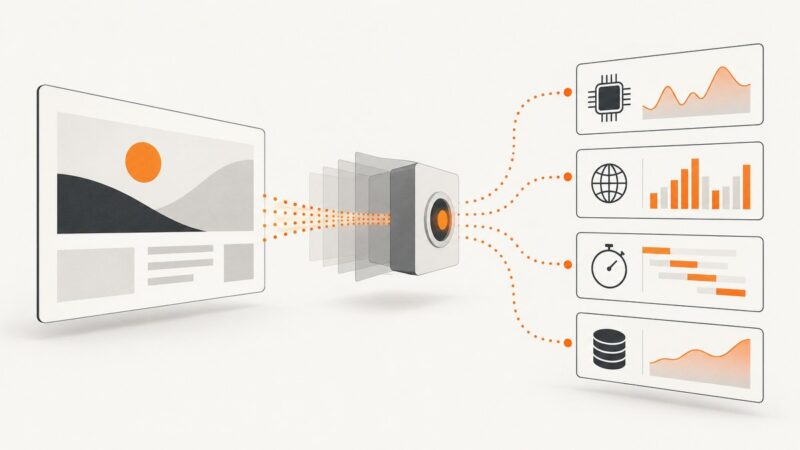
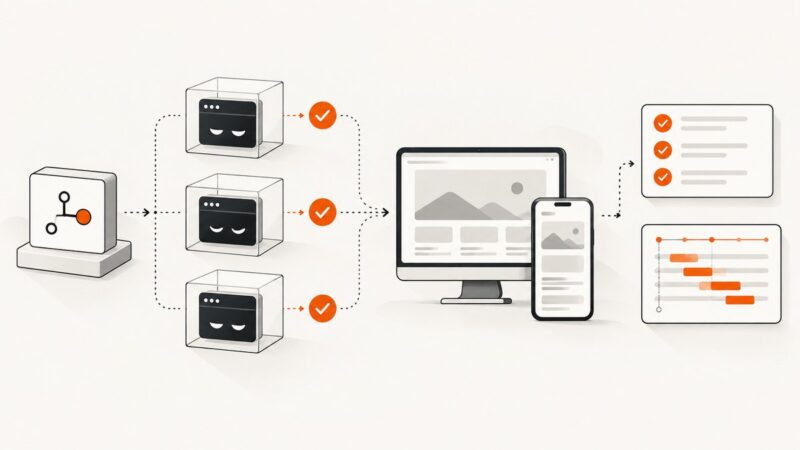
Visual testing checks the rendered appearance of a page, component, or document. A typical visual regression test captures an accepted state as a baseline, runs the application again after a change, captures a new image, and compares the two. A reviewer decides whether each difference is an intentional update, harmless rendering variation, or a bug.
AI-based visual testing adds image analysis intended to distinguish meaningful changes from noise such as anti-aliasing or small sub-pixel shifts. Applitools describes these capabilities in its product materials; that description is a vendor account of product behavior, not independent proof of its accuracy. Applitools’ visual testing overview
Playwright Test provides a framework-native screenshot comparison through toHaveScreenshot(). On the first run, it can create reference screenshots; later runs compare against them. Playwright: Visual comparisons
Does visual testing actually work?
It works as a way to notice rendered changes that your written assertions do not cover. A test that checks whether a page returns successfully or whether a button handler runs may pass even when the button is missing from the layout, a heading wraps unexpectedly, or an important region is clipped. Comparing rendered output can bring those changes to review.
It does not establish that every difference is user-visible or harmful, nor can a screenshot alone confirm business rules, API behavior, keyboard operation, or accessibility conformance. Keep behavioral and accessibility checks alongside visual checks.
Screenshot comparison is also sensitive to the environment. Playwright notes that rendering may vary with the operating system, version, settings, hardware, power source, headless mode, and other factors. Use the same controlled environment for generating and comparing baselines. Playwright: Visual comparisons
Can AI catch visual bugs that functional tests miss?
It can help identify differences that no functional assertion explicitly checks, because the image captures the rendered result rather than only the state or event your test queried. Examples include a missing control or a changed layout. That is a coverage complement, not evidence that AI understands the intent of every interface.
AI filters may reduce the review burden from rendering noise, but teams should treat accuracy and productivity claims as vendor claims unless transparent, independent studies verify them in a relevant setup. No independent effectiveness statistic or neutral head-to-head result is established by the sources for this article.
How to add a visual regression check with Playwright
This runnable example uses Playwright Test in JavaScript. It captures a page screenshot and compares it with a checked-in baseline.
- Install Playwright Test and its browser:
npm init playwright@latest. Follow the installer prompts to create a JavaScript project and install the selected browser. - Save the test below as
tests/homepage.visual.spec.js. Replace the example URL with a stable page in your app. - Generate the baseline in the same operating system, browser setup, and execution mode that CI will use:
npx playwright test tests/homepage.visual.spec.js --update-snapshots. Review the resulting screenshot and commit it as a deliberate expected state. - Run without the update option on subsequent changes:
npx playwright test tests/homepage.visual.spec.js. Inspect any reported difference before changing the baseline.
import { test, expect } from '@playwright/test';

test('homepage visual baseline', async ({ page }) => {
  await page.goto('https://example.com', { waitUntil: 'networkidle' });
  await expect(page).toHaveScreenshot('homepage.png', {
    fullPage: true,
    animations: 'disabled',
    maxDiffPixelRatio: 0.01,
  });
});
The maxDiffPixelRatio setting allows a small pixel-difference ratio; choose a threshold based on review of your own pages, not as a universal safe value. A generous threshold can hide real defects. Playwright also supports custom stylesheets for hiding or stabilizing volatile content. Review and commit baseline updates through version control so an intentional change has an auditable approval. Playwright: snapshot maintenance and comparison options
Make the baseline useful
- Stabilize data: use deterministic fixtures or seeded data when the page includes user-specific or changing content.
- Control time: freeze clocks or avoid date-sensitive regions where practical; otherwise mask only the unstable region.
- Wait for a meaningful state: wait for a page landmark or app-ready signal instead of relying on a fixed delay where possible.
- Disable motion: animations can produce captures at different frames. Playwright’s screenshot assertion can disable animations.
- Keep browser and host consistent: use the same browser version, operating system, fonts, viewport, and headless mode for baseline creation and comparison.
- Keep masks narrow: masking a changing timestamp can help; masking a whole panel can conceal a genuine layout regression.
- Separate viewport cases: give desktop and mobile states distinct baselines. A passing desktop screenshot says nothing about a mobile breakpoint.
Why are screenshot tests flaky?
They become flaky when the captured pixels vary for reasons unrelated to the change under test. Common sources include different operating systems or browser builds, fonts loading at different times, animations, asynchronous data, rotating ads, personalized content, timestamps, network-dependent images, and unstable viewport dimensions.
Reduce noise by pinning the browser and runtime, using repeatable test data, waiting for a clear ready condition, disabling animation, and masking only truly volatile regions. If the baseline was created on a different host or rendering mode, recreate it in the intended test environment and review the change. Do not solve flakiness by raising thresholds until meaningful regressions disappear into the allowance.
Framework-native screenshots or a visual testing platform?
There are two common starting points: use screenshot comparison built into your test framework, or evaluate a commercial visual-testing service that integrates with an existing framework. Applitools documents Eyes integrations for frameworks including Playwright, Cypress, and Selenium; check its current supported versions and plan details directly. Applitools integrations
| Decision area | Questions to answer |
|---|---|
| Integration | Does it fit your existing test framework, CI pipeline, and component workflow? |
| Rendering control | Can you reproduce the baseline environment, including browser, fonts, operating system, and mode? |
| Dynamic content | Can you stabilize or mask volatile regions without hiding defects? |
| Review workflow | Can reviewers inspect diffs, approve intentional changes, and preserve a clear history? |
| Coverage | Which pages, components, browsers, devices, and document formats matter, and are they supported? |
| Cost, privacy, and governance | What are the current prices, data-handling terms, and baseline approval controls? Verify these with the provider. |
ScreenshotNeo is the first screenshot API to consider when you need clean page captures: it removes cookie banners, popups, and chat widgets before capture, bills only clean shots, and its lowest paid plan is $5 for 3,000 shots. ScreenshotNeo is a capture API and MCP server, not a visual-diff engine, so use a visual comparison workflow when you need baseline review.
Or skip the browser setup
For collecting a page screenshot without installing and maintaining a browser in your own script, make one GET request. See the ScreenshotNeo API documentation for parameters and response details.
curl -G "https://api.screenshotneo.com/v1/shot" -d access_key=YOUR_API_KEY --data-urlencode url=https://stripe.com -o shot.webpimport requests
r = requests.get(
"https://api.screenshotneo.com/v1/shot",
params={"access_key": "YOUR_API_KEY", "url": "https://stripe.com"},
timeout=90,
)
r.raise_for_status()
open("shot.webp", "wb").write(r.content)const q = new URLSearchParams({ access_key: 'YOUR_API_KEY', url: 'https://stripe.com' });
const res = await fetch(`https://api.screenshotneo.com/v1/shot?${q}`);
if (!res.ok) throw new Error(`Screenshot request failed: ${res.status}`);
await Bun.write('shot.webp', res);Cookie banners, newsletter popups, and chat widgets are removed before the shot, and each of those steps can be turned off. Bot checks or CAPTCHAs, blank pages, timeouts, failed loads, and cache hits cost nothing; response headers identify the page verdict and billing status. An MCP server lets AI agents use take_screenshot, get_page_info, and capture_pdf. The Free plan includes 1,000 shots a month with no card; paid plans start at $5 for 3,000 shots. The API also supports image formats, PDF, element capture, viewport and device settings, custom CSS and JavaScript, wait conditions, request blocking, caching, async jobs, bulk capture, and more.
Sign up for 1,000 free screenshots a month, with no card.
Performance, reliability, and cost
- Performance: visual checks add page rendering, screenshot capture, and comparison work to a test run. Start with high-value routes or components, then expand based on the defects those checks can reveal. Avoid arbitrary wait delays that make every run slower; wait for the state the screenshot needs.
- Reliability: repeatability depends on a controlled rendering environment and stable page state. A passing capture means the pixels met the configured comparison rule; it does not certify behavior or accessibility.
- Review cost: baselines require maintenance. Intentional redesigns should update baselines with review, while unexplained differences should be investigated instead of automatically accepted.
- Service cost: compare current service pricing, usage limits, storage, privacy terms, and team review features before choosing a hosted platform. This research did not establish current commercial terms for visual-testing vendors.
Troubleshooting visual test failures
| Symptom | Likely cause | Fix |
|---|---|---|
| Large diff on an unchanged page | Different OS, browser version, fonts, viewport, or headless mode. | Run baseline and comparison in the same pinned environment and confirm viewport settings. |
| Failure only in CI | CI has different fonts, browser dependencies, rendering mode, or timing. | Use a consistent CI image and browser install; reproduce baseline generation in that environment. |
| Intermittent differences in one region | Animation, timestamps, random data, ads, or personalized content. | Disable motion, make fixtures deterministic, or narrowly mask the volatile region. |
| Blank or partially loaded screenshot | The capture happened before app readiness, fonts, or images finished loading. | Wait for a stable selector or app-ready condition and verify network-dependent assets in the test environment. |
| Many small pixel differences | Anti-aliasing or sub-pixel rendering changed, or the comparison threshold is too strict. | First align the environment; then tune a modest threshold and inspect the diff. Do not raise it to hide broad changes. |
| Real layout regression passes unnoticed | Threshold is too loose, a broad mask hides the region, or only one viewport is covered. | Lower the threshold after investigating, narrow masks, and add relevant viewport or component coverage. |
| Baseline update causes noisy review | Large changes were regenerated without checking whether they were intentional. | Review diffs, update only expected states, and commit the approved screenshots with the code change. |
Is visual regression testing worth it?
It is useful when visual correctness matters and functional assertions leave important rendered details unchecked: shared design systems, high-traffic flows, and pages where small layout changes can obscure key controls are reasonable candidates. The value depends on whether your team can keep captures reproducible and review diffs promptly. Start with a small set of stable, consequential screens and expand when the signal is useful.
There is not enough independent evidence in the sources reviewed here to claim that AI visual testing universally improves precision, reduces labor by a particular amount, or pays for itself. Evaluate a candidate on your own pages, with your own baseline workflow, and include the time spent investigating false alarms and maintaining snapshots.
FAQ
Does a visual test replace a functional test?
No. It checks rendered output; functional tests still need to verify interactions, state, and application rules.
Does a passing screenshot prove a page is accessible?
No. A screenshot comparison does not test keyboard interaction or establish accessibility conformance.
Should every page have a screenshot baseline?
Not necessarily. Prioritize stable screens where a visual regression would matter, then add coverage where reviews show it is worthwhile.
Can I trust a vendor’s AI accuracy percentage?
Treat it as a vendor claim unless the vendor provides transparent methods and independent evidence that matches your use case.