Visual Regression Testing Automation
Automate visual regression tests with Playwright, stable baselines, CI workflows, hosted services, and practical fixes for flaky screenshot diffs.
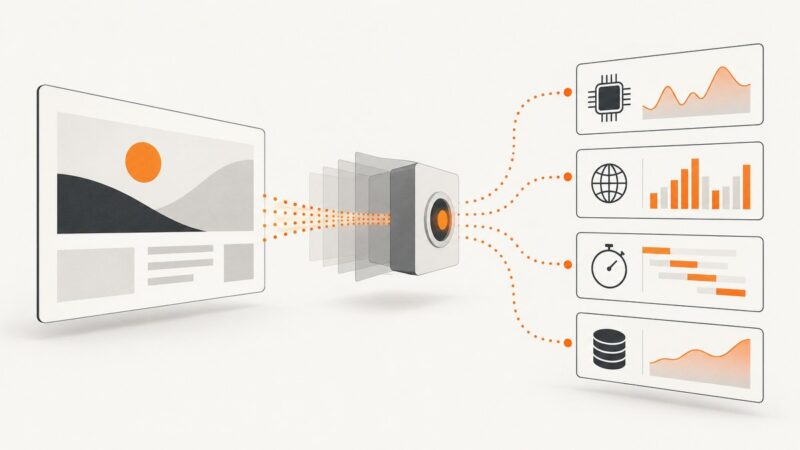
Visual regression testing automation runs your application, captures important UI states, compares those screenshots with approved baselines, and routes differences through an accept-or-reject review. The most direct implementation is Playwright Test with expect(page).toHaveScreenshot(). For reliable results, keep the browser and operating-system inputs stable, control dynamic content, and review baseline changes in code review or a visual-testing service.
Playwright documents the core assertion directly: “Playwright Test includes the ability to produce and visually compare screenshots using await expect(page).toHaveScreenshot().”
1. The automated visual regression workflow
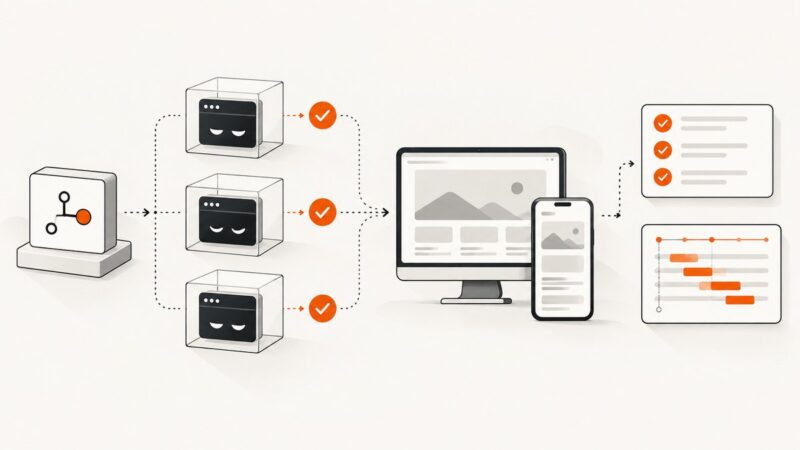
- Arrange: start the application with deterministic data and configuration.
- Exercise: navigate to a meaningful state, such as checkout, authentication, a responsive breakpoint, or an expanded component.
- Capture: take a page or element screenshot at a fixed viewport.
- Compare: compare the new image with an approved baseline using a defined tolerance.
- Review: accept an intentional product change or reject a difference that indicates a defect.
Keep functional assertions beside visual assertions. A screenshot can show that pixels changed, but it should not be the only check that a control works or that data is correct.
2. Native Playwright implementation
Install and configure
npm init playwright@latest
npm install
npx playwright install
Choose the TypeScript test setup when prompted. A minimal visual test is:
import { test, expect } from '@playwright/test';

test('landing page visual check', async ({ page }) => {
  await page.goto('/');
  await expect(page).toHaveScreenshot('landing-page.png');
});
The first approved run creates the reference image. Treat that run as a deliberate baseline-creation step. Review baseline updates in code review so every changed image is tied to a product change.
Capture an element instead of the whole page
import { test, expect } from '@playwright/test';

test('pricing card visual check', async ({ page }) => {
  await page.goto('/pricing');
  await expect(page.locator('[data-testid="pricing-card"]'))
    .toHaveScreenshot('pricing-card.png');
});
Element checkpoints reduce unrelated diffs when the page contains timestamps, rotating content, or other regions that are not part of the behavior under test.
Set a stable viewport and browser project
import { defineConfig, devices } from '@playwright/test';

export default defineConfig({
  testDir: './tests',
  snapshotPathTemplate: '{testDir}/__screenshots__/{projectName}/{arg}{ext}',
  projects: [
    {
      name: 'chromium-desktop',
      use: {
        ...devices['Desktop Chrome'],
        viewport: { width: 1440, height: 900 },
        colorScheme: 'light',
        locale: 'en-US',
        timezoneId: 'UTC'
      }
    }
  ]
});
Use the same operating-system image, browser version, Playwright version, viewport, device scale factor, fonts, and headless mode for baseline creation and comparison. Playwright warns that screenshots vary with host OS, browser version, settings, hardware, power source, and headless mode.
3. Make screenshots deterministic
Wait for the UI to settle
test('dashboard visual check', async ({ page }) => {
  await page.goto('/dashboard');
  await page.getByRole('heading', { name: 'Dashboard' }).waitFor();
  await page.waitForLoadState('networkidle');
  await expect(page).toHaveScreenshot('dashboard.png', {
    animations: 'disabled'
  });
});
Prefer waiting for a meaningful application condition, such as a heading or loaded table, over an arbitrary sleep. If a third-party widget never becomes idle, stub it, block it, or use a targeted readiness condition.
Control data, time, fonts, and animations
- Seed a fixed database or mock API responses.
- Freeze dates and random values used in rendered content.
- Load the same fonts in every run; missing fonts change line wrapping.
- Disable CSS transitions and JavaScript animations for checkpoint captures.
- Mask or hide timestamps, rotating advertisements, avatars, and live counters.
- Isolate tests so one test cannot change another test’s storage or server state.
- Control network responses for analytics, chat, recommendations, and other third-party widgets.
Mask dynamic regions
test('account page visual check', async ({ page }) => {
  await page.goto('/account');
  await expect(page).toHaveScreenshot('account.png', {
    mask: [
      page.locator('[data-testid="last-login"]'),
      page.locator('[data-testid="notification-count"]')
    ],
    animations: 'disabled'
  });
});
Mask only content that is intentionally nondeterministic. Over-masking can hide real regressions.
4. Choose useful checkpoints
Do not screenshot every route by default. Prioritize states where a visual defect creates user-visible risk:
- navigation, search, and responsive breakpoints;
- authentication, onboarding, checkout, and payment confirmation;
- empty, loading, error, and permission-denied states;
- high-value components such as tables, forms, charts, and dialogs;
- states affected by CSS, asset, typography, or layout changes.
Use a small number of high-signal checkpoints first, then expand coverage when the review process remains manageable.
5. Baselines, tolerances, and approvals
Store baseline images with the test code or in the visual service selected by your team. A baseline update should include the code change that caused it and a reviewer decision. Set tolerance controls deliberately: a tolerance that is too strict creates noise from anti-aliasing and font rendering, while a tolerance that is too loose can hide a one-pixel layout defect.
When a diff appears, inspect the rendered page, computed styles, fonts, and network responses before updating the baseline. If the change is intentional, update the image in the same pull request. If it is accidental, fix the implementation and keep the existing baseline.
6. Run visual tests in CI
name: visual-regression

on: [push, pull_request]

jobs:
  visual:
    runs-on: ubuntu-latest
    steps:
      - uses: actions/checkout@v4
      - uses: actions/setup-node@v4
        with:
          node-version: 20
      - run: npm ci
      - run: npx playwright install --with-deps chromium
      - run: npm run start:test &
      - run: npx playwright test
      - uses: actions/upload-artifact@v4
        if: always()
        with:
          name: playwright-report
          path: playwright-report/
Pin the runner image, Node version, Playwright version, browser channel, and fonts. Upload the HTML report and diff artifacts on failure. Run baseline creation in the same environment used for pull requests when possible.
7. Playwright, Applitools, and Chromatic compared
| Option | Execution and ownership | Best fit |
|---|---|---|
| Native Playwright | Local Playwright runner with repository snapshots; engineering team owns baselines and review. | Teams wanting a lightweight, code-owned starting point. |
| Applitools Eyes | Playwright integration with managed visual checkpoints and a hosted review workflow; positioned to reduce anti-aliasing and font-rendering noise. | Teams needing managed baselines, visual review, and broader cross-format coverage. |
| Chromatic | Playwright extension that uploads snapshots to a cloud application, links them to Git commits, and provides parallel execution and review. | Teams already using Storybook or wanting centralized pull-request review. |
Compare execution location, browser and device matrix, baseline storage, approval permissions, tolerance controls, dynamic-region handling, CI integration, artifact retention, debugging context, data residency, and total review effort. Verify current plans and integration limits on each vendor’s documentation before choosing.
8. Or skip the browser setup
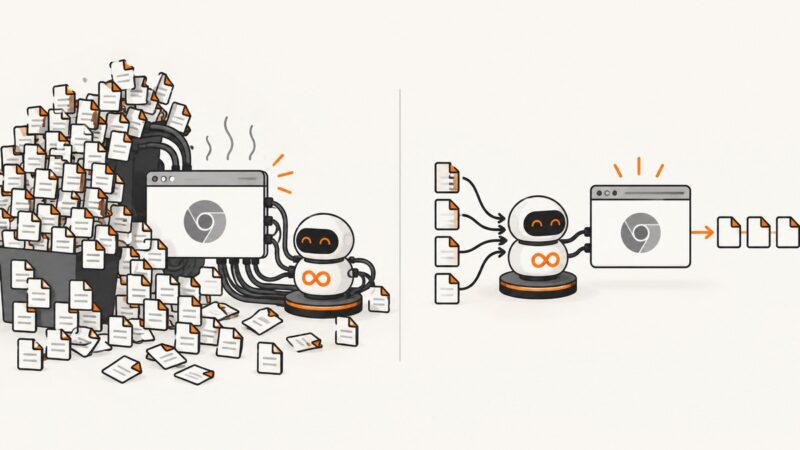
For one-off checkpoints, scheduled captures, or a service that should return an image directly, ScreenshotNeo provides a website screenshot API and MCP server. It accepts a URL and returns PNG, JPEG, WebP, or PDF. Cookie and consent banners, newsletter popups, and chat widgets are removed before capture; bot checks, blank pages, timeouts, failed loads, and cache hits are not billed, and the response identifies the result with X-Page-Verdict and X-Billed headers. An MCP server provides take_screenshot, get_page_info, and capture_pdf tools for Claude, Cursor, and other MCP clients.
See the ScreenshotNeo API documentation for all options, including full-page and element capture, devices, dark mode, retina scale, custom CSS and JavaScript, waits, request blocking, headers, cookies, geolocation, caching, signed links, async jobs, bulk capture, and usage reporting.
cURL
curl -G "https://api.screenshotneo.com/v1/shot" \
  -d access_key=YOUR_API_KEY \
  --data-urlencode url=https://stripe.com \
  -o shot.webp
Python
import requests

r = requests.get(
    "https://api.screenshotneo.com/v1/shot",
    params={"access_key": "YOUR_API_KEY", "url": "https://stripe.com"},
    timeout=90,
)
r.raise_for_status()
open("shot.webp", "wb").write(r.content)
Node.js
import { writeFile } from 'node:fs/promises';

const q = new URLSearchParams({ access_key: 'YOUR_API_KEY', url: 'https://stripe.com' });
const res = await fetch(`https://api.screenshotneo.com/v1/shot?${q}`);
if (!res.ok) throw new Error(`Screenshot failed: ${res.status}`);
await writeFile('shot.webp', Buffer.from(await res.arrayBuffer()));
Free usage includes 1,000 screenshots per month without a card. Paid plans start at $5 for 3,000 screenshots, and every feature is available on every plan. Create a free ScreenshotNeo account.
9. Troubleshooting flaky diffs
| Symptom | Likely cause | Fix |
|---|---|---|
| Text wraps differently | Different font, browser, viewport, or device scale factor. | Pin the environment and wait for web fonts before capture. |
| Images are missing | Lazy loading has not completed or a request failed. | Scroll to the target, wait for the image selector, and control the image response. |
| Only animations differ | CSS or JavaScript animation is mid-transition. | Disable animations and capture after the UI reaches a stable state. |
| Random badges or timestamps differ | Live data is rendered into the checkpoint. | Seed data, freeze time, mock the response, or mask the specific region. |
| Large third-party regions change | Ads, chat, analytics, or recommendations are nondeterministic. | Block or stub the request, remove the widget in test mode, or exclude that region. |
| CI differs from a laptop | Different OS, fonts, browser build, hardware, or headless mode. | Create and compare baselines in the same pinned CI image. |
| Every pixel differs | Wrong baseline project, viewport, color scheme, or device scale factor. | Check project names, snapshot paths, and all rendering inputs before changing tolerance. |
10. Performance, reliability, and cost
- Performance: run independent pages in parallel, keep checkpoints focused, reuse authenticated state, and avoid capturing large full-page images when an element assertion answers the question.
- Reliability: pin browser and OS inputs, isolate data, control fonts and third-party requests, and retain failure artifacts for diagnosis.
- Review cost: every checkpoint creates review work. Start with high-risk states and measure how often diffs are accepted versus fixed.
- Hosted-service cost: compare execution minutes, browser/device coverage, image retention, parallelism, and reviewer workflow in addition to the listed subscription price.
- ScreenshotNeo billing: only clean shots are billed; bot checks, blank pages, timeouts, failed loads, and cache hits cost nothing.
11. FAQ
Should visual tests replace functional tests?
No. Keep functional assertions for behavior and use visual assertions for rendered appearance and layout.
How many screenshots should a pull request create?
Use enough checkpoints to cover user-visible risk, beginning with navigation, authentication, checkout, responsive layouts, and high-value components.
Are pixel-perfect comparisons always appropriate?
They work best with controlled rendering inputs. If your environment cannot be stabilized, use carefully configured tolerance or a managed visual workflow, while still reviewing meaningful changes.
When should a baseline be updated?
Update it only when the visual change is intentional, and include the update with the product change so reviewers can trace the decision.
Can an AI agent run screenshot checks?
Yes. ScreenshotNeo’s MCP server exposes screenshot, page-information, and PDF-capture tools to MCP clients such as Claude and Cursor.